Arimidex
In brief
- Arimidex (anastrozole) is a prescription-only medicine in most regulated markets, and it is typically purchased from pharmacies or oncology suppliers; however, some pharmacies may offer it without a prescription depending on local rules and availability.
- Arimidex is used mainly to treat hormone receptor-positive breast cancer in postmenopausal women. It is an aromatase inhibitor that blocks the aromatase enzyme, lowering estrogen levels and helping slow the growth of estrogen-sensitive cancer cells.
- The usual dose of Arimidex is 1 mg once daily.
- The form of administration is an oral tablet.
- Arimidex begins working quickly, with estrogen suppression starting within 24 to 48 hours and peak blood levels reached in about 2 hours after a dose.
- The duration of action is about 24 hours, which is why it is taken once daily; the drug’s terminal half-life is approximately 40 to 50 hours.
- Alcohol should be used with caution. There is no major direct interaction known, but heavy drinking is not recommended because it may worsen overall tolerance and liver strain.
- The most common side effects include hot flashes, joint pain, muscle aches, fatigue, headache, nausea, and bone thinning with long-term use.
- Would you like to try Arimidex without a prescription?
Basic Arimidex Information
- INN (International Nonproprietary Name): Anastrozole
- Brand Name(s) Available In United States: Arimidex; anastrozole is also marketed as a generic in many markets
- ATC Code: L02BG03
- Forms & Dosages: Oral tablet, standard strength 1 mg once daily
- Manufacturers In United States: AstraZeneca is the originator company
- Registration Status In United States: Prescription only (Rx); authorized in major regulated markets including FDA labeling
- OTC / Rx Classification: Prescription only (Rx)
Arimidex 1 Mg Breast Cancer Treatment
Arimidex is a name many patients first hear after a breast cancer diagnosis, and it usually comes with the same set of questions: when should it be taken, what side effects are normal, and how long does treatment last?
As a pharmacist, the most important thing to understand is that Arimidex (anastrozole) is a once-daily aromatase inhibitor used mainly for hormone receptor-positive breast cancer in postmenopausal women.
It is prescription only in standard U.S. labeling, and the usual dose is 1 mg by mouth once a day, with or without food.
The goal is not to “feel” the medicine working day to day, but to lower estrogen and reduce the chance that hormone-sensitive cancer cells keep growing.
Everyday Use & Best Practices
Morning Vs. Evening Dosing
Is it better to take Arimidex in the morning or at night?
The practical answer is whichever time you can repeat every day.
Arimidex 1 mg is taken once daily, and building it into an existing routine helps adherence, whether that routine is breakfast, brushing your teeth, or another daily anchor.
It can be taken with or without food, so there is no need to schedule meals around it.
Many patients do well with a phone alarm, a pill box, or a medication app, especially when treatment is long term and the benefit is preventive rather than immediate.
Do not change the dose or stop on your own without oncology guidance.
Taking With Or Without Meals
Can you swallow it with dinner if mornings are hectic?
Yes, and that flexibility is one reason many people stay on schedule more easily with anastrozole tablets.
Swallow the tablet whole with water, and do not crush, split, or chew it.
If nausea shows up, some patients find that taking the tablet with a light meal feels easier even though food is not required.
A simple checklist helps:
- Set a daily habit.
- Track refills before the bottle runs low.
- Have a missed-dose plan.
In routine use, Arimidex 1mg is an oral Rx medication designed for once-daily dosing, so consistency matters more than the exact clock time.
Safety Priorities
Who Should Avoid It
Who needs extra caution with Arimidex safety?
This medicine is intended mainly for postmenopausal women with hormone receptor-positive breast cancer.
It is not appropriate in pregnancy or breastfeeding.
It is generally not recommended for premenopausal women unless a specialist is directing care.
People with severe liver disease, severe kidney disease, or high fracture risk need closer monitoring because this aromatase inhibitor can affect long-term bone health and overall tolerability.
Activities To Limit
If joint stiffness or dizziness shows up, it is smart to be careful with activities that increase fall risk.
That can include climbing ladders, rushing on stairs, or starting a new workout without checking in with the care team first.
Hot flashes, fatigue, and mood changes can also affect work, driving, exercise, and sleep quality.
Report these red flags fast:
- Swelling that comes on quickly.
- Rash or signs of a serious skin reaction.
- Chest pain or shortness of breath.
- Severe weakness or a sudden change in function.
Arimidex is an antiestrogenic endocrine therapy, so the main safety conversation usually centers on contraindications, fall prevention, and bone health rather than the classic side effects of chemotherapy.
Dosage & Adjustments
General Regimen
What dose do patients actually take?
The standard Arimidex dosage is 1 mg orally once daily.
Approved uses include adjuvant treatment for early breast cancer and first-line treatment for locally advanced or metastatic disease in appropriate postmenopausal patients.
In adjuvant care, treatment often runs about 5 years, although oncology teams may recommend longer therapy in selected patients based on recurrence risk and tolerance.
Special Cases
Children and adolescents should not use Arimidex unless a specialist specifically directs otherwise.
No routine dose change is usually needed for older adults.
Do not split, crush, or double doses to catch up.
If a dose is missed, the usual advice is to take it when remembered unless it is close to the next scheduled dose.
| Situation | Usual Guidance | Practical Note |
|---|---|---|
| Normal dose | 1 mg once daily | Take at the same time each day. |
| Missed dose | Take when remembered unless close to next dose | Do not double up. |
| Special populations | Closer monitoring for severe liver, kidney, or fracture risk | Specialist input may be needed. |
| Duration | Often about 5 years in adjuvant care | Longer use depends on oncology guidance. |
Arimidex is an oral tablet with the ATC code L02BG03, and the commercially established strength is 1 mg.
User Testimonials
Positive Reports
Why do some people stay on Arimidex for years even with side effects?
Many patients say it gives them peace of mind because it lowers recurrence risk after surgery, radiation, or chemotherapy.
Some report staying active, working full time, and having minimal problems day to day.
For those patients, the benefit is mostly preventive, so the value may feel invisible until they think about long-term cancer control.
Common Challenges
Other patients have a harder time with joint stiffness, hot flashes, fatigue, and mood changes.
That mix shows up in real-world reviews: strong confidence in cancer control, but very mixed quality-of-life ratings.
What should be tracked at home?
- Pain level and joint stiffness.
- Sleep quality.
- Mood changes.
- Libido or vaginal dryness.
- Activity level and energy.
Real-world adherence is often driven by recurrence-prevention goals, but the day-to-day experience can still be demanding.
Buying Guide
Pharmacy Sources
Arimidex is prescription only and should be obtained through a licensed pharmacy.
Many patients also see generic anastrozole tablets, which may be easier to find and less expensive.
When comparing online listings, verify the exact strength: 1 mg tablets.
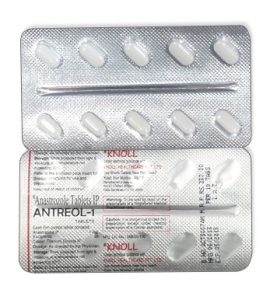
For buyers, packaging wording may appear as Arimidex 1 mg tablets or Arimidex 1 mg film-coated tablets depending on the market.
Price Comparison
How do you compare brand and generic options?
Compare pack size, manufacturer, and dispensing rules, but do not switch between brand and generic without prescriber approval.
Arimidex and anastrozole are the same active ingredient in the reference-brand and generic context, but the final choice still belongs to the oncology team.
| Product | Generic Name | Pack Size | Rx Status | Typical Use |
|---|---|---|---|---|
| Arimidex | Anastrozole | Varies by market | Rx only | Breast cancer endocrine therapy |
| Generic Anastrozole | Anastrozole | Varies by manufacturer | Rx only | Same clinical class and use |
Avoid websites selling prescription cancer medicine without a prescription.
In our online pharmacy, arimidex is available without a prescription, with discreet delivery to United States in 5-14 days.
What’s Inside & How It Works
Ingredients Overview
The active ingredient is anastrozole.
Arimidex is a nonsteroidal aromatase inhibitor in oral tablet form.
No injectable, topical, or cream formulation is supported by the product data used here.
Mechanism Basics
Why does blocking aromatase matter after menopause?
After menopause, estrogen is made mainly in peripheral tissues through the aromatase enzyme.
Arimidex blocks that enzyme, lowering estrogen levels and reducing growth signals for hormone-sensitive breast cancer cells.
That is why it is designed for postmenopausal hormone receptor-positive breast cancer.
- What it does: Lowers estrogen production.
- What it does not do: It does not work like chemotherapy.
- Why it matters: Less estrogen can mean less stimulation of cancer cells.
INN anastrozole and ATC code L02BG03 identify the medicine in standard drug references, and the usual dose remains 1 mg daily.
Main Indications
Approved Uses
Arimidex is approved for adjuvant treatment of postmenopausal women with hormone receptor-positive early breast cancer.
It is also used as first-line therapy for locally advanced or metastatic breast cancer in appropriate postmenopausal patients.
Another approved role is treatment of advanced breast cancer after tamoxifen failure.
Off-Label Uses
Off-label use may appear in specialist settings, but it should be supervised closely.
Chemoprevention for high-risk postmenopausal women is discussed in the literature, but it is not the core everyday use for most readers.
| Use Type | Target Group | Purpose | Caution |
|---|---|---|---|
| Approved | Postmenopausal women with HR+ breast cancer | Treatment and recurrence reduction | Standard oncology supervision |
| Off-label | Specialist-selected patients | Non-core indications in select settings | Needs close monitoring |
Arimidex is not a general-purpose hormone balance supplement.
Interaction Warnings
Food Interactions
Can food change how Arimidex works?
Not in a meaningful way for most patients.
Arimidex can be taken with or without food, and meals are usually a convenience issue rather than a safety issue.
Drug Conflicts
Tell your clinician about all prescriptions, over-the-counter products, and supplements.
DHEA and hormone-containing supplements may interfere with treatment goals.
That includes menopause products, herbal remedies, and anything marketed as an estrogen booster.
- Supplements
- Menopause products
- Herbal remedies
- Hormone products
Do not start estrogen-support products without oncology approval.
Latest Evidence & Insights
What Recent Research Suggests
Recent updates continue to support Arimidex as a durable breast cancer treatment option.
The newer literature is focused more on long-term outcomes, bone health, and cardiovascular safety than on changing the drug’s core role.
FALCON follow-up data and long-term observational studies keep anastrozole relevant in modern endocrine therapy discussions.
What This Means Day To Day
The practical message is simple: benefit remains strong, but monitoring matters.
Patients should stay alert to bone loss, fracture risk, and persistent symptoms.
That is especially important during extended treatment, when recurrence prevention and survivorship goals overlap.
| Benefit Area | Monitoring Need | What Patients Should Ask |
|---|---|---|
| Recurrence reduction | Oncology follow-up | How long should treatment continue? |
| Bone health | Bone density monitoring | Do I need calcium, vitamin D, or another bone plan? |
| Cardiovascular safety | Risk-factor review | Should my cholesterol or blood pressure be watched more closely? |
2022 to 2025 literature emphasizes bone and cardiovascular outcomes, not a new formulation.
Alternative Choices
Arimidex Vs. Femara
Femara is letrozole, another nonsteroidal aromatase inhibitor.
Both are used in similar postmenopausal breast cancer settings.
Some clinicians favor letrozole for potency, while others choose Arimidex based on tolerability and patient history.
Arimidex Vs. Aromasin
Aromasin is exemestane, a steroidal aromatase inhibitor.
It may be chosen if a patient does not tolerate one of the nonsteroidal options.
| Drug | Class | Typical Use | Common Switch Reason |
|---|---|---|---|
| Arimidex | Nonsteroidal AI | Adjuvant or first-line endocrine therapy | Initial choice or history-based selection |
| Femara | Nonsteroidal AI | Similar postmenopausal settings | Potency preference or clinician choice |
| Aromasin | Steroidal AI | Alternative endocrine option | Tolerability or switch after other AI |
Switching should be oncology-guided, not self-directed.
Regulation Snapshot
Prescription And Labeling
Arimidex is Rx only.
Standard label wording may appear as Arimidex 1 mg tablets or Arimidex 1 mg film-coated tablets depending on the market.
The oral tablet is the established form; no topical or injectable version is supported by the supplied product data.
Market And Approval Context
Arimidex is approved in major regulated markets, including FDA and EMA contexts.
The originator brand is associated with AstraZeneca.
The current commercial story is broad generic availability and continued oncology use.
- Label strength
- Pack wording
- Rx status
- Approved population
Generic anastrozole is widely available in many markets, and access is generally easier than during the branded-only era.
Frequently Asked Questions
Practical Questions Patients Ask
Take Arimidex once daily, with or without food.
If you miss a dose, take it when remembered unless it is close to the next dose.
Common concerns include joint pain, hot flashes, bone loss, and libido changes.
Arimidex is not chemotherapy; it is hormone therapy.
When To Call Your Doctor
Call promptly for severe rash, chest pain, shortness of breath, swelling, or severe mood changes.
Also report persistent bone pain, fractures, or worsening mobility.
Use this quick reminder list:
- Missed dose questions.
- Side effects that are not easing.
- Urgent symptoms such as chest pain or swelling.
- Questions about treatment duration.
The main approved population is postmenopausal women with hormone receptor-positive breast cancer.
Guidelines For Proper Use
Daily Habits That Help
Take the tablet at the same time each day.
Use reminders, refills, and pill organizers.
Keep follow-up visits for bone density, symptom review, and treatment response.
Stay active with safe walking, strength work, and balance exercises if approved by your clinician.
What Not To Do
Do not double doses.
Do not stop because of a rough week without talking to oncology first.
Do not assume supplements are safe just because they are natural.
A good routine usually includes daily habit setup, refill checks, a symptom log, and appointment scheduling.
Arimidex is a once-daily oral tablet in the standard 1 mg strength, and prescription oversight remains the safest way to use it well.
Delivery Across United States
| City | Region | Delivery time |
|---|---|---|
| New York | Northeast | 5-7 days |
| Los Angeles | West | 5-7 days |
| Chicago | Midwest | 5-7 days |
| Houston | South | 5-7 days |
| Phoenix | West | 5-7 days |
| Philadelphia | Northeast | 5-7 days |
| San Antonio | South | 5-7 days |
| San Diego | West | 5-7 days |
| Dallas | South | 5-7 days |
| San Jose | West | 5-7 days |
| Austin | South | 5-7 days |
| Jacksonville | South | 5-9 days |
| Fort Worth | South | 5-9 days |
| Columbus | Midwest | 5-9 days |
| Charlotte | South | 5-9 days |
Arimidex 1 Mg (Anastrozole) Breast Cancer Treatment
Arimidex 1 mg tablets are a prescription-only aromatase inhibitor used in postmenopausal hormone receptor-positive breast cancer to lower estrogen levels and reduce recurrence risk.
The most practical takeaways are simple: take it once daily, keep the routine steady, watch for joint pain and bone health changes, and stay in close contact with the oncology team if side effects become hard to manage.