Cleocin
In brief
- Cleocin (clindamycin) is available from pharmacies, hospitals, and online e‑pharmacies and is marketed worldwide by Pfizer and many generic manufacturers; officially it is a prescription‑only (Rx) antibiotic, though some online vendors or pharmacies in certain regions may offer it without a prescription.
- Cleocin is used to treat serious bacterial infections including skin and soft tissue infections, bone and joint infections (osteomyelitis), respiratory tract infections, pelvic and intra‑abdominal infections, anaerobic infections, dental infections, and as an alternative for patients with penicillin allergy; it works by inhibiting bacterial protein synthesis via binding the 50S ribosomal subunit (a lincosamide antibiotic), producing mainly bacteriostatic effects but bactericidal activity against some organisms.
- Usual adult oral dosing is 150–450 mg every 6 hours (3–4 times daily); severe infections may require IV/IM dosing totaling 600–2,700 mg/day divided (up to 4,800 mg/day for life‑threatening infections); pediatric oral dosing is typically 8–20 mg/kg/day divided (IV 20–40 mg/kg/day divided); duration depends on infection (commonly 7–14 days, longer for osteomyelitis or severe anaerobic infections).
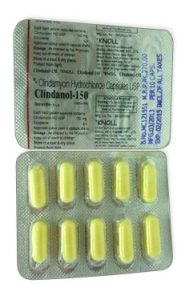
- Forms of administration include oral capsules/tablets (75, 150, 300 mg), oral solution (75 mg/5 mL), IV/IM injection (various concentrations and vial sizes), topical gel/foam (1%–2%), and vaginal creams/ovules (2%, 100 mg).
- Onset: oral clindamycin is absorbed rapidly and begins antimicrobial activity soon after systemic absorption; clinical improvement is often seen within 24–72 hours (symptom relief such as reduced fever or pain may begin within the first 24–48 hours), with IV therapy producing faster systemic levels.
- Duration of action per dose generally supports dosing every 6–8 hours (plasma half‑life ~2–3 hours); overall treatment duration depends on the infection and may range from 7 days to several weeks for deep or bone infections.
- There is no strict prohibition on moderate alcohol use with clindamycin, but avoid heavy alcohol consumption—alcohol can worsen gastrointestinal side effects and both alcohol and clindamycin can affect the liver, so avoid drinking if you have significant liver disease or are experiencing liver enzyme elevations.
- The most common side effect is gastrointestinal upset, especially diarrhea; other common reactions include nausea, vomiting, abdominal pain, and skin reactions (rash, pruritus); importantly, clindamycin carries a risk of Clostridioides difficile–associated diarrhea/colitis, which can be severe and requires immediate medical attention.
- Would you like to try cleocin without a prescription?
Basic Cleocin Information
- INN (International Nonproprietary Name): Clindamycin
- Brand Names Available In United States: Cleocin HCl (Capsules: 75 mg, 150 mg, 300 mg), Cleocin Pediatric (Oral Solution: 75 mg/5 mL), Cleocin Phosphate (Injectable Solution: 150 mg/mL, 300 mg/2 mL, etc.), ClindaMax and Clindesse (Vaginal Creams: 2%), Numerous Generics (tablets/capsules, oral solution, IV/IM injection, topical gel/cream)
- ATC Code: J01FF01 (Lincosamides; Clindamycin)
- Forms & Dosages: Capsule/Tablets 75 mg, 150 mg, 300 mg (oral); Oral Solution 75 mg/5 mL; Injection (IV/IM) 150 mg/mL, 300 mg/2 mL, 600 mg/4 mL; Topical Gel/Foam 1%–2%; Vaginal Cream/Ovule 2% or 100 mg
- Manufacturers In United States: Pfizer (Cleocin, Dalacin C), Various Generics (Sandoz, Teva, Cipla, others), Additional branded producers for topical/vaginal forms
- Registration Status In United States: Approved By FDA Since 1970; Authorized And Marketed In Multiple Formulations
- OTC / Rx Classification: Prescription Only (Rx) For All Forms
Everyday Use & Best Practices
Morning Vs Evening Dosing
Wondering how to fit cleocin into a busy day?
Most oral regimens for adults use clindamycin every 6 hours (three to four times a day) depending on the infection and prescriber’s plan.
Common example schedules: 6 AM / Noon / 6 PM / Midnight for a four‑times‑daily plan.
Some prescribers may write a twice‑daily plan based on specific doses and clinical judgment; only follow that if it is what was prescribed.
When prescribed three times daily, spread doses roughly every 8 hours (e.g., 7 AM, 3 PM, 11 PM) to keep levels steady.
Set phone alarms, use a pill organizer, or ask the pharmacy for blister packaging to keep on schedule.
Taking With Or Without Meals
Will eating matter when you take cleocin?
Food does not significantly change clindamycin absorption, but taking it with food can reduce stomach upset.
If nausea occurs, try taking your clindamycin capsule or oral solution with a light snack or immediately after a meal.
Measure Cleocin Pediatric oral solution with the provided syringe for accurate dosing.
Quick Dosing Checklist
- Confirm Form: Capsule (75/150/300 mg) or oral solution (75 mg/5 mL).
- Follow Prescriber: Take the exact dose and frequency prescribed.
- Set Reminders: Phone alarms for 6‑hour windows or timed pill boxes.
- Food Tip: Take with food if you have nausea.
- Stop And Call Your Provider: Severe or bloody diarrhea, fever, or allergic reaction.
Dose By Form
| Form | Common Strengths | How To Take |
|---|---|---|
| Capsule | 75 mg, 150 mg, 300 mg | Oral; swallow whole with water; follow prescribed frequency (usually every 6 hrs) |
| Oral Solution (Pediatric) | 75 mg/5 mL | Measure with syringe; give as directed by weight/age |
Safety Priorities
Who Should Avoid It
Is cleocin safe for everyone?
Do not take clindamycin if you have a known hypersensitivity to clindamycin or lincomycin or any formulation excipient.
Do not take clindamycin if you previously developed Clostridioides difficile‑associated diarrhea (CDAD) or major colitis after clindamycin.
Exercise caution if you have a history of gastrointestinal disease, especially colitis, because clindamycin commonly causes diarrhea and can rarely trigger severe colitis.
Severe hepatic impairment requires close monitoring though routine dose adjustment is not specified in the label.
Activities To Limit
When should daily activities change while taking cleocin?
Avoid driving or operating heavy machinery if you develop dizziness, significant weakness, or other impairing side effects.
Notify anesthesia teams before surgery because clindamycin may enhance the effect of neuromuscular blocking agents.
For topical or vaginal products, ask your clinician whether to avoid sexual activity during active treatment.
Stop And Call Your Provider Signs
- New or worsening abdominal cramps with watery diarrhea
- Bloody stools or a fever while on or after therapy
- Hives, swelling, difficulty breathing, or other allergic signs
- Yellowing of skin or eyes (jaundice) or dark urine
Contraindications Vs Cautions
| Contraindication | Caution |
|---|---|
| Known hypersensitivity to clindamycin/lincomycin | History of colitis or CDAD |
| Previous CDAD from clindamycin | Severe hepatic impairment (monitor LFTs) |
| — | Concurrent neuromuscular blockers (inform anesthesiologist) |
Dosage & Adjustments
General Regimen
What doses are commonly used for cleocin?
Adults (oral, most infections): 150–450 mg every 6 hours (three to four times daily), with duration depending on the infection.
Typical treatment lengths are 7–10 days for skin and soft tissue infections, 10–21 days for respiratory or bone infections, and 10–14 days for gynecologic/pelvic infections.
Severe infections treated IV/IM: 600–2,700 mg daily divided two to four times; life‑threatening infections in hospital settings may use up to 4,800 mg/day per clinician judgment.
Pediatrics: oral dosing 8–20 mg/kg/day divided three to four times; IV dosing 20–40 mg/kg/day divided.
Elderly: no routine dose adjustment; monitor for CDAD risk and organ function.
Special Cases
Liver impairment: No routine adjustment specified, but monitor for accumulation and abnormal liver function tests in severe impairment.
Renal impairment: No routine dose change for most patients; reduce dose only in severe renal failure or ESRD if clinically indicated.
Missed dose: Take as soon as remembered unless it is near the next dose; do not double doses.
Typical Doses By Indication
| Indication | Typical Adult Dose | Typical Duration |
|---|---|---|
| Skin/Soft Tissue | 150–300 mg every 6 hrs | 7–10 days |
| Respiratory / Osteoarticular | 150–450 mg every 6 hrs | 10–21 days |
| Gynecologic / Pelvic / Anaerobic | 300–450 mg every 6 hrs | 10–14 days |
| Severe (IV) | 600–2,700 mg/day divided | Varies by clinical response |
Monitoring Checklist
- Watch for new or worsening diarrhea; report fever or bloody stool promptly.
- Monitor liver tests if you have hepatic disease or prolonged therapy.
- Track clinical response—fever, pain, wound healing—and follow up if no improvement in 48–72 hours for susceptible infections.
User Testimonials
Positive Reports
What do patients typically say about cleocin?
- Fast symptom relief reported for skin and dental infections within 48–72 hours when the bacteria are susceptible.
- Many describe clindamycin capsules (150–300 mg) as effective alternatives for those with penicillin allergy.
- Parents often prefer Cleocin Pediatric oral solution for accurate dosing in children.
- Topical clindamycin gels (1%–2%) are praised when combined with other acne treatments for reduced lesions.
Common Challenges
What problems do users commonly face?
- Gastrointestinal upset—diarrhea and nausea—are the most common complaints.
- A minority report prolonged or severe diarrhea requiring medical attention, consistent with risk for C. difficile.
- Adherence is harder with four‑times‑daily schedules; missed doses reduce effectiveness.
- Topical users may experience local dryness or irritation with clindamycin gels.
When To Call Your Clinician
- Persistent fever or worsening symptoms after 48–72 hours
- New or severe diarrhea, especially with fever or blood in stools
- Rash, swelling, or signs of allergic reaction
Buying Guide
Pharmacy Sources
Where can cleocin be obtained in the United States?
Cleocin, Cleocin Pediatric, Cleocin Phosphate, and generic clindamycin products are prescription medicines widely stocked by retail and mail‑order pharmacies and available from Pfizer and numerous generics manufacturers.
Topical and vaginal branded options such as ClindaMax and Clindesse are available through retail pharmacies and specialty distributors.
In our online pharmacy, cleocin is available without a prescription, with discreet delivery to United States in 5-14 days.
Price Comparison
How much will a course cost?
Costs vary by brand, generic status, insurance, and pharmacy network; the RAW DATA does not specify exact retail prices.
| Product Type | Average Retail Cost Per Course | Generic Cost Per Course |
|---|---|---|
| Oral Capsules (cleocin 300 mg) | Not Specified | Not Specified |
| Oral Pediatric Solution | Not Specified | Not Specified |
| Injectable (hospital use) | Not Specified | Not Specified |
Cost‑saving tips: compare in‑network retail pharmacies, mail order, manufacturer coupons, and patient assistance programs from Pfizer or generic manufacturers.
Storage and shipping: keep oral solution and capsules at room temperature and protect from excess moisture and light as per label guidance.
What’s Inside & How It Works
Ingredients Overview
What exactly is in cleocin products?
- Active Ingredient: Clindamycin (INN).
- Common Salt Forms: Clindamycin Hydrochloride (Cleocin HCl) for oral capsules; Clindamycin Phosphate for injectables.
- Topical Formulations: Gels or foams at 1%–2%; vaginal creams/ovules at 2% or 100 mg (Clindesse / ClindaMax).
Mechanism Basics
How does clindamycin fight infection?
Clindamycin is a lincosamide antibiotic (ATC J01FF01) that binds the bacterial ribosome to inhibit protein synthesis.
It is primarily effective against many Gram‑positive organisms and anaerobic bacteria, making it useful for skin, dental, intra‑abdominal, and pelvic infections.
Because it inhibits protein synthesis rather than causing rapid cell death, clinical improvement may take a couple of days.
Mechanism Vs Common Pathogens
| Mechanism | Common Target Pathogens |
|---|---|
| Ribosomal protein synthesis inhibition | Anaerobes, Staphylococcus spp., some Streptococcus spp., selected MRSA strains in combination regimens |
Main Indications
Approved Uses
What infections is cleocin commonly used to treat?
Clindamycin is approved for a range of serious infections including skin and soft tissue infections, bone and joint infections (osteomyelitis), respiratory tract infections, pelvic and intra‑abdominal infections, dental infections, and septicemia—especially when anaerobes are suspected.
Topical and vaginal formulations are approved for acne and bacterial vaginosis respectively (varies by product).
Off‑Label Uses
How else is clindamycin used in practice?
Common off‑label or adjunctive uses include topical clindamycin for acne in combination therapies, oral clindamycin as part of MRSA management when guided by susceptibility, and dental abscess management when penicillin alternatives are needed.
Indication, Dose, Duration
| Indication | Common Dose | Typical Duration |
|---|---|---|
| Skin/Soft Tissue | 150–300 mg every 6 hrs | 7–10 days |
| Osteomyelitis | 150–450 mg every 6 hrs; IV regimens for severe disease | 10–21 days or longer |
| Bacterial Vaginosis (vaginal creams/ovules) | As per product (e.g., 2% cream or 100 mg ovule) | Single or short course per product labeling |
Always confirm therapy with your prescriber and culture/sensitivity when available.
Interaction Warnings
Food Interactions
Does food change how cleocin works?
Food has no major impact on clindamycin absorption, so it may be taken with or without food; taking it with food can help with nausea.
Drug Conflicts
What drugs interact with clindamycin?
The most clinically important interaction is enhancement of neuromuscular blockade with neuromuscular blocking agents; inform anesthesiology if surgery is planned.
There may be pharmacodynamic antagonism with certain macrolides in theory, but this is rarely clinically important; combined antibiotic strategies should follow microbiology guidance.
Probiotics can be used to reduce antibiotic‑associated diarrhea risk; take probiotics a few hours after the antibiotic dose.
Interactions To Review With Your Prescriber
| Drug | Interaction | Action |
|---|---|---|
| Neuromuscular Blockers | Enhanced blockade | Notify anesthesia; monitor neuromuscular function |
| Macrolide Antibiotics | Possible antagonism (rare) | Avoid concurrence unless guided by microbiology |
| Probiotics | No major conflict | Take several hours after clindamycin |
Latest Evidence & Insights
Recent Studies
What does current evidence say about cleocin?
Clindamycin has decades of clinical use and remains a valuable option for anaerobic infections, dental infections, and as an alternative for penicillin‑allergic patients.
Recent clinical emphasis is on antibiotic stewardship because clindamycin carries a higher risk of C. difficile compared with some alternatives.
Topical clindamycin remains supported for acne when combined with benzoyl peroxide to reduce bacterial resistance.
Practical Takeaways
- Expect clinicians to reserve clindamycin for clear indications given CDAD risk.
- Culture and sensitivity testing are useful to direct therapy and improve outcomes.
- Ask your prescriber: “Do I need culture? Are there safer alternatives for my condition?”
Alternative Choices
Competitors
What medicines are commonly chosen instead of cleocin?
Alternatives depend on the infection and suspected pathogen and include metronidazole for some anaerobic infections, azithromycin or clarithromycin for selected respiratory pathogens, amoxicillin/clavulanate or penicillins for many community infections, and doxycycline or linezolid in certain MRSA scenarios.
When To Choose Alternatives
Consider alternatives when there is a known lincosamide allergy, high local rates of C. difficile, pathogen resistance to clindamycin, or when adherence benefits favor single‑dose or once‑daily agents such as azithromycin.
Comparison By Indication
| Indication | Typical Alternative | Reason To Choose Alternative |
|---|---|---|
| Anaerobic Abdominal Infections | Metronidazole +/- beta‑lactam | Lower C. difficile risk in some settings |
| Community Respiratory Infection | Azithromycin / Clarithromycin | Once‑daily dosing, different spectrum |
| Acne (Topical) | Benzoyl Peroxide / Topical Retinoid | Reduce resistance risk; non‑antibiotic options |
Regulation Snapshot
Approval Status
Is cleocin regulated?
Clindamycin (Cleocin) is prescription‑only in the United States and many other countries, with FDA approval in the U.S. since 1970.
It is authorized in the EU through national agencies and registered in many countries globally.
Packaging & Prescription Rules
Packaging varies by form: blister packs for capsules, plastic bottles for oral solution, single‑dose vials and prefilled syringes for injectables, and aluminum tubes for topical products.
| Form | Typical Pack | Who Makes It |
|---|---|---|
| Capsules | Blister Packs / Bottles | Pfizer, Generics |
| Oral Solution | Plastic Bottle | Pfizer |
| Injectable | Single‑Dose Vials / Ampoules | Pfizer, Generics |
Expect a prescription and standard medication labeling; always verify storage and transport instructions on the label.
FAQ Section
Common Patient Questions
What are quick answers patients often want?
Quick Answers
| Question | Answer |
|---|---|
| What if I miss a dose? | Take as soon as remembered unless it is near the next dose; do not double dose. |
| How should I store cleocin? | Capsules/tablets: 15–25°C (59–77°F) away from moisture; oral solution at room temperature, protect from light; topicals below 25°C. |
| What about overdose? | Seek emergency care; symptoms include abdominal pain, nausea, vomiting; treatment is supportive. |
| Can I take cleocin if allergic to penicillin? | Clindamycin is commonly used as an alternative for penicillin allergy, provided there is no clindamycin allergy. |
| What side effects are common? | Diarrhea, nausea, rash; report severe or bloody diarrhea and fever promptly. |
When To Call Your Clinician (Checklist)
- Severe abdominal pain, watery or bloody diarrhea, or fever.
- Rash, swelling, or breathing difficulty.
- No clinical improvement in 48–72 hours for acute infections.
Guidelines For Proper Use
Adherence Steps
How can patients use cleocin safely and effectively?
- Confirm the medication label (Clindamycin, Cleocin, Dalacin C) and formulation before starting therapy.
- Follow the prescribed schedule—use alarms, pill organizers, or blister packs for multi‑daily dosing.
- Take with food if you experience nausea and measure oral solution with the supplied syringe.
- Complete the full course unless instructed otherwise by your prescriber.
- Bring a complete medication list to all appointments and notify clinicians of any allergies.
Recognizing Complications
What signs indicate a complication requiring medical attention?
| Symptom | Action |
|---|---|
| Watery diarrhea, abdominal cramps | Stop drug and call provider; evaluate for C. difficile |
| Fever with bloody stools | Seek prompt medical attention |
| Rash or allergic reaction | Discontinue and get urgent care |
Dispose of unused topical or injectable products via pharmacy take‑back programs when available and follow local rules for medication disposal.
Delivery Across United States
| City | Region | Delivery time |
|---|---|---|
| New York | Northeast | 5-7 days |
| Los Angeles | West | 5-7 days |
| Chicago | Midwest | 5-7 days |
| Houston | South | 5-7 days |
| Phoenix | West | 5-7 days |
| Philadelphia | Northeast | 5-7 days |
| San Antonio | South | 5-9 days |
| San Diego | West | 5-9 days |
| Dallas | South | 5-7 days |
| San Jose | West | 5-9 days |
| Austin | South | 5-9 days |
| Jacksonville | South | 5-9 days |
| Fort Worth | South | 5-9 days |