Clomiphene
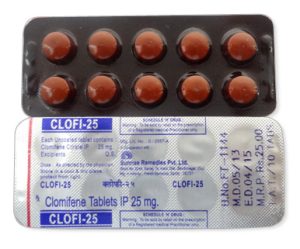
In brief
- You can purchase clomiphene as a prescription-only medicine in most countries, but some pharmacies and online sellers may offer it without a prescription. It is commonly sold under brand names such as Clomid, Serophene, Omifin, and Clostilbegyt, usually in tablet packs or blister packs.
- Clomiphene is used mainly to treat female infertility due to anovulation and is sometimes used off-label for male infertility. It is a selective estrogen receptor modulator (SERM) that helps stimulate ovulation by blocking estrogen feedback at the hypothalamus and pituitary, which increases gonadotropin release.
- The usual dose for female infertility is 50 mg once daily for 5 days, starting on cycle day 3 to 5, and may be increased up to 150 mg per day in some cases. For male infertility, off-label dosing is often 25 to 50 mg daily.
- Clomiphene is taken by mouth as a tablet.
- It usually begins working within a few days after starting a treatment cycle, but ovulation response is typically expected later in the cycle rather than immediately.
- Each treatment cycle lasts 5 days for women, and treatment may be repeated for up to 6 ovulatory cycles. In men, off-label treatment may continue for 3 to 6 months.
- Alcohol is not strictly contraindicated, but it is best to avoid or limit alcohol because it may worsen side effects such as dizziness, nausea, and mood changes, and it can interfere with fertility goals.
- The most common side effects are hot flashes, headache, dizziness, nausea, abdominal discomfort, breast tenderness, and visual disturbances such as blurred vision or spots.
- Would you like to try clomiphene without a prescription?
Basic Clomiphene Information
- INN (International Nonproprietary Name): Clomifene; alternatively spelled Clomiphene.
- Brand names available in United States: Clomid; Serophene.
- ATC Code: G03GB02.
- Forms & dosages: Tablet; 25 mg, 50 mg, 100 mg; 10, 30, 50 tablet packs or blisters.
- Manufacturers in United States: Organon; global supply by generic manufacturers is broad.
- Registration status in United States: FDA Rx-only; available since 1967 via NDA.
- OTC / Rx classification: Prescription-only (Rx) worldwide.
Everyday Use And Best Practices
Morning Vs Evening Dosing
Many patients ask whether clomiphene should be taken in the morning or at night.
For female infertility, clomiphene tablets are usually taken by mouth once daily for a 5-day cycle, often starting on cycle day 3 to 5.
The exact time of day matters less than taking the dose consistently at the same time each day.
That steady routine helps with clomiphene daily routine planning, especially if shifts, school drop-offs, or long workdays make life unpredictable.
If mornings are rushed, a bedtime habit may be easier.
If evenings get chaotic, pairing the dose with breakfast or a regular lunch break can keep fertility pill use on track.
Taking With Or Without Meals
Clomiphene tablets are generally taken by mouth and can be taken with or without food.
If nausea shows up, taking the ovulation pill with a light snack is a practical fix.
Keep the clomiphene 50 mg tablets in the original package until use, and store them at room temperature away from moisture and light.
A simple clomiphene citrate routine makes treatment easier to follow and reduces missed doses.
- Daily routine tips: take the tablet at the same time each day, mark the dose on a calendar, and track cycle day before starting.
- When to call the clinic: if you miss a dose and are unsure what to do, if nausea is persistent, or if you notice visual changes, bloating, or severe discomfort.
Safety Priorities
Who Should Avoid It
Before starting a fertility drug for ovulation, the safety screen matters just as much as the dose.
Clomiphene is prescription-only worldwide, and pregnancy must be ruled out first because it is contraindicated in pregnancy.
- Do not use if you have: pregnancy, liver disease or impairment, hypersensitivity to clomifene or excipients, ovarian cysts not related to PCOS, unexplained uterine bleeding, or organic intracranial lesions or tumors.
- Use only with careful monitoring if you have: PCOS, enlarged ovaries, thyroid or adrenal dysfunction, endometriosis, or a history of uterine fibroids.
Those warnings are the core of clomiphene safety and clomiphene warnings in real practice.
Because it is an Rx-only fertility medicine, clinicians usually confirm the diagnosis and make sure the ovulation stimulant precautions are clear before treatment starts.
Activities To Limit
Some people feel perfectly normal on treatment, while others notice vision side effects, headaches, or hot flashes that can affect work performance.
Blurred vision, visual spots, dizziness, or fatigue are reasons to avoid driving or operating machinery until you feel steady again.
Mood changes and abdominal discomfort can also make a long workday harder than expected.
If visual symptoms occur, the clinic should be contacted right away.
Any sign of severe abdominal pain, ovarian enlargement, or a reaction that feels out of the ordinary deserves prompt medical review.
Dosage And Adjustments
General Regimen
For female anovulation, the usual clomiphene dosage starts at 50 mg daily for 5 days per cycle.
That clomiphene 50 mg tablets regimen typically begins on day 3 to 5 of the menstrual cycle and may be repeated for up to 6 cycles if the clinician continues treatment.
Under medical supervision, the dose may increase up to 150 mg per day.
For male infertility, off-label use is commonly 25 to 50 mg daily for 3 to 6 months, with sperm analysis follow-up.
The fertility pill dosing plan is individualized, so the dose cycle can change based on response.
Special Cases
Pediatric use is not indicated, and there is no safety data for patients under 16 years.
Older adults are not routine candidates, although limited fertility use in men over 50 may occur.
Liver impairment is the major caution point here; no formal dose adjustment is listed, but use should be avoided or monitored very closely if impairment is mild.
| Indication | Starting Dose | Maximum Dose | Duration |
|---|---|---|---|
| Female infertility due to anovulation | 50 mg daily for 5 days | Up to 150 mg/day | Up to 6 cycles |
| Male infertility, off-label | 25 to 50 mg daily | Not specified | 3 to 6 months |
User Testimonials
Positive Reports
What patients often notice first is not a miracle story, but better structure around treatment.
People often describe easier cycle planning, clearer ovulation tracking, and a stronger sense of control during fertility treatment.
A patient might say, “At least I know what week to watch,” which captures the practical side of clomiphene experience better than any dramatic promise.
These comments are best understood as patient feedback, not proof of effectiveness.
Common Challenges
What patients often notice on the harder days is hot flashes, mood swings, headaches, nausea, and the stress of timing intercourse and ovulation monitoring.
Some people also report blurred vision or visual spots, and those symptoms need immediate clinical contact.
| Helpful | Challenging |
|---|---|
| Better cycle planning | Hot flashes |
| Improved ovulation tracking | Mood swings and headaches |
| More treatment structure | Nausea and visual symptoms |
Buying Guide
Pharmacy Sources
Clomiphene should be obtained through licensed pharmacies with a valid prescription.
That is true for Clomid, Serophene, Omifin, Clostilbegyt, Clomiphène®, Réprefol, and Fertomid.
Tablet packaging is usually 10, 30, or 50 tablets, and 50 mg is the most widely recognized strength.
In our online pharmacy, clomiphene is available without a prescription, with discreet delivery to United States in 5-14 days.
When access is the issue, patients often compare legitimate sources, brand availability, and tablet strength rather than just hunting for the lowest price.
Price Comparison
Clomiphene price can vary by brand, country, and manufacturer.
Generic manufacturers are broad globally, and reputable parallel importers may exist where the original brand is unavailable.
Before purchase, check the manufacturer name, tablet strength, and country-specific registration so you know exactly what is in the box.
| Brand Name | Region | Strength | Pack Size |
|---|---|---|---|
| Clomid | United States, UK, EU, Japan | 50 mg | Blister packs |
| Serophene | North America | 50 mg | 10-tablet boxes |
| Omifin | Spain | 50 mg | 10-tablet packs |
| Clostilbegyt | Eastern Europe, Russia, EAEU | 50 mg | Strip or bottle packs |
What Is Inside And How It Works
Ingredients Overview
The marketed product contains clomifene, also spelled clomiphene, which is a racemic mix of two stereoisomers: enclomiphene and zuclomiphene.
Common tablet strengths include 25 mg, 50 mg, and limited-region 100 mg tablets.
Mechanism Basics
Clomiphene is a selective estrogen receptor modulator, or SERM.
In fertility care, it helps trigger ovulation by changing estrogen feedback in the brain, which increases the signals that support follicle development.
The process is simple in concept:
Tablet → hormone signaling changes → follicle development support → ovulation support.
Main Indications
Approved Uses
The main standard use is female infertility due to anovulation.
Typical treatment starts on cycle day 3 to 5 and continues for 5 days.
If the clinician decides it is still appropriate, treatment may be repeated for up to 6 cycles.
Off-Label Uses
Male infertility is an off-label use, usually at 25 to 50 mg daily for 3 to 6 months with sperm analysis follow-up.
Some patients with PCOS may also be treated under close monitoring.
- Approved: female infertility due to anovulation.
- Off-label: male infertility, and selected PCOS-related fertility treatment under supervision.
Interaction Warnings
Food Interactions
No major food interactions are highlighted in the available data.
Still, taking clomiphene consistently with or without meals is the most practical routine.
If nausea appears, a small meal or snack can make the dose easier to tolerate.
Drug Conflicts
Patients should review all medicines with their clinician, especially hormone treatments and fertility regimens.
Thyroid or adrenal dysfunction should be controlled first, because those conditions affect treatment planning.
Urgent review is needed if visual symptoms, severe abdominal pain, or ovarian enlargement occur.
- Before starting: list every prescription drug, over-the-counter medicine, and hormone product.
- Before starting: confirm pregnancy has been ruled out.
- Before starting: tell the clinician about thyroid, adrenal, or liver problems.
Latest Evidence And Insights
What Current Practice Suggests
Clomiphene remains a long-standing, globally recognized ovulation stimulant with ATC code G03GB02.
It has been FDA regulated since 1967 and is approved by major agencies in many regions.
In everyday practice, ovulation tracking, cycle response, and side-effect surveillance matter more than any marketing claim.
That is why a clomiphene citrate plan usually includes follow-up rather than a simple hand-off.
Where It Fits Today
It now sits alongside letrozole, gonadotropins, tamoxifen, metformin, and IVF or natural cycle approaches.
The real decision often comes down to cost, convenience, oral dosing, and clinician preference.
| Option | Route | Monitoring Burden | Common Use |
|---|---|---|---|
| Clomiphene | Oral | Moderate | Ovulation induction |
| Letrozole | Oral | Moderate | Fertility induction |
| Gonadotropins | Injectable | High | Close-supervision cycles |
| Metformin | Oral | Variable | PCOS-associated ovulation support |
Alternative Choices
Medication Alternatives
Letrozole is often discussed as an oral option for fertility induction.
Gonadotropins such as hMG and FSH are injectable and need close supervision, which makes them more intensive.
Tamoxifen is another SERM with limited fertility use, and metformin may help in PCOS-associated ovulation induction.
Non-Drug Options
Natural cycles and IVF protocols are common next steps when clomiphene is ineffective or contraindicated.
The best choice depends on diagnosis, age, partner factors, and how much monitoring the patient can handle.
| Alternative | Best Fit | Key Drawback |
|---|---|---|
| Letrozole | Oral fertility induction | Requires clinician selection |
| Gonadotropins | More intensive treatment | Injectable and closely monitored |
| Metformin | PCOS-related support | Not a direct ovulation pill |
| IVF | When simpler approaches fail | Higher cost and complexity |
Regulation Snapshot
Approval And Labeling
Clomiphene has FDA Rx-only status since 1967 and is also approved or licensed by the EMA, MHRA, PMDA, and ANMDMR.
It is prescription-only worldwide, with country-specific labeling and product information.
The ATC code G03GB02 supports pharmacovigilance tracking across markets.
Packaging And Naming
Brand and package style can vary a lot by country.
| Region | Regulatory Status | Common Pack Type |
|---|---|---|
| United States | FDA Rx-only | Clomid 50 mg blister packs |
| North America | Prescription medication | Serophene 50 mg scored tablets in 10-tablet boxes |
| Eastern Europe | Prescription medication | Clostilbegyt strip or bottle packs |
| France | Approved and licensed | Clomiphène® 30-tablet packs |
International naming may vary, but the INN is clomifene or clomiphene.
Frequently Asked Questions
Common Patient Questions
How long does treatment last?
For female infertility, treatment may run for up to 6 ovulatory cycles.
For male infertility, off-label use is often 3 to 6 months.
What if I miss a dose?
Take it the same day if you remember.
If a day is missed, skip it and do not double the next dose.
Can I take it with food?
Yes, clomiphene can be taken with or without food.
What side effects need urgent attention?
Blurred vision, visual spots, severe abdominal pain, vomiting, or ovarian enlargement need immediate medical attention.
When To Call A Doctor
Seek immediate medical help for overdose concerns, especially nausea, vomiting, visual disturbances, or signs of ovarian enlargement.
Blurred vision is never something to ignore while taking this fertility pill.
Pregnancy must be ruled out before treatment, because clomiphene is contraindicated in pregnancy.
Guidelines For Proper Use
Daily Checklist
Proper use starts with taking clomiphene exactly as prescribed and tracking cycle days carefully.
Note ovulation signs, keep follow-up appointments, and bring up any visual changes or abdominal pain right away.
Storage matters too: keep tablets at room temperature between 15 and 30°C, protect them from moisture and light, do not refrigerate or freeze, and leave them in the original packaging until use.
Monitoring And Follow-Up
Clinicians may monitor for ovarian enlargement, multiple gestation risk, and visual symptoms.
Female treatment may continue for up to six ovulatory cycles, while male off-label use often requires sperm checks.
Liver disease is a major stop-sign, and thyroid or adrenal disorders should be controlled before starting.
- Do: take the dose on schedule, track your cycle, and attend all follow-up visits.
- Do not: double a missed dose or continue if you develop blurred vision.
- Contact the clinic: for severe pain, ovarian swelling, vomiting, or any pregnancy concern.
Delivery Across United States
| City | Region | Delivery Time |
|---|---|---|
| New York | Northeast | 5-7 days |
| Los Angeles | West Coast | 5-7 days |
| Chicago | Midwest | 5-7 days |
| Houston | South | 5-7 days |
| Phoenix | Southwest | 5-7 days |
| Philadelphia | Northeast | 5-7 days |
| San Antonio | South | 5-9 days |
| San Diego | West Coast | 5-7 days |
| Dallas | South | 5-7 days |
| San Jose | West Coast | 5-9 days |
| Austin | South | 5-7 days |
| Jacksonville | South | 5-9 days |
| Fort Worth | South | 5-7 days |
| Columbus | Midwest | 5-9 days |
| Charlotte | South | 5-9 days |