Hydrochlorothiazide
In brief
- Hydrochlorothiazide can be purchased in many countries from pharmacies and online pharmacies; in some places it is prescription-only, while in others it may be available without a prescription depending on local regulations.
- Hydrochlorothiazide is used to treat high blood pressure, edema, and sometimes calcium kidney stones. It is a thiazide diuretic that works by increasing the amount of sodium and water the kidneys remove from the body, which helps lower blood pressure and reduce fluid buildup.
- The usual adult dose is 12.5–25 mg once daily for hypertension; 25–100 mg daily for edema; and 25–50 mg daily for calcium stone prevention. Doses may be adjusted based on age, kidney function, and response.
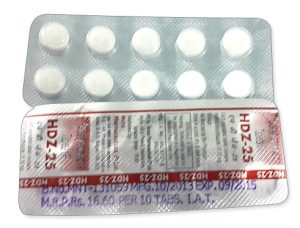
- The form of administration is usually an oral tablet, most commonly in 12.5 mg, 25 mg, and 50 mg strengths. It is less commonly available as a capsule, and liquid or powder forms are rare.
- Hydrochlorothiazide usually starts working within about 2 hours after taking it, with the diuretic effect becoming noticeable the same day.
- The duration of action is about 6–12 hours, and blood-pressure-lowering effects are maintained with regular once-daily use.
- Alcohol can increase dizziness, dehydration, and low blood pressure while taking hydrochlorothiazide, so it is best to avoid or limit alcohol.
- The most common side effects are dizziness, headache, increased urination, fatigue, mild low potassium or low sodium, nausea, and photosensitivity rash.
- Would you like to try hydrochlorothiazide without a prescription?
Basic Hydrochlorothiazide Information
- INN (International Nonproprietary Name): Hydrochlorothiazide
- Brand Names Available In United States: Esidrix, Hydro-Diuril, Oretic
- ATC Code: C03AA03
- Forms & Dosages: Tablets 12.5 mg, 25 mg, 50 mg; capsules 12.5 mg, 25 mg; sachet/powder rarely used
- Manufacturers In United States: Teva, Apotex, Hikma Intl Pharms, Aurobindo Pharma, Jubilant Cadista, Pfizer, Novartis, Sanofi
- Registration Status In United States: Prescription only medicine in most jurisdictions, including the USA
- OTC / Rx Classification: Rx
How To Use Hydrochlorothiazide Every Day
Morning Versus Evening Dosing
Worried about getting up all night to use the bathroom?
Hydrochlorothiazide is usually taken in the morning for that exact reason.
As a diuretic, it increases urination, and taking the morning dose helps keep nighttime trips to the bathroom to a minimum.
If a second dose is prescribed, it is often taken earlier in the day rather than late evening.
Many people make hydrochlorothiazide tablets part of a simple diuretic routine, such as taking the dose with breakfast or setting a phone reminder before work.
That kind of routine helps with consistency, which matters for blood pressure control and swelling relief.
Taking With Or Without Meals
This medicine can usually be taken with or without food.
For people who get mild stomach upset, taking it with food may help.
The key is taking it at the same time each day so the effect stays steady.
Drink normally during the day, but do not overcorrect by forcing in large amounts of water unless a clinician has told you to do that.
Most oral tablet strengths are 12.5 mg, 25 mg, and 50 mg, and they should be stored at 15–30°C (59–86°F).
- Take it in the morning whenever possible.
- Use breakfast, a pill box, or a phone alarm to stay on schedule.
- Take it with food if your stomach feels off.
- Keep your daily fluid intake normal unless you were given special instructions.
Safety Priorities Before Starting Treatment
Who Should Avoid It
Some patients should not take hydrochlorothiazide at all, while others need close monitoring.
Absolute contraindications include hypersensitivity to hydrochlorothiazide or sulfonamide-derived drugs, anuria, severe renal or hepatic impairment, and refractory hyponatremia or hypokalemia.
People with diabetes, gout, moderate renal insufficiency, liver dysfunction, or existing electrolyte problems need careful follow-up because thiazide safety depends on monitoring.
Use may be ineffective or inappropriate when kidney function is low, especially when eGFR is below 30 mL/min.
Common hydrochlorothiazide side effects include dizziness, headache, fatigue, polyuria, hypokalemia, hyponatremia, hyperuricemia, nausea, abdominal pain, and photosensitivity rash.
Activities To Limit
Dizziness, dehydration, and lightheadedness can happen, especially when standing up quickly.
Be careful with driving, ladders, hot weather, strenuous exercise, and alcohol, since each can make dehydration risk worse.
Checking blood pressure at home can help spot a problem early.
If symptoms become stronger, the medicine may be doing too much or your electrolytes may be off.
- Stop and call your clinician if you have: fainting, confusion, muscle weakness, severe cramping, palpitations, or very low urine output.
- Also call promptly if you notice: a rash after sun exposure, severe dizziness, or signs of dehydration.
Dosage And Adjustments
General Regimen
For adult hypertension, the usual starting dose is 12.5–25 mg once daily.
Maintenance dosing is commonly 25–50 mg once daily or divided, and some adults may need up to 100 mg per day.
For edema related to heart failure, hepatic disease, or renal disease, adult dosing is often 25–100 mg daily in one or divided doses.
For nephrolithiasis, the usual adult dose is 25–50 mg daily.
Special Cases
Children are usually dosed at 1–2 mg/kg/day in one or two divided doses, with a maximum of 37.5 mg/day.
Older adults often start at 12.5 mg because they are more sensitive to electrolyte shifts.
Hepatic impairment may require dose adjustment, and renal impairment can make use ineffective or inappropriate.
Liquid forms are rare and are usually compounded locally when needed for pediatric administration.
| Indication | Typical Adult Dose | Key Note |
|---|---|---|
| Hypertension | 12.5–25 mg daily | Maintenance often 25–50 mg once or divided |
| Edema | 25–100 mg daily | May be used with a loop diuretic |
| Calcium kidney stones | 25–50 mg daily | Long-term reassessment may be needed |
| Pediatric use | 1–2 mg/kg/day | Maximum 37.5 mg/day |
What Patients Often Notice In Real Life
Positive Reports
Many patients say swelling goes down and blood pressure becomes easier to manage.
Once-daily use is another common plus, especially for people who want a simple routine.
People also like the low cost of generic hydrochlorothiazide and the broad availability of branded equivalents.
Globally recognized names include Esidrix, Hydro-Diuril, Oretic, Aquazide, Klorzide, Bpzide, and Ridaq.
Common Challenges
Some people talk about more frequent urination, dizziness, cramps, or the need for lab checks.
Others switch because electrolyte concerns show up on blood work or because the timing interferes with work or sleep.
These are patient experiences, not promises, and they match what pharmacists hear every day at the counter.
- “My ankles felt less tight after a few days.”
- “Once I took it in the morning, the bathroom trips were easier to manage.”
- “The generic version was affordable, but I had to keep up with lab work.”
Buying Hydrochlorothiazide Safely
Pharmacy Sources
In the USA, hydrochlorothiazide is prescription-only.
The safest place to fill it is a licensed retail pharmacy, a verified mail-order pharmacy, or a hospital pharmacy.
Combination products may be easier to find than monotherapy in some areas, especially when blood pressure treatment is part of a larger regimen.
In our online pharmacy, hydrochlorothiazide is available without a prescription, with discreet delivery to United States in 5-14 days.
Price Comparison
Before buying, compare generic versus brand pricing, insurance copays, and 90-day supply options.
Packaging can vary from blister packs to bulk bottles depending on the supplier, so check the exact strength and whether the tablet is a single ingredient or a combination product.
| Product Type | Common Strength | Packaging | Buying Tip |
|---|---|---|---|
| Generic hydrochlorothiazide | 12.5 mg, 25 mg, 50 mg | Blister packs or bottles | Usually the lowest cost option |
| Brand products | Varies by manufacturer | 10–30 tablets per box | Compare carefully with the prescription label |
| Bulk pharmacy stock | Same strengths | 100–1,000 tablets | Useful for maintenance therapy |
What Is Inside And How It Works
Ingredients Overview
The active ingredient is hydrochlorothiazide, a thiazide diuretic classified under ATC code C03AA03.
Inactive ingredients vary by manufacturer and may differ between brands and countries.
Most forms are tablets, with capsules less common and sachet or powder forms used only rarely.
Mechanism Basics
This medicine helps the kidneys remove extra salt and water.
That kidney salt removal lowers blood pressure and can also reduce swelling.
More urination is expected early in treatment, and that is part of the normal diuretic action.
| Part Of The Body | What Hydrochlorothiazide Does |
|---|---|
| Kidneys | Helps remove extra salt and water |
| Blood vessels | Supports lower blood pressure |
| Feet, legs, abdomen | Can reduce fluid buildup and swelling |
Main Reasons It Is Prescribed
Approved Uses
The most common everyday use is hypertension treatment.
Hydrochlorothiazide is also used for edema related to heart failure, hepatic disease, or renal disease, and for preventing calcium kidney stones.
Chronic conditions often need long-term reassessment, while edema treatment may be shorter and sometimes lasts days to weeks.
Off-Label Uses
Some clinicians may use it in combination therapy or in related fluid-control situations when appropriate.
Any off-label use should be directed and monitored by a clinician.
That is especially important when hydrochlorothiazide is paired with other blood pressure drugs.
| Indication | Typical Adult Dose | Key Note |
|---|---|---|
| Hypertension | 12.5–25 mg daily | Most common routine use |
| Edema | 25–100 mg daily | Often used with a loop diuretic |
| Calcium kidney stones | 25–50 mg daily | Needs periodic reassessment |
Interaction Warnings To Review
Food Interactions
Food usually does not block absorption.
Alcohol can make dizziness or low blood pressure worse, so caution makes sense.
Sodium intake affects fluid balance and blood pressure control, so follow dietary advice consistently if one has been given.
Big changes in salt intake can change how the medicine feels day to day.
Drug Conflicts
Lithium, digitalis, and other antihypertensive agents deserve extra attention.
Monitoring is also important with diabetes medicines, gout treatments, and drugs that change potassium levels.
Combination products such as losartan-hydrochlorothiazide or valsartan-hydrochlorothiazide need a careful review so therapy is not duplicated.
| Interaction | Concern Level | What To Do |
|---|---|---|
| Lithium | High | Check before use and monitor closely |
| Digitalis | High | Watch potassium and heart symptoms |
| Other blood pressure medicines | Moderate to high | Avoid duplication and monitor blood pressure |
| Potassium-affecting drugs | Moderate | Review labs and symptoms |
What Recent Prescribing Emphasizes
Current Use Focus
Modern prescribing usually starts low, checks electrolytes, and aims for individualized blood pressure goals.
Many clinicians favor combination therapy when one agent is not enough.
Real-world effectiveness is well established, but side effect monitoring still matters every time.
Monitoring Priorities
Electrolyte imbalances are universally monitored, along with kidney function and sometimes uric acid.
That means sodium, potassium, creatinine, and sometimes uric acid may be checked.
Weakness, confusion, or palpitations should not be ignored because they can point to a problem that needs attention.
- Check sodium.
- Check potassium.
- Check kidney function.
- Ask about uric acid when gout is a concern.
Other Medicines That May Be Considered
Other Thiazides
Hydrochlorothiazide is not the only thiazide-type diuretic on the shelf.
Chlorthalidone, indapamide, and bendroflumethiazide are similar options, and some patients respond better to one than another depending on the treatment goal.
Choice often comes down to how the clinician wants to balance blood pressure response, fluid control, and lab monitoring.
Non-Thiazide Options
For more severe edema, loop diuretics such as furosemide may be used.
When potassium balance is a concern, potassium-sparing diuretics such as amiloride or spironolactone may be considered.
The right alternative depends on the condition being treated, not just brand preference.
| Option | Drug Type | Common Reason To Consider It |
|---|---|---|
| Chlorthalidone | Thiazide-type diuretic | Alternative for blood pressure treatment |
| Indapamide | Thiazide-type diuretic | Another blood pressure option |
| Bendroflumethiazide | Thiazide diuretic | Similar class choice |
| Furosemide | Loop diuretic | More severe edema |
| Amiloride | Potassium-sparing diuretic | Potassium balance concern |
| Spironolactone | Potassium-sparing diuretic | Fluid control with potassium preservation |
Approval And Brand Status
Approval And Status
Hydrochlorothiazide is widely approved globally and is commonly available as a generic medicine.
Major regulators such as the FDA, EMA, and TGA have approved it.
In the USA and most jurisdictions, it remains prescription-only.
Global Branding
Brand names vary by country and include Esidrix, Hydro-Diuril, Diuril, Oretic, Aquazide, and Ridaq.
Local manufacturers and packaging can differ without changing the active ingredient.
That is why one pharmacy label may look different from another even when the medicine is the same.
- Common suppliers: Teva, Apotex, Sun Pharmaceuticals, Zydus Cadila Healthcare, Hikma Intl Pharms, Aurobindo Pharma, Pfizer, Novartis, and Sanofi.
- Common brand examples: Esidrix, Hydro-Diuril, Oretic, Aquazide, Klorzide, Bpzide, and Ridaq.
Common Patient Questions
Frequently Asked Questions
What time should I take it? Take it in the morning unless your prescriber told you otherwise.
Can I take it with food? Yes, it can usually be taken with or without food.
Why am I urinating more? Increased urination is expected, especially early on.
What should I do if I miss a dose? Take it when remembered unless it is close to the next dose; do not double up.
When should I call my clinician? Call for fainting, confusion, severe cramps, palpitations, or a big drop in urine output.
Safety-Focused Questions
Can it cause dehydration? Yes, especially if you are not drinking normally or if you are in hot weather.
Does it make the skin more sensitive to the sun? It can, and a rash after sun exposure may be a clue.
Can it worsen gout? It may, so gout history deserves monitoring.
When are labs needed? Sodium, potassium, kidney function, and sometimes uric acid are commonly checked.
What are overdose signs? Severe electrolyte imbalance, dehydration, and hypotension are warning signs that need urgent evaluation.
Proper Use And Red Flags
Daily Use Checklist
Take hydrochlorothiazide at the same time each day, usually in the morning.
Keep up with prescribed labs and do not skip them if your clinician asks for monitoring.
Watch for dizziness, cramps, or unusual fatigue.
Never double a missed dose.
Store tablets in the original container away from moisture and heat, and keep them at 15–30°C (59–86°F).
When traveling, keep the bottle with you and avoid leaving it in a hot car or damp bathroom.
When To Seek Help
Severe weakness, confusion, fainting, palpitations, very low urine output, or allergic symptoms need prompt medical attention.
A rash after sun exposure can point to photosensitivity and should be reported.
Keep an updated medication list, especially if you also take combination blood pressure products.
That includes fixed-dose products with losartan, valsartan, irbesartan, quinapril, or other antihypertensive partners.
- Call urgently for fainting or palpitations.
- Call urgently for very low urine output.
- Call urgently for confusion or severe weakness.
- Report rash, severe cramps, or signs of dehydration.
Delivery Across United States
| City | Region | Delivery Time |
|---|---|---|
| New York | Northeast | 5-7 days |
| Los Angeles | West | 5-7 days |
| Chicago | Midwest | 5-7 days |
| Houston | South | 5-7 days |
| Phoenix | West | 5-7 days |
| Philadelphia | Northeast | 5-7 days |
| San Antonio | South | 5-7 days |
| San Diego | West | 5-7 days |
| Dallas | South | 5-7 days |
| San Jose | West | 5-7 days |
| Austin | South | 5-7 days |
| Jacksonville | South | 5-9 days |
| Columbus | Midwest | 5-9 days |
| Charlotte | South | 5-9 days |
| Indianapolis | Midwest | 5-9 days |