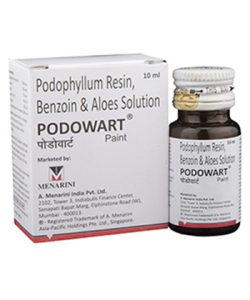
Podowart
In brief
- You can often purchase Podowart (podophyllum resin / podophyllotoxin topical) from pharmacies and online e-pharmacies; although it is generally classified as prescription-only due to toxicity, in some countries and via some retailers it is available without a prescription or receipt—check local regulations and seller policies.
- Podowart is used to treat external warts (genital, anal and plantar warts); podophyllotoxin and podophyllum resin are antimitotic agents that damage wart tissue by inhibiting microtubule function and cell division, causing local necrosis of the lesion.
- Usual dosages: professional-applied resin solutions 10%–25% (commonly 20%–25%) applied once weekly by a healthcare professional; podophyllotoxin 0.5% gel/cream is self-applied twice daily for 3 days followed by 4 days off, up to 4 cycles (do not exceed about 6 weeks continuous treatment).
- Form of administration: topical only — resin solutions (dropper vials) applied to the wart by a clinician; podophyllotoxin 0.5% as a self-applied cream or gel using the supplied applicator, applied only to visible warts and not to surrounding healthy skin or mucosa.
- Onset time: local irritation and necrotic effect can begin within hours to days after application; visible wart shrinkage typically appears over days to a few weeks with repeated cycles.
- Duration of action: there is no prolonged systemic action; therapeutic effects develop over the course of treatment cycles (weeks) and may persist after clearance; do not continue treatment beyond recommended cycles (generally up to 4 cycles or about 6 weeks).
- Alcohol warning: there is no specific interaction with alcohol for topical use, but avoid alcohol if you develop systemic symptoms from overdose or toxicity; also avoid applying alcohol-based products to treated skin to reduce irritation.
- The most common side effects are local skin reactions such as burning, redness, itching, swelling, pain, mild erosion or ulceration; rare systemic toxicity (with excessive or inappropriate use) can include nausea, vomiting, neurological symptoms and blood cell suppression.
- Would you like to try podowart without a prescription?
Basic Podowart Information
- INN (International Nonproprietary Name): Podophyllotoxin; Podophyllum Resin (Podophyllin).
- Brand Names Available In United States: Podocon-25, Podofin, Pododerm (typically 25% topical resin solutions).
- ATC Code: D06BB04 (Podophyllotoxin / Podophyllum resin topical).
- Forms & Dosages: Topical solution 10%–25% (resin) in 3–10 mL vials; topical cream/gel 0.5% (podophyllotoxin) in 3–5 g tubes.
- Manufacturers In United States: Not specified by RAW DATA; worldwide suppliers include Meda, Glenmark, Taro, Mylan, Dr. Reddy’s and others.
- Registration Status In United States: Cream and solution forms (podophyllotoxin brands such as Condyline/Podofilox) are approved by national agencies; specific brand registration for Podowart in the United States is not specified.
- OTC / Rx Classification: Prescription (Rx) only in most jurisdictions; rare low-concentration exceptions exist, but general classification is Rx.
Everyday Use & Best Practices
Morning Vs Evening Dosing
Patients ask whether to apply podowart in the morning or evening because they worry about washing it off during the day.
For self-applied 0.5% podophyllotoxin gel or cream, the recommended pattern is twice daily for three days followed by four days off, repeated up to four cycles.
Many people prefer evening applications because there is less friction and a lower chance of washing the product off during daily activities.
Provider-applied resin solutions (10%–25%, often 20%–25%) are applied in clinic once weekly and are washed off after one to four hours by the clinician.
Plan applications when you won’t shower, swim, or engage in sexual activity involving the treated area for several hours afterward.
Taking With Or Without Meals
Topical podowart is applied to the skin, so meals do not affect absorption.
The crucial factor is clean, dry skin at the time of application rather than food timing.
Before applying any podophyllotoxin gel or resin, follow a simple skin-prep checklist.
- Wash the area with mild soap and water and pat dry thoroughly.
- Trim hair carefully if needed so the product contacts the wart surface only.
- Avoid applying on irritated or broken skin near the wart.
If you apply in the evening, this short routine helps:
- Wash and dry the area.
- Apply a thin layer to the wart only.
- Wash hands immediately after applying.
- Wear loose, breathable clothing or leave the area uncovered if advised.
Never apply podowart to mucosal membranes or open wounds.
Do not use podophyllotoxin or podophyllum resin during pregnancy because these agents are teratogenic and embryotoxic (Category X).
Safety Priorities
Who Should Avoid It
Absolute contraindications include pregnancy, known hypersensitivity to podophyllum or podophyllotoxin, and application to mucosal membranes or open wounds.
Children are generally not recommended for treatment because of higher risk of systemic absorption and toxicity.
Patients with HIV/AIDS or those with large or multiple lesions should be treated with extra caution because toxicity risk is higher in these groups.
Resin products are more irritant and less standardized than podophyllotoxin creams, so they are restricted to clinician administration.
Activities To Limit
Limit activities that can spread the virus or increase absorption after applying podowart.
- Avoid sexual activity involving treated genital or perianal areas until lesions have healed.
- Do not swim, bathe, or shower for several hours after application.
- Do not use home occlusion unless specifically instructed by your clinician.
- Never attempt self-application of high-concentration resin solutions (10%–25%).
If you experience severe local burning, blistering beyond expected irritation, or systemic symptoms such as nausea, confusion, or unexpected bleeding, seek immediate medical attention.
Dosage & Adjustments
General Regimen
Regimens differ depending on formulation and who applies the medication.
For 0.5% podophyllotoxin cream or gel (patient-applied), the standard adult regimen is twice daily for three days followed by four days off, repeated for up to four cycles or a maximum of approximately six weeks.
For podophyllum resin topical solutions (10%–25%), the usual practice is clinic application once weekly with the solution washed off after one to four hours.
Do not exceed the recommended treated area size and avoid treating large surface areas to limit systemic absorption risk.
Special Cases
Children are typically excluded from podowart therapy because of systemic absorption concerns and toxicity risk.
Elderly patients may have increased skin sensitivity; clinicians should reduce frequency or stop treatment at the first sign of marked irritation.
In patients with liver or kidney impairment, systemic absorption from 0.5% topical forms is minimal, but large-area applications should still be avoided.
| Formulation | Typical Regimen | Who Applies |
|---|---|---|
| Podophyllotoxin 0.5% Gel/Cream | Twice daily for 3 days, then 4 days off; repeat up to 4 cycles | Patient |
| Podophyllum Resin Solution 10%–25% | Once weekly in clinic; wash off after 1–4 hours; up to 6 weeks | Healthcare Professional |
If you miss a scheduled self-application, skip the missed dose and continue the regular schedule.
Never double up doses to make up for a missed application.
User Testimonials
Positive Reports
Many patients describe visible softening and reduction in wart size after one to three cycles of podophyllotoxin 0.5% gel or cream.
Users often highlight the privacy and convenience of a predictable at-home treatment with the 0.5% formulation.
Clinic-applied resin treatments are reported as effective after a few weekly sessions, especially for stubborn lesions.
Common Challenges
Local burning, redness, peeling, and occasional ulceration are common and expected reactions for both resin and podophyllotoxin treatments.
Some patients stop treatment early because of discomfort or scheduling hassles for weekly clinic visits when resin is used.
- Use phone reminders for cycle days to maintain adherence.
- Choose loose, nonabrasive clothing overnight after evening application to reduce friction.
- Keep a small log of treated sites and dates to avoid overlapping treatments.
Call your clinician if you have severe pain, spreading redness, fever, drainage suggesting infection, or systemic symptoms such as dizziness or persistent nausea.
Buying Guide
Pharmacy Sources
Where to obtain podowart depends on formulation and local regulation.
In the United States, products labeled Podocon-25, Podofin, or Pododerm typically refer to 25% resin topical solutions available through pharmacies.
In UK/EU markets, podophyllotoxin 0.5% is sold under brand names such as Condyline, Warticon, and Wartec in tube or dropper packaging.
In Asia and India, Podowart is a common label with both resin (10%–25%) and 0.5% gel/cream formats available.
Because most formulations are regulated, check local pharmacy e-shops and expect prescription requirements in many countries.
In our online pharmacy, podowart is available without a prescription, with discreet delivery to United States in 5-14 days.
Price Comparison
Price varies by concentration, brand, and region.
| Region | Form | Common Concentrations | Typical Price Range | Rx/OTC Note |
|---|---|---|---|---|
| United States | Topical Solution | 25% (resin) | Not specified | Prescription typical |
| UK / EU | Cream / Gel | 0.5% (podophyllotoxin) | Not specified | Prescription typical |
| India / SE Asia | Solution and Gel | 10%–25% (resin); 0.5% gel | Not specified | Varies by state; often Rx |
| Romania / Balkans | Solution | 20% (Podowart resin) | Not specified | Registered product; prescription typical |
Always verify supplier authenticity and buy from licensed pharmacies.
Ask your clinician which brand or formulation they recommend for your situation.
What’s Inside & How It Works
Ingredients Overview
Podowart products contain either pure podophyllotoxin or podophyllum resin (podophyllin), a crude plant extract containing podophyllotoxin and related lignans.
Common formulations include resin-based topical solutions (10%–25%) and podophyllotoxin 0.5% cream or gel.
- Active Ingredients: Podophyllotoxin (standardized) or Podophyllum resin/podophyllin (crude extract).
- Excipients: Vary by manufacturer and formulation; consult the package insert for full details.
Mechanism Basics
Podophyllotoxin works by interfering with mitosis in infected keratinocytes through binding to tubulin and disrupting microtubule formation.
That interference causes cell death in wart tissue and leads to gradual lesion destruction.
| Active Ingredient | Primary Mechanism |
|---|---|
| Podophyllotoxin | Antimitotic agent binding tubulin → disrupts mitosis → wart cell death |
| Podophyllum Resin | Contains podophyllotoxin and related lignans; less standardized and more irritant |
Main Indications
Approved Uses
Approved indications focus on external warts such as external genital and perianal warts in many jurisdictions.
Podophyllotoxin 0.5% gel/cream and podophyllum resin solutions are approved for external wart treatment in multiple markets.
Provider-applied resin can also be used for plantar and other cutaneous warts under professional supervision.
Off-Label Uses
Clinicians may occasionally use these agents for select recalcitrant plantar or cutaneous warts off-label.
Off-label use increases risk and should be done under clinician guidance only.
| Formulation | Approved Sites | Not Approved / Avoid |
|---|---|---|
| Podophyllotoxin 0.5% Gel/Cream | External genital and perianal warts | Internal mucosal surfaces, open wounds |
| Podophyllum Resin 10%–25% | External genital, perianal, plantar warts (professional use) | Self-application at high concentrations; mucosa |
Interaction Warnings
Food Interactions
Topical podowart at 0.5% has minimal systemic absorption, so food interactions are not clinically relevant.
A practical caution is to avoid alcohol-based solvents or topical products that may disrupt the skin barrier on the treated area unless advised by your clinician.
Drug Conflicts
Drug interactions are uncommon for routine topical use, but systemic toxicity can occur with excessive application or large treated areas.
Patients on systemic immunosuppressants or chemotherapies that cause bone marrow suppression should be monitored closely because rare systemic toxicity from podophyllotoxin can affect the gastrointestinal, neurologic, or hematologic systems.
- Avoid combining with other strong topical cytotoxic agents unless directed by a clinician.
- Do not apply immediately after abrasive skin procedures or strong topical corticosteroids without clinician approval.
Latest Evidence & Insights
Clinical Study Highlights
High-quality evidence supports the effectiveness of podophyllotoxin 0.5% gel/cream as a patient-applied option for external genital warts.
Professional resin applications are effective but are associated with higher local irritation and greater toxicity risk if misused.
Recent guidance recommends restricting self-use to low-concentration podophyllotoxin products and reserving resin forms for clinician administration.
Practical Takeaways
- Favor podophyllotoxin 0.5% gel/cream for at-home treatment when appropriate.
- Expect local irritation; monitor closely for severe reactions.
- Reserve professional resin applications for clinic use due to toxicity and irritant potential.
| Product Type | Evidence Summary |
|---|---|
| Podophyllotoxin 0.5% | Effective and appropriate for self-application with expected local irritation |
| Podophyllum Resin 10%–25% | Effective in clinic; more irritant and riskier if misused |
Alternative Choices
Comparable Medicines
Alternatives include imiquimod (an immune response modifier), cryotherapy with liquid nitrogen, trichloroacetic acid applied by professionals, and cantharidin for selected patients.
These options differ in pain profile, cost, and clinic visit requirements.
When To Switch
Consider switching therapy when lesions persist after recommended cycles, local adverse effects are intolerable, systemic symptoms occur, or pregnancy is planned.
- Switch to cryotherapy, TCA, or an immunomodulator if podowart causes severe irritation or is contraindicated.
- Always discuss switching with a clinician to match the alternative to lesion type and patient preference.
| Option | Pros | Cons |
|---|---|---|
| Imiquimod | Home use, immune-based clearance | May take weeks; local skin reactions |
| Cryotherapy | Fast in-clinic treatment | Requires clinic visits; can be painful |
| TCA | Clinic-based chemical cautery | Requires professional application; possible irritation |
Regulation Snapshot
Approval Status
Regulatory status varies by country and formulation.
Podowart as a branded resin solution is registered in Romania with ANMDMR as an external wart treatment; specific registration details for each country vary.
Cream and solution forms of podophyllotoxin are approved for topical wart treatment in the USA and EU under various brands.
OTC Vs Rx Rules
Most podophyllotoxin and resin formulations are prescription-only due to toxicity risks and the need for clinician guidance.
Rare exceptions for selected low-concentration products may exist, but these are not the norm.
| Region | Typical Status |
|---|---|
| United States | Prescription (Rx) typical |
| European Union | Prescription (Rx) typical |
| India / Asia | Varies by state; often Rx but sometimes available without Rx |
FAQ Section
Common Quick Answers
Can I self-apply podowart?
Only 0.5% podophyllotoxin gel/cream is intended for patient self-application; resin 10%–25% solutions should be clinic-applied.
How long before I see results?
Expect gradual improvement over several weeks; many patients see lesion softening or size reduction after one to three cycles of 0.5% therapy.
Is it safe in pregnancy?
No. Podophyllotoxin and podophyllum resin are contraindicated in pregnancy (Category X).
When To Call A Clinician
Call your clinician promptly for severe local pain or blistering beyond expected mild erosion.
Contact your clinician for systemic symptoms such as persistent nausea, vomiting, confusion, fever, unexplained bruising, or signs of infection at the treated site.
- Severe pain or spreading redness.
- Blistering or deep ulceration not consistent with expected local reaction.
- Systemic symptoms like confusion, persistent nausea, or bleeding tendencies.
Guidelines For Proper Use
Step-By-Step Application
This is a practical how-to for self-applied podophyllotoxin 0.5% gel/cream.
- Wash your hands and the affected area with mild soap and water, then dry thoroughly.
- Apply a thin layer to the wart only, avoiding healthy surrounding skin.
- Wash hands immediately after application unless the hands are the treated site.
- Follow the cycle of twice daily for three days, then four days without application.
- Repeat up to four cycles or as directed by your clinician, but do not exceed approximately six weeks of continuous use.
For clinician-applied resin treatments, follow your provider’s instructions and do not self-wash or interfere with the treated site until the clinician advises.
If an overdose or excessive area is treated and severe local or systemic signs occur, seek immediate medical care.
Storage And Disposal
Store podowart products at 15–30°C, protected from light and out of children’s reach.
Avoid extreme heat during transport and keep the product in its original container with the cap tightly closed.
Dispose of unused or expired medication via pharmacy take-back programs when available or follow hazardous medication disposal guidance provided by local authorities.
Delivery Across United States
| City | Region | Delivery Time |
|---|---|---|
| New York | New York | 5-7 days |
| Los Angeles | California | 5-7 days |
| Chicago | Illinois | 5-7 days |
| Houston | Texas | 5-7 days |
| Phoenix | Arizona | 5-7 days |
| Philadelphia | Pennsylvania | 5-7 days |
| San Antonio | Texas | 5-7 days |
| San Diego | California | 5-7 days |
| Dallas | Texas | 5-7 days |
| San Jose | California | 5-7 days |
| Austin | Texas | 5-7 days |
| Jacksonville | Florida | 5-9 days |
| Fort Worth | Texas | 5-9 days |
| Columbus | Ohio | 5-9 days |
| Charlotte | North Carolina | 5-9 days |
Quick Safety Summary
Podowart products include podophyllotoxin 0.5% gels for self-application and podophyllum resin solutions (10%–25%) for professional application.
Do not use in pregnancy, on mucosa, or on open wounds.
Children are generally not recommended for treatment due to systemic absorption risk.
Seek immediate care for severe local reactions or systemic symptoms such as persistent nausea, confusion, or bleeding.
Final Practical Tips
Keep a treatment calendar to avoid overlapping cycles and accidental overuse.
For home treatment, favor podophyllotoxin 0.5% gel/cream for safety and predictable dosing.
For large, multiple, or difficult lesions, seek clinic-based options like resin application, cryotherapy, or TCA under professional care.
Always buy from licensed pharmacies and check packaging and concentrations before use.