Aciclovir
In brief
- Aciclovir can be purchased from pharmacies and online pharmacies; however, in most countries it is a prescription-only medicine. In some pharmacy settings it may be available without a prescription, depending on local rules and the seller.
- Aciclovir is used to treat herpes simplex infections, genital herpes, herpes zoster (shingles), and varicella (chickenpox). It works as a nucleoside antiviral that inhibits viral DNA synthesis by blocking viral DNA polymerase after activation inside infected cells.
- The usual dose depends on the condition: for herpes simplex, 200 mg by mouth 5 times daily for 5–10 days; for genital herpes suppression, 400 mg twice daily or 200 mg 3–5 times daily; for shingles, 800 mg 5 times daily for 7–10 days; and for chickenpox, 800 mg 4 times daily for 5 days. Doses must be adjusted in children and in renal impairment.
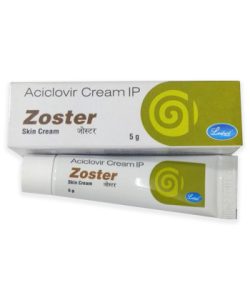
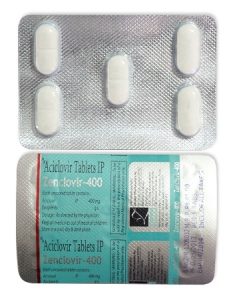
- Aciclovir is available as tablets, cream, ointment, oral suspension, and intravenous vials. Common strengths include 200 mg, 400 mg, and 800 mg tablets, 5% cream or ointment, 200 mg/5 mL suspension, and IV formulations for hospital use.
- Aciclovir usually starts working within a few hours after the first dose, but symptom improvement is often noticed after 1–2 days of regular use. Topical forms may begin reducing discomfort sooner on the skin or lips.
- The duration of action is several hours per dose, which is why oral aciclovir is taken multiple times a day. Treatment courses usually last 4–10 days for outbreaks, while suppressive therapy may continue for months.
- Alcohol should be avoided or minimized during treatment, especially if you are dehydrated or have kidney problems, because alcohol can worsen dizziness and increase the risk of side effects.
- The most common side effects are nausea, vomiting, diarrhea, abdominal pain, headache, dizziness, fatigue, and local skin irritation with cream use. Less commonly, kidney problems or confusion can occur, especially in older adults or people with renal impairment.
- Would you like to try aciclovir without a prescription?
Basic Aciclovir Information
- INN (International Nonproprietary Name): Aciclovir, also commonly spelled Acyclovir in the United States, Canada, and some other regions.
- Brand names available in United States: Zovirax (Acyclovir).
- ATC Code: J05AB01.
- Forms & dosages: Tablets 200mg, 400mg, 800mg; cream 5% (50mg/g); ointment 5%; suspension 200mg/5ml; intravenous vials 250mg, 500mg, and 1000mg.
- Manufacturers in United States: GlaxoSmithKline, Sandoz/Novartis, Mylan, Ranbaxy/Sun Pharma, and Sanofi are among the major global suppliers.
- Registration status in United States: Prescription medicine listed by the FDA.
- OTC / Rx classification: Rx — prescription only in the United States.
Everyday Use And Best Practices
Morning Vs Evening Dosing
People often ask whether aciclovir works better in the morning or at night.
The short answer is that it usually matters more to stay on a fixed dosing schedule than to pick a specific time of day.
Acyclovir tablets are commonly taken several times daily, so missing doses can reduce the benefit.
That is why daily dosing works best when it is tied to routines such as waking up, meals, lunch breaks, and bedtime.
If the prescriber says every 4 hours while awake, every 5 times daily, or twice daily for suppression, keep the exact interval as close as possible.
The schedule can differ depending on whether the medicine is being used for cold sores, genital herpes, shingles, or suppression therapy.
A simple take-at-the-same-times-every-day checklist helps a lot:
- Set phone alarms for each dose.
- Link the dose to breakfast, lunch, dinner, or bedtime.
- Keep Acyclovir tablets in a consistent place at home or work.
- Use a pill organizer if the regimen is frequent.
- Take the missed-dose advice seriously and do not double up.
Taking With Or Without Meals
Oral aciclovir can usually be taken with or without food.
If stomach upset shows up, taking it with food is often easier on the stomach.
Staying hydrated during the day is also important, because hydration supports kidney safety.
That matters even more for patients who are taking Generic Acyclovir for a short outbreak or for long-term suppression.
The cream is different from the tablets and should be applied carefully to clean, dry skin.
There is no need to rub it in aggressively.
- Wash and dry the area before applying Acyclovir cream.
- Use a thin layer only on the affected spot.
- Wash hands before and after application.
- Avoid getting the cream into the eyes unless the product is meant for ophthalmic use.
- Keep drinking fluids through the day unless a clinician has limited intake.
Safety Priorities
Who Should Avoid It
Safety starts with screening for allergies and kidney risk.
The absolute contraindication is hypersensitivity to aciclovir, valaciclovir, or excipients in the formulation.
Extra caution is needed in people with renal impairment, dehydration, neurological disorders, and older adults.
Pregnant or nursing patients should talk with a clinician about risks and benefits before starting a prescription antiviral.
| Risk Group | What It Means | Practical Step |
|---|---|---|
| Avoid | Known allergy to aciclovir, valaciclovir, or excipients | Do not take the product unless a prescriber says otherwise |
| Use Caution | Renal impairment, dehydration, neurological disorders, older age | Ask about dosing and monitoring before starting |
| Monitor Closely | Pregnant or nursing patients, or anyone on nephrotoxic drugs | Review benefits, kidney status, and any side effects early |
Activities To Limit
Dizziness, confusion, or fatigue can make driving or complex tasks unsafe.
Alcohol deserves extra caution if it worsens dehydration or side effects.
People with kidney issues should not try to adjust the dose on their own.
Red-flag symptoms need prompt medical help, especially if they point to confusion or kidney problems.
- Seek care for severe confusion.
- Seek care for reduced urination.
- Seek care for agitation or unusual lethargy.
- Call a prescriber if side effects are getting worse.
- Get help right away if overdose is suspected.
Dosage And Adjustments
General Regimen
Common adult oral regimens follow the condition being treated.
Acyclovir dosage is not one-size-fits-all, and treatment duration changes with the infection.
Topical cream is typically used several times a day for a few days, while oral regimens may last longer.
| Condition | Adult Oral Regimen | Typical Duration | Topical Use |
|---|---|---|---|
| HSV skin and mucosa | 200mg 5 times daily | 5 to 10 days | Cold sore or genital lesion cream 5 times daily for 4 to 5 days, up to 10 days |
| Genital herpes, initial | 200mg 5 times daily | 5 to 10 days | As directed for local lesions |
| Suppression | 400mg twice daily or 200mg 3 to 5 times daily | Up to 6 to 12 months | Not usually the main form for suppression |
| Shingles | 800mg 5 times daily | 7 to 10 days | Not the usual primary form |
| Chickenpox | 800mg 4 times daily | 5 days when started early | Not the usual primary form |
Special Cases
Children are dosed by body weight, and lower strengths or an Acyclovir suspension are often used for infants and small children.
Older adults usually receive standard dosing, but kidney monitoring is more important because neurotoxicity risk is higher.
Renal impairment calls for dose reduction, and severe impairment may require halving the oral dosing frequency.
Hepatic adjustment is usually not a major issue, though severe liver dysfunction deserves monitoring, especially with intravenous use.
Prescribers may also change the duration if outbreaks recur often or if the response is slower than expected.
User Testimonials
Positive Reports
Patient reports are not proof of effectiveness, but they do show what many people notice in everyday use.
When aciclovir is started early, symptom control often feels easier.
Some patients like suppression because it makes recurring herpes less disruptive.
Others say the cream is manageable for cold sores, especially when it is started fast.
- Easier symptom control when treatment starts early.
- Convenient suppression for recurrent herpes.
- Simple cream use for cold sore treatment.
- Choice between familiar Zovirax tablets and Generic Acyclovir, depending on price and availability.
Common Challenges
The most common complaints are the many daily doses, stomach upset, and the need to start treatment early.
Topical products may also cause local irritation or itching.
Any confusing side effects should be reported, especially in older adults or people with kidney disease.
Buying Guide
Pharmacy Sources
Aciclovir is prescription-only in most countries, including the United States.
In U.S. pharmacies, the common products are Zovirax or Acyclovir tablets, cream, ointment, and capsules depending on availability.
Hospital IV formulations are reserved for severe infection.
For safe access, fill prescriptions through licensed pharmacies and verify the product strength and form before ordering.
In our online pharmacy, aciclovir is available without a prescription, with discreet delivery to United States in 5-14 days.
Price Comparison
Generic Acyclovir is widely available and usually costs less than brand-name options.
Price can change based on dosage form, tube size, tablet strength, and manufacturer.
It is smarter to compare the tablet strength, quantity, and insurance coverage rather than the sticker price alone.
| Option | Typical Use | Convenience | Price Note |
|---|---|---|---|
| Brand tablets | Systemic treatment | Frequent-dose schedule | Usually higher cost |
| Generic tablets | Systemic treatment | Frequent-dose schedule | Often lower cost |
| Cream | Cold sores and genital lesions | Local use, several daily applications | Depends on tube size and manufacturer |
| Ointment | Eye or skin use where available | Specialty form | Availability varies |
What Is Inside And How It Works
Ingredients Overview
Aciclovir is the active ingredient in tablets, cream, ointment, suspension, and IV vials.
Product ingredients can differ by brand and form, so excipients matter for people with sensitivities.
The U.S. spelling is acyclovir, while the international nonproprietary name is aciclovir.
| Form | Typical Strength | Common Use |
|---|---|---|
| Tablets | 200mg, 400mg, 800mg | Oral treatment and suppression |
| Cream | 5% | Cold sores and genital lesions |
| Ointment | 5% | Eye or skin use |
| Suspension | 200mg/5ml | Pediatric use |
| Intravenous | 250mg, 500mg, 1000mg vials | Hospital use for severe infection |
Mechanism Basics
Aciclovir is an antiviral in the J05AB01 classification.
Its practical role is to help block herpes virus replication, which can shorten symptoms and reduce viral spread.
Topical forms are categorized separately as dermatologic antivirals under D06BB.
That is why Acyclovir tablets are used for broader systemic treatment, while topical products are better suited to local outbreaks.
Main Indications
Approved Uses
Common approved uses include herpes labialis, genital herpes, herpes zoster, varicella, and ophthalmic use for eye involvement.
Topical cream is used for cold sores and genital lesions, while oral therapy is used for broader systemic treatment.
| Condition | Form | Typical Duration |
|---|---|---|
| Cold sores | Cream or oral therapy | 4 to 10 days depending on form and timing |
| Genital herpes | Oral therapy or topical lesions treatment | 5 to 10 days for acute treatment |
| Shingles | Oral therapy | 7 to 10 days |
| Chickenpox | Oral therapy | 5 days when started early |
| Eye involvement | Ophthalmic ointment | Until 3 days after healing |
Off-Label Uses
Prophylaxis in immunocompromised patients is a common use case in practice.
Off-label use should be guided by a clinician because dose, duration, and monitoring vary.
Starting early matters most with shingles and primary outbreaks, where timing can strongly affect the result.
For many patients, the main decision is whether a topical product is enough or whether oral therapy is the better fit.
Interaction Warnings
Food Interactions
There are no major food restrictions for most oral aciclovir users.
Hydration should stay steady through the day, and food may help if nausea occurs.
Topical cream is not affected by meals, but it should not be applied to broken skin unless instructed.
- Take oral doses with or without food.
- Use food if nausea becomes bothersome.
- Keep fluids up unless a clinician says otherwise.
- Do not apply topical products to broken skin unless directed.
Drug Conflicts
Caution is needed with nephrotoxic drugs and other medicines that may strain kidney function.
Valaciclovir is related to aciclovir, so it is not a duplicate substitute without guidance.
Patients should tell the prescriber about all prescription drugs, OTC products, and supplements.
Overdose symptoms may include confusion and kidney dysfunction.
Latest Evidence And Insights
What Current Practice Emphasizes
Current practice keeps things practical.
Early treatment works best.
Adherence matters because doses are frequent.
Hydration helps reduce kidney-related risk.
Renal monitoring is especially important in older adults.
Aciclovir remains widely used worldwide because it is established, familiar, and available as a generic antiviral.
- Start early for the best chance of benefit.
- Stick closely to the prescribed schedule.
- Drink enough fluids during the day.
- Watch kidney function more closely in older adults.
Alternative Choices
Compared With Related Antivirals
Patients sometimes compare aciclovir with valaciclovir, famciclovir, penciclovir, and docosanol.
Valaciclovir has improved oral bioavailability, while famciclovir uses a different regimen.
Docosanol is OTC in the United States for cold sores, but it is not equivalent to prescription antiviral treatment.
| Medicine | Use | Route | Convenience |
|---|---|---|---|
| Aciclovir | Herpes infections and shingles | Oral and topical | Frequent dosing |
| Valaciclovir | Related herpes indications | Oral | Often easier to take |
| Famciclovir | Similar indications | Oral | Different regimen |
| Penciclovir | Topical herpes treatment | Topical | Local use only |
| Docosanol | Cold sores | Topical OTC | Nonprescription option |
When A Switch May Be Considered
A switch may be considered when frequent dosing makes adherence difficult, when the clinician prefers another regimen, or when tolerance is poor.
Any change should stay clinician-guided so the dose and duration still match the condition being treated.
Regulation Snapshot
Prescription Status
Aciclovir is Rx-only in most countries, including the United States, the United Kingdom, the European Union, and Romania.
The FDA and EMA recognize it for herpes simplex, varicella zoster, and related indications.
National agencies, including ANMDMR, publish official product listings and SmPC data.
| Region | Common Brands | Dosage Forms |
|---|---|---|
| United States | Zovirax, Acyclovir | Tablets, cream, ointment, capsules, IV |
| United Kingdom | Zovirax, generic aciclovir | Tablets, cream, suspension |
| European Union | Zovirax, Aciclovir Sandoz, ratiopharm products | Tablets, cream, ointment, suspension |
| Romania | Aciclovir Arena, Aciclovir Terapia, Zovirax | Tablets, cream, ointment |
Packaging And Naming
The spelling can be confusing at first, because aciclovir and acyclovir are both used depending on the region.
Patients may see Zovirax or generic acyclovir on the box, label, or pharmacy receipt.
That is normal, and it usually refers to the same active ingredient in a different package or market.
Frequently Asked Questions
Common Patient Questions
Can I take aciclovir with food? Yes, oral aciclovir can usually be taken with or without food.
What if I miss a dose? Take it as soon as remembered if it is only a few hours late, but skip it if the next dose is almost due.
How long does treatment usually last? Acute HSV or primary genital outbreaks often last 5 to 10 days, shingles 7 to 10 days, and suppression can last up to 12 months.
Can children take it? Yes, but pediatric dosing is weight-based and often uses a suspension or lower strengths.
Is it safe with kidney problems? Kidney disease needs dose reduction and close monitoring, so the prescriber should guide the plan.
What To Do In Urgent Situations
Overdose symptoms can include agitation, confusion, lethargy, and kidney dysfunction.
Serious symptoms need prompt medical advice.
Never double the next dose after a missed pill.
That mistake can raise the risk of side effects without helping the infection.
Guidelines For Proper Use
Practical Use Checklist
A simple routine keeps treatment safer and easier to follow.
- Take aciclovir at the prescribed times.
- Finish the full course unless a clinician tells you to stop.
- Maintain good hydration through the day.
- Store tablets at room temperature, usually under 25°C.
- Protect tablets and cream from light and moisture.
- Do not freeze the cream.
- Close cream tubes tightly after each use.
- Apply cream as directed, usually 5 times daily for 4 to 5 days.
When To Contact A Clinician
Contact a clinician if symptoms worsen, side effects become troubling, or outbreaks recur often.
Special follow-up is important for people with renal impairment, older adults, and anyone taking nephrotoxic medicines.
Treatment success depends on starting early and using the exact form prescribed.
Delivery Across United States
| City | Region | Delivery time |
|---|---|---|
| New York City | Northeast | 5-7 days |
| Los Angeles | West | 5-7 days |
| Chicago | Midwest | 5-7 days |
| Houston | South | 5-7 days |
| Phoenix | West | 5-7 days |
| Philadelphia | Northeast | 5-7 days |
| San Antonio | South | 5-9 days |
| San Diego | West | 5-7 days |
| Dallas | South | 5-7 days |
| San Jose | West | 5-9 days |
| Austin | South | 5-7 days |
| Jacksonville | South | 5-9 days |
| Fort Worth | South | 5-9 days |
| Columbus | Midwest | 5-9 days |
| Charlotte | South | 5-9 days |