Anafranil
In brief
- Although Anafranil (clomipramine) is officially a prescription-only medicine in most countries, some pharmacies sell it without a prescription; in our pharmacy you can buy Anafranil without a prescription with discreet packaging and delivery options.
- Anafranil (clomipramine) is a tricyclic antidepressant (TCA) primarily used to treat obsessive-compulsive disorder (OCD) and sometimes depressive disorders; it works mainly by inhibiting the reuptake of serotonin (and to a lesser extent norepinephrine) and also has anticholinergic, antihistaminic, and alpha‑adrenergic blocking effects.
- Usual adult dosing for OCD starts at 25 mg at bedtime, increased gradually (e.g., by 25 mg/day as tolerated) to a typical maintenance range of 100–250 mg/day (maximum 250 mg/day); for depression doses are often individualized up to ~150 mg/day; pediatric dosing for OCD often starts at 25 mg and may be titrated to about 3 mg/kg/day (not to exceed ~200 mg/day in young adolescents).
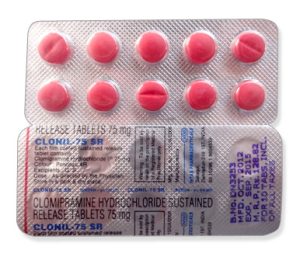
- Administered orally as capsules or tablets (common strengths 10 mg, 25 mg, 50 mg, 75 mg); available in blister packs and bottles depending on region.
- Some sedative or anticholinergic effects (drowsiness, dry mouth) can appear within hours, but meaningful therapeutic benefit for OCD or depression usually begins after 2–4 weeks and may take up to 8–12 weeks for full effect.
- The pharmacologic effect is sustained with daily dosing; individual dosing schedules commonly provide about 24 hours coverage (once-daily or divided dosing), and therapeutic benefits persist with ongoing treatment.
- Do not drink alcohol while taking Anafranil — alcohol increases drowsiness, orthostatic hypotension, cognitive impairment, and may worsen side effects or lower seizure threshold.
- The most common side effect is dry mouth; other frequent adverse effects include drowsiness, constipation, blurred vision, orthostatic hypotension, tachycardia, weight gain, and sweating.
- Would you like to try “anafranil” without a prescription?
Basic Anafranil Information
- INN (International Nonproprietary Name): Clomipramine.
- Brand Names Available In United States: Anafranil (capsules: 25 mg, 50 mg, 75 mg; blister & bottle).
- ATC Code: N06AA04.
- Forms & Dosages: Capsules and tablets are sold in 10 mg (varies), 25 mg, 50 mg, and 75 mg strengths for oral administration.
- Manufacturers In United States: Major originator Novartis Pharma AG (via Sandoz) and other global suppliers include Sun Pharma, Teva, Sanofi and generic manufacturers; local availability may vary by pharmacy.
- Registration Status In United States: Prescription-only (Rx); FDA-approved for obsessive-compulsive disorder in adults and pediatric patients aged 10 years and older.
- OTC / Rx Classification: Prescription-only medication (Rx).
Everyday Use & Best Practices
Many people new to Anafranil ask whether to take it in the morning or at night.
A common practical rule is to start clomipramine at bedtime to reduce daytime drowsiness and orthostatic symptoms.
For obsessive-compulsive disorder, initial bedtime dosing of 25 mg with gradual increases is the usual approach.
Typical maintenance doses for OCD often fall between 100–250 mg per day given in divided doses, with a maximum of 250 mg per day.
If daytime sedation occurs, consider moving the larger portion of the dose to bedtime.
If new or worsening insomnia appears, take the medication earlier in the day after discussing with your prescriber.
Morning Vs Evening Dosing
Start low at night to see how drowsy clomipramine makes you before shifting dose timing.
Patients often begin with 25 mg at bedtime and titrate up in ~25 mg steps as tolerated.
Maintenance dosing commonly ends up split into morning and evening doses for better tolerability and steady blood levels.
Taking With Or Without Meals
Anafranil can be taken with or without food.
Taking it with a light snack often reduces nausea and stomach upset during initiation.
Keep dosing times consistent day to day to maintain steady blood levels.
- Checklist For Titration:
- Week 1: 25 mg at bedtime; note daytime drowsiness and dizziness.
- Week 2: Increase by 25 mg every 3–7 days as tolerated toward target range.
- Weeks 3–4: Reassess benefit and side effects; aim for lowest effective maintenance dose.
| Dosing Schedule | Typical Example |
|---|---|
| Initiation | 25 mg at bedtime for 3–7 days. |
| Titration | Increase by ~25 mg increments every 3–7 days as tolerated. |
| Maintenance | 100–250 mg/day in divided doses; max 250 mg/day. |
Use a simple pillbox routine and a printed daily medication log to track each dose change, missed doses, and side effects.
Keeping a medication checklist helps when you need to report progress to your prescriber or pharmacist.
Safety Priorities
Patients often want to know whether Anafranil is safe for them.
Certain conditions make clomipramine unsuitable or require specialist supervision.
Who Should Avoid It
- Absolute Contraindications: recent myocardial infarction, known hypersensitivity to clomipramine or other tricyclics, concurrent use of monoamine oxidase (MAO) inhibitors, and severe liver disease.
- People with significant cardiac conduction problems or uncontrolled arrhythmias should avoid clomipramine unless monitored closely.
- Patients with a history of seizures require specialist assessment before starting due to seizure risk.
- Uncontrolled narrow-angle glaucoma and severe prostatic hypertrophy are relative contraindications because of anticholinergic effects.
- In older adults, begin at a very low dose and monitor cardiac status and anticholinergic side effects.
Activities To Limit
Until you know how Anafranil affects you, avoid driving, operating heavy machinery, or making high-stakes decisions.
Drowsiness, dizziness, or blurred vision are common during initiation and dose increases.
Avoid or limit alcohol because it increases sedation and the risk of orthostatic hypotension.
- Printable What To Avoid Checklist:
- Avoid alcohol while adjusting dose.
- Do not combine with MAO inhibitors.
- Delay driving or heavy machinery until you know your response.
- Report fainting, palpitations, or sudden vision changes immediately.
Keep an emergency plan that lists contraindicated medications, emergency contacts, and your prescriber’s phone number.
Dosage & Adjustments
People commonly ask how fast clomipramine should be increased and what target ranges look like.
Follow slow titration and aim for the lowest effective dose that controls symptoms.
General Regimen
Typical adult initiation for OCD is 25 mg at bedtime with increases of roughly 25 mg as tolerated.
Many adults stabilize between 100–250 mg daily given in divided doses, with a maximum of 250 mg per day.
For depression or off-label uses, doses are individualized and often lower than the upper OCD range.
Titrate slowly over 2–3 weeks during the acute phase, then seek the lowest effective maintenance dose.
Special Cases
Children and adolescents with OCD usually start at 25 mg and titrate toward approximately 3 mg/kg/day when indicated.
Maximum pediatric dosing in younger adolescents is about 200 mg per day or roughly 3 mg/kg/day, whichever limit applies.
Elderly patients should begin at a very low dose and increase slowly with cardiac monitoring.
For patients with liver or kidney impairment, no formal dose adjustment is defined; use caution and monitor clinically.
If you miss a dose, take it as soon as remembered unless it is close to the next scheduled dose; do not double doses.
| Population | Starting Dose | Target Range | Maximum |
|---|---|---|---|
| Adults (OCD) | 25 mg at bedtime | 100–250 mg/day (divided) | 250 mg/day |
| Children/Adolescents (OCD) | 25 mg initial | ~3 mg/kg/day when indicated | ~200 mg/day in younger adolescents |
| Elderly | Lowest adult dose | Titrate slowly with monitoring | Individualized |
User Testimonials
Patients often ask what others experience on Anafranil before deciding to start.
Real-world reports show both strong benefits and common tolerability challenges.
Positive Reports
Many patients report meaningful reduction in obsessive-compulsive symptoms when SSRIs fail.
Some describe clearer thinking and significantly less time spent on rituals after adequate titration to therapeutic doses.
Patients using brand Anafranil note predictable capsule strengths such as 25 mg, 50 mg, and 75 mg.
Common Challenges
Frequent patient-reported challenges include initial drowsiness, dry mouth, constipation, weight gain, and orthostatic lightheadedness.
Older adults often struggle with urinary retention or blurred vision due to the drug’s anticholinergic burden.
Slow titration is commonly advised by clinicians to reduce oversedation and other early side effects.
- Reported Benefits vs Challenges
- Benefits: robust effect for treatment-resistant OCD, clearer daily functioning, predictable capsule strengths.
- Challenges: drowsiness, dry mouth, constipation, orthostatic hypotension, weight gain.
Keep a symptom diary and share it with your prescriber to guide dose adjustments and supportive measures.
Printable Symptom Diary Template:
- Date | Time | Dose Taken | Side Effects Noted | Severity (1–10) | Notes for Prescriber
Buying Guide
People often ask where to buy Anafranil and whether to choose brand or generic clomipramine.
Anafranil is prescription-only in the U.S. but is available through multiple pharmacy channels.
Pharmacy Sources
Fill prescriptions at retail community pharmacies, hospital pharmacies, or legitimate online/mail-order pharmacies that require a valid U.S. prescription.
Ask your pharmacist about brand (Anafranil) versus generic clomipramine; generics from reputable manufacturers are usually less expensive and equally effective.
In our online pharmacy, anafranil is available without a prescription, with discreet delivery to United States in 5-14 days.
Price Comparison
Costs vary by insurance, manufacturer, dosage, and whether you use a brand or generic product.
Brand-name Anafranil is generally costlier than generics made by Sun Pharma, Teva, Sandoz, or others.
Compare pharmacy discount programs, manufacturer coupons, and legitimate online pharmacies when price shopping.
Consider 90-day fills for stable maintenance dosing to reduce per-dose cost when permitted by your insurer.
| Source | Expected Price Range | Insurance Tips |
|---|---|---|
| Local Retail Pharmacy | Variable; depends on insurance copay | Use insurance card; check for prior authorization if brand requested. |
| Mail-Order / Online Pharmacy | Often lower for 90-day supply | Require valid prescription; compare shipping costs and authentication. |
| Discount Programs / Coupons | Can reduce out-of-pocket cost significantly | Check manufacturer or pharmacy coupon programs before purchase. |
What’s Inside & How It Works
Understanding active ingredients and mechanism helps set expectations for benefit and side effects.
Ingredients Overview
The active ingredient is clomipramine hydrochloride, a tricyclic antidepressant with notable anticholinergic activity.
Common capsule strengths include 25 mg, 50 mg, and 75 mg depending on packaging and region.
Inactive ingredients vary by manufacturer, so check product packaging if you have allergies or sensitivities.
Major manufacturers include Novartis/Sandoz, Sun Pharma, Teva, and others listed by regional suppliers.
Mechanism Basics
Clomipramine blocks reuptake of serotonin and norepinephrine and carries anticholinergic and antihistamine effects.
Its strong serotonin reuptake inhibition is why it is particularly effective for obsessive-compulsive disorder.
The ATC classification is N06AA04 indicating a tricyclic antidepressant (clomipramine).
Expect mood and compulsivity benefits to develop over weeks, while anticholinergic side effects can appear quickly after starting or increasing dose.
| Item | Summary |
|---|---|
| Active Ingredient | Clomipramine Hydrochloride (clomipramine HCl) |
| Mechanism | Serotonin and norepinephrine reuptake inhibition; anticholinergic properties |
| ATC Code | N06AA04 |
Main Indications
Patients want to know for which conditions Anafranil is approved and when it is used off-label.
Approved Uses
- Anafranil (clomipramine) is FDA-approved in the U.S. for the treatment of obsessive-compulsive disorder in adults and pediatric patients aged 10 years and older.
- Some countries additionally list indications for depressive syndromes; approvals vary by region.
Off-Label Uses
- Clinicians sometimes use clomipramine off-label for treatment-resistant depression, panic disorder, or other anxiety disorders when SSRIs have failed.
- Guidelines often place clomipramine as a second-line or adjunct option for refractory OCD due to efficacy combined with a higher side-effect burden than SSRIs.
| Indication | Age Group | Notes |
|---|---|---|
| Obsessive-Compulsive Disorder | Adults and ≥10 years | FDA-approved; often used when SSRIs are insufficient. |
| Depression / Other | Adults | Often off-label; clinician discretion required. |
Interaction Warnings
Interactions are a major safety concern with clomipramine.
Always provide your prescriber and pharmacist a complete medication list including OTCs and supplements.
Food Interactions
There are no major food restrictions listed, but avoid alcohol because it increases sedation and orthostatic hypotension risk.
Grapefruit is not widely listed as a direct contraindication, but metabolic interactions can vary by formulation and manufacturer, so check with your pharmacist.
Drug Conflicts
Major risks include concurrent MAO inhibitors, which can cause life-threatening serotonin syndrome.
Anafranil should not be combined with other strong serotonergic agents or certain antipsychotics without specialist oversight.
Be cautious with other QT-prolonging drugs and additional anticholinergic medications because of additive effects.
- Do Not Combine Checklist
- MAO inhibitors (absolute contraindication).
- Other strong serotonergic drugs without prescriber instruction.
- Medications that prolong QT interval unless carefully monitored.
- Other anticholinergics that increase urinary retention or vision problems.
| Risk Level | Examples |
|---|---|
| High Risk | MAO inhibitors; combinations that can cause serotonin syndrome. |
| Moderate Risk | Other anticholinergics; QT-prolonging agents; some antipsychotics. |
Latest Evidence & Insights
Clinicians and patients want the current perspective on where clomipramine fits in therapy.
Recent trial summaries confirm clomipramine’s strong efficacy for OCD, especially after SSRI failure.
Recent Trial Takeaways
- Clomipramine is highly effective for OCD and can outperform some SSRIs in treatment-resistant cases.
- Comparative studies show higher rates of anticholinergic and cardiovascular side effects for clomipramine versus SSRIs.
- Use trial evidence to balance potential benefit against tolerability in shared decision-making.
Practical Clinical Insights
Best outcomes often follow slow titration and combination with behavioral therapy such as exposure and response prevention (ERP).
Baseline cardiac screening (ECG) is advised for older patients or those with cardiac risk factors.
Pharmacovigilance focuses on anticholinergic burden, weight gain, and orthostatic hypotension monitoring.
- Clinician Baseline Workup Checklist:
- Medication review for serotonergic or QT-risk drugs.
- Baseline ECG for patients with cardiac history or elderly patients.
- Assess liver/renal function if clinically indicated.
Alternative Choices
Patients commonly ask how Anafranil compares to SSRIs and other strategies.
Choice depends on efficacy needs, side-effect tolerability, and comorbid conditions.
SSRIs Vs Anafranil
Many guidelines recommend SSRIs such as sertraline, fluoxetine, or paroxetine as first-line treatments for OCD.
SSRIs generally have lower anticholinergic and cardiotoxic risk compared with clomipramine.
Anafranil can be more effective in SSRI-resistant cases due to stronger serotonin reuptake inhibition, but it carries more side effects.
When To Consider Other TCAs Or Augmentation
Other TCAs like imipramine or augmentation with antipsychotics and continued CBT/ERP may be options for partial responders.
If anticholinergic burden is a major concern, prioritize SSRIs or non-anticholinergic treatments first.
| Option | When To Consider | Monitoring Needs |
|---|---|---|
| SSRIs (Sertraline, Fluoxetine, Paroxetine) | First-line for OCD; better tolerability | Standard SSRI monitoring |
| Clomipramine (Anafranil) | Second-line or SSRI-resistant OCD | Cardiac monitoring, anticholinergic vigilance |
| Augmentation (Antipsychotic, CBT) | Partial response to single agent | Drug-specific safety checks and therapy adherence |
Regulation Snapshot
Regulatory status affects access, packaging, and storage recommendations.
Clomipramine and Anafranil are prescription-only in most regions with similar approved uses.
FDA / EMA Status
In the United States, Anafranil is prescription-only and FDA-approved for OCD in adults and children aged 10 years and older.
EMA and national regulators typically list clomipramine as prescription-only, often with approvals focused on OCD and sometimes certain depressive syndromes.
Prescription And Dispensing Notes
Always obtain a valid prescription and keep medications in original packaging when possible.
Common capsule strengths in the U.S., UK, and Canada include 25 mg, 50 mg, and 75 mg in blister packs or bottles.
Store at 20–25°C (68–77°F) and protect from light and moisture during transport and storage.
| Region | Regulatory Status | Storage / Transport |
|---|---|---|
| United States | Prescription-only; FDA-approved for OCD ≥10 years | Store at 20–25°C (68–77°F); protect from light and moisture |
| Europe | Prescription-only; country-specific approvals | Follow local product labeling; 20–25°C recommended |
| Canada | Prescription-only; similar availability to U.S. | Store at 20–25°C (68–77°F) |
FAQ Section
Short answers to common patient questions can help manage expectations and safety.
Common Patient Questions
| Question | Answer |
|---|---|
| Will Anafranil Make Me Sleepy? | Often at first; drowsiness commonly lessens over several weeks as tolerance develops. |
| How Long Until Benefit? | Improvement in OCD symptoms can take several weeks and full effect may require longer consistent treatment. |
| Can I Stop Suddenly? | No. Taper gradually under prescriber supervision to avoid withdrawal symptoms and relapse. |
Quick Answers To Safety Concerns
- If you miss a dose, take it when remembered unless it is close to your next dose; do not double up.
- Overdose requires emergency care; watch for cardiac arrhythmias and severe anticholinergic effects.
- If pregnant or breastfeeding, discuss risks versus benefits with your prescriber before starting or continuing treatment.
Ask your prescriber about ECG screening, other medications that increase serotonin, and any history of cardiac disease before starting therapy.
Guidelines For Proper Use
Clear steps for starting, monitoring, and stopping help reduce risks and improve outcomes.
Starting, Titrating, And Monitoring
Begin with 25 mg at bedtime for adults with OCD and increase slowly by about 25 mg increments as tolerated.
Acute titration commonly occurs over 2–3 weeks with regular review of side effects and efficacy.
Baseline assessments should include a medication list, cardiac history, ECG if indicated, renal and hepatic assessment if necessary, and pregnancy status.
Long-Term Management And Stopping
For maintenance, regularly review benefit versus side effects and aim for the lowest effective dose.
When discontinuing, taper slowly under supervision to minimize withdrawal and relapse risk.
Store medication at 20–25°C (68–77°F) in original packaging and keep an emergency card listing contraindications and prescriber contact information.
- Monitoring & Taper Template
- Baseline: medication review, ECG if cardiac risk, basic labs as indicated.
- Titration Phase: clinic follow-up every 1–2 weeks for side effects and dose adjustment.
- Maintenance: review every 3 months or as clinically indicated.
Delivery Across United States
| City | Region | Delivery Time |
|---|---|---|
| New York | Northeast | 5-7 days |
| Los Angeles | West | 5-7 days |
| Chicago | Midwest | 5-7 days |
| Houston | South | 5-7 days |
| Phoenix | West | 5-7 days |
| Philadelphia | Northeast | 5-7 days |
| San Antonio | South | 5-9 days |
| San Diego | West | 5-7 days |
| Dallas | South | 5-7 days |
| San Jose | West | 5-9 days |
| Austin | South | 5-9 days |
| Jacksonville | South | 5-9 days |
| Columbus | Midwest | 5-9 days |
| Charlotte | South | 5-9 days |