Casodex
In brief
- Casodex (bicalutamide) is normally a prescription-only medicine available from pharmacies, hospitals and licensed distributors (originator AstraZeneca and various generics); while it is officially prescription-only in most countries, some pharmacies or online suppliers may offer it without a prescription—this may be illegal and is not recommended due to safety and monitoring needs.
- Casodex is used in hormonal therapy for prostate cancer (metastatic disease in combination with LHRH analogs and as monotherapy for certain locally advanced cases); it is a nonsteroidal anti-androgen that binds to androgen receptors and blocks the action of testosterone and dihydrotestosterone on prostate cancer cells.
- Typical adult doses are 50 mg once daily when given with an LHRH analog for metastatic prostate cancer; 150 mg once daily may be used as monotherapy for locally advanced non‑metastatic disease in some regions; not indicated for children.
- Casodex is given orally as film‑coated tablets (commonly 50 mg and 150 mg strengths), taken once daily with or without food.
- Effects begin within days, with symptomatic improvement sometimes seen within days to weeks; biochemical responses (PSA decline) and full clinical benefit may take several weeks.
- The drug is dosed once daily and has a long elimination half‑life (on the order of days), so pharmacologic activity is sustained beyond 24 hours; treatment is usually continued chronically until disease progression or unacceptable toxicity.
- Avoid heavy alcohol use; alcohol can worsen liver injury and may increase side effects—use caution and discuss alcohol use with your prescriber.
- The most common side effects include hot flashes, breast tenderness/enlargement (gynecomastia), fatigue, gastrointestinal upset (nausea, diarrhea, constipation), edema and elevated liver enzymes—liver function should be monitored regularly.
- Would you like to try casodex without a prescription?
Basic Casodex Information
- INN (International Nonproprietary Name): Bicalutamide
- Brand Names Available In United States: Casodex (AstraZeneca), available as 50 mg and 150 mg tablets in bottles or blister packs.
- ATC Code: L02BB03 (Endocrine therapy → Hormone antagonists and related agents → Anti-androgens → Bicalutamide).
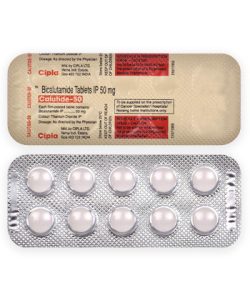
- Forms & Dosages: Film-coated tablet forms sold as 50 mg and 150 mg strengths, commonly packaged in blisters of 28, 30, 60, or 100 tablets.
- Manufacturers In United States: Originator manufacturer is AstraZeneca; major generics and suppliers globally include Cipla, Intas, and R-Pharm.
- Registration Status In United States: FDA-approved for metastatic and locally advanced prostate cancer and is prescription-only.
- OTC / Rx Classification: Prescription only (Rx) in all countries per product information.
Everyday Use & Best Practices
Morning Vs Evening Dosing
Do patients worry about when to take casodex and how to avoid missed doses?
Use casodex (bicalutamide) at the same time every day to maintain steady blood levels.
The standard regimen per product information is 50 mg once daily when given with an LHRH analog, and 150 mg once daily if used as monotherapy in regions where monotherapy is permitted.
Choose a dosing time that fits your routine, such as morning with breakfast or evening before bed, and stick with it.
If a dose is missed, take it as soon as remembered unless it is almost time for the next scheduled dose; do not double up.
Practical adherence tools work well for daily dosing.
- Set a phone alarm for the chosen time each day.
- Use a pill organizer labeled by day.
- Pair the dose with a habit like brushing teeth or morning coffee.
- Ask a caregiver to check your checklist if needed.
Taking With Or Without Meals
Does food change how bicalutamide works or what you should expect?
Bicalutamide tablets can be taken with or without food according to product data.
Swallow the film-coated tablet whole with water and do not crush or chew the tablet.
Store the medication in its original packaging, protected from light and moisture, and keep it below 25°C (77°F).
Practical daily-life integration tips help keep daily dosing reliable.
| Strength | Common Use | Typical Patient Routine |
|---|---|---|
| 50 mg | Combination therapy with LHRH analogs | Once-daily with breakfast; pill organizer suggested |
| 150 mg | Monotherapy in select regions | Once-daily at bedtime to reduce perceived daytime side effects |
Checklist for dose reminders: alarm, pill box, calendar alert, or caregiver prompt.
Safety Priorities
Who Should Avoid It
Who must not take casodex and what to check before starting?
Bicalutamide is contraindicated in women and children and should not be used by these groups.
Known hypersensitivity to bicalutamide or any tablet excipients is an absolute contraindication.
Severe hepatic impairment is a hard contraindication because liver function strongly affects safety.
Use caution and specialist input for patients with mild-to-moderate liver disease; monitoring is required.
Patients taking warfarin or other narrow-therapeutic-index drugs should discuss interaction risks and monitoring with their prescriber and pharmacist.
Before you start, confirm these items with your clinician.
- Medical history review, including liver disease and prior hepatotoxic drugs.
- Current medicines list, including anticoagulants and supplements.
- Allergy history focused on drug excipients.
- Baseline liver function tests arranged.
Activities To Limit
What day-to-day activities need extra caution while on casodex?
Common side effects include dizziness, fatigue, weakness, and edema, so avoid driving or heavy machinery until you know how the drug affects you.
Alcohol can worsen fatigue and may add strain to the liver, so limit intake especially early in treatment.
Regular liver-function monitoring (ALT/AST) is required in the first months; set calendar reminders for labs.
Safety checks and emergency signs should be easy to spot and act on.
- Avoid driving if feeling dizzy or unusually sleepy.
- Limit alcohol, especially during initiation.
- Inform clinicians before starting new medicines or supplements.
Emergency signs checklist (seek immediate care):
- Yellowing of skin or eyes (jaundice).
- Severe abdominal pain or persistent nausea.
- High fever with rash or breathing difficulty.
Dosage & Adjustments
General Regimen
What dose will most adults receive and how is it supplied?
The usual adult dose for metastatic prostate cancer when given with an LHRH analog is 50 mg once daily.
In regions that permit monotherapy for locally advanced non-metastatic disease, the typical monotherapy dose is 150 mg once daily.
Tablets are available as 50 mg and 150 mg, supplied in blisters or bottles.
Elderly patients generally require no dose adjustment and standard adult dosing applies.
There is no pediatric indication; bicalutamide is contraindicated in children.
| Indication | Typical Dose | Formulation |
|---|---|---|
| Metastatic (with LHRH analog) | 50 mg once daily | 50 mg tablet |
| Locally Advanced (monotherapy, where approved) | 150 mg once daily | 150 mg tablet |
Special Cases
What changes are needed for kidney or liver disease and how long is treatment continued?
Renal impairment usually does not require dose adjustment according to product data.
Liver impairment demands caution; bicalutamide is not recommended in moderate or severe hepatic dysfunction and specialist input is advised.
Duration varies: metastatic disease may continue indefinitely until progression or unacceptable toxicity, while locally advanced therapy commonly runs at least two years per protocol.
If a dose is missed, take it as soon as remembered unless it is nearly time for the next dose; do not take a double dose.
- Baseline LFTs before start, repeat early in treatment.
- Consider alternative therapies if hepatic function is unstable.
- Document therapy duration and reassessment schedule in the chart.
User Testimonials
Positive Reports
What do patients commonly say when casodex is working well for them?
Many patients report improved PSA control and manageable side effects when bicalutamide is used alongside LHRH analogs.
Positive comments often highlight the convenience of simple once-daily dosing with a 50 mg tablet in combination therapy.
Patients also praise the easy-to-swallow film-coated tablets and clear manufacturer packaging from AstraZeneca or trusted generics.
Creating a predictable routine, such as pairing the tablet with breakfast, reduces missed doses and lowers anxiety about adherence.
- Convenience of once-daily oral dosing.
- Effectiveness as part of combined androgen blockade.
- Tolerability for many patients with routine monitoring.
Common Challenges
What side effects and practical problems do patients typically report?
Common challenges include hot flashes, breast tenderness or gynecomastia, fatigue, and mild gastrointestinal symptoms.
Some patients experience elevated liver enzymes that require temporary pauses or closer monitoring, and a minority switch therapy due to severe side effects.
Body changes and sexual side effects can have a meaningful psychological impact that warrants open discussion with clinicians.
Patients benefit from support groups and counselling when coping with these changes.
Checklist topics to raise at clinic visits include fatigue, mood changes, breast symptoms, and lab scheduling.
Buying Guide
Pharmacy Sources
Where can patients obtain casodex and what should they verify on arrival?
Casodex (AstraZeneca) and bicalutamide generics are prescription-only medicines worldwide according to product information.
In the United States, Casodex is marketed in 50 mg and 150 mg tablets by AstraZeneca, while generics and other suppliers are available in some markets.
Fill options include local retail pharmacies, hospital pharmacies, and licensed mail-order or specialty pharmacies.
Verify brand and strength on the label and keep prescriptions and prior-authorization paperwork accessible.
Checklist for legitimate sourcing: valid prescription, manufacturer name, lot number, and expiry date on the package.
Price Comparison
How do costs vary and what can patients check to reduce out-of-pocket expense?
Prices depend on brand, insurance coverage, tablet strength, and packaging size such as 30, 60, or 100 tablets.
Compare cash price, insurance copay, and any manufacturer assistance or patient support programs available.
For generics, reputable pharmacy discount programs or manufacturer assistance may lower costs.
In our online pharmacy, casodex is available without a prescription, with discreet delivery to United States in 5-14 days.
| Option | Out-Of-Pocket | Typical Delivery |
|---|---|---|
| Retail Pharmacy (insured) | Copay varies by plan | 1-5 days (local pickup) |
| Mail-Order Specialty | May have lower monthly cost | 5-14 days |
| Generic Discount Program | Lowest cash price for generics | 5-9 days |
What’s Inside & How It Works
Ingredients Overview
What does a casodex tablet contain and how to check authenticity on the pack?
The active ingredient is bicalutamide (INN) and tablets are marketed in 50 mg and 150 mg strengths.
The originator manufacturer is AstraZeneca and major generics seen globally include Cipla, Intas, and R-Pharm.
Excipients may vary by manufacturer, so check the package leaflet if you have allergies to non-active ingredients.
Packaging formats include bottles and blister packs commonly in counts of 28, 30, 60, or 100 tablets.
Items to check on the label: INN (bicalutamide), strength (50 mg or 150 mg), manufacturer name, batch/lot number, and expiry date.
Mechanism Basics
How does bicalutamide act against prostate cancer in simple terms?
Bicalutamide is a nonsteroidal anti-androgen classified under ATC code L02BB03.
It works by blocking androgen receptors in prostate tissue and preventing testosterone from activating cancer cells.
When combined with an LHRH analog it contributes to combined androgen blockade, reducing androgen-driven tumor growth.
For patients, the straightforward takeaway is that bicalutamide stops testosterone from signaling prostate cancer cells to grow.
| Androgen Source | Drug Action |
|---|---|
| Testosterone from testes/adrenals | Bicalutamide blocks receptor activation |
Main Indications
Approved Uses
What are the official indications for casodex in the United States and elsewhere?
Regulatory data indicate bicalutamide is approved for metastatic and locally advanced prostate cancer and is prescription-only.
Typical adult indications include use with LHRH analogs for metastatic disease at 50 mg daily and monotherapy at 150 mg daily for select locally advanced non-metastatic cases in jurisdictions that permit it.
Treatment duration varies: metastatic therapy may continue indefinitely, and locally advanced therapy commonly lasts at least two years per clinical protocols.
| Indication | Typical Dose | Usual Duration |
|---|---|---|
| Metastatic Prostate Cancer | 50 mg once daily (with LHRH) | Until progression or unacceptable toxicity |
| Locally Advanced (where approved) | 150 mg once daily (monotherapy) | Typically ≥2 years |
Off-Label Uses
Are there other situations where clinicians might consider bicalutamide?
Some clinicians use bicalutamide off-label in specific androgen-driven conditions, but off-label use should be specialist-led and clearly documented.
Because bicalutamide is contraindicated in women and children, off-label options are limited and require careful consideration.
Before any off-label use, discuss the evidence, the expected benefit, and the monitoring plan with your oncologist.
- Ask about alternative therapies and why bicalutamide is selected.
- Request a written monitoring schedule and informed consent for off-label use.
Interaction Warnings
Food Interactions
Does food change casodex absorption or safety?
Bicalutamide may be taken with or without food and no major food interactions are recorded in product information.
Consistent timing with meals can improve adherence but is not required for drug action.
Avoid large amounts of alcohol when starting therapy to reduce liver strain and the chance of increased fatigue.
Simple do’s and don’ts help with day-to-day management.
- Do take the tablet at the same time each day.
- Do limit alcohol, especially during initiation and if liver tests rise.
Drug Conflicts
Which medicines are high-priority flags when a patient is prescribed casodex?
Bicalutamide can affect liver enzymes and may interact with drugs metabolized by the liver, such as warfarin; close INR monitoring is advised for patients on warfarin.
Inform all prescribers and pharmacists about bicalutamide use to allow medicines reconciliation.
Always report prescription, over-the-counter drugs, and herbal supplements, since some supplements alter liver enzymes.
- Flag anticoagulants (warfarin) for monitoring.
- Flag strong CYP inhibitors or inducers for potential interaction risk.
- Check interaction potential before starting new medications.
Latest Evidence & Insights
Regulatory And Clinical Context
Where does bicalutamide fit in modern prostate cancer therapy?
Bicalutamide has a long regulatory history and was authorized in Europe since 1995 and is FDA-approved for prostate cancer indications.
It remains a core anti-androgen in combination therapy despite the arrival of newer androgen receptor inhibitors.
Recent oncology trends favor next-generation agents like enzalutamide and apalutamide in certain settings, but bicalutamide continues to be used where tolerability and cost are considerations.
Clinicians balance efficacy, side-effect profiles, and patient comorbidities when choosing therapy.
What Patients Should Know Now
What practical points should patients discuss with their oncologist at the start of therapy?
Expect routine liver tests and symptom checks early in therapy and a clear monitoring schedule outlined by the care team.
If the disease progresses or side effects become intolerable, newer alternatives such as enzalutamide or apalutamide may be discussed.
Keep informed using trusted sources such as oncology clinics and regulatory agency updates and bring questions to appointments.
Consider asking for a one-page comparison of efficacy, cost, and side-effect profiles between bicalutamide and newer anti-androgens to guide shared decision-making.
Alternative Choices
Other Anti-Androgens
What are the main drug alternatives to bicalutamide?
Competitors include flutamide (L02BB01) and nilutamide (L02BB02) as older anti-androgens, and enzalutamide (L02BB04) and apalutamide (L02BB06) as newer agents with different efficacy and side-effect profiles.
Each agent has unique monitoring needs and toxicity considerations, which influence choice in clinic.
| Drug | Notes | Common Issues |
|---|---|---|
| Flutamide | Older anti-androgen | Hepatotoxicity concerns |
| Enzalutamide | Next-generation AR inhibitor | Different efficacy profile; seizures rare |
Non-Drug And Combination Approaches
How is bicalutamide used as part of broader treatment strategies?
Bicalutamide is frequently paired with LHRH analogs such as goserelin, leuprorelin, or triptorelin for combined androgen blockade.
Other strategies include surgical castration or switching to newer oral AR inhibitors depending on disease stage and patient preference.
When discussing alternatives, consider benefits, side effects, monitoring burden, and cost as part of shared decision-making.
- Discuss surgical versus medical castration if appropriate.
- Review monitoring needs for any change in therapy.
- Consider patient lifestyle and cost when choosing alternatives.
Regulation Snapshot
Global Approval Status
Where is bicalutamide authorized and how do brand names vary?
Bicalutamide is registered globally for prostate cancer treatment and Casodex is a commonly recognized brand in the US, UK, EU, and Canada.
The EMA authorized it in 1995, and the FDA lists approvals for metastatic and locally advanced prostate cancer.
Brand naming and packaging vary by country; examples include Casodex in many Western markets and local generics or transliterations in other regions.
Because regulatory approvals for monotherapy (150 mg) differ by jurisdiction, confirm local guidance with your oncologist or pharmacist.
Regulatory Practicalities For Patients
What practical regulatory details should patients keep in mind when obtaining casodex?
Casodex is prescription-only worldwide and counterfeit risk exists, so always buy from licensed pharmacies and verify manufacturer and packaging details.
Keep prescription records and ask the pharmacist for the patient leaflet and approved labeling, which includes storage instructions, contraindications, and side-effect lists.
If traveling, be aware that packaging and brand names may differ; carry a copy of your prescription and the drug information when crossing borders.
FAQ Section
Quick Answers Patients Ask
Can I drive while taking casodex?
If you feel dizzy or unusually fatigued, avoid driving until you are stable.
Can women take bicalutamide?
No; bicalutamide is contraindicated in women.
What should I do if I miss a dose?
Take the missed dose as soon as you remember unless it is almost time for the next dose; do not double up.
How should I store the tablets?
Store below 25°C (77°F) in the original pack, protected from moisture and light.
When To Call The Clinic
Which signs require urgent medical attention?
Seek urgent care for jaundice, severe abdominal pain, high fever with rash, difficulty breathing, or severe allergic reactions.
Call your provider if routine labs show elevated ALT/AST or if you have worsening fatigue, unexplained swelling, or bleeding while on anticoagulants.
Routine lab schedule suggestion: baseline LFTs, then early checks at one month and three months, then as directed by your oncology team.
- Emergency signs: jaundice, severe abdominal pain, high fever with rash, breathing difficulty.
- Routine follow-up: baseline labs, month 1, month 3, then per protocol.
Guidelines For Proper Use
Start-Up Checklist
What should be completed before the first dose of casodex?
Confirm the indication and correct dose—50 mg with LHRH analogs or 150 mg monotherapy where approved.
Review the medical history for liver disease and prior drug reactions and list all current medications including warfarin.
Order baseline labs including liver function tests, CBC, and PSA.
Acquire the medication from a licensed pharmacy and set daily reminders to support adherence.
- Confirm prescription and dosing instructions.
- Baseline LFTs, CBC, PSA ordered.
- Medication source verified and reminders set.
Ongoing Monitoring & Follow-Up
What ongoing checks and timelines should patients expect while on therapy?
Monitor liver enzymes regularly, especially during the first months of therapy, and schedule PSA testing as directed by the oncology team.
Report any new breast tenderness, gynecomastia, severe fatigue, GI symptoms, or mood changes promptly.
For long-term metastatic therapy expect periodic reassessment for disease progression and tolerability and consider regimen change when needed.
Suggested monitoring intervals: baseline, 1 month, 3 months, then adjusted per clinician guidance.
- Baseline LFTs and PSA before starting.
- Early follow-ups at 1 month and 3 months for LFTs.
- Ongoing PSA checks per oncology protocol.
Delivery Across United States
| City | Region | Delivery Time |
|---|---|---|
| New York | Northeast | 5-7 days |
| Los Angeles | West | 5-7 days |
| Chicago | Midwest | 5-7 days |
| Houston | South | 5-7 days |
| Phoenix | West | 5-7 days |
| Philadelphia | Northeast | 5-7 days |
| San Antonio | South | 5-9 days |
| San Diego | West | 5-7 days |
| Dallas | South | 5-7 days |
| San Jose | West | 5-7 days |
| Austin | South | 5-9 days |
| Jacksonville | South | 5-9 days |
| Fort Worth | South | 5-9 days |
| Columbus | Midwest | 5-9 days |
| Charlotte | South | 5-9 days |