Clomid
In brief
- Clomid (clomifene/clomiphene) may be available from some pharmacies and online sellers, but in most major markets it is a prescription-only medicine (Rx) and should be obtained through a licensed healthcare provider.
- Clomid is used mainly to treat ovulatory infertility in women, including anovulation and some cases of PCOS; it works as a selective estrogen receptor modulator (SERM) that stimulates the release of hormones needed to trigger ovulation.
- The usual dose is 50 mg once daily for 5 days, typically starting on cycle days 2–5; if needed, the dose may be increased up to 150 mg/day under medical supervision. Off-label use in men is often 25–50 mg/day.
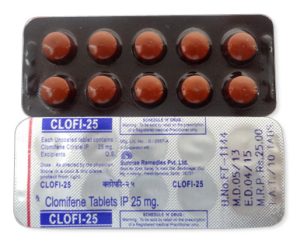
- The form of administration is an oral tablet, commonly available in 25 mg, 50 mg, and occasionally 100 mg scored tablets.
- Clomid usually starts working during the treatment cycle, with ovulation often occurring about 5–10 days after the last dose, though timing can vary by person.
- The duration of action is generally one treatment cycle after a 5-day course; ovulation induction protocols may be repeated for up to 6 cycles if directed by a clinician.
- Alcohol is best avoided or limited, especially when trying to conceive, because it may worsen side effects like dizziness, nausea, and headache and can interfere with fertility treatment.
- The most common side effects are hot flashes, ovarian enlargement or pelvic discomfort, abdominal bloating, nausea, headache, and sometimes visual disturbances.
- Would you like to try Clomid without a prescription?
Basic Clomid Information
- INN (International Nonproprietary Name): Clomifene, also spelled Clomiphene in the United States.
- Brand names available in United States: Clomid and Serophene are the main U.S. brand names.
- ATC Code: G03GB02.
- Forms & dosages: Oral tablets only.
Common strengths include 25 mg, 50 mg, and occasionally 100 mg scored tablets for dose splitting.
No approved creams, vials, or non-oral forms are available. - Manufacturers in United States: Sanofi Aventis, EMD Serono, and other U.S. and global generics.
- Registration status in United States: FDA approved.
- OTC / Rx classification: Prescription only (Rx) in major markets.
- Standard dosages by condition: For ovulatory failure or anovulation, 50 mg/day for 5 days; for off-label male infertility or hypogonadism, 25–50 mg/day under physician monitoring.
Everyday Use And Best Practices
Taking Clomid well comes down to routine, timing, and a few simple safety habits.
This prescription-only oral tablet is used most often as a fertility medicine, and the most common strength is clomiphene citrate 50mg, with 25 mg tablets also used and 100 mg scored tablets sometimes available for splitting when prescribed.
Most people do best when they take the Clomid pill at the same time every day and keep the 5-day cycle exactly as directed, because clomiphene tablets work best when the schedule stays consistent.
Morning dosing or evening dosing can both work, so the main goal is not the clock but consistency and following the prescriber’s plan for Clomid daily use.
Food is usually not a problem, so Clomid can be taken with or without meals.
If nausea shows up, taking the tablet with a light snack, avoiding a heavy or greasy meal, and drinking water slowly can make the dose easier to tolerate.
- Before you start: confirm the start day of the cycle, check the tablet strength, and set phone reminders for each dose.
- Every day during treatment: take the tablet at the same time, keep the 5-day course steady, and watch for side effects such as bloating or hot flashes.
If a dose is missed, take it when remembered unless it is close to the next dose, and never double up.
Store clomiphene tablets below 25°C (77°F) in a dry place and keep them away from children.
Safety Priorities
Who should avoid Clomid, and when does a normal fertility plan need extra caution?
Clomiphene safety starts with knowing the hard stop situations and the people who need closer monitoring.
Absolute contraindications include pregnancy, liver disease or abnormal liver function, unexplained uterine bleeding, ovarian cysts not due to PCOS, pituitary or other hormone-dependent tumors, and known hypersensitivity to clomifene or tablet components.
Extra monitoring is needed in PCOS, fibroid uterus, visual disturbances, and thromboembolic risk because Clomid warnings include ovarian enlargement, ovarian hyperstimulation, and vision-related problems.
If persistent blurred vision, spots, or other visual changes occur, stop the medicine and call a clinician right away.
Pelvic pain, worsening bloating, or discomfort that seems to be building can signal ovarian enlargement, so strenuous activity may need to be paused until the prescriber checks what is going on.
Athletes should also know that clomifene is on the World Anti-Doping Agency Prohibited List, so clearance matters before use.
| Situation | What It Means | What To Do |
|---|---|---|
| Do not use | Pregnancy, liver disease, unexplained bleeding, certain ovarian cysts, hormone-dependent tumors, hypersensitivity | Avoid Clomid and contact the prescriber |
| Use only with monitoring | PCOS, fibroid uterus, visual disturbances, thromboembolic risk | Follow closer follow-up and cycle monitoring |
| Call urgently | Persistent blurred vision, spots, severe pelvic pain, worsening bloating | Stop the tablet and seek medical review |
Dosage And Adjustments
What dose is usually started first, and when does the prescriber change it?
The standard Clomid regimen for ovulatory failure or anovulation is 50 mg per day for 5 days, usually starting on cycle days 2 through 5.
If response is not adequate, the prescriber may adjust the dose, but the usual maximum is 150 mg per day.
Treatment may be repeated for up to 6 cycles, with breaks as needed, because longer use is not recommended without specialist review.
For off-label male infertility or hypogonadism, physicians may use 25–50 mg per day with monitoring, but that should stay under clinical supervision rather than self-directed dosing.
Children are not indicated, elderly use is not routine, and severe hepatic dysfunction is a contraindication.
Split tablets may be used when prescribed, since scored 100 mg tablets exist in some markets and can be divided for the correct dose.
| Condition | Starting Dose | Maximum Dose | Typical Duration |
|---|---|---|---|
| Ovulatory failure or anovulation infertility | 50 mg/day | Up to 150 mg/day | 5 days, starting days 2–5 of cycle, repeated for up to 6 cycles |
| Male infertility or hypogonadism, off-label | 25–50 mg/day | Titrated by response | Long-term, physician-monitored use |
User Testimonials
What do people usually notice first when they start a fertility pill like Clomid?
Patient-centered experiences are useful because they show what daily life often feels like, but they never guarantee the same result for every person.
Many people say clomiphene reviews feel encouraging because cycles become easier to track, ovulation seems more predictable, and the medicine is simpler than injectable fertility drugs.
Others mention hot flashes, bloating, mood changes, and headache, especially during the waiting period after each cycle.
- What people like: simpler dosing, fewer steps than injections, and a clearer sense of when ovulation may happen.
- What people struggle with: hot flashes, abdominal bloating, mood swings, headaches, follow-up visits, and the stress of waiting for cycle results.
Some users also describe the emotional weight of repeated cycles and the inconvenience of extra appointments and monitoring.
Testimonials should never replace medical advice, especially if visual symptoms or severe pelvic pain appear.
Buying Guide
Can Clomid be bought legally in the United States, and how should buyers compare options?
Clomid is Rx-only, so safe purchasing starts with a licensed pharmacy and a valid prescription in the U.S. market.
Brand and generic options can include Clomid, Serophene, Omifin, Clostilbegyt, ClomHEXAL, Fertomid/Fertin, and other local trade names used around the world.
Most packages are blister packs of 50 mg tablets, although strengths can vary by market.
Price shopping usually comes down to insurance coverage, generic Clomid availability, pharmacy coupons, and mail-order options.
Unverified online sellers should be avoided because fertility medicines need prescription oversight and product authenticity matters.
In our online pharmacy, clomid is available without a prescription, with discreet delivery to United States in 5-14 days.
| Brand | Common Market | Typical Form |
|---|---|---|
| Clomid | United States, Canada, global | 50 mg tablets in blisters |
| Serophene | United States | 50 mg tablets in blisters |
| Omifin | Latin America, Europe | 50 mg tablets |
| Clostilbegyt | Central and Eastern Europe | 50 mg tablets |
What’s Inside And How It Works
What exactly is clomifene, and why does a fertility pill help with ovulation?
Clomifene is the international nonproprietary name, while Clomiphene is the U.S. spelling that many patients recognize.
This synthetic ovulation stimulant is classified under ATC code G03GB02, which places it among sex hormones and modulators of the genital system.
In practical terms, Clomid helps trigger ovulation by influencing hormone signaling, which is why it is used for ovulatory disorders and anovulation infertility.
It is taken by mouth only, and no approved creams, injections, vials, or other non-oral forms are available.
- What the medicine is: clomiphene citrate, a synthetic ovulation stimulant.
- How it’s taken: oral tablets only, usually in 25 mg, 50 mg, or sometimes scored 100 mg strengths.
- Why it’s used: to help the body release an egg on a more predictable cycle.
Main Indications
Is Clomid mainly for women trying to conceive, and does it have any other use?
The main approved use is ovulatory failure or anovulation infertility, including PCOS-related ovulation problems and other ovulatory disorders.
The goal is straightforward: help the body release an egg on a predictable cycle so conception becomes more possible.
Clomiphene for infertility is often paired with cycle tracking and follow-up, because timing and monitoring matter as much as the tablet itself.
Off-label use in male infertility or hypogonadism is sometimes considered, but it should always be physician-monitored.
Clomid is not a contraceptive, and it is not meant for long-term hormone modulation.
| Use | Status | Practical Note |
|---|---|---|
| Ovulatory failure / anovulation infertility | Approved use | Used to help induce ovulation |
| Male infertility / hypogonadism | Off-label | Requires physician monitoring |
| Long-term hormone control or contraception | Not indicated | Not a birth control medicine |
Interaction Warnings
What should be checked before starting Clomid with other medicines or supplements?
Food interactions are usually not a major issue, but taking the tablet consistently with or without meals helps routine adherence.
The bigger concern is drug conflicts and overlapping fertility therapies, so every prescription, over-the-counter product, supplement, and fertility treatment should be reviewed with the clinician.
Special caution is needed if another medicine may already be affecting hormones or fertility planning.
Visual changes or severe abdominal pain are not routine interaction issues; they are warning signs that need prompt medical attention.
- Tell your doctor if you take: fertility drugs, hormone-related medicines, supplements, or any treatment that may affect ovulation.
- Tell your doctor if you notice: blurred vision, spots, severe pelvic pain, or worsening bloating.
Latest Evidence And Insights
Why do some clinicians still use Clomid when newer fertility options exist?
Current clomiphene evidence shows that Clomid remains widely used, but letrozole is increasingly considered in some ovulation-induction scenarios.
Evidence-based care often includes cycle tracking and close follow-up so response and safety can be checked early.
Newer does not always mean better for every person, because the right choice depends on the diagnosis, goals, side effects, and how much monitoring is available.
- What clinicians consider today: diagnosis, PCOS status, prior response, visual side effects, and cycle monitoring access.
- What often changes the plan: poor response, pelvic discomfort, or the need for a different fertility pathway.
- What still matters most: predictable follow-up rather than medication alone.
Alternative Choices
What if Clomid is not the best fit, or the response is not strong enough?
Letrozole, gonadotropins, and metformin are the main fertility medication alternatives that clinicians may consider depending on the plan.
Letrozole versus Clomid often comes down to diagnosis and prior response, while gonadotropins are injectable and need more intensive monitoring.
Metformin is usually an adjunct in PCOS rather than a direct substitute for ovulation induction tablets.
Switching on your own is not a good idea, because the choice should be based on clinical assessment rather than convenience alone.
| Option | Route | When It May Be Considered |
|---|---|---|
| Letrozole (Femara) | Oral | Poor response or a clinician-preferred ovulation plan |
| Gonadotropins (FSH, HMG) | Injectable | When a more intensive induction strategy is needed |
| Metformin | Oral | Adjunct use in PCOS |
Regulation Snapshot
Is Clomid legal and approved in the United States and other regions?
Clomiphene is FDA approved in the United States and is prescription only because of safety concerns and the need for monitoring.
It is also authorized through national agencies in the European Union, Rx-only in Canada, and registered in many countries worldwide, including ANMDMR in Romania.
That global oversight is one reason the drug keeps both the U.S. spelling and the INN spelling in circulation.
| Region | Status | Access Note |
|---|---|---|
| United States | FDA approved, Rx only | Prescription-only access |
| European Union | Authorized via national agencies | Regulated market access |
| Canada | Rx only | Prescription required |
| Romania | Registered with ANMDMR | Leaflets and product details accessible through the portal |
Frequently Asked Questions
What is Clomid used for?
It is used mainly for infertility treatment linked to ovulatory failure, anovulation, PCOS, and other ovulatory disorders.
How long do you take Clomid?
The usual course is 5 days, and treatment may be repeated for up to 6 cycles if the prescriber recommends it.
What if I miss a dose?
Take it when remembered unless the next dose is close, and never double up.
Can I take Clomid with food?
Yes, food is usually not a problem, so Clomid can be taken with or without meals.
Why do I need eye-symptom warnings?
Blurred vision, spots, or other visual disturbances can signal a serious reaction and should be reported right away.
Is Clomid available as a capsule or injection?
No, it is available as oral tablets only, with no approved non-oral forms.
Can I take Clomid while pregnant?
No, current pregnancy is an absolute contraindication.
Guidelines For Proper Use
How do you use Clomid safely from the first tablet to the last follow-up visit?
Start on the day your prescriber selected, keep appointments, track symptoms, and report pain or vision changes promptly.
Do not double a missed dose, and if an overdose is suspected, get immediate medical attention because nausea, vomiting, visual disturbances, and ovarian enlargement can occur.
Storage should stay below 25°C (77°F) in a dry place, out of reach of children, and the medicine should not be used after expiration.
Longer use beyond 6 cycles is generally not recommended without specialist review.
- Daily steps: take the tablet as directed, keep the timing consistent, and watch for pelvic discomfort, bloating, hot flashes, or headache.
- Emergency steps: stop the medicine and seek help for persistent blurred vision, spots, severe abdominal pain, or worsening bloating.
- Storage steps: keep clomiphene tablets in a dry place below 25°C (77°F) and away from children.
Delivery Across United States
| City | Region | Delivery time |
|---|---|---|
| New York | Northeast | 5-7 days |
| Los Angeles | West | 5-7 days |
| Chicago | Midwest | 5-7 days |
| Houston | South | 5-7 days |
| Phoenix | West | 5-7 days |
| Philadelphia | Northeast | 5-7 days |
| San Antonio | South | 5-7 days |
| San Diego | West | 5-7 days |
| Dallas | South | 5-7 days |
| San Jose | West | 5-7 days |
| Austin | South | 5-7 days |
| Jacksonville | South | 5-9 days |
| Fort Worth | South | 5-9 days |
| Columbus | Midwest | 5-9 days |
| Charlotte | South | 5-9 days |