Detrol La
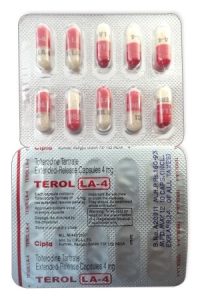
In brief
- In our pharmacy, you can buy detrol la without a prescription, with delivery in 5–14 days throughout United States. Discreet and anonymous packaging.
- Detrol LA is used to treat overactive bladder (urgency, frequency, and urge incontinence). It is an antimuscarinic (muscarinic receptor antagonist) that reduces involuntary detrusor muscle contractions.
- The usual dose for adults is Detrol LA 4 mg once daily (may be reduced to 2 mg once daily if needed); immediate‑release Detrol is typically 2 mg twice daily (may be lowered to 1 mg twice daily).
- The form of administration is oral: extended‑release capsules (Detrol LA, commonly 2 mg or 4 mg) and immediate‑release tablets (1 mg, 2 mg).
- The effect begins pharmacologically within hours (peak plasma typically 1–4 hours depending on formulation); some patients notice symptom improvement within days to about one week.
- The duration of action for the ER (LA) formulation is approximately 24 hours with once‑daily dosing; the immediate‑release form has a shorter duration (requiring twice‑daily dosing).
- Alcohol warning: avoid or limit alcohol while taking detrol la—alcohol can increase drowsiness, dizziness and other anticholinergic effects and may impair driving or operating machinery.
- The most common side effect is dry mouth. Other frequent effects include headache, constipation, dizziness, blurred vision, indigestion, and drowsiness.
- Would you like to try detrol la without a prescription?
Basic Detrol La Information
- INN (International Nonproprietary Name): Tolterodine (often as tolterodine tartrate).
- Brand Names Available In United States: Detrol and Detrol LA are the branded forms commonly supplied by Pfizer in the U.S., with Detrol tablets in 1 mg and 2 mg immediate‑release strengths and Detrol LA extended‑release capsules in 2 mg and 4 mg strengths; several generics are also marketed by manufacturers such as Accord, Sandoz, Teva, and Sun Pharma.
- ATC Code: G04BD07.
Everyday Use & Best Practices
Morning Vs Evening Dosing
Should I take detrol la in the morning or at night?
Detrol LA is an extended‑release tolterodine capsule usually taken once daily, with a standard adult dose of 4 mg once daily; the dose may be reduced to 2 mg if needed.
Immediate‑release Detrol tablets are typically dosed 2 mg twice daily and can be lowered to 1 mg twice daily if tolerance is an issue.
Take your dose at the same time every day for steady symptom control and to build a routine.
If you notice drowsiness, especially as an older adult, discuss the timing with your prescriber rather than moving doses on your own; your clinician may suggest a nighttime schedule after assessment.
Taking With Or Without Meals
Do I need to eat with detrol la?
Label directions do not demand a strict food rule, so detrol la (tolterodine ER) may be taken with or without food.
Some people prefer taking the ER capsule with food to reduce stomach upset and to keep timing consistent day to day.
- Quick Dosing Rules
- Detrol LA 4mg — once daily; may reduce to Detrol LA 2mg if needed.
- Detrol (IR) 2mg — twice daily; may lower to 1mg twice daily for intolerance.
- Take at the same time every day to support dosing consistency.
- If you miss a dose, take it when remembered unless it’s almost time for the next dose; do not double doses.
Practical daily-life integration includes setting a phone alarm, keeping pills in original Rx packaging at room temperature (20–25 °C / 68–77 °F), using a weekly pillbox to separate IR vs ER products, and maintaining a medication checklist for clinic visits.
Safety Priorities
Who Should Avoid It
Who must not take tolterodine?
Detrol and Detrol LA are prescription medicines that are contraindicated in people with urinary retention, gastric retention, uncontrolled narrow‑angle glaucoma, known hypersensitivity to tolterodine or any excipient, and severe hepatic impairment.
Use caution if you have bladder outflow obstruction, severe constipation, or controlled narrow‑angle glaucoma, and discuss risk with your clinician before starting tolterodine.
| Absolute Contraindications | Relative Contraindications / Caution |
|---|---|
| Known hypersensitivity to tolterodine or excipients | Bladder outflow obstruction |
| Urinary retention | Gastrointestinal obstructive disorders |
| Gastric retention | Decreased GI motility (eg, severe constipation) |
| Uncontrolled narrow‑angle glaucoma | Controlled narrow‑angle glaucoma (use with care) |
| Severe hepatic impairment | Renal impairment (dose adjustment may be needed) |
Activities To Limit
What should I avoid while starting tolterodine?
Avoid driving, operating heavy machinery, or performing tasks requiring sharp attention until you know how tolterodine affects you because dizziness and drowsiness are possible side effects.
Limit alcohol while initiating or adjusting dose since alcohol can increase drowsiness.
Monitor bowel habits and report signs of urinary retention (inability to pass urine, painful retention) or severe constipation promptly.
- Before You Start — Screening Questions
- Do you have glaucoma or unexplained vision problems?
- Do you have liver disease or reduced kidney function?
- Do you have a history of urinary or gastric retention or severe constipation?
- Are you taking other medications with anticholinergic effects?
Dosage & Adjustments
General Regimen
What is the usual dosing schedule?
Detrol LA (extended release) is commonly prescribed as 4 mg once daily for adults; reduce to 2 mg once daily if not tolerated.
Immediate‑release Detrol tablets are typically given as 2 mg twice daily and can be reduced to 1 mg twice daily for intolerance.
Treatment duration is individualized, and many patients remain on tolterodine long term with periodic reassessment.
Special Cases
Are there special dosing rules for certain patients?
Tolterodine is not indicated for pediatric use and should not be used in children because clinical trials did not show benefit.
Elderly patients generally do not require formal dose reduction, but frail older adults may benefit from a lower starting dose due to increased sensitivity to anticholinergic effects like drowsiness and blurred vision.
In moderate to severe renal impairment consider starting ER detrol la at 2 mg daily or IR detrol at 1 mg twice daily.
Severe hepatic impairment is a contraindication; mild to moderate hepatic disease requires the lowest effective dose and careful monitoring.
| Form | Typical Dose | Adjustment Notes |
|---|---|---|
| Detrol LA (ER capsule) | 4 mg once daily | Reduce to 2 mg once daily if not tolerated; 2 mg recommended initial dose in moderate‑severe renal impairment |
| Detrol (IR tablet) | 2 mg twice daily | Can lower to 1 mg twice daily; use 1 mg twice daily in renal impairment |
| Pediatric | Not indicated | Do not use — no proven benefit |
- Checklist For Dose Changes At Clinic Visits
- Assess symptom relief and number of urgency episodes.
- Review side effects, especially dry mouth, constipation, dizziness, and drowsiness.
- Check renal and hepatic function when relevant.
- Consider alternative agents if anticholinergic burden is high.
User Testimonials
Positive Reports
What have patients said about detrol la?
- Many users report fewer urgency episodes and reduced nighttime bathroom trips within days to weeks after starting Detrol LA 4mg.
- Patients often appreciate once‑daily extended‑release dosing for convenience and better adherence compared with twice‑daily IR tablets.
- Some users say improved bladder control increases confidence for outings and social activities.
- Several people note improved sleep once nocturnal urgency subsides.
Common Challenges
What side effects do people commonly report?
- Dry mouth is the most frequently mentioned complaint.
- Other common issues include constipation, headache, dizziness, blurred vision, and drowsiness — older adults report drowsiness and slower thinking more often.
- Some patients reduce dose or stop treatment due to anticholinergic side effects.
- Practical coping tips shared by users include sugar‑free gum or lozenges for dry mouth and increasing fluids and dietary fiber to ease constipation after discussing with their clinician.
| Benefits | Side Effects |
|---|---|
| Reduced urgency and frequency | Dry mouth (very common) |
| Fewer nighttime bathroom trips | Constipation, dizziness, blurred vision |
| Once‑daily ER dosing improves adherence | Drowsiness, especially in elderly |
Buying Guide
Pharmacy Sources
Where can I buy detrol la?
Detrol and Detrol LA are prescription‑only medicines in standard regulatory guidance, with branded Detrol/Detrol LA and multiple generics available at community pharmacies and large online pharmacies in the United States.
Our online pharmacy lists detrol la as available without a prescription, with discreet delivery to United States in 5-14 days.
Check local pharmacies, mail‑order services, and manufacturer patient assistance programs if cost is a barrier.
Price Comparison
How much does detrol la cost?
Branded Detrol LA 4 mg usually costs more than generics, and price varies by pharmacy, insurance formulary tier, and available coupons.
Use pharmacy price comparison tools and manufacturer discounts to find the best price, and always confirm an online seller requires a valid prescription and ships from a licensed U.S. source if purchasing through third parties.
| Source | Pros | Cons |
|---|---|---|
| Local Community Pharmacy | Immediate pickup, pharmacist counseling | May have higher retail price |
| Big‑Box / Chain Pharmacy | Wide availability, insurance processing | Variable stock of brand vs generic |
| Online Pharmacy / Mail Order | Convenience, potential savings | Delivery time and need to verify legitimacy |
- Authenticity Checklist
- Confirm the seller requires a valid Rx.
- Verify packaging, lot number, and expiry date on delivery.
- Prefer licensed U.S. pharmacies and look for pharmacy accreditation where possible.
What’s Inside & How It Works
Ingredients Overview
What is the active ingredient in detrol la?
The active ingredient is tolterodine, most commonly presented as tolterodine tartrate in manufactured products.
Detrol immediate‑release tablets come in 1 mg and 2 mg strengths, while Detrol LA extended‑release capsules are available in 2 mg and 4 mg formulations.
Inactive ingredients vary by manufacturer, so check the leaflet if you have allergies to excipients.
Mechanism Basics
How does tolterodine reduce bladder symptoms?
Tolterodine is an antimuscarinic (anticholinergic) agent that reduces involuntary bladder muscle contractions by blocking muscarinic receptors in the bladder, thereby lowering urgency and frequency.
Extended‑release (LA) capsules deliver tolterodine steadily over about 24 hours to allow once‑daily dosing and smoother symptom control compared with immediate‑release formulations.
| Formulation | Release Pattern | Practical Implication |
|---|---|---|
| Immediate‑Release (IR) | Faster release, shorter duration | Requires twice‑daily dosing; more variable symptom control |
| Extended‑Release (LA) | Slow, steady release over 24 hours | Once‑daily dosing; smoother symptom control and often better adherence |
Main Indications
Approved Uses
What is detrol la approved to treat?
Tolterodine (Detrol and Detrol LA) is FDA‑approved for treating overactive bladder (OAB) symptoms, including urinary urgency, frequency, and urge incontinence.
It is commonly added when behavioral therapies and pelvic floor training need pharmacologic support.
Off‑Label Uses
Is tolterodine used for anything off‑label?
Occasionally tolterodine is used for neurogenic detrusor overactivity in select cases under specialist supervision, but pediatric use is not indicated because trials have not shown benefit.
| Nonpharmacologic First‑Line | Pharmacologic Options |
|---|---|
| Bladder training | Tolterodine (Detrol/Detrol LA) |
| Pelvic floor exercises | Mirabegron (beta‑3 agonist) as an alternative with fewer anticholinergic effects |
| Fluid management | Other antimuscarinics (solifenacin, oxybutynin, fesoterodine, trospium) |
- When To Consider Tolterodine
- Persistent urgency/frequency despite behavioral measures.
- Urge incontinence affecting quality of life.
- Patient preference for oral medication and tolerability of anticholinergic side effects.
Interaction Warnings
Food Interactions
Are there any food restrictions with tolterodine?
The product label does not mandate specific meal restrictions for detrol la, but taking the ER capsule with food can reduce stomach upset for some patients and helps maintain consistent absorption timing.
Drug Conflicts
Which drugs interact with tolterodine?
Tolterodine is metabolized via CYP pathways, and combining it with potent CYP3A4 inhibitors such as ketoconazole can increase tolterodine exposure and raise the risk of adverse effects.
Use caution with other anticholinergic drugs because effects like dry mouth, constipation, and cognitive impairment can be additive.
Review your medication list for CNS depressants and drugs affecting heart rhythm and consult a pharmacist about potential interactions.
| Drug/Category | Interaction |
|---|---|
| Ketoconazole (potent CYP3A4 inhibitor) | Increased tolterodine levels; greater adverse effects |
| Other anticholinergics | Additive anticholinergic burden (dry mouth, constipation, cognitive effects) |
| CNS depressants / Alcohol | May increase drowsiness and dizziness |
- Meds To Tell Your Provider
- Any antifungal (ketoconazole) or strong CYP3A4 inhibitor.
- Other anticholinergics, tricyclic antidepressants, or antipsychotics.
- Drugs that affect kidney or liver function.
Latest Evidence & Insights
What does the evidence say about tolterodine?
Randomized trials show tolterodine reduces urgency episodes and frequency versus placebo, and extended‑release formulations like Detrol LA 4 mg match IR efficacy while offering once‑daily convenience.
Dry mouth is the most commonly reported side effect across trials, and clinicians are mindful of cumulative anticholinergic burden, particularly in older patients where cognitive risk is a concern.
Clinical practice balances symptomatic benefit against side effects, with mirabegron or nonpharmacologic strategies considered when anticholinergic intolerance or cognitive risk exists.
- Key Trial Outcomes
- ER tolterodine provides symptom control comparable to IR formulations with improved adherence potential.
- Anticholinergic side effects remain the leading cause of discontinuation.
- Dosing adjustments for renal or hepatic impairment are evidence‑informed and routinely applied.
- Follow‑Up Assessment Checklist
- Evaluate efficacy via bladder diary after 4–12 weeks.
- Monitor adverse effects, hydration, and bowel function.
- Assess cognitive status in older adults periodically.
Alternative Choices
Main Drug Alternatives
What other medicines treat overactive bladder?
Common alternatives include solifenacin (Vesicare), oxybutynin (oral or patch), fesoterodine (Toviaz), trospium, and mirabegron (Myrbetriq), each with different efficacy and side‑effect tradeoffs.
When To Switch
When should a clinician consider changing therapy?
Consider switching if symptoms remain uncontrolled after an adequate trial of tolterodine, if side effects are intolerable (severe dry mouth, cognitive symptoms), or if contraindications emerge such as severe hepatic impairment.
| Drug | Dosing | Pros / Cons |
|---|---|---|
| Solifenacin (Vesicare) | Once daily | Longer half‑life; similar anticholinergic risk |
| Oxybutynin | Oral or patch | Effective but higher CNS side effects; patch may reduce systemic effects |
| Trospium | Varies by formulation | Lower CNS penetration; option when cognitive effects are a concern |
| Mirabegron | Once daily | Different mechanism (beta‑3 agonist); fewer anticholinergic effects |
- Decision Checklist For Switching
- Confirm an adequate trial (weeks) at tolerated dose.
- Evaluate anticholinergic burden and cognitive risk.
- Consider class switch (eg, to mirabegron) when anticholinergic effects limit therapy.
Regulation Snapshot
Approval Status
Is tolterodine approved by regulators?
Tolterodine (Detrol and Detrol LA) is FDA‑approved in the United States for overactive bladder and is registered in many other regions, including EMA jurisdictions, Canada, Australia, and countries listed by ANMDMR (Romania) where Detrol LA is available as 2 mg and 4 mg ER capsules.
Legal & Storage Notes
What are the legal and storage rules?
Detrol and Detrol LA are prescription medicines by regulatory classification, and the product should be stored at room temperature (20–25 °C / 68–77 °F) in original packaging protected from moisture and heat; do not freeze.
| Region | Approval Status |
|---|---|
| United States | FDA‑approved Rx product for OAB |
| European Union | Approved; country‑specific registrations |
| Romania | Registered by ANMDMR; Detrol LA 2 mg and 4 mg ER capsules |
| Canada / Australia / Asia | Registered Rx products |
- Storage & Transport Checklist
- Store at 20–25 °C (68–77 °F) in original container.
- Keep away from children and pets.
- Verify lot number and expiry date on receipt.
FAQ Section
Quick Answers
- Is Detrol LA once daily? — Yes; standard ER dose is 4 mg once daily and may be reduced to 2 mg.
- Can I drive while taking tolterodine? — Avoid driving until you know whether drowsiness or dizziness occur.
- Is it safe in pregnancy? — Use only if clearly needed; safety in pregnancy is not established.
- What if I miss a dose? — Take when remembered unless it’s almost time for the next dose; do not double doses.
Troubleshooting Tips
- Dry Mouth — Use sugar‑free gum or lozenges and maintain oral hydration.
- Constipation — Increase dietary fiber and fluids and discuss a stool softener with your clinician if needed.
- Blurred Vision / Urinary Retention — Stop medication and seek medical evaluation promptly.
- Suspected Overdose — Severe anticholinergic signs (fast heartbeat, hallucinations, severe drowsiness) require emergency care.
Guidelines For Proper Use
Monitoring & Follow Up
How should tolterodine be monitored?
Baseline assessment should include symptom frequency and a bladder diary when practical, and review of concomitant anticholinergic medications.
Reassess efficacy and adverse effects after 4–12 weeks and periodically thereafter if therapy continues.
Monitor renal and hepatic function based on clinical judgment and avoid use in severe hepatic impairment.
For older adults, assess cognitive status and overall anticholinergic burden regularly.
- Monitoring Schedule
- Baseline: bladder diary, medication review, liver/kidney history.
- 4–12 Weeks: assess symptom improvement and side effects.
- Ongoing: periodic reassessment and cognition checks for older adults.
Practical Storage And Disposal
How should unused detrol la be disposed of?
Store detrol la at 20–25 °C (68–77 °F) in the original container and keep it out of reach of children.
Dispose of unused tablets or capsules following pharmacy take‑back programs or local disposal guidance; do not flush medications unless the guidance explicitly permits it.
- Check pharmacy or local government drug take‑back events.
- If no take‑back is available, follow local guidance for household disposal in sealed containers.
- Remove personal information from prescription labels before disposing of containers.
Delivery Across United States
| City | Region | Delivery time |
|---|---|---|
| New York City | New York | 5-7 days |
| Los Angeles | California | 5-7 days |
| Chicago | Illinois | 5-7 days |
| Houston | Texas | 5-7 days |
| Phoenix | Arizona | 5-7 days |
| Philadelphia | Pennsylvania | 5-7 days |
| San Antonio | Texas | 5-7 days |
| San Diego | California | 5-9 days |
| Dallas | Texas | 5-9 days |
| San Jose | California | 5-9 days |
| Austin | Texas | 5-9 days |
| Jacksonville | Florida | 5-9 days |
| Fort Worth | Texas | 5-9 days |
| Columbus | Ohio | 5-9 days |
| Charlotte | North Carolina | 5-9 days |