Gabapentin
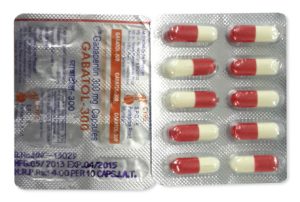
In brief
- Gabapentin is sold internationally under many brand names, and in some online pharmacies it may be available without a prescription; however, in most countries it is officially a prescription-only medicine (Rx).
- Gabapentin is used to treat partial seizures and neuropathic pain, including postherpetic neuralgia. It works by binding to the alpha-2-delta subunit of voltage-gated calcium channels in the nervous system, which helps reduce abnormal nerve signaling and pain transmission.
- The usual adult dose is 300 mg to start, then titrated to 900–1,800 mg per day in divided doses; the maximum dose is commonly 3,600 mg per day, depending on the condition and tolerability.
- Gabapentin is available as capsules, tablets, extended-release tablets, and oral solution.
- It usually starts working within a few hours, but noticeable pain relief or seizure control may take several days to weeks as the dose is gradually increased.
- The duration of action is about 6 to 8 hours for immediate-release forms, while extended-release products last longer and may be taken once daily.
- Do not drink alcohol while taking gabapentin, because alcohol can increase drowsiness, dizziness, and the risk of falls or impaired coordination.
- The most common side effects are dizziness and drowsiness; fatigue, headache, nausea, and swelling in the legs or hands can also occur.
- Would you like to try gabapentin without a prescription?
Basic Gabapentin Information
- INN (International Nonproprietary Name): Gabapentin
- Brand Names Available In United States: Neurontin, Gralise, Horizant, Gabarone, Fanatrex
- ATC Code: N03AX12
- Forms & Dosages: Capsules, tablets, extended-release tablets, oral solution; common strengths include 100 mg, 300 mg, 400 mg, 600 mg, 800 mg, and 250 mg/5 mL solution
- Manufacturers In United States: Viatris, Depomed, Arbor Pharmaceuticals, various generic manufacturers
- Registration Status In United States: FDA-approved for epilepsy and neuropathic pain
- OTC / Rx Classification: Prescription-only medication (Rx)
Everyday Use And Best Practices
Morning Versus Evening Dosing
People often ask whether gabapentin should be taken in the morning or at bedtime.
The usual answer depends on the prescriber’s plan, the symptom pattern, and whether gabapentin side effects like drowsiness show up after a dose.
Some people feel more sleepy after taking gabapentin 300 mg, so an evening dose may fit daily life better for them.
For others, morning dosing works better when symptoms are worse during the day or when the regimen calls for three doses a day.
How to make gabapentin easier to remember:
- Set phone alarms for each dose.
- Use a pill organizer for the week.
- Link the dose to a meal, coffee, or bedtime routine.
- Keep one dose in the same spot each day, away from heat and moisture.
- Follow the routine your clinician gave you, especially if the dose is being titrated.
Taking With Or Without Meals
Gabapentin can generally be taken with or without food unless the specific product directions say otherwise.
Taking it with food may help some people feel less stomach upset.
That said, extended-release products such as Gralise or Horizant may have special directions, so the label matters.
Daily-use tips:
- Take it the same way each day if possible.
- Do not change timing just because a single dose feels stronger or weaker.
- Swallow capsules or tablets as directed.
- Ask the pharmacist if the product is immediate-release or gabapentin ER.
- Follow the exact label and pharmacy instructions every time.
Safety Priorities
Who Should Avoid It
The absolute contraindication for gabapentin is known hypersensitivity to gabapentin or any excipients.
That screening matters before starting or continuing treatment, because even familiar medicines can cause trouble when a prior allergy exists.
Extra caution is also needed in kidney impairment, older adults, people with a history of substance use, and anyone with suicidal thoughts.
When kidney function is reduced, dose changes may be needed.
Who needs extra caution:
| Group | Why It Matters | Practical Note |
|---|---|---|
| Kidney impairment | Gabapentin is cleared by the kidneys | Dose reduction may be required |
| Older adults | Higher chance of sedation and falls | Review the dose carefully |
| Substance use history | Misuse and co-abuse have been reported | Monitoring may need to be tighter |
| Suicidal thoughts | Mood changes need attention | Report symptoms promptly |
Activities To Limit
Gabapentin side effects can include dizziness, drowsiness, and slowed reaction time.
Those effects can make ordinary tasks risky, especially early in treatment or after a dose increase.
Activities to avoid or limit:
- Driving, especially at night or after a new dose.
- Using ladders, step stools, or rooftop equipment.
- Operating machinery at work.
- Drinking alcohol with the medicine.
- Getting up quickly at night, especially if balance is poor.
- Childcare tasks that require fast reflexes, like carrying a child on stairs.
Older adults should pay special attention to fall risk, since even mild gabapentin warning signs can make a stumble more likely.
Dosage And Adjustments
General Regimen
The starting gabapentin dosage depends on the condition being treated.
For partial seizures and neuropathic pain, treatment often starts at 300 mg once daily or 300 mg three times daily, then increases gradually.
Gradual titration helps improve tolerability and may reduce early dizziness or sleepiness.
Postherpetic neuralgia often starts at 300 mg on day 1 and increases step by step.
Typical adult dosing patterns are shown below.
| Condition | Usual Starting Dose | Usual Maintenance Dose | Maximum Dose | Notes |
|---|---|---|---|---|
| Partial seizures, adjunct treatment | 300 mg once daily or 3 times daily | 900–1800 mg/day in 3 divided doses | 3600 mg/day | Titrate as tolerated |
| Neuropathic pain | 300 mg at bedtime or 3 times daily | 900–1800 mg/day in 3 divided doses | 3600 mg/day | Titrate per response |
| Postherpetic neuralgia | 300 mg on day 1, then increase gradually | 1800 mg/day | 1800 mg/day | Gralise is once daily up to 1800 mg |
Special Cases
Gabapentin dosage review is important before each refill when kidney function may have changed.
Renal adjustment is required when CrCl is less than 60 mL/min.
Children in some countries use weight-based dosing for epilepsy, with treatment based on age and body weight.
Liver impairment usually does not require adjustment because gabapentin is not metabolized hepatically.
Elderly patients often need dose review because kidney function may be lower even when the person feels well.
Dose review questions before each refill:
- Has kidney function changed since the last visit?
- Has the dose been missed often?
- Are dizziness or drowsiness getting worse?
- Has the patient started a new medicine?
- Has the prescriber changed the target dose for nerve pain or seizures?
User Testimonials
Positive Reports
Patient-reported experiences often describe practical day-to-day changes rather than dramatic overnight results.
These comments are not proof that gabapentin works for everyone, but they help set expectations.
What people often notice first:
- Less burning or shooting nerve pain.
- Fewer nighttime symptoms that interrupt sleep.
- Easier sleep once the dose is stabilized.
- Appreciation for generic availability and familiar brand names like Neurontin, Gabarone, and Fanatrex.
- Relief that several strengths are available, including gabapentin 300 mg.
Common Challenges
Other gabapentin reviews sound less positive, especially when side effects show up early.
Sleepiness, brain fog, dizziness, swelling, and weight gain are common reasons people call the pharmacy or their clinician.
Three-times-daily dosing can also be hard to remember during work shifts or family routines.
| Helpful Effects | Common Problems |
|---|---|
| Less nerve pain | Drowsiness and fatigue |
| Better sleep | Brain fog and dizziness |
| Fewer nighttime symptoms | Swelling and weight gain |
| Generic options available | Hard-to-remember 3-times-daily schedules |
Some people also say it feels slow to work, which is why side effects often decide whether they stay on treatment.
Buying Guide
Pharmacy Sources
In the United States, gabapentin is prescription-only medication in normal retail practice.
For that reason, purchase should be limited to licensed pharmacies.
Common U.S. products include Neurontin, Gralise, Horizant, Gabarone, and Fanatrex.
Pack sizes and formulations can vary by region and product.
How to verify a legitimate pharmacy:
- Check that the pharmacy is licensed in the United States.
- Make sure the product name and strength match the prescription.
- Look for a real pharmacist contact option.
- Confirm the site shows a physical pharmacy presence or clear corporate details.
- Be cautious if a site offers prescription medicines with no screening at all.
For access and convenience, our online pharmacy is available without a prescription, with discreet delivery to United States in 5-14 days.
Price Comparison
Generic gabapentin is usually less expensive than brand-name versions.
That said, the smartest comparison is per pill or per month, not just the bottle price.
Extended-release products may cost more because of their formulation.
Price comparison factors:
| Factor | What To Compare |
|---|---|
| Generic versus brand | Generic gabapentin cost is usually lower |
| Per-pill price | Helps compare different package sizes |
| Per-month price | Useful for long-term therapy |
| Extended-release products | Often cost more than standard capsules |
| Insurance and discount programs | Can change the final out-of-pocket price |
What’s Inside And How It Works
Ingredients Overview
The INN is gabapentin.
Different products may use different fillers or capsule materials, but the active ingredient stays the same.
Available dosage forms include capsules, tablets, extended-release tablets, and oral solution.
Common strengths vary by product and form, as shown below.
| Form | Common Strengths | Notes |
|---|---|---|
| Capsules | 100 mg, 300 mg, 400 mg | Hard gelatin capsules |
| Tablets | 600 mg, 800 mg | Scored or unscored |
| Extended-release tablets | 300 mg, 600 mg | Examples include Gralise and Horizant |
| Oral solution | 250 mg/5 mL | Used for pediatric or special-needs dosing |
Mechanism Basics
Gabapentin helps calm overactive nerve signals.
That simple action is why gabapentin for nerve pain and gabapentin for seizures are the main uses people hear about.
It is classified as an antiepileptic and carries ATC code N03AX12.
How it may help:
- May reduce abnormal nerve signaling linked to pain.
- May support seizure control as an adjunct treatment.
- May help lower discomfort from postherpetic neuralgia.
- May fit long-term treatment plans because chronic use is common in epilepsy and neuropathic pain.
Main Indications
Approved Uses
In the United States, gabapentin is FDA-approved for epilepsy and neuropathic pain.
Adjunct treatment for partial seizures is one of its key labeled uses.
Postherpetic neuralgia and diabetic peripheral neuropathy are important pain-related indications discussed in routine care.
| Indication | Common Dose Pattern | Notes |
|---|---|---|
| Partial seizures | 300 mg once or 3 times daily, then titrate | Used as adjunct treatment |
| Postherpetic neuralgia | 300 mg day 1, then gradual increase | Maintenance often reaches 1800 mg/day |
| Neuropathic pain | 300 mg at bedtime or 3 times daily | Titrate per response |
Off-Label Uses
Some clinicians also use gabapentin off-label for anxiety, migraine prophylaxis, and restless leg syndrome in certain regions.
Those uses are not the same as FDA-approved indications.
Patients should ask the clinician why gabapentin was chosen for a specific symptom, especially when other gabapentin uses are being considered.
- Anxiety in selected patients.
- Migraine prevention in selected cases.
- Restless leg syndrome in some regions.
Interaction Warnings
Food Interactions
There are no major food restrictions for most people taking gabapentin.
Still, directions can vary by product, especially with extended-release forms.
Alcohol can increase sedation and should be avoided or limited.
Before taking gabapentin with food or drinks:
- Check whether the product is immediate-release or extended-release.
- Follow the exact label instructions.
- Use food if it helps with stomach upset.
- Avoid alcohol if dizziness or drowsiness is already a problem.
- Ask about Horizant or Gralise instructions if that is the product you received.
Drug Conflicts
Gabapentin interactions are most concerning when sedation stacks up.
Opioids, benzodiazepines, sleep medicines, and other CNS depressants can make dizziness and drowsiness worse.
That combination also matters in people with opioid or sedative co-abuse risk.
Because gabapentin is cleared through the kidneys, medicines that affect renal function may matter indirectly.
| High-Risk Combination | Why It Matters | Practical Action |
|---|---|---|
| Opioids | Additive sedation and breathing risk | Tell the prescriber and pharmacist |
| Benzodiazepines | More drowsiness and slowed reaction time | Use caution and monitor closely |
| Sleep medicines | Can worsen impairment | Avoid mixing unless directed |
| Other CNS depressants | Stacked sedation | Share the full medication list |
Always share prescription drugs, over-the-counter medicines, and supplements with a clinician before starting treatment.
Latest Evidence And Insights
What Current Use Patterns Show
Gabapentin remains widely used because it is generic, familiar, and available in many strengths.
That helps explain why gabapentin evidence still draws attention in neuropathic pain and epilepsy support.
What has changed in real-world use:
- Generic prescribing is common.
- Brand names such as Neurontin, Gralise, and Horizant remain recognizable.
- Multiple strengths make titration easier.
- Extended-release products are still used for selected patients.
Ongoing Concerns
Misuse and dependence concerns continue, especially when gabapentin is combined with opioids or benzodiazepines.
Reports of abrupt withdrawal symptoms after stopping suddenly have also shaped prescribing habits.
That is why many clinicians emphasize careful monitoring and gradual tapering.
| Benefit Areas | Concern Areas |
|---|---|
| Neuropathic pain management | Misuse risk in some settings |
| Epilepsy support | Withdrawal if stopped abruptly |
| Generic availability | Need for monitoring with sedatives |
| Many dosage forms | Need for careful tapering |
Alternative Choices
Similar Medicines
Pregabalin, sold as Lyrica, is the closest commonly discussed alternative to gabapentin.
Both are used for nerve pain, but dosing, cost, and side effects may differ.
| Medicine | Main Similarity | Practical Difference |
|---|---|---|
| Gabapentin | Used for nerve pain and seizures | Often less expensive as a generic |
| Pregabalin | Similar mechanism | Different dosing and pricing |
Other Options For Nerve Pain
Duloxetine and amitriptyline are also used in some cases for nerve pain.
The best option depends on the condition, age, kidney function, and side effect tolerance.
When an alternative may be considered:
- Gabapentin causes too much dizziness or drowsiness.
- Dosing three times daily is too hard to follow.
- Kidney function changes the safety picture.
- The prescriber wants a different strategy for nerve pain options.
Regulation Snapshot
U.S. Status
Gabapentin is FDA-approved for epilepsy and neuropathic pain in the United States.
It is Rx-only in the U.S. market.
Common product types include capsules, tablets, extended-release tablets, and oral solution.
| Country | Status | Examples |
|---|---|---|
| United States | FDA-approved, prescription-only | Neurontin, Gralise, Horizant, Gabarone, Fanatrex |
| European Union | EMA-approved generics and branded forms | Regional branded products |
| Romania | Registered with ANMDMR | Gabapentin Arena, Gabapentin Aurobindo, and others |
International Availability
Regional brand names vary widely, with over 300 names used globally.
Packaging, leaflet details, and strengths can differ by country.
- Branding may differ from one market to another.
- Pack sizes are not uniform.
- Strengths can vary by local approval.
- Patient information leaflets may follow national agency rules.
Faq Section
Common Patient Questions
Can I take gabapentin at night? Yes, many people do, especially if drowsiness is an issue.
Can I take it with food? Yes, gabapentin can usually be taken with or without food unless the label says otherwise.
What if I miss a dose? Take it as soon as you remember unless it is almost time for the next dose; do not double up.
How long does it take to work? That varies by condition and dose, and some people need gradual titration before they notice a change.
When To Call A Clinician
Call a clinician urgently if any of these show up:
- Severe dizziness.
- Allergic reaction.
- Swelling.
- Mood changes or confusion.
- Overdose symptoms such as drowsiness, ataxia, dizziness, double vision, or slurred speech.
- Trouble breathing when combined with sedatives.
Guidelines For Proper Use
How To Take It Safely Every Day
Gabapentin should be taken exactly as prescribed, with gradual titration when the dose is being changed.
Chronic treatment is common for epilepsy and neuropathic pain.
Do not stop suddenly without medical advice.
Storage matters too: keep it at 15–30°C (59–86°F), away from light and moisture, and protect solutions from freezing.
Daily use do’s and don’ts:
- Take the dose at the same time each day when possible.
- Keep capsules and tablets away from excessive heat.
- Do not change the dose on your own.
- Do not stop abruptly.
- Use the pharmacy label as the final word for your product.
Tracking Results And Side Effects
Symptom tracking helps a lot during follow-up visits.
It is useful to note pain scores, sleep quality, seizure frequency, and side effects like dizziness or swelling.
Bring a simple log to the next appointment, along with any kidney-function review if that applies.
| What To Track | When To Report It |
|---|---|
| Pain score or burning symptoms | If there is no improvement after titration |
| Sleep quality | If daytime sedation is getting worse |
| Seizure frequency | If seizures continue or change |
| Swelling, dizziness, or weight gain | If side effects interfere with daily life |
| Kidney function | At refill or follow-up when relevant |
Delivery Across United States
| City | Region | Delivery time |
|---|---|---|
| New York | Northeast | 5-7 days |
| Los Angeles | West | 5-7 days |
| Chicago | Midwest | 5-7 days |
| Houston | South | 5-7 days |
| Phoenix | West | 5-7 days |
| Philadelphia | Northeast | 5-7 days |
| San Antonio | South | 5-7 days |
| San Diego | West | 5-7 days |
| Dallas | South | 5-7 days |
| San Jose | West | 5-7 days |
| Austin | South | 5-7 days |
| Jacksonville | South | 5-9 days |
| Columbus | Midwest | 5-9 days |
| Charlotte | South | 5-9 days |
| Indianapolis | Midwest | 5-9 days |