Isotretinoin
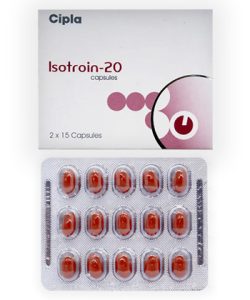
In brief
- Isotretinoin is a prescription-only medicine in the US, EU, UK, Canada, and most other countries because it can cause severe birth defects and other serious side effects. In some online pharmacies or gray-market sources it may be offered without a prescription, but this is unsafe and not legally appropriate; the approved route requires strict medical supervision and, in the US, enrollment in the iPLEDGE program.
- Isotretinoin is used to treat severe recalcitrant nodular or cystic acne that has not responded to other therapies. It is a systemic retinoid that works by reducing sebaceous gland size and sebum production, normalizing skin cell turnover, and lowering inflammation and acne-causing bacteria.
- The usual dose is about 0.5 mg/kg/day to start, with adjustment up to 1 mg/kg/day as tolerated. Typical treatment lasts 16–24 weeks, and dosing is often aimed at reaching a cumulative total dose of about 120–150 mg/kg.
- It is taken by mouth as hard capsules, soft capsules, tablets, or, in rare cases, an oral suspension. Common strengths include 5 mg, 10 mg, 20 mg, 30 mg, and 40 mg, depending on the product.
- Isotretinoin does not provide immediate symptom relief; improvement usually begins gradually after several weeks of treatment, often around 4–8 weeks, with continued benefit over the full course.
- The effect lasts as long as the treatment course is continued, typically 16–24 weeks. Some patients may need a repeat course if acne relapses after stopping therapy.
- Avoid alcohol or use it only with extreme caution, because alcohol can increase the risk of liver stress and elevated triglycerides while taking isotretinoin.
- The most common side effects are dry lips, dry skin, dry eyes, nosebleeds, peeling skin, and increased sensitivity to sunlight. Muscle or joint pain, headache, and increased triglycerides can also occur.
- Would you like to try isotretinoin without a prescription?
Basic Isotretinoin Information
- INN (International Nonproprietary Name): Isotretinoin
- Brand Names Available in United States: Claravis, Absorica, Amnesteem, Myorisan, Zenatane, and historical Accutane, which is discontinued in the U.S.
- ATC Code: D10BA01
- Forms & Dosages: Hard capsules or tablets in 5 mg, 10 mg, 20 mg, and 40 mg; soft capsules in some versions; oral suspension is rare and mainly associated with Absorica
- Manufacturers in United States: Teva, Ranbaxy, Mylan, and other manufacturers and distributors
- Registration Status in United States: FDA-approved; prescription-only; dispensed through iPLEDGE because of teratogenicity risk
- OTC / Rx Classification: Prescription only (Rx)
Everyday Use And Best Practices
Wondering when to take isotretinoin, or whether the acne pill Accutane should go with breakfast or dinner?
Isotretinoin is a prescription-only systemic retinoid used for severe acne, and the most helpful habit is to take it at the same time every day.
Many patients choose morning dosing because it is easy to pair with an existing routine, while others prefer evening dosing if nausea or stomach upset makes the dose feel easier to tolerate.
Brand names in the U.S. may include Claravis, Absorica, Amnesteem, Myorisan, and Zenatane, while Accutane is a historical, discontinued name.
Some formulations are easier to absorb with food, while specific products can differ by brand, so the safest plan is to follow the pharmacy label and prescriber instructions for isotretinoin with food.
A simple isotretinoin daily routine usually works best when it fits real life.
- Take it exactly as prescribed.
- Use lip balm often.
- Moisturize skin and protect your lips.
- Wear sunscreen every day.
- Do not double a dose if one is missed.
Keeping capsules in the original package, setting a phone reminder, and planning ahead for dry skin and eye care can make treatment much easier to stick with.
Safety Priorities
Who should avoid isotretinoin, and what problems deserve immediate attention?
The major absolute contraindications are pregnancy, planning pregnancy, breastfeeding, severe liver or kidney impairment, hypervitaminosis A, very high blood lipids, and hypersensitivity to the medicine or its excipients.
In the United States, this teratogenic acne medicine is tightly controlled through iPLEDGE because exposure during pregnancy can cause severe harm.
Daily life also matters here.
Patients are usually told to avoid blood donation, tanning, and unprotected sun exposure, and to be careful with contact lenses if the eyes become dry.
Extra caution is needed if there is a history of depression or psychiatric illness, diabetes, lipid disorders, chronic alcohol use, or if the patient is under 12 years old.
Tell the prescriber about every medicine and supplement, especially vitamin A.
- Red flag: severe headache.
- Red flag: vision changes or reduced night vision.
- Red flag: mood changes, depression, or unusual behavior.
- Red flag: abdominal pain, nausea, or vomiting that does not settle.
- Red flag: jaundice or dark urine.
- Red flag: any sign of pregnancy exposure.
Use sunscreen, keep follow-up appointments, and call the prescriber promptly if anything feels out of pattern.
Dosage And Adjustments
How much isotretinoin is usually started, and when do clinicians adjust it?
The typical starting dose is 0.5 mg/kg/day, with possible increases up to 1 mg/kg/day depending on response and tolerability.
Treatment usually lasts 16 to 24 weeks, and some courses are planned around a cumulative dose of 120 to 150 mg/kg.
Adolescents over 12 years may use weight-based dosing, while elderly patients do not have a standard automatic dose reduction but still need close tolerability monitoring.
Mild to moderate liver or renal impairment may call for a lower starting dose and closer follow-up, but severe hepatic impairment is a contraindication.
| Population | Typical Approach | Monitoring Priority |
|---|---|---|
| Most adults with severe acne | Start around 0.5 mg/kg/day, then adjust as needed | Skin dryness, lipids, liver enzymes, tolerability |
| Adolescents over 12 years | Weight-based dosing | Growth context, dryness, follow-up adherence |
| Older adults | No standard dose reduction, but cautious titration | Adverse effects and overall tolerability |
| Mild to moderate liver or kidney impairment | Lower starting dose may be used | Closer lab and clinical monitoring |
Patients often ask about isotretinoin dosage as if there is one fixed number, but the real answer is that acne treatment dosing depends on body weight, response, and side effects.
User Testimonials
What do people usually notice after starting isotretinoin, and what gets annoying fast?
Patient experiences are often a mix of relief and adjustment.
Many people report fewer breakouts, less painful cystic acne, and a real boost in confidence after several weeks.
The tradeoff is that dry lips Accutane users talk about most often can be stubborn, and dryness usually shows up before the acne improves fully.
- “My breakouts started calming down after a few weeks, and that felt huge.”
- “Lip balm became part of my routine almost immediately.”
- “My skin was so dry that I switched to a thicker moisturizer at night.”
- “The acne journey was slower than I hoped, but the pain from cysts got better.”
Common complaints include dry eyes, skin peeling, nosebleeds, and joint aches, so many patients need time to build new daily habits.
Testimonials can help set expectations, but they do not replace medical advice.
Buying Guide
Looking to buy isotretinoin and wondering what matters most beyond the brand name?
In the U.S., isotretinoin is Rx-only and must be dispensed through regulated channels.
Common U.S. options include Claravis, Absorica, Amnesteem, Myorisan, and Zenatane, and Absorica is supplied in bottles, with some versions including oral suspension.
When comparing cost, it makes more sense to look at insurance coverage, pharmacy availability, and generic substitution than to shop by brand alone.
Packaging may come as bottles or blister packs depending on the manufacturer and market, although U.S. products are commonly seen in blister or pill bottle formats.
| Brand/Example | Typical Package | Practical Buying Note |
|---|---|---|
| Claravis | Blister pack or pill bottle | Common U.S. generic option |
| Absorica | Bottles | May include oral suspension in some versions |
| Amnesteem | Bottles | Check insurance and pharmacy stock |
| Myorisan | Varies by supplier | Generic substitution may affect pricing |
| Zenatane | Varies by supplier | Confirm product label and dosage strength |
Avoid e-commerce sellers that bypass prescription rules or offer parallel-import packs without verification.
In our online pharmacy, isotretinoin is available without a prescription, with discreet delivery to United States in 5-14 days.
What Is Inside And How It Works
What exactly is isotretinoin, and why does it work so well for severe acne?
Isotretinoin is 13-cis-retinoic acid, a systemic retinoid in ATC group D10BA01 for acne treatment.
It is sold as hard capsules, soft capsules, and, more rarely, oral suspension, and that is not the same thing as topical tretinoin.
Topical products may sound similar, but they are different medicines with different uses.
In plain language, isotretinoin helps reduce oil production, clogged pores, and acne inflammation.
Less oil can mean fewer new lesions, but dryness is common because the medicine changes how skin behaves.
| What It Does | What Patients Notice |
|---|---|
| Reduces oil production | Skin often feels less greasy, but drier |
| Helps reduce clogging | Fewer new pimples over time |
| Calms inflammation | Less painful cystic acne for many patients |
That is why a good isotretinoin mechanism explanation always includes both the upside and the dryness patients feel day to day.
Main Indications
Isotretinoin is mainly reserved for severe recalcitrant nodular or cystic acne that has not responded to conventional therapy.
It is usually considered after topical agents, antibiotics, or hormonal options have not been enough.
Off-label use exists in some settings, but it is limited and physician-dependent, so acne remains the main focus.
Other acne treatments often compared with it include tetracyclines, oral contraceptives, topical retinoids, dapsone, clindamycin, azelaic acid, and benzoyl peroxide.
When do doctors consider isotretinoin for acne?
- Persistent nodules or cysts.
- Scarring or high scarring risk.
- Acne that has not responded to prior treatments.
- Severe acne that is affecting daily life or confidence.
For patients with nodular acne or cystic acne, the main question is usually not whether the medicine is strong enough, but whether the risk profile fits the situation.
Interaction Warnings
Can isotretinoin be taken with food, alcohol, vitamins, or other acne medicines?
Some formulations absorb differently with meals, so patients should follow their specific product instructions and take the medicine consistently the same way each day.
Vitamin A supplements should be avoided because of toxicity risk.
Tetracyclines are a major concern because they may increase the risk of intracranial pressure if combined without clinician guidance.
Alcohol deserves caution because of liver and lipid concerns.
Every visit should include a review of prescription drugs, over-the-counter products, and supplements.
| Substance | Why It Matters | What To Do |
|---|---|---|
| Vitamin A supplements | Adds toxicity risk | Avoid unless the prescriber specifically says otherwise |
| Tetracyclines | May raise intracranial pressure risk | Do not combine without clinician guidance |
| Alcohol | Can worsen liver and lipid concerns | Use caution and discuss intake honestly |
When people mention isotretinoin interactions, the safest answer is simple: bring the full medication list to every appointment.
Latest Evidence And Insights
What has changed in real-world isotretinoin use, and what still matters most?
Current practice is still very much individualized.
Lab monitoring is common, dosing is adjusted to response and tolerability, and some patients need a repeat course after relapse.
A standard course is often 16 to 24 weeks, but the plan may shift to reach the intended cumulative dose.
- iPLEDGE remains central in the U.S.
- Mental health, lipids, and liver enzymes are still watched closely.
- Relapse can happen, so follow-up matters even after the skin improves.
- Individualized dosing is now the norm, not a one-size-fits-all script.
The practical takeaway is that acne treatment evidence supports careful prescribing, steady monitoring, and honest symptom reporting.
Alternative Choices
Isotretinoin is not the only acne treatment, so how do the other options compare?
For milder acne, alternatives such as tetracyclines, hormonal therapy, topical retinoids, benzoyl peroxide, azelaic acid, clindamycin, and dapsone are often a better fit.
Isotretinoin is usually saved for severe, scarring, or treatment-resistant cases.
| Option | Best For | Key Limitation |
|---|---|---|
| Tetracyclines | Inflammatory acne that needs systemic treatment | Not ideal for everyone, and not for combination with isotretinoin without guidance |
| Hormonal therapy | Some patients with hormonally influenced acne | Not appropriate for all patients, especially depending on pregnancy plans |
| Topical retinoids | Mild to moderate acne and maintenance | Usually not enough for severe nodular disease |
| Benzoyl peroxide or azelaic acid | Maintenance and combination care | Often weaker than isotretinoin for severe acne |
| Clindamycin or dapsone | Selected acne patterns | May not control deep cystic acne alone |
The right choice depends on acne type, pregnancy plans, dryness tolerance, and whether prior treatment failed.
Regulation Snapshot
Isotretinoin is FDA-approved in the United States and prescription-only because of its teratogenic risk.
It is dispensed under iPLEDGE, and that safety system is still a key part of U.S. access.
Outside the U.S., the same medicine appears under names such as Claravis, Absorica, Amnesteem, Epuris, Curacné, Roaccutane, and Isotretinoína, depending on the country.
Package forms vary by market, and blister packs and bottles are both common, with strengths such as 5 mg, 10 mg, 20 mg, and 40 mg.
| Country/Region | Brand Example | Access Note |
|---|---|---|
| United States | Claravis, Absorica, Amnesteem | FDA-approved and Rx-only through iPLEDGE |
| Canada | Epuris | Prescription only |
| United Kingdom | Roaccutane, Roacutan | Rx-only |
| France and EU | Curacné, Curacne, Curakne | Prescription-only access |
| Brazil | Isotretinoína Ranbaxy | Rx only |
| Portugal | Isotretinoína Pierre Fabre | Prescription only |
| Romania | Registered local packs | ANMDMR public database can confirm status |
For anyone checking isotretinoin FDA approved status, the bottom line is that access is tightly regulated for safety.
Frequently Asked Questions
What if I miss a dose? Take it as soon as you remember unless it is close to the next dose, and never double up.
Can I drink alcohol? It is best to use caution because alcohol can add to liver and lipid concerns, so talk with the prescriber about your actual intake.
Why is my skin so dry? Dry skin, dry lips, and dry eyes are common isotretinoin side effects because the medicine lowers oil production.
How long until I see results? Some patients notice improvement after several weeks, but timing varies with dose, adherence, and acne severity.
Can I get pregnant while taking it? No, and pregnancy exposure is an urgent safety issue because isotretinoin pregnancy risk is severe.
If severe headache, vision changes, mood changes, or possible pregnancy exposure happens, contact the prescriber right away.
Guidelines For Proper Use
What keeps isotretinoin safe and manageable from day to day?
The best routine is simple and consistent.
Take the medicine exactly as prescribed, keep contraception requirements if applicable, attend lab and follow-up visits, and use moisturizer, lip balm, and sunscreen every day.
Store the capsules at 15 to 25°C, or 59 to 77°F, in the original packaging and away from light and moisture.
For missed doses, take the dose when remembered unless the next dose is close, and never take two doses at once.
An overdose is unusual but can cause vitamin A toxicity symptoms, so urgent medical attention is needed if too much is taken.
Travel plans matter too.
Keep the medicine secure, avoid heat and freezing, and bring enough supply for the trip.
- Take exactly as prescribed.
- Do not double-dose after a missed dose.
- Keep the medicine in original packaging.
- Store at 15 to 25°C, protected from light and moisture.
- Use moisturizers, lip balm, and sunscreen daily.
- Attend follow-up visits and lab checks.
- Seek urgent help for overdose symptoms or pregnancy exposure.
Delivery Across United States
| City | Region | Delivery time |
|---|---|---|
| New York | Northeast | 5-7 days |
| Los Angeles | West | 5-7 days |
| Chicago | Midwest | 5-7 days |
| Houston | South | 5-7 days |
| Phoenix | West | 5-7 days |
| Philadelphia | Northeast | 5-7 days |
| San Antonio | South | 5-7 days |
| San Diego | West | 5-7 days |
| Dallas | South | 5-7 days |
| San Jose | West | 5-7 days |
| Austin | South | 5-7 days |
| Jacksonville | South | 5-9 days |
| Columbus | Midwest | 5-9 days |
| Charlotte | South | 5-9 days |
| Indianapolis | Midwest | 5-9 days |