Oxybutynin
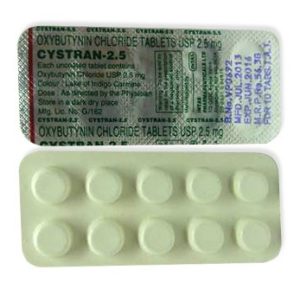
In brief
- In our pharmacy, you can buy oxybutynin without a prescription, with delivery available in 5–14 days within the United States and discreet packaging; note that oxybutynin is prescription-only in most countries (though the Oxytrol patch is OTC for women in the US).
- Oxybutynin is used to treat overactive bladder, urge incontinence, urinary frequency and neurogenic bladder; it is an antimuscarinic (anticholinergic) that blocks bladder muscarinic receptors (primarily M3), reducing detrusor muscle spasms.
- Usual adult doses: immediate-release 5 mg by mouth 2–3 times daily (max 20 mg/day); extended-release (XL) 5–10 mg once daily, titrate up to 30 mg/day if needed; transdermal patch delivers 3.9 mg/24h applied twice weekly; topical gel (Gelnique) one 100 mg sachet once daily. Pediatric starting doses (ages ≥5): 5 mg twice daily, up to 5 mg three times daily per physician guidance.
- Forms of administration: oral (immediate- and extended-release tablets, syrup), transdermal patch, and topical gel.
- Onset time: immediate-release oral doses typically start working within 30–60 minutes; extended-release formulations begin within a few hours; transdermal patch and topical gel effects are often seen within 24–48 hours.
- Duration of action: immediate-release effects last roughly 4–6 hours; extended-release provides about 24-hour control; patches deliver medication continuously for 3–4 days (apply twice weekly); topical gel effects persist about 24 hours.
- Avoid or limit alcohol while taking oxybutynin—alcohol can increase drowsiness, dizziness, and other CNS side effects and may worsen impairment.
- The most common side effec are dry mouth, constipation, blurred vision, drowsiness, dizziness, headache, urinary retention and tachycardia; patches and gels may also cause local skin irritation or rash.
- Would you like to try oxybutynin without a prescription?
Basic Oxybutynin Information
- INN (International Nonproprietary Name): Oxybutynin.
- Brand Names Available In United States: Ditropan XL, Oxytrol, Gelnique, Urotrol.
- ATC Code: G04BD04.
- Forms & Dosages: Immediate‑release tablets 2.5 mg and 5 mg; extended‑release tablets 5 mg, 10 mg, 15 mg; syrup 1 mg/mL and 5 mg/5 mL; transdermal patch delivering 3.9 mg/24h; topical gel 10% (100 mg/g).
- Manufacturers In United States: Janssen and Alza are listed among US/Canada suppliers.
- Registration Status In United States: Approved by the FDA for treatment of overactive bladder and related indications.
- OTC / Rx Classification: Generally prescription‑only (Rx) across major jurisdictions; the Oxytrol transdermal patch is available OTC for women in the United States while most other oxybutynin products remain Rx.
Everyday Use & Best Practices
Worried about when to take oxybutynin so it helps without wrecking your day?
Take oxybutynin exactly as your clinician prescribes and keep the medication in its original container out of reach of children.
Immediate‑release tablets are commonly 2.5–5 mg and are usually taken two to three times daily.
Extended‑release tablets such as Ditropan XL or Lyrinel XL are taken once daily.
Transdermal patches like Oxytrol or Kentera deliver 3.9 mg/24h and are applied twice weekly.
Topical Gelnique (10%, 100 mg/g) is applied once daily to skin as directed.
Many people prefer extended‑release tablets or morning dosing to reduce nighttime urgency and nocturia.
If daytime dryness or drowsiness is a problem with immediate‑release forms, discuss trying evening dosing with your provider.
Oxybutynin may be taken with or without food; if nausea occurs, take it with a small meal.
Monitor effects during the first one to two weeks for common anticholinergic side effects such as dry mouth, blurred vision, constipation, or drowsiness.
When starting a patch or gel, apply to clean, dry skin and rotate application sites to reduce irritation.
| Form | Typical Dosing Schedule |
|---|---|
| Immediate‑Release Tablets (2.5–5 mg) | Two to three times daily |
| Extended‑Release Tablets (5–15 mg) | Once daily (Ditropan XL) |
| Transdermal Patch (3.9 mg/24h) | Apply twice weekly (Oxytrol) |
| Topical Gel (10%, 100 mg) | Apply once daily (Gelnique) |
- Start‑Up Checklist: Confirm prescribed form and dose, read the patient leaflet, set reminders for doses or patch days, carry sugarless gum for dry mouth, and report severe side effects promptly.
- Morning/Evening Decision Tree: If nighttime urgency is the main problem, prefer morning ER dosing; if daytime sedation or dryness is limiting, discuss shifting IR doses to evening with your clinician.
Safety Priorities
Who should avoid oxybutynin is a top concern for many patients.
Absolute contraindications include untreated narrow‑angle glaucoma, urinary retention, gastric retention or paralytic ileus, and known allergy to oxybutynin or any excipient.
Use with caution under clinician supervision in patients with myasthenia gravis, severe ulcerative colitis, obstructive uropathy, or significant hepatic or renal impairment.
Older adults require extra caution because chronic anticholinergic exposure is associated with increased dementia risk; start low and monitor cognition and balance.
While adjusting to therapy, avoid driving, operating heavy machinery, or climbing ladders if you experience drowsiness, dizziness, or blurred vision.
Patches and gels can cause local skin irritation; avoid applying to damaged or inflamed skin.
If you develop rapid heartbeat, severe abdominal pain, difficulty urinating, confusion, or sudden vision changes, stop the medicine and seek urgent care.
- Absolute Contraindications: Untreated narrow‑angle glaucoma; urinary retention; gastric retention/paralytic ileus; allergy to oxybutynin or excipients.
- Relative Contraindications / Cautions: Myasthenia gravis; severe ulcerative colitis; obstructive uropathy; significant hepatic or renal impairment; high anticholinergic burden; elderly patients with cognitive vulnerability.
- When To Call Emergency Services: Rapid heartbeat, fainting, severe abdominal pain, sudden confusion, sudden vision loss, or signs of severe allergic reaction such as swelling or difficulty breathing.
Dosage & Adjustments
Patients often ask for a simple dosing summary they can trust.
Immediate‑release tablets are typically prescribed at 5 mg two to three times daily with a maximum of 20 mg per day.
Extended‑release (XL) formulations usually start at 5–10 mg once daily and may be titrated up to 30 mg per day under clinician supervision.
The transdermal patch delivers 3.9 mg/24h and is applied twice weekly.
Topical Gelnique is supplied as a 10% gel and is applied as one 100 mg sachet once daily.
For children ages 5 and older, immediate‑release dosing commonly starts at 5 mg twice daily and can be increased to 5 mg three times daily per physician guidance.
Elderly patients should start at the lowest effective dose with close monitoring for CNS and anticholinergic effects.
There is no universal formal dose adjustment for liver or kidney impairment noted in product summaries, so clinicians commonly use lower starting doses or slower titration and monitor closely.
If you miss a dose, take it as soon as you remember unless the next scheduled dose is near, but do not double up doses to catch up.
Overdose signs include restlessness, rapid heartbeat, hallucinations, severe drowsiness, coma, and respiratory failure; seek immediate medical care for suspected overdose.
| Form | Typical Start Dose | Frequency | Max Dose |
|---|---|---|---|
| Immediate‑Release Tablet | 5 mg | 2–3 times daily | 20 mg/day |
| Extended‑Release Tablet (XL) | 5–10 mg | Once daily | Up to 30 mg/day (titration) |
| Transdermal Patch | One patch | Twice weekly | Patch delivers 3.9 mg/24h |
| Topical Gel (10%) | 100 mg (one sachet) | Once daily | Per product labeling |
User Testimonials
What do real people notice first when they start oxybutynin?
Positive reports commonly describe fewer urgency episodes and reduced nocturia after one to two weeks on extended‑release oxybutynin or the transdermal patch.
Many patients with neurogenic bladder due to spinal cord injury or multiple sclerosis report meaningful symptom control that helps with daily independence.
Users who switch from oral tablets to the patch or Gelnique often say dry mouth and constipation are reduced because topical or transdermal delivery bypasses some first‑pass systemic exposure.
Common challenges mentioned by users include dry mouth, constipation, blurred vision, and drowsiness.
Patches may cause local skin irritation in some users and require site rotation or switching formulations if irritation persists.
Several patients report multiple clinic visits are needed for dose titration until benefits outweigh side effects.
- Quick Self‑Care Tips: Carry sugarless gum or lozenges for dry mouth, increase fluids and fiber to help with constipation, and use sunglasses if blurred vision is problematic outdoors.
- Tracking Checklist: Note daily urgency episodes, nighttime awakenings, bowel habits, and any dizziness or vision changes; review these with your prescriber at follow‑up visits.
Buying Guide
Can you buy oxybutynin easily and where is it safest to order?
Oxybutynin products are available through retail chain pharmacies, independent pharmacies, licensed online pharmacy services, and mail‑order or insurance mail programs.
Most oxybutynin products are prescription‑only, but the Oxytrol transdermal patch is OTC for women in the United States.
Generic oxybutynin tablets and extended‑release generics are widely available and typically cost less than branded products.
Price‑saving tips include checking manufacturer copay cards for brand products, comparing cash prices at GoodRx or RxSaver, and asking your prescriber about therapeutically equivalent generics.
Patch and gel packaging formats (single‑use foil packets vs pump bottles) may affect cost per dose, so compare price per dose when shopping.
When traveling, keep patches and gels sealed and avoid storing them in direct sunlight or excessive heat.
In our online pharmacy, oxybutynin is available without a prescription, with discreet delivery to United States addresses in 5–14 days.
| Source | OTC vs Rx | Price‑Saving Options |
|---|---|---|
| Retail Chain Pharmacy | Rx (Oxytrol OTC for women) | Insurance, manufacturer coupons |
| Independent Pharmacy | Rx | Price match, generic substitution |
| Licensed Online Pharmacy | Rx (verify licensure) | Mail‑order discounts, coupon codes |
| Mail‑Order Programs | Rx | 90‑day supply savings |
What’S Inside & How It Works
Patients often want a simple explanation of what oxybutynin contains and how it acts on bladder function.
The active ingredient is oxybutynin, an antimuscarinic agent that relaxes bladder smooth muscle by blocking muscarinic receptors.
Different formulations vary in excipients and delivery systems, including oral tablets, extended‑release tablets, syrup, transdermal patches, and topical gel.
Commonly sold forms include IR tablets (2.5 and 5 mg), ER tablets (5, 10, 15 mg), syrup (1 mg/mL, 5 mg/5 mL), transdermal patch (3.9 mg/24h), and topical gel 10% (100 mg/g).
Oxybutynin blocks muscarinic receptors with action at M3 receptors predominant in the bladder detrusor muscle to reduce involuntary contractions and increase storage capacity.
Transdermal and topical formulations provide different pharmacokinetics, producing steadier systemic exposure and often fewer peak‑related side effects like dry mouth.
Excipients vary by manufacturer; check the product leaflet if you have known sensitivities or allergies to inactive ingredients.
| Form | Active Concentration | Route |
|---|---|---|
| Immediate‑Release Tablet | 2.5 mg, 5 mg | Oral |
| Extended‑Release Tablet | 5 mg, 10 mg, 15 mg | Oral |
| Transdermal Patch | 3.9 mg/24h | Transdermal |
| Topical Gel | 10% (100 mg/g) | Topical |
Main Indications
What conditions is oxybutynin actually approved to treat?
The primary approved indication is treatment of overactive bladder with symptoms of urge incontinence, urgency, and urinary frequency.
Oxybutynin is also approved and commonly used for neurogenic bladder management in conditions such as spinal cord injury or multiple sclerosis to reduce detrusor overactivity.
Off‑label uses seen in practice include topical use for focal hyperhidrosis in some settings and pediatric nocturnal enuresis under specialist guidance.
- Approved Uses: Overactive bladder, urge incontinence, urinary frequency; neurogenic bladder symptom control in spinal cord injury and MS.
- Common Off‑Label Uses: Topical Gelnique for focal hyperhidrosis in selected cases; pediatric enuresis managed by specialists.
If symptoms persist or dosing is complex, discuss referral to a urologist or specialist for additional therapy options such as behavioral therapy, botulinum toxin, or neuromodulation.
Interaction Warnings
Patients frequently ask whether they can take oxybutynin with their other medications or with food.
Oxybutynin may be taken with or without food, and there are no major food inhibitors noted in product summaries, though fatty meals can sometimes affect absorption for oral forms.
If you notice increased nausea with oral oxybutynin, try taking it with a light snack and discuss persistent symptoms with your pharmacist or prescriber.
The main clinical concern is additive anticholinergic effects when oxybutynin is combined with other anticholinergic drugs such as certain antihistamines, tricyclic antidepressants, some antipsychotics, and other bladder antispasmodics.
Concurrent use with CNS depressants like benzodiazepines or sedative antihistamines may increase drowsiness or cognitive impairment.
Topical and transdermal formulations generally have lower systemic peak levels and a reduced interaction risk profile, but systemic interactions remain possible especially with polypharmacy.
- Checklist For Clinic Visits: Bring a full medication list including OTC sleep aids, antihistamines, herbal supplements, and topical products to review anticholinergic burden.
| Drug Class | Interaction Concern |
|---|---|
| Anticholinergics (antihistamines, TCAs, antipsychotics) | Additive anticholinergic effects: dry mouth, constipation, confusion, urinary retention |
| CNS Depressants | Increased drowsiness and dizziness |
| Topical/Transdermal Products | Lower systemic peaks but still monitor for interactions in polypharmacy |
Latest Evidence & Insights
Clinicians and patients want to know what the evidence says about effectiveness and safety updates.
Clinical summaries emphasize oxybutynin’s efficacy for overactive bladder across oral, transdermal, and topical formulations.
Important evidence‑based insight is that transdermal and topical formulations reduce systemic peak concentrations and often produce fewer anticholinergic side effects, particularly dry mouth, compared with immediate‑release oral tablets.
Long‑term safety reviews and guideline documents highlight the anticholinergic burden concern, especially in older adults, where prolonged use of anticholinergic medications is associated with cognitive decline and increased dementia risk.
Guidance commonly recommends periodic reassessment of ongoing need every three to six months and considering deprescribing or switching to alternatives when appropriate.
For neurogenic bladder, oxybutynin remains a commonly used agent with demonstrated symptom control, but bladder monitoring for retention is important during therapy.
| Delivery Method | Side‑Effect Burden |
|---|---|
| Immediate‑Release Oral | Higher peak anticholinergic side effects such as dry mouth |
| Extended‑Release Oral | Lower peaks than IR, improved tolerability for some patients |
| Transdermal/Topical | Lower systemic peaks, often fewer dry mouth and GI effects; possible local skin irritation |
- 3–6 Month Monitoring Checklist: Reassess symptom control, check for urinary retention, review cognitive status and falls risk in older adults, examine skin for irritation if using patch or gel.
Alternative Choices
What if oxybutynin causes unacceptable side effects or is contraindicated?
Other antimuscarinic alternatives include tolterodine, darifenacin, solifenacin, trospium, and fesoterodine, each with different receptor selectivity and side‑effect profiles.
Mirabegron (Myrbetriq) is a beta‑3 agonist that relaxes the bladder without anticholinergic effects and is an option for patients with cognitive concerns or high anticholinergic burden.
Trospium has less central nervous system penetration and may be preferred in some older adults for that reason.
Choice of alternative depends on comorbidities, tolerability, cost, pregnancy or pediatric considerations, and patient preference.
For refractory cases, combination therapy or referral to urology for behavioral therapy, botulinum toxin injections, or neuromodulation may be appropriate.
| Option | When Consider |
|---|---|
| Tolterodine / Darifenacin / Solifenacin / Fesoterodine | When antimuscarinic approach is acceptable but oxybutynin is poorly tolerated |
| Trospium | When reduced CNS penetration is desired |
| Mirabegron (Myrbetriq) | When anticholinergic risks are a concern |
Discuss switching strategy with your clinician because the need for washout or direct substitution varies by agents and patient factors.
Regulation Snapshot
Patients traveling or buying online often ask about approval and Rx status.
Oxybutynin is approved by major regulators including the FDA in the United States, EMA member agencies in Europe, the MHRA in the UK, Health Canada, and the TGA in Australia.
Classification is generally prescription‑only (Rx) across major jurisdictions, with the specific US distinction that the Oxytrol transdermal patch is available OTC for women while most products remain Rx.
Brand names and packaging vary by country, and generics labeled with the INN oxybutynin are widely available in many markets.
Before travel or import, verify the local regulatory status and carry a copy of your prescription when crossing borders.
- Regional Points: FDA approval in the US; Oxytrol OTC for women in the US; generics widely available; product packaging and brand names vary internationally.
FAQ Section
What if I miss a dose?
Take it as soon as you remember; if it’s near the next scheduled dose, skip the missed dose—do not double up.
What are overdose signs?
Restlessness, rapid heartbeat, hallucinations, severe drowsiness, coma, or respiratory failure are possible signs and require immediate medical attention.
Can pregnant or breastfeeding people use oxybutynin?
Use only if clearly needed and after discussing risks and benefits with a clinician.
Will oxybutynin make me constipated?
Constipation is common; increase fluids and dietary fiber and consider stool softeners if advised by your prescriber.
How quickly will it work?
Some symptom improvement can be seen within days, but full effect often takes several weeks; assess benefit versus side effects within four to twelve weeks.
Can I drive while taking oxybutynin?
Avoid driving until you know whether drowsiness or blurred vision occurs.
For complex questions about drug interactions, pediatric use, or cognitive risks, consult your prescriber or pharmacist.
- Printable FAQ Checklist: Missed dose plan, overdose signs, pregnancy/breastfeeding note, constipation advice, expected time to benefit, driving precautions.
Guidelines For Proper Use
How should oxybutynin products be stored, applied, and monitored at home?
Store tablets and syrup below 25°C (77°F) and keep them away from moisture, heat, and light.
Keep patches and gels sealed until use and avoid direct sunlight or excessive heat during storage or transport.
For patch application, apply to clean, dry, hairless skin on the abdomen, buttock, hip, or upper torso and rotate sites; do not cut the patch.
Replace transdermal patches twice weekly as directed by the product labeling.
For Gelnique, apply a thin layer to clean, dry skin, allow it to dry before dressing, avoid broken skin, and wash hands after application.
Monitor effectiveness and side effects every three to six months, including checks for urinary retention, cognitive changes, heart rate changes, and skin reactions.
Call your clinician promptly for difficulty urinating, severe abdominal pain, confusion, vision changes, fainting, fast heartbeat, or signs of severe allergic reaction.
- Patch/Gel Application Checklist: Clean and dry site, rotate sites, do not apply to irritated skin, wash hands after gel use, keep spare patches sealed until needed.
- Monitoring Schedule: Follow up at 4–12 weeks after starting or changing dose, then reassess every 3–6 months for ongoing therapy.
Delivery Across United States
| City | Region | Delivery time |
|---|---|---|
| New York | New York | 5-7 days |
| Los Angeles | California | 5-7 days |
| Chicago | Illinois | 5-7 days |
| Houston | Texas | 5-7 days |
| Phoenix | Arizona | 5-7 days |
| Philadelphia | Pennsylvania | 5-7 days |
| San Diego | California | 5-7 days |
| Dallas | Texas | 5-9 days |
| Austin | Texas | 5-9 days |
| Jacksonville | Florida | 5-9 days |
| San Jose | California | 5-9 days |
| Columbus | Ohio | 5-9 days |