Dramamine
In brief
- In the pharmacy, you can buy Dramamine without a prescription in many countries, including the United States, where it is available OTC. Availability and packaging may vary by region, and some higher-dose or injectable forms may require a prescription depending on local regulations.
- Dramamine is used to prevent and treat motion sickness, nausea, and vomiting, especially during travel or from vertigo-related conditions. Its active ingredient, dimenhydrinate, works as an antihistamine with anticholinergic effects that reduce signals in the brain involved in nausea and motion sickness.
- The usual dose for adults and adolescents is 50–100 mg every 4–6 hours as needed, with a typical maximum of 400 mg per day. For children, dosing is weight-based, and lower-dose or liquid formulations should be used carefully according to age and local labeling.
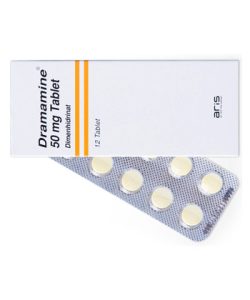
- Dramamine is available as oral tablets, chewable tablets, oral solution, and in some regions as suppositories or injection. The most common form is the 50 mg oral tablet.
- It usually starts working within 30 to 60 minutes after taking it.
- The duration of action is generally about 4 to 6 hours.
- Do not drink alcohol while taking Dramamine, because alcohol can increase drowsiness, dizziness, and impaired coordination.
- The most common side effects are drowsiness, dry mouth, blurred vision, headache, and dizziness.
- Would you like to try Dramamine without a prescription?
Basic Dramamine Information
- INN (International Nonproprietary Name): Dimenhydrinate
- Brand names available in United States: Dramamine
- ATC Code: A04AA05
- Forms & dosages: Tablet (Original Formula) 50 mg; chewable tablet 25 mg, 50 mg; injection 10 mg/mL in some regions; suppositories 25 mg, 50 mg in select markets; oral solution for children 12.5 mg/5 mL, varies
- Manufacturers in United States: L.N.K. International; Medtech Products (Dramamine)
- Registration status in United States: Approved as an OTC by FDA; Dramamine and generics widely available
- OTC / Rx classification: Generally over-the-counter in most countries for adult formulations; pediatric or higher dose/IV forms may be Rx-only, depending on local regulations
Everyday Use And Best Practices
Morning Vs Evening Dosing
Planning a cruise, a long drive, or a flight with a rough landing window?
That is usually when people reach for Dramamine, also called dimenhydrinate.
The Original Formula tablets are commonly 50 mg, and they work best when taken 30 to 60 minutes before travel or any motion-triggering activity.
For daytime trips, remember that drowsiness can be part of the tradeoff, so some people prefer evening dosing when the motion exposure happens later.
The right timing depends on the trip, not the clock on the wall.
If symptoms return during a longer ride, repeat dosing can be used as directed every 4 to 6 hours as needed, staying within the daily limit.
A simple travel routine helps: keep motion sickness tablets in a bag you already carry, set a phone reminder before departure, and do not wait until nausea is severe.
- Before travel: take the dose 30 to 60 minutes ahead of time.
- During long trips: keep the tablets available and re-dose only if needed.
- If symptoms return: do not panic; take the next appropriate dose on schedule.
Taking With Or Without Meals
Dramamine can be taken with or without food.
If nausea is already starting, a small snack may make it easier to tolerate the dose.
That can matter on a busy day when you are packing, boarding, and trying to keep a normal travel routine.
For many patients, the biggest improvement comes from pre-dose timing rather than taking the motion sickness medicine after discomfort is already strong.
Safety Priorities
Who Should Avoid It
Dramamine is generally OTC in the United States, but that does not mean it is right for everyone.
Some people should not use dimenhydrinate at all, and others need careful monitoring because the medicine can cause sedation and anticholinergic side effects.
- Do not use: hypersensitivity to dimenhydrinate or any component.
- Do not use: neonates or premature infants.
- Do not use: untreated narrow-angle glaucoma.
- Do not use: MAOI use.
- Do not use: severe lower respiratory disease.
- Use caution: older adults, especially because confusion and drowsiness can be more noticeable.
- Use caution: asthma, urinary retention, prostatic hypertrophy, epilepsy, hepatic or renal impairment.
Caregivers should keep motion sickness medicine out of reach of children and store it securely.
The most common daily-living problem is simple but important: drowsiness, blurred vision, and dizziness can make driving, ladder use, and machinery work unsafe until a person knows how they respond.
Activities To Limit
Alcohol should be avoided because it can intensify impairment.
People who feel sleepy after the first dose should not drive, operate machinery, climb ladders, or do anything that requires sharp balance or quick reaction time.
That warning matters on travel days, when people often rush from check-in to boarding and underestimate how much dimenhydrinate can slow them down.
Dosage And Adjustments
General Regimen
Most adults and adolescents use 50 to 100 mg every 4 to 6 hours as needed for motion sickness or nausea and vomiting.
For prevention, the usual approach is to take it 30 to 60 minutes before exposure.
The adult maximum daily dose often cited is 400 mg.
| Group | Typical Dose | Timing |
|---|---|---|
| Adults And Adolescents | 50 to 100 mg every 4 to 6 hours as needed | 30 to 60 minutes before travel for prevention |
| Children | 1.25 mg/kg per dose every 6 hours | Measure carefully using the correct form |
For children, liquid or chewable products can make measuring easier and more accurate than splitting a standard tablet.
Adults should pay attention to the strength on the box, because dimenhydrinate 50 mg tablets are common, but chewables can come in lower or different strengths.
Special Cases
Older adults should usually start at the lower end of the range.
Kidney or liver impairment calls for caution because data are limited, and a clinician may recommend dose reduction or closer monitoring.
If a scheduled dose is missed on a cruise or long trip, take it when remembered unless the next dose is close.
- Missed dose: skip if the next scheduled dose is near.
- Never double up to make up for a missed dose.
- Overdose concern: seek emergency care for CNS depression or anticholinergic toxicity.
User Testimonials
Positive Reports
People often describe Dramamine reviews in a practical way: fewer nausea episodes on cruises, road trips, and flights when they take it early enough.
The familiar blister-pack tablet format is a plus for travelers who want motion sickness pills that are easy to pack and easy to count.
OTC access in the United States is another reason it stays popular for last-minute travel.
Common Challenges
- Sleepiness is the most common complaint.
- Dry mouth and dizziness can also show up.
- Some people forget to take it before the trip starts and feel it works better for prevention than for severe nausea already in progress.
- Children may occasionally have paradoxical excitement instead of sedation.
That mix of benefits and drawbacks is why many travelers keep it on hand, but only use it when the ride, flight, or boat trip is predictable.
Buying Guide
Pharmacy Sources
People commonly buy Dramamine at U.S. pharmacies, grocery-store pharmacies, big-box retailers, travel shops, and online pharmacies.
In the United States, it is an FDA-approved OTC product and is widely available as brand-name Dramamine and generic dimenhydrinate.
In our online pharmacy, dramamine is available without a prescription, with discreet delivery to United States in 5 to 14 days.
Shoppers should compare the active ingredient name, not just the box design, and confirm the form and strength before checking out.
Price Comparison
| Product | Strength | Form | Notes |
|---|---|---|---|
| Dramamine Original Formula | 50 mg | Tablet | Familiar brand with blister-pack packaging |
| Generic Dimenhydrinate | Varies | Tablet Or Chewable | Often the lower-cost option |
| Children’s Form | 12.5 mg/5 mL, varies | Oral solution | Helpful for weight-based dosing |
Read labels carefully, because Dramamine Less Drowsy contains meclizine, not dimenhydrinate.
What Is Inside And How It Works
Ingredients Overview
The INN is dimenhydrinate, and the ATC code is A04AA05.
It is an antihistamine antiemetic used for motion sickness and related nausea and vomiting.
U.S. users most often see 50 mg tablets and chewable tablets first, but oral solution for children is also available in some products.
| Form | Common Strength | Route |
|---|---|---|
| Tablet (Original Formula) | 50 mg | Oral |
| Chewable Tablet | 25 mg, 50 mg | Oral |
| Oral Solution (Children) | 12.5 mg/5 mL, varies | Oral |
Mechanism Basics
In plain English, it helps reduce the signals tied to nausea and motion-related dizziness.
That is why it can help with the car sick, sea sick, or air sick feeling before it takes over a trip.
It can also cause sleepiness because it crosses into the brain, which is part of why daytime use can slow people down.
Main Indications
Approved Uses
The main uses are prevention and treatment of motion sickness and management of nausea and vomiting associated with vertigo or labyrinthine disorders.
- Road trips and highway travel.
- Cruises and boat rides.
- Flights and airport travel days.
- Amusement park rides.
- Some VR and AR experiences that trigger motion discomfort.
Best results usually happen when the dose is taken before the trigger starts.
Off-Label Uses
Some clinicians may use dimenhydrinate for related nausea situations, but patients should not expand use on their own without guidance.
It is meant for short-term use, not chronic therapy.
Interaction Warnings
Food Interactions
There are no major food restrictions for most users.
Alcohol should be avoided because it can worsen sedation and impairment.
Heavy meals may make some people feel more sluggish, even though the medication can be taken with food.
Drug Conflicts
| Substance | Concern | What To Do |
|---|---|---|
| Alcohol | More sedation and poorer coordination | Avoid while using Dramamine |
| Sleep aids, benzodiazepines, opioids, other sedating medicines | Duplicate sedation | Check with a clinician or pharmacist first |
| Other anticholinergic drugs and some allergy medicines | More dry mouth, blurred vision, confusion, and urinary retention | Review all labels for overlap |
| MAOIs | Contraindicated use | Do not combine |
When a person takes multiple medications, duplicate antihistamines can sneak in fast, so label reading matters.
Latest Evidence And Insights
What Current Use Patterns Show
Dimenhydrinate remains widely used because it is accessible, familiar, and effective for prevention when timed correctly.
The biggest tradeoff is sedation, and that is the main reason some patients switch to other motion sickness medicine options.
Practical Takeaway For Patients
- For short trips with predictable motion, Dramamine still has a clear role.
- For users who need less drowsiness, an alternative may be easier to live with.
- For best results, take it before the motion starts instead of after nausea is already strong.
Alternative Choices
Medication Alternatives
| Option | Best For | Main Drawback |
|---|---|---|
| Meclizine (Antivert, Bonine) | People who want a less sedating option | Not the same ingredient as Dramamine Original Formula |
| Scopolamine patch | Prevention on longer trips | Patch-based use may not fit every situation |
| Promethazine | Severe nausea when prescribed by a clinician | Prescription-only |
Non-Drug Options
Ginger and acupressure bands are common non-pharmaceutical choices for motion sickness relief.
They may appeal to travelers who want to avoid drowsiness or who prefer to try a simple option first.
If sedation is the biggest concern, meclizine may be preferred; if a patch is more practical for a longer trip, scopolamine may fit better.
Regulation Snapshot
U.S. Status
In the United States, Dramamine and generic dimenhydrinate are FDA-approved OTC products.
Adult formulations are generally OTC in many countries, while pediatric or higher dose and IV forms may be prescription-only depending on local rules.
Global Brand Names
| Brand Name | Region | Typical Form |
|---|---|---|
| Gravol | Canada | Tablets, chewables, suppositories |
| Vomex A | Germany | Tablets, liquid |
| Dramina | Croatia, Russia | Tablets |
| Xamamina | Italy | Tablets, possible oral solutions |
| Biodramina | Spain | Tablets |
| Aviomarin | Poland, Slovakia | Tablets |
That kind of packaging difference matters when people buy the same medicine while traveling abroad.
Frequently Asked Questions
Common User Questions
When should I take Dramamine before traveling? Take it 30 to 60 minutes before exposure.
Can I take it with food? Yes, it can be taken with or without food, and a small snack may help if nausea has already started.
Why does it make me sleepy? Drowsiness is a common side effect of dimenhydrinate.
Is Dramamine Less Drowsy the same thing? No. Dramamine Less Drowsy contains meclizine, not dimenhydrinate.
Can children use it? Yes, but dosing is weight-based at 1.25 mg/kg per dose every 6 hours, and measuring should be careful.
What if I miss a dose? Take it when remembered if the next dose is not close, but do not double the dose.
Those answers cover the questions pharmacists hear most often right before a family trip or cruise.
Guidelines For Proper Use
Storage And Transport
Keep Dramamine at room temperature, 20 to 25°C, away from moisture and heat, and protect it from light.
Blister packs help protect the tablets during travel and make it easier to count doses.
- Leave the tablets in the original packaging.
- Keep doses visible so you do not repeat them by mistake.
- Store the medicine away from children.
- Pack it before leaving home so the first dose is not forgotten.
When To Seek Help
Get urgent medical help for overdose symptoms, severe confusion, trouble breathing, allergic reactions, or vomiting that does not let a person keep fluids down.
Talk with a clinician before use if there is glaucoma, urinary retention, asthma, epilepsy, or significant liver or kidney disease.
This medicine is for short-term use, not chronic therapy.
Plan the dose before travel, avoid alcohol, and do not test the first dose right before driving.
Delivery Across United States
| City | Region | Delivery time |
|---|---|---|
| New York City | Northeast | 5-7 days |
| Los Angeles | West | 5-7 days |
| Chicago | Midwest | 5-7 days |
| Houston | South | 5-7 days |
| Phoenix | West | 5-7 days |
| Philadelphia | Northeast | 5-7 days |
| San Antonio | South | 5-7 days |
| San Diego | West | 5-7 days |
| Dallas | South | 5-7 days |
| San Jose | West | 5-7 days |
| Austin | South | 5-7 days |
| Jacksonville | South | 5-9 days |
| Columbus | Midwest | 5-9 days |
| Charlotte | South | 5-9 days |
| Indianapolis | Midwest | 5-9 days |