Spironolactone
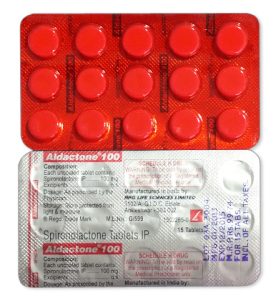
In brief
- In many countries spironolactone is a prescription-only medicine (Rx) and is available from pharmacies and by prescription brands such as Aldactone, Verospiron and others; however availability varies by country and in some pharmacies or online sellers it may be possible to obtain spironolactone without a prescription—check local regulations and be aware this may be outside legal or medical advice.
- Spironolactone is used for edema (heart failure, cirrhosis, nephrotic syndrome), hypertension, primary aldosteronism, hypokalemia prevention, and as an off-label treatment for acne and hirsutism; it is a potassium-sparing diuretic that antagonizes aldosterone at the mineralocorticoid receptor, reducing sodium reabsorption and potassium excretion.
- Usual adult doses vary by indication: edema 25–200 mg/day (commonly ~100 mg/day), hypertension 25–100 mg/day, primary aldosteronism 100–400 mg/day when used diagnostically/therapeutically, heart failure adjunctive doses 12.5–50 mg/day, and for acne/hirsutism 50–200 mg/day; pediatric dosing is weight-based and specialist-managed.
- Administered orally, most commonly as tablets (25 mg, 50 mg, 100 mg); combo tablets with thiazide diuretics (e.g., hydrochlorothiazide) are also available and oral suspension may be compounded in some pharmacies.
- Onset of diuretic/potassium‑sparing effect is usually within 24–72 hours (natriuresis and potassium retention may begin in the first 1–2 days); hormonal/antiandrogen effects (for acne/hirsutism) require weeks to months to become apparent.
- Duration of action is prolonged by active metabolites, with clinical diuretic effects often lasting 24–72 hours, allowing once-daily or divided dosing depending on the regimen.
- Avoid excessive alcohol while taking spironolactone; alcohol can increase the risk of dizziness, orthostatic hypotension, dehydration, and may worsen liver disease or other side effects.
- The most common side effects include hyperkalemia (elevated potassium), gastrointestinal upset (nausea, vomiting, diarrhea), dizziness, menstrual irregularities, and in men gynecomastia or decreased libido.
- Would you like to try spironolactone without a prescription?
Everyday Use & Best Practices
Basic Spironolactone Information
- INN (International Nonproprietary Name): Spironolactone
- Brand Names Available In United States: Aldactone, Aldactazide
- ATC Code: C03DA01
- Forms & Dosages: Tablets commonly 25 mg, 50 mg, 100 mg; oral suspension less common (compounded); combo tablets with hydrochlorothiazide (examples: 25 mg/25 mg, 50 mg/50 mg)
- Manufacturers In United States: Pfizer, Searle (generics also widely available)
- Registration Status In United States: FDA approved prescription drug
- OTC / Rx Classification: Prescription Only (“Rx”) in nearly all jurisdictions
Morning Vs Evening Dosing
Many patients ask whether to take spironolactone in the morning or at night.
Pick a consistent time each day and stick with it to make monitoring and symptom tracking reliable.
For once-daily low doses (for example, 25–50 mg), morning dosing can reduce nocturia and fit into existing morning routines.
For larger daily totals or twice-daily regimens (for example, 100 mg total), splitting doses into AM and PM can help steady effects and limit dizziness.
Heart-failure regimens are often low-dose (commonly 12.5–50 mg/day), and coordinating spironolactone with other morning medications can simplify routines.
Tablet strengths commonly prescribed include 25 mg, 50 mg, and 100 mg, which usually align with standard dosing steps.
Practical Tip
- Consistency: Choose a time and keep it daily.
- Split Doses: Consider AM/PM split for totals ≥100 mg/day.
- Nocturia: Prefer morning dosing for low once-daily doses to reduce night-time urination.
Taking With Or Without Meals
Spironolactone may be taken with or without food.
If nausea or stomach upset occurs, take it with a small meal to reduce gastrointestinal side effects.
If dizziness or lightheadedness is experienced after a dose, sit or lie down for a few minutes before resuming activity.
| Schedule Type | Typical Dose Range | Pros | Cons |
|---|---|---|---|
| Single Daily | 25–50 mg once daily | Simple routine; less nocturia with morning dosing | May cause peak-related dizziness if dose is larger |
| Split Daily | 50–100 mg divided AM/PM | Smoother blood levels; fewer dizziness episodes | Requires two dosing times; slightly more complex |
Safety Priorities
Who Should Avoid It
Do not take spironolactone if there is known hyperkalemia.
Do not take spironolactone in the setting of acute renal insufficiency or anuria.
Do not take spironolactone if Addison’s disease (adrenal insufficiency) is diagnosed.
A documented allergy to spironolactone or any excipient is an absolute contraindication.
Avoid or use extreme caution when estimated creatinine clearance is under 30 mL/min because of high hyperkalemia risk.
Pregnancy and breastfeeding require discussion with the prescriber due to safety considerations; use is generally cautious in these populations.
Activities To Limit
Avoid potassium supplements and salt substitutes that contain potassium unless your clinician explicitly directs otherwise.
Limit high-potassium diets while monitoring potassium levels closely during therapy changes.
Avoid excessive alcohol initially if dizziness or low blood pressure occurs after starting spironolactone.
Be cautious when driving or operating heavy machinery until the effect on alertness and balance is known.
Red-Flag Symptom Checklist
- Muscle weakness or unusual cramps
- Fast or irregular heartbeat / palpitations
- Severe nausea, vomiting, or persistent diarrhea
- Marked dizziness or fainting
| Side Effect | What To Do |
|---|---|
| Mild GI Upset (nausea) | Take with food; if persistent, tell prescriber |
| Hyperkalemia Signs (weakness, palpitations) | Stop drug and seek urgent care; check serum K+ and creatinine |
| Severe Dizziness/Fainting | Sit/lie down; seek medical help if recurrent |
| Gynecomastia/Impotence | Discuss switching options with prescriber (eplerenone may be alternative) |
Dosage & Adjustments
General Regimen
Adult dosing depends on the indication and is titrated to effect while monitoring labs.
For edema related to heart failure, cirrhosis, or nephrotic syndrome a typical starting approach centers around 100 mg/day, with an overall range of 25–200 mg/day reported.
For hypertension, common doses range from 25–100 mg/day.
As adjunct therapy in heart failure, doses are usually 12.5–50 mg/day.
For off-label dermatologic uses such as acne or hirsutism, dermatology regimens commonly range from 50–200 mg/day and require at least 3–6 months to assess benefit.
Always start low and titrate up to minimize side effects and guide monitoring.
Special Cases
Elderly patients should begin therapy at the lower end of the dosing range and have renal function and potassium checked more frequently.
Children require specialist oversight with mg/kg dosing (for certain uses around 1–3 mg/kg/day divided), and pediatric use is specialist-driven.
Hepatic impairment calls for cautious use with close fluid and electrolyte monitoring.
For CrCl <30 mL/min, spironolactone should generally be avoided or used only with extreme caution and close lab surveillance.
Dosing Flowchart (Checklist)
- Step 1: Confirm indication and baseline labs (K+, serum creatinine, eGFR).
- Step 2: Start low — common starters: 12.5–25 mg/day for heart failure adjunct; 25–50 mg/day for hypertension or mild edema.
- Step 3: Recheck labs at 3–7 days after start or dose change.
- Step 4: Titrate every 1–2 weeks as needed, with repeat K+ and creatinine checks.
- Step 5: If stable, monitor every 3–6 months or more often with interacting drugs or CKD.
User Testimonials
Positive Reports
Many patients report reduced fluid retention and durable weight loss when spironolactone is used for edema related to heart failure or cirrhosis.
People using spironolactone off-label for acne often see marked improvement in hormonally driven acne after three to six months of therapy.
Users appreciate when tablet strengths (25/50/100 mg) match the prescribed daily total and when a clear lab schedule is provided by the clinician.
- “My ankles stopped swelling after a few days of adjusting my dose” — edema patient example.
- “My dermatologist started me on 100 mg and within 3 months my acne cleared significantly” — off-label acne user example.
- “Lab checks were frequent at first, but the routine made me feel safer” — heart-failure patient example.
Common Challenges
Frequent issues reported include gastrointestinal upset such as nausea, menstrual irregularities in women, and breast tenderness or gynecomastia in men.
Some patients experience drowsiness or lightheadedness, particularly when therapy starts or doses increase.
Hyperkalemia is a common reason for dose reduction or discontinuation in real-world use.
What To Tell Your Prescriber (Checklist)
- Any symptoms of muscle weakness, palpitations, or extreme fatigue.
- All over-the-counter supplements, especially potassium or herbal products.
- All prescription medications, particularly ACE inhibitors, ARBs, NSAIDs, or potassium-sparing diuretics.
Buying Guide
Pharmacy Sources
Spironolactone is a prescription-only medication in the United States and requires a valid prescription for legal dispensing.
Both branded product Aldactone and many generic manufacturers supply tablets in common strengths of 25 mg, 50 mg, and 100 mg packaged as bottles or blister packs.
Check local independent pharmacies, national chains, or mail-order pharmacies for availability.
In our online pharmacy, spironolactone is available without a prescription, with discreet delivery to United States in 5-14 days.
Price Comparison
| Product | Typical Per-Tablet Cost (Estimate) | Notes |
|---|---|---|
| Generic Spironolactone 50 mg | Varies by pharmacy and insurance | Lowest-cost option when available |
| Aldactone 50 mg (Branded) | Higher than generic | May be more expensive depending on coverage |
| Aldactazide (Spironolactone + HCTZ) | Varies | Combination product affects price and coverage |
Tips To Save
- Ask for generic spironolactone when clinically appropriate.
- Use coupons or manufacturer savings programs if eligible.
- Consider 90-day fills or mail-order to lower per-fill cost.
- Check pharmacy discount programs and compare prices across local and online pharmacies.
What’s Inside & How It Works
Ingredients Overview
The active pharmaceutical ingredient is spironolactone (INN).
Tablets are commonly available in strengths of 25 mg, 50 mg, and 100 mg.
Combo tablets pair spironolactone with a thiazide diuretic such as hydrochlorothiazide in fixed-dose combinations.
Excipients vary by manufacturer; patients with known excipient allergies should consult their pharmacist.
Mechanism Basics
Spironolactone is an aldosterone antagonist and a potassium-sparing diuretic classified under ATC code C03DA01.
It blocks aldosterone receptors in the kidney collecting duct to reduce sodium reabsorption and decrease potassium excretion.
This mechanism reduces fluid retention and helps control blood pressure while conserving potassium.
Eplerenone is a related aldosterone antagonist with fewer hormonal side effects and can be considered when anti-androgen effects of spironolactone are problematic.
| Step | How Spironolactone Lowers Fluid |
|---|---|
| 1 | Blocks aldosterone receptor in kidney |
| 2 | Reduces sodium reabsorption |
| 3 | Decreases water retention and conserves potassium |
| 4 | Leads to lower edema and may help blood pressure/heart-failure outcomes |
Main Indications
Approved Uses
Regulatory approvals include treatment of edema due to congestive heart failure, cirrhosis, and nephrotic syndrome.
Spironolactone is approved as adjunct therapy in heart failure to reduce morbidity and mortality in selected populations.
It is also used in certain cases of primary aldosteronism and as part of hypertension management in some regimens.
| Indication | Typical Dose | Notes |
|---|---|---|
| Edema (CHF/Cirrhosis/Nephrotic) | 100 mg/day (range: 25–200 mg/day) | Adjust to effect and monitor electrolytes |
| Hypertension | 25–100 mg/day | Often added when resistant to other agents |
| Heart Failure (Adjunct) | 12.5–50 mg/day | Low-dose adjunct with monitoring |
| Primary Aldosteronism | 100–400 mg/day | Higher doses used diagnostically and therapeutically |
Off-Label Uses
Common off-label uses include treatment of hormonally driven acne and hirsutism at doses commonly between 50–200 mg/day.
Use in adolescents is limited and should involve specialist input.
Interaction Warnings
Food Interactions
Avoid salt substitutes that contain potassium unless advised by the clinician.
High-potassium foods should be consumed with caution while on spironolactone and during lab monitoring.
Alcohol can worsen orthostatic hypotension and dizziness; limit consumption especially early in treatment.
Drug Conflicts
Major drug interactions increase the risk of hyperkalemia when spironolactone is combined with ACE inhibitors, ARBs, potassium supplements, or potassium-sparing diuretics.
NSAIDs and heparin may increase renal risk and alter potassium handling; monitor closely when coadministered.
Combo products like Aldactazide (spironolactone + hydrochlorothiazide) change the potassium balance and require tailored monitoring.
| High-Risk Drug Pair | Concern | Suggested Monitoring |
|---|---|---|
| Spironolactone + ACE Inhibitor | Increased hyperkalemia risk | Check K+ and creatinine 3–7 days after start/change |
| Spironolactone + ARB | Increased hyperkalemia risk | Frequent K+ checks and dose review |
| Spironolactone + Potassium Supplements | Marked hyperkalemia risk | Avoid unless clinician directed; monitor K+ |
| Spironolactone + NSAIDs | Reduced renal perfusion; altered K+ | Monitor renal function closely |
Latest Evidence & Insights
Clinical Benefits Summary
Cardiology and hepatology guidelines emphasize spironolactone’s benefit for selected heart-failure populations and for control of ascites in cirrhosis when used alongside sodium restriction.
Dermatology trials support spironolactone’s effectiveness for hormonally driven acne and hirsutism, with meaningful improvement over months.
Practical Research Takeaways
- Check electrolytes and renal function 1–2 weeks after starting or changing dose.
- Expect clinical benefits over weeks to months depending on indication.
- Consider eplerenone when hormonal side effects are problematic.
- Refer to a specialist if potassium rises or renal function worsens despite adjustments.
Alternative Choices
Other Diuretics & Antagonists
| Drug | Class | Pros | Cons |
|---|---|---|---|
| Eplerenone | Aldosterone Antagonist | Fewer hormonal side effects | May be more expensive; similar hyperkalemia risk |
| Amiloride | Potassium-Sparing Diuretic | Directly spares potassium | Less potent for aldosterone-driven states |
| Triamterene | Potassium-Sparing Diuretic | Available in combos with thiazides | Less potent than spironolactone for primary aldosteronism |
| Hydrochlorothiazide | Thiazide Diuretic | Good for hypertension | Not potassium-sparing; may lower K+ |
When To Switch
- Consider switching if gynecomastia or persistent sexual side effects occur.
- Switch if hyperkalemia develops despite dose adjustments and monitoring.
- Coordinate any switch with cardiology or the prescribing specialist for heart-failure or resistant-hypertension cases.
- Order labs (K+, creatinine) during transition and increase monitoring frequency.
Regulation Snapshot
Approval & Prescription Status
Spironolactone (INN) is approved by the US FDA and by the EMA in the European Union.
It is classified as prescription-only in nearly all jurisdictions and must be dispensed with a valid prescriber authorization.
Major manufacturers include Pfizer and Searle, and generics are widely available.
Brand Names & Packaging
Common brand names include Aldactone and the combo product Aldactazide.
Tablets commonly come in 25 mg, 50 mg, and 100 mg strengths in blister packs or bottles.
Recommended storage is at 20–25°C (68–77°F), protected from light and moisture.
International travelers should carry a copy of their prescription and store tablets in a cool, dry place during transit.
FAQ Section
Quick Answers Patients Ask
- Can I take spironolactone for acne? Often used off-label at 50–200 mg/day after specialist discussion; expect 3–6 months for improvement.
- Will it raise my potassium? Yes. Regular potassium monitoring is required, especially early in treatment or with renal dysfunction.
- Is it safe during pregnancy? Discuss with your provider; spironolactone is used cautiously and is typically avoided unless benefits outweigh risks.
Practical Troubleshooting
If a dose is missed, take it as soon as remembered unless it is near the next scheduled dose, and never double the dose to catch up.
For suspected overdose with signs such as severe hyperkalemia, confusion, marked drowsiness, or severe GI upset, seek emergency care immediately.
Guidelines For Proper Use
Monitoring Schedule
Obtain baseline serum potassium and creatinine (or eGFR) before starting spironolactone.
Recheck labs 3–7 days after initiation or dose change, then at one month, and periodically every 3–6 months if stable.
Increase monitoring frequency in elderly patients, those with CKD, diabetics with nephropathy, or patients on interacting medications such as ACE inhibitors or ARBs.
Printable Lab Schedule (Checklist)
- Baseline: K+, creatinine, eGFR.
- 3–7 days: K+, creatinine after start or dose change.
- 1 month: K+, creatinine.
- Every 3–6 months: K+, creatinine if stable.
- More frequent checks if interacting drugs are added or kidney function changes.
Storage, Transport & Disposal
Store spironolactone at 20–25°C (68–77°F) and protect from light and moisture.
Do not freeze tablets and avoid prolonged exposure to heat during transport.
Keep tablets in original packaging with prescription label for travel.
Dispose of expired or unused medication according to local guidelines; many pharmacies accept returns for safe disposal.
Patient-Facing Checklist: Start, Monitor, Adjust, Stop
- Start: Confirm indication and baseline labs.
- Monitor: Check K+ and creatinine at recommended intervals.
- Adjust: Titrate dose slowly and recheck labs after changes.
- Stop: Discontinue and seek care for signs of severe hyperkalemia, unexplained muscle weakness, or symptomatic hypotension.
Delivery Across United States
| City | Region | Delivery Time |
|---|---|---|
| New York | New York | 5-7 days |
| Los Angeles | California | 5-7 days |
| Chicago | Illinois | 5-7 days |
| Houston | Texas | 5-7 days |
| Phoenix | Arizona | 5-7 days |
| Philadelphia | Pennsylvania | 5-7 days |
| San Antonio | Texas | 5-7 days |
| San Diego | California | 5-7 days |
| Omaha | Nebraska | 5-9 days |
| Boise | Idaho | 5-9 days |
| Albuquerque | New Mexico | 5-9 days |
| Tulsa | Oklahoma | 5-9 days |
| Charleston | South Carolina | 5-9 days |