Voltaren Gel
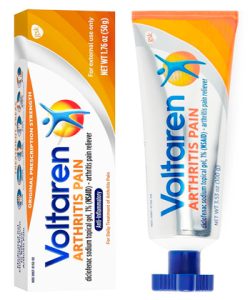
In brief
- In our pharmacy, you can buy Voltaren Gel without a prescription, with delivery in 5–14 days throughout United States. Discreet and anonymous packaging.
- Voltaren Gel is used for short-term relief of localized musculoskeletal pain (osteoarthritis of the knee/hand, sprains, strains). It contains diclofenac, a topical NSAID that inhibits cyclooxygenase (COX) enzymes to reduce prostaglandin production, inflammation and pain.
- The usual adult dose for osteoarthritis is about 4 g to the affected joint up to 4 times daily (maximum ~32 g/day); for acute muscle or joint injury use about 2 g to the affected area up to 4 times daily, not exceeding the recommended total.
- Voltaren Gel is administered topically as a gel or emulgel applied to intact skin and gently rubbed in; available in tubes (common strengths: 1%, 1.16%, and 2.32% extra strength in some markets).
- Onset: some people notice pain relief within hours, though meaningful improvement may take a few days of regular application.
- Duration of action: effects from a single application typically last around 8–12 hours; specific 12‑hour formulations are designed to provide relief up to 12 hours.
- Alcohol warning: avoid heavy alcohol use while using Voltaren Gel, as alcohol can increase the risk of gastrointestinal and liver adverse effects with NSAIDs; do not apply to broken or alcohol‑soaked skin.
- The most common side effect is local skin irritation (redness, itching, burning, dryness); systemic side effects are rare but more likely with extensive or prolonged use.
- Would you like to try Voltaren Gel without a prescription?
Basic Voltaren Gel Information
- INN (International Nonproprietary Name): Diclofenac (diclofenac sodium, diclofenac diethylamine).
- Brand Names Available In United States: Voltaren Gel 1% is marketed in the United States as a prescription topical diclofenac product.
- ATC Code: M02AA15.
- Forms & Dosages: Gel 1% (diclofenac sodium) in 20g, 50g, 100g tubes; Gel 1.16% (diclofenac diethylamine) in 50g/100g; Gel 2.32% (diclofenac diethylamine, Extra Strength) in 50g/100g; emulgel 1%; 12-hour formulations (1%/1.16%) in 100g tubes in some markets.
- Manufacturers In United States: Keltman Pharmaceuticals Inc. is listed as a U.S. repackager; global suppliers include GSK Consumer Healthcare and Novartis in various regions.
- Registration Status In United States: FDA approval via NDA; marketed as a prescription product.
- OTC / Rx Classification: Rx in the United States (Voltaren Gel 1%); OTC availability in other countries varies (for example, Canada permits a 2.32% Extra Strength OTC product).
Everyday Use & Best Practices
Morning Vs Evening Dosing
Want a simple routine that fits your day and night?
For osteoarthritis, the standard topical diclofenac routine is roughly 4 g applied to the affected joint up to four times daily, so many people spread applications across morning, midday, afternoon, and evening.
For acute sprains and strains, typical single applications are about 2 g up to four times daily, which often means a schedule like wake-up, midday, late afternoon, and bedtime.
Apply to clean, dry skin and allow the gel to absorb before covering with clothing.
Wash your hands after use unless you are treating the hands themselves.
Taking With Or Without Meals
Worried about timing around meals?
Topical application minimizes gastrointestinal exposure, so there is no need to coordinate Voltaren Gel dosing with food.
Avoid using oral NSAIDs at the same time unless your clinician advises it, because concurrent systemic NSAID use increases overall risk.
Do not apply to open wounds or mucous membranes and keep the gel away from eyes.
- Quick-Check Dosing Checklist: Osteoarthritis: ~4 g/joint up to 4×/day; Sprains/Strains: ~2 g up to 4×/day; Max ~32 g/day across joints.
- Do: Apply to intact, clean, dry skin; rub in until absorbed; wash hands after treating other areas.
- Don’t: Use on broken skin, near eyes, or double-dose.
Safety Priorities
Who Should Avoid It
Not sure if Voltaren Gel is safe for you?
Do not use topical diclofenac if you have a known allergy to diclofenac or any excipient listed on your product leaflet.
Avoid use if you have a history of asthma, urticaria, or allergic-type reactions triggered by NSAIDs or aspirin.
People with active gastrointestinal bleeding, severe hepatic or renal impairment, or significant cardiovascular disease should consult their clinician before starting topical diclofenac because systemic absorption, while lower than oral NSAIDs, still exists.
Activities To Limit
Worried about exercise or heat after applying the gel?
Avoid heavy exercise or activities that stretch or rub the treated skin immediately after application to reduce transfer and irritation.
Allow the gel to dry before covering the area with clothing and do not use heating pads over the treated area unless directed by a clinician.
- Contraindications Checklist: Allergy to diclofenac or excipients; NSAID-induced asthma or hives; peri-operative use around CABG surgery.
- Activity Precautions: Let the gel dry; avoid heat sources and occlusive dressings unless instructed; avoid swimming right after application.
Dosage & Adjustments
General Regimen
How much and how long?
For osteoarthritis of the knee or hand, apply approximately 4 g to the affected joint four times daily, which is the commonly recommended Voltaren Gel dosing method linked to trial protocols.
For acute muscle or joint injuries like sprains, apply around 2 g to the affected area up to four times daily.
The maximum recommended total is about 32 g per day across treated sites.
Courses for OA are often evaluated for benefit after up to 3–4 weeks, while acute injuries are usually limited to about 7 days unless your prescriber advises otherwise.
Special Cases
What if I’m older or have liver problems?
Children generally are not recommended users of topical diclofenac, and formulations may not be approved for pediatric use.
Elderly patients do not have a routine dose reduction defined, but they should be monitored for increased sensitivity to skin reactions and systemic effects.
Use caution in patients with hepatic or renal impairment and stop treatment if signs of liver injury appear, such as dark urine or jaundice.
If you miss an application, apply as soon as you remember unless it is near the next scheduled dose; do not double up.
User Testimonials
Positive Reports
What do people say after trying Voltaren Gel?
Many users report noticeable localized pain relief for osteoarthritis and soft-tissue injuries without the stomach upset they experienced on oral NSAIDs.
Common praise includes reduced morning stiffness in hands and knees and the convenience of targeted application that limits systemic exposure.
Common Challenges
What issues do other users mention?
Local skin irritation such as redness, itching, dryness, or a burning sensation is the most frequent complaint.
Some users find the onset slower than expected and may be disappointed if deep joint pain persists despite topical treatment.
Transfer onto clothing before the gel dries is a common nuisance, so many users advise waiting a few minutes before dressing.
- Pros: Targeted pain relief, fewer GI effects than oral NSAIDs, easy to apply.
- Cons: Possible skin irritation, slower effect on deep joint pain, potential for clothing transfer.
Buying Guide
Pharmacy Sources
Where should you look for Voltaren Gel?
In the United States, Voltaren Gel 1% is prescription-only and available at retail and online pharmacies with appropriate dispensing documentation.
Other countries may offer different strengths or OTC access, for example Voltaren Emulgel Extra Strength 2.32% is available OTC in Canada.
When comparing products, check whether the listed INN is diclofenac sodium or diclofenac diethylamine, since formulations and strengths vary by market.
Price Comparison
How price varies and how to save.
Price depends on strength (higher strength like 2.32% generally costs more), tube size (20g vs 100g), and whether you buy a brand-name tube or a generic topical diclofenac.
Look for manufacturer coupons or generic options for cost savings, and verify packaging size before checkout.
- Buying Checklist: Confirm strength and INN, check tube size, verify Rx vs OTC rules for your country, and inspect packaging for authenticity.
- Tip: Check the ATC code M02AA15 on product details if you need to confirm the active ingredient class.
What’s Inside & How It Works
Ingredients Overview
What compounds are in Voltaren Gel?
The active ingredient across Voltaren products is diclofenac, either as diclofenac sodium (commonly 1% gels) or diclofenac diethylamine (typically 1.16% or 2.32% Extra Strength emulgels).
Formulations include gel or emulgel bases and excipients that vary by country and packer, so always check the leaflet for preservatives or fragrances if you have allergies.
Mechanism Basics
How does topical diclofenac reduce pain?
Diclofenac works by inhibiting local cyclooxygenase enzymes, lowering prostaglandin production and reducing inflammation at the application site.
Topical delivery achieves useful local anti-inflammatory and analgesic effects with much lower systemic plasma levels than oral NSAIDs, which reduces but does not completely eliminate systemic risks.
| Strength | Common INN Form | Typical Packaging |
|---|---|---|
| 1% | Diclofenac Sodium | 20g, 50g, 100g Tubes |
| 1.16% | Diclofenac Diethylamine | 50g, 100g Tubes |
| 2.32% (Extra Strength) | Diclofenac Diethylamine | 50g, 100g Tubes (Some Markets) |
Main Indications
Approved Uses
What is Voltaren Gel approved to treat?
Voltaren Gel is indicated in many markets for short-term relief of localized musculoskeletal pain, including osteoarthritis of the knee and hand and acute soft-tissue injuries.
Typical product-info dosing for OA mirrors the 4 g per affected joint four times daily regimen and sprains are usually treated with around 2 g up to four times daily.
Off-Label Uses
Can clinicians use it for other pains?
Some prescribers use topical diclofenac off-label for localized tendon pain or other focal musculoskeletal complaints where evidence or clinical experience supports benefit, but this should be discussed with your provider.
| Indication | Typical Dose | Typical Duration |
|---|---|---|
| Osteoarthritis (Knee/Hand) | 4 g per joint, 4×/day | Assess benefit after up to 3–4 weeks |
| Acute Sprain/Strain | 2 g to area, up to 4×/day | Usually ≤7 days unless supervised |
Interaction Warnings
Food Interactions
Do you need to take Voltaren Gel with food?
Topical Voltaren Gel does not require co-administration with food because systemic exposure is low and food effects are negligible.
If you experience abdominal symptoms or other systemic signs, seek medical advice promptly.
Drug Conflicts
Which drugs should you watch out for?
Avoid concurrent use of oral NSAIDs when possible because of additive systemic risks to the gastrointestinal tract, kidneys, and cardiovascular system.
Exercise caution if you are taking anticoagulants, selective serotonin reuptake inhibitors (SSRIs), or other agents that increase bleeding risk; discuss medication reconciliation with your clinician.
Also alert your provider if you already use systemic diclofenac or other systemic NSAIDs prior to starting topical diclofenac.
- High-Risk Drug Classes: Oral NSAIDs, anticoagulants, SSRIs/SNRIs, systemic corticosteroids (monitor bleeding risk).
- Topical Coordination: Allow previous topical products to dry and avoid combining without medical advice to reduce skin irritation and altered absorption.
Latest Evidence & Insights
Summary Of Recent Findings
What does the research say about topical diclofenac?
Evidence supports topical diclofenac as effective for localized osteoarthritis and certain acute soft-tissue injuries, offering clinically meaningful symptom reduction with lower systemic exposure than oral NSAIDs.
Comparative studies in knee and hand OA show topical diclofenac reduces pain and improves function for many patients.
Practical Takeaways
How should you use this evidence to decide?
Topical diclofenac is a reasonable localized option for patients at elevated risk from systemic NSAIDs, but monitor for skin reactions and reassess effectiveness after several weeks.
Strength and formulation differences between 1%, 1.16%, and 2.32% can influence potency and availability, so choose the product best aligned with clinical advice and patient response.
- Key Point: Combine topical therapy with exercise, weight management, or physical therapy for longer-term benefit.
Alternative Choices
Comparable Topical NSAIDs
Looking for other topical pain gels?
Alternatives include ketoprofen gel, topical ibuprofen formulations, generic topical diclofenac gels, and topical indometacin.
Patches such as diclofenac-containing patches can offer a different delivery method and may be preferable for some patients.
Non-Pharmacologic Options
What else helps besides a tube of gel?
Targeted physical therapy, bracing, icing or heat as appropriate, weight management, and joint-strengthening exercises are effective adjuncts to topical therapy.
For chronic osteoarthritis, combining topical diclofenac with an exercise program usually produces better outcomes than either approach alone.
| Option | Pros | Cons |
|---|---|---|
| Ketoprofen Gel | Effective topical NSAID alternative | Availability varies by country |
| Physical Therapy | Improves strength and function | Requires time and appointments |
Regulation Snapshot
Global Approval Status
How is Voltaren handled around the world?
Approval and OTC/Rx status vary by country.
Voltaren Gel 1% is prescription in the United States following FDA NDA approval, while other countries such as Canada, the UK, and Australia permit OTC access for certain strengths or formulations.
OTC Vs Rx Landscape
What determines whether Voltaren Gel is OTC or Rx?
Strength, formulation (sodium vs diethylamine), and local regulatory decisions determine OTC availability.
Manufacturers and packers include GSK, Novartis, and regional repackers like Keltman in the U.S., and labels carry the ATC code M02AA15 identifying the product class.
| Country | OTC Or Rx | Common Strength |
|---|---|---|
| United States | Rx | 1% (diclofenac sodium) |
| Canada | OTC Allowed | 2.32% Extra Strength (diethylamine) |
| United Kingdom | OTC Allowed | 1.16% (diethylamine) |
FAQ Section
Quick Answers
Common questions answered fast.
Can I use Voltaren Gel anywhere? No — apply only to intact, clean skin and avoid mucous membranes and open wounds.
How fast does it work? Onset varies; many users notice improvement in days while others need several weeks.
Is it safe long-term? Topical use lowers systemic exposure but long-term use should be supervised by a clinician.
Can I use it with oral NSAIDs? Generally avoid combining topical and oral NSAIDs unless your provider advises it.
When To See A Doctor
When should you stop self-care and get help?
Seek immediate care if you develop a severe rash, wheezing, facial swelling, or other signs of an allergic reaction.
Contact your clinician if pain worsens despite treatment, if you have persistent gastrointestinal symptoms, or if you notice signs of liver dysfunction such as dark urine or jaundice.
Also consult before using Voltaren Gel if you are pregnant, breastfeeding, or taking blood thinners.
Guidelines For Proper Use
Step-By-Step Application
- Read the product leaflet for your specific formulation and strength.
- Measure the recommended gram amount; many leaflets include a 4 g dosing guide for the knee.
- Apply gently to the affected area and rub in until absorbed.
- Wash hands after application unless you are treating the hands.
- Do not cover with airtight dressings or apply heat unless instructed by your clinician.
Storage, Disposal & Travel Tips
How to keep your tube safe and legal on the go.
Store Voltaren Gel below 30°C (86°F), protect it from direct sunlight, and do not freeze.
Dispose of partly used tubes according to local regulations and the product leaflet.
When traveling, pack in carry-on luggage if needed and follow airline liquid limits for tube size.
If crossing borders, check local OTC vs Rx rules, since availability and strength may vary.
Note: In our online pharmacy, Voltaren Gel is available without a prescription, with discreet delivery to United States in 5-14 days.
Delivery Across United States
| City | Region | Delivery Time |
|---|---|---|
| New York | New York | 5-7 days |
| Los Angeles | California | 5-7 days |
| Chicago | Illinois | 5-7 days |
| Houston | Texas | 5-7 days |
| Phoenix | Arizona | 5-7 days |
| Philadelphia | Pennsylvania | 5-7 days |
| San Antonio | Texas | 5-9 days |
| San Diego | California | 5-9 days |
| Dallas | Texas | 5-7 days |
| San Jose | California | 5-9 days |
| Austin | Texas | 5-9 days |
| Jacksonville | Florida | 5-9 days |
| Fort Worth | Texas | 5-9 days |
| Columbus | Ohio | 5-9 days |
Final Notes And Red Flags
Voltaren Gel provides targeted topical diclofenac therapy for localized pain with lower systemic exposure than oral NSAIDs.
Respect the dosing guidance—typical osteoarthritis dosing is 4 g per joint up to 4 times daily and sprain dosing is about 2 g per application up to 4 times daily with a total limit of around 32 g per day.
Stop use and get medical advice for severe skin reactions, allergy signs, or symptoms suggesting liver injury.
If you are on blood thinners or have heart, kidney, or liver disease, consult your clinician before starting topical diclofenac.
For persistent or worsening pain, combine topical therapy with exercise and consult for alternative options such as other topical NSAIDs, oral analgesics, or specialist referral.