Antivert
In brief
- You can buy Antivert (meclizine) without a prescription in some pharmacies and countries, especially for lower-dose motion-sickness products, while higher-dose or vestibular-use forms may require a prescription depending on local regulations.
- Antivert is used to help prevent and treat motion sickness and vertigo. It works as a histamine H1 antagonist with antiemetic and antivertigo effects, helping reduce nausea, dizziness, and spinning sensations caused by inner-ear/vestibular problems.
- The usual dose is 25–50 mg taken about 1 hour before travel for motion sickness, and 25–100 mg per day in divided doses for vertigo, as directed by a healthcare professional.
- The form of administration is an oral tablet, chewable tablet, or oral caplet.
- It usually starts working within about 1 hour after taking it.
- The duration of action is typically about 24 hours, so it is often taken once daily if needed.
- Avoid alcohol while taking Antivert, because alcohol can increase drowsiness, dizziness, and impaired coordination.
- The most common side effect is drowsiness; dry mouth, headache, and blurred vision can also occur.
- Would you like to try Antivert without a prescription?
Basic Antivert Information
- INN (International Nonproprietary Name): Meclizine
- Brand names available in United States: Antivert®, Bonine®, Dramamine® Less Drowsy Formula
- ATC Code: N07CA03
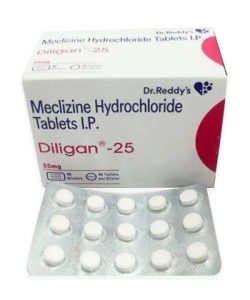
- Forms & dosages: Tablets 12.5 mg, 25 mg, 50 mg; chewable tablets 25 mg; oral caplet 25 mg
- Manufacturers in United States: Casper Pharma LLC (Antivert®)
- Registration status in United States: Rx and OTC in some forms
- OTC / Rx classification: OTC in some countries for motion sickness, prescription for vestibular conditions, higher doses, or special populations
Everyday Use & Best Practices
Morning Vs Evening Dosing
Antivert is often taken about 1 hour before travel when it is being used for motion sickness, and it may also be taken on a daily schedule for vertigo.
The best time usually depends on how much drowsiness shows up and what the day looks like.
If the person has to drive, work, or stay steady on their feet, morning dosing may be easier to plan around, but it can still cause sleepiness and increase fall risk.
Some people prefer evening dosing when sedation is noticeable, especially if they are using it for ongoing vertigo symptoms and can rest afterward.
- Before taking Antivert, check whether you need to drive soon.
- Before taking Antivert, think about fall risk, especially on stairs or at night.
- Before taking Antivert, review whether the dose is for travel or for daily vertigo control.
- Before taking Antivert, keep the plan simple if you are trying meclizine tablets for the first time.
Taking With Or Without Meals
Meclizine can generally be taken with or without food, but food may help if the stomach feels sensitive.
Real-life basics matter here: keep water nearby for dry mouth, and try to avoid alcohol because it can make sleepiness worse.
U.S. shoppers commonly see Antivert tablets in 12.5 mg, 25 mg, and 50 mg strengths, while Bonine chewables and Dramamine Less Drowsy Formula are other familiar meclizine products.
For people comparing motion sickness medication options, meclizine 25 mg is one of the most recognized starting strengths, and travel nausea pills are often chosen based on how quickly they need relief and how much drowsiness they can tolerate.
Safety Priorities
Who Should Avoid It
Antivert is not for everyone, and safety screening matters before a dose is taken.
Absolute contraindications include known hypersensitivity to meclizine or any excipients, and children under 12 years unless a physician specifically directs use.
Extra caution is needed in people with glaucoma, urinary retention or prostatic hypertrophy, asthma or other respiratory disorders, hepatic or renal impairment, and older adults.
- Check with a clinician first if glaucoma is part of the medical history.
- Check with a clinician first if there is trouble emptying the bladder.
- Check with a clinician first if breathing disorders are present.
- Check with a clinician first if there is liver or kidney impairment.
- Check with a clinician first if the patient is an older adult with fall risk or memory concerns.
Activities To Limit
Driving, operating machinery, and other alertness-heavy tasks should be limited until the person knows how meclizine affects them.
Drowsiness, confusion, blurred vision, and sedation can show up, and older adults are more vulnerable to falls and cognitive slowing.
If symptoms are severe or keep coming back, it is better not to self-treat indefinitely without an evaluation.
Dosage & Adjustments
General Regimen
Dosing depends on why Antivert is being used.
For motion sickness, adults typically take 25 to 50 mg 1 hour before travel, and the dose may be repeated every 24 hours if needed.
For vertigo, the usual adult range is 25 to 100 mg daily in divided doses.
Pediatric use is not recommended under 12 years.
| Indication | Adult Dose | Timing |
|---|---|---|
| Motion sickness | 25–50 mg | 1 hour before travel; repeat every 24 hours if needed |
| Vertigo | 25–100 mg daily | Divided doses |
Special Cases
Older adults should use the lowest effective dose because sedation and anticholinergic effects can be more troublesome.
There are no formal renal or hepatic adjustment guidelines, but caution is advised and central nervous system effects should be monitored.
Treatment duration also differs: motion sickness use is usually short-term, while vertigo treatment may be more chronic and individualized.
User Testimonials
Positive Reports
People often describe fewer motion sickness episodes, easier car or cruise travel, and less vertigo-related imbalance.
Predictable symptom control matters a lot, especially when someone wants a medication that is easy to find as Antivert, Bonine, or generic meclizine.
Common Challenges
Typical comments sound like this:
- “It helped my travel nausea, but it made me sleepy.”
- “My mouth felt dry for hours after the dose.”
- “It worked, but I felt groggy the next morning.”
Testimonials are useful, but they do not replace medical advice, and response can vary from person to person.
Buying Guide
Pharmacy Sources
In the U.S., Antivert is sold as tablets in 12.5 mg, 25 mg, and 50 mg strengths, usually in bottles of 100.
Bonine is a chewable tablet, and Dramamine Less Drowsy Formula is another market option.
Online and e-pharmacy listings may appear as meclizine HCl or local equivalents, and international suppliers may list brands tied to Teva, Sandoz, or other generic manufacturers.
| Brand | Dosage Form | Packaging |
|---|---|---|
| Antivert® | Tablets 12.5 mg, 25 mg, 50 mg | Bottles of 100 |
| Bonine® | Chewable tablets 25 mg | Blister of 8, bottle of 100 |
| Dramamine® Less Drowsy Formula | Meclizine product line | Varies by listing |
| Generic meclizine | Tablets or caplets | Varies by manufacturer |
Price Comparison
Price shopping should look at strength, tablet count, brand versus generic, and pharmacy reputation, not just the sticker price.
It is also smart to confirm whether the product is OTC or Rx in the buyer’s region before ordering.
Sites that do not list strength, manufacturer, or regulatory status are better left alone.
What’s Inside & How It Works
Ingredients Overview
The INN is meclizine, and the drug class is an antihistamine H1 antagonist under ATC code N07CA03.
Product labels may read meclizine hydrochloride, Antivert, or Meclizine 25 mg, depending on the market.
Available forms include tablets, chewable tablets, and oral caplets.
| Form | Strength | Region |
|---|---|---|
| Tablet | 12.5 mg | USA |
| Tablet | 25 mg | EU, USA, Asia |
| Tablet | 50 mg | USA |
| Chewable tablet | 25 mg | USA, Canada |
| Oral caplet | 25 mg | Asia, Latin America |
Mechanism Basics
Meclizine helps reduce the brain’s response to motion-related signals, which can ease vertigo and motion sickness.
That is why it is used as a practical motion sickness medication rather than a deep, technical treatment for every kind of nausea.
It is not intended for all causes of nausea, especially nausea that is not tied to vestibular dysfunction.
Main Indications
Approved Uses
The main uses are motion sickness and vertigo or other vestibular symptoms.
For motion sickness, the usual adult dose is 25 to 50 mg before travel.
For vertigo, adults may take 25 to 100 mg daily.
Availability can be OTC for motion sickness in some countries and prescription-based for vestibular conditions or special populations.
- Motion sickness when travel is expected.
- Vertigo with spinning or imbalance symptoms.
- Vestibular symptoms that need daily control.
- Travel nausea pills when a predictable plan is needed.
Off-Label Uses
Antivert is not for general nausea from unrelated causes.
Some people misuse it as a sleep aid because it can cause drowsiness, but that is not its intended use.
There is also research interest in migraine and neuro-inflammation, but standard use still centers on motion sickness and vertigo relief.
Interaction Warnings
Food Interactions
Meclizine can usually be taken with or without food, but alcohol should be avoided or limited because it can worsen sedation.
It is also wise to be cautious with other substances that cause drowsiness, including some sleep aids and calming medicines.
Drug Conflicts
Additive effects can happen with other antihistamines, sedatives, and anticholinergic drugs.
- Other antihistamines.
- Sedatives and sleep medicines.
- Anticholinergic drugs.
- Medications that worsen glaucoma or urinary retention.
Patients should tell clinicians about all OTC products, because even “less drowsy” products can still interact.
Latest Evidence & Insights
What Current Use Shows
Meclizine remains widely used because it is practical, familiar, and available in multiple markets.
The regulatory picture is mixed: it is FDA Rx and OTC in some forms, registration in the EU varies by country, and it is also available in Canada, Australia, and parts of Asia.
For patients, the real issues are access, tolerability, and whether the medication gives reliable symptom relief.
What To Watch In Future Research
Researchers continue to look at neuro-inflammation and migraine prevention, but those ideas should not be overstated.
For now, the everyday value of meclizine hydrochloride is still tied to vertigo treatment and motion sickness relief.
Alternative Choices
Comparable Medications
Some people do better with a different option if sedation or symptom control becomes a problem.
| Medication | Best For | Common Drawback | Key Caution |
|---|---|---|---|
| Dimenhydrinate | Motion sickness | Can be sedating | Driving caution |
| Cyclizine | Motion sickness or vestibular symptoms | Dry mouth | Anticholinergic effects |
| Promethazine | Strong nausea control | More sedation | Falls and confusion |
| Scopolamine | Motion sickness prevention | Patch-related issues | Glaucoma caution |
| Betahistine | Vestibular disorders | Different availability | Condition-specific use |
When To Consider Switching
An alternative may make sense if meclizine causes too much drowsiness, does not control symptoms, or is not appropriate because of a contraindication.
Choice depends on the underlying condition, so the best vertigo pill is the one matched to the patient’s situation.
Regulation Snapshot
U.S. And Global Status
In the United States, meclizine is Rx and OTC in some forms.
Across the EU, status varies by country, and in Romania there was no specific public listing for Antivert as of July 2025.
Lower-dose forms are more likely to be OTC in some countries.
What Buyers Should Verify
Check the local database or pharmacist for the exact product name, including meclizine, meclozine, meclizina, or meclizine hydrochloride.
Packaging and brand names differ by region, so the label should always be reviewed closely before purchase.
Common Questions
Common Questions
- How long before travel should I take Antivert? About 1 hour before travel is typical for motion sickness.
- Can I take it every day? Yes, some adults use it daily for vertigo, but the dose and duration should be individualized.
- Why does it make me sleepy? Drowsiness and sedation are known effects, especially at higher doses.
- Is it okay for children? It is not recommended under 12 years unless a physician directs otherwise.
Quick Clarifications
It is not for all nausea, children under 12 should not use it unless directed by a physician, and overdose needs emergency care.
If a dose is missed, take it when remembered unless the next dose is near, and do not double up.
Guidelines For Proper Use
Storage And Transport
Keep Antivert at room temperature, between 20 and 25°C, and protect it from moisture and heat.
Carry it in the original package, and avoid freezing or excessive heat during travel.
- Pack the original bottle or blister pack.
- Keep it away from damp bags or bathroom storage.
- Avoid leaving it in a hot car.
- Check the label before every trip.
Daily-Use Rules
Take it as directed, avoid doubling doses, and watch for sedation.
If overdose symptoms appear, including severe drowsiness, seizures, or anticholinergic toxicity, emergency care is needed right away.
Older adults should use the lowest effective dose and monitor closely for confusion or falls.
Delivery Across United States
| City | Region | Delivery time |
|---|---|---|
| New York | Northeast | 5-7 days |
| Los Angeles | West | 5-7 days |
| Chicago | Midwest | 5-7 days |
| Houston | South | 5-7 days |
| Phoenix | West | 5-7 days |
| Philadelphia | Northeast | 5-7 days |
| San Antonio | South | 5-9 days |
| San Diego | West | 5-7 days |
| Dallas | South | 5-7 days |
| San Jose | West | 5-9 days |
| Austin | South | 5-7 days |
| Jacksonville | South | 5-9 days |
| Fort Worth | South | 5-9 days |
| Columbus | Midwest | 5-9 days |
| Charlotte | South | 5-9 days |
In our online pharmacy, Antivert is available without a prescription, with discreet delivery to United States in 5-14 days.