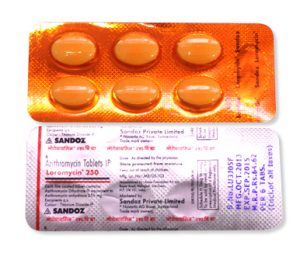
Azithromycin
In brief
- In our pharmacy, you can buy azithromycin without a prescription, with delivery available in the United States. Discreet packaging is provided.
- Azithromycin is an antibiotic used to treat many bacterial infections, such as respiratory tract infections, skin infections, ear infections, and some sexually transmitted infections. It works by binding to the bacterial 50S ribosomal subunit and inhibiting protein synthesis.
- The usual dose depends on the infection, but common adult regimens include 500 mg on day 1 followed by 250 mg once daily on days 2–5, or 500 mg once daily for 3 days.
- The form of administration is usually an oral tablet or capsule, and it is also available as an oral suspension; in some cases, it may be given intravenously.
- Azithromycin starts working within a few hours, but noticeable symptom improvement is often seen within 1–3 days.
- The duration of action is prolonged, with antibacterial effects lasting several days after the last dose because the drug stays in body tissues for a long time.
- Alcohol should generally be limited. While there is no major direct interaction, alcohol can worsen stomach upset and may slow recovery from infection.
- The most common side effects are nausea, diarrhea, abdominal pain, vomiting, and sometimes headache.
- Would you like to try azithromycin without a prescription?
Basic Azithromycin Information
- INN (International Nonproprietary Name): azithromycin
- Brand names available in United States: Zithromax, Z-Pak, Zmax
- ATC code: J01FA10
- Forms and dosages: azithromycin tablets, azithromycin 5-day pack, azithromycin oral suspension, extended-release option
- Manufacturers in United States: not specified
- Registration status in United States: FDA approved, prescription only
- OTC / Rx classification: prescription only (Rx)
Everyday Use And Best Practices
Does azithromycin fit into a normal day without turning the schedule upside down?
For most people, yes, because azithromycin is usually taken once daily.
The exact time matters less than taking it consistently at about the same time each day, whether that is after breakfast, with teeth brushing at night, or tied to a phone reminder.
That routine is especially helpful with a Z-Pak, where the azithromycin 5-day pack is designed to be simple and short.
Some prescriptions use a 5-day regimen, while others use a single-dose extended-release option, so the label should always be followed exactly.
Azithromycin tablets can often be taken with or without food.
If nausea shows up, taking the dose with a light meal may make it easier to tolerate.
A full glass of water can help swallow the medicine comfortably, and staying hydrated supports recovery when the body is fighting infection.
- Do this before each dose: confirm the prescribed dose.
- Do this before each dose: check the timing on the label.
- Do this before each dose: avoid doubling up if a dose was missed.
- Do this before each dose: finish the full prescribed course.
Safety Priorities
Could azithromycin be unsafe for some people?
Yes, and that is why it is prescription-only.
People with a known macrolide allergy should not take it.
Extra caution is needed in patients with significant heart rhythm problems, a history of QT prolongation, severe liver disease, or a past serious reaction to similar antibiotics.
Pregnancy, breastfeeding, and complex chronic illness are all situations where a clinician should review the risks and benefits first.
Alcohol in excess is worth avoiding if it worsens stomach side effects or contributes to dehydration.
Dizziness, faintness, or palpitations can make driving or using machinery risky, so those activities should be limited if symptoms appear.
- Call a clinician urgently if there is a severe rash.
- Call a clinician urgently if there is trouble breathing.
- Call a clinician urgently if there is fainting.
- Call a clinician urgently if there is an irregular heartbeat.
Dosage And Adjustments
What does a normal azithromycin dose look like?
That depends on the infection, the patient’s age, and the form being used.
A common adult schedule is a Z-Pak style 5-day course, but other clinician-selected regimens are also used.
Azithromycin 250 mg and azithromycin 500 mg products are not interchangeable unless the prescription specifically matches that strength and schedule.
| Pack Type | Common Strength | Typical Use |
|---|---|---|
| Azithromycin 250 mg pack | 250 mg tablets | Often used for a Z-Pak style regimen |
| Azithromycin 500 mg tablets | 500 mg | Used in some clinician-selected schedules |
| Oral suspension | Liquid form | Common in children and for weight-based dosing |
Children may receive azithromycin oral suspension with weight-based dosing.
Older adults may need extra monitoring if there are cardiac or liver concerns.
If a dose is missed, the usual advice is to take it as soon as remembered unless it is close to the next dose.
Doubling up is never the fix.
Severe vomiting, fainting, or an abnormal heartbeat after taking too much medicine needs urgent help right away.
User Testimonials
What do patients usually like about azithromycin?
People often mention the simple once-daily routine, the short treatment course, and the convenience of the packaging.
Busy patients appreciate the Z-Pak format because it fits better into workdays, school runs, and travel.
- “One dose a day was easy to remember.”
- “The azithromycin 5-day pack kept the course straightforward.”
- “The packaging made it simple to stay on track.”
- “I had some stomach upset, but the short course helped.”
- “The metallic taste was annoying, but symptoms improved when I finished the course.”
Common challenges include stomach upset, diarrhea, nausea, and a metallic taste.
Another real-world problem is stopping too early once symptoms improve, which can reduce treatment success.
Buying Guide
Where should azithromycin be purchased?
Only from a licensed pharmacy with a valid prescription.
In the U.S., common options include Zithromax and generic azithromycin tablets or oral suspension.
Packaging may vary by manufacturer, but the strength and directions must match the prescription exactly.
Cost can vary based on brand versus generic, tablet strength, quantity, and insurance coverage.
It usually helps to compare the total cost per course instead of looking at the price per tablet alone.
| Option | Strength | Typical Pack Size | Cost Notes |
|---|---|---|---|
| Brand Zithromax | 250 mg or 500 mg | Varies by regimen | Often higher than generic |
| Generic azithromycin tablets | 250 mg or 500 mg | Course-based packs | Usually lower azithromycin price |
| Azithromycin oral suspension | Weight-based strength | Bottle | Often used in pediatrics |
Buying prescription antibiotics without a prescription is a red flag and should be avoided.
In our online pharmacy, azithromycin is available without a prescription, with discreet delivery to United States in 5-14 days.
What Is Inside And How It Works
What is actually in azithromycin medicine?
Azithromycin is the active ingredient.
Inactive ingredients vary by manufacturer and dosage form, and packaging can differ between brands.
Tablets and oral suspension are the most common forms.
Azithromycin is a macrolide antibiotic that stops susceptible bacteria from growing.
That makes it useful when a bacterial infection is likely, not when the illness is caused by a virus.
| Condition Type | What Azithromycin Does |
|---|---|
| Bacterial infection | Can help treat susceptible bacteria |
| Viral illness | Does not treat colds or flu |
Main Indications
When is azithromycin commonly prescribed?
Common uses include certain respiratory, skin, ear, and some sexually transmitted infections, depending on local labeling and clinician judgment.
The exact approved indication can vary by country and product label.
Some clinicians also use it in select situations outside the label when the evidence and clinical context support it.
Self-treating unknown symptoms is not appropriate, because the right antibiotic depends on the diagnosis.
- Azithromycin may be prescribed for a confirmed or strongly suspected bacterial infection.
- Azithromycin may be prescribed when a clinician chooses a short-course regimen for adherence.
- Azithromycin may be prescribed when local guidance supports its use.
- Azithromycin should not be expected to help with viral colds, flu, or unexplained pain.
Interaction Warnings
Can food or other medicine change how azithromycin works?
Food usually does not block azithromycin, but a heavy meal may worsen stomach upset for some users.
If nausea is already present, hydration and avoiding unnecessary stomach irritants can make the course easier.
Medication review matters because some drugs can increase heart rhythm risk or interact with macrolide antibiotics.
That includes prescription drugs, supplements, and over-the-counter products.
| Interaction Category | Why It Matters | Main Caution |
|---|---|---|
| Heart rhythm drugs | Can raise azithromycin heart risk | Review with a clinician before use |
| Anticoagulants | May need closer monitoring | Ask about bleeding and dose checks |
| Other antibiotics | May overlap or duplicate treatment | Do not combine without advice |
If multiple prescription medicines are being taken, a pharmacist should check the full list for interactions.
Latest Evidence And Insights
Why do clinicians still reach for azithromycin?
Convenient dosing and broad clinical familiarity are major reasons.
Current guidance continues to favor using antibiotics only when clearly indicated so resistance does not grow faster than treatment options.
Real-world success still depends on the basics: the right diagnosis, good adherence, and finishing the prescribed course.
Shorter regimens can improve adherence for some patients, especially those who struggle with longer antibiotic schedules.
| What Clinicians Value | What Patients Notice |
|---|---|
| Short-course dosing | Easier to finish |
| Broad familiarity | Clearer instructions |
| Stewardship concerns | Need to use only when appropriate |
Alternative Choices
What if azithromycin is not the best fit?
The answer depends on the infection, local resistance patterns, allergies, and lab results.
Other antibiotic classes may be chosen when azithromycin is not appropriate.
| Alternative | When Considered | Main Caution |
|---|---|---|
| Other macrolides | When a macrolide antibiotic is still preferred | Same class-related allergy and interaction concerns |
| Penicillins | When the infection is better covered by this class | Allergy history matters |
| Cephalosporins | When clinically justified by the infection | Need appropriate selection by diagnosis |
| Doxycycline | When azithromycin vs doxycycline is being considered | Not suitable for every patient |
| Fluoroquinolones | When other options are not appropriate | Reserved use because of safety concerns |
Patients should not swap antibiotics based on internet advice or a past prescription.
Regulation Snapshot
What is the legal status of azithromycin in the United States?
It is FDA approved and prescription only.
Azithromycin is widely available as generic and branded products, including Zithromax and Z-Pak-style packs.
Product labeling and packaging can differ by manufacturer, but the prescription must specify the correct strength and regimen.
| Status | Common Forms | Typical Packaging |
|---|---|---|
| Rx only | Tablets and oral suspension | Bottle or course pack |
| FDA approved | Zithromax, generic azithromycin | Manufacturer-dependent |
Frequently Asked Questions
- How long does azithromycin stay in the body? It stays in the body for some time after the last dose, which is one reason short courses are common.
- Can I take azithromycin with food? Yes, it can often be taken with or without food, and a light meal may help if nausea happens.
- What should I do if I miss a dose? Take it as soon as remembered unless it is almost time for the next dose, and do not double up.
- Is azithromycin the same as a Z-Pak? A Z-Pak is a common azithromycin packaging format, but not every azithromycin prescription is a Z-Pak.
- Can I use azithromycin for weight loss? No, azithromycin is an antibiotic and is not used for weight loss.
- When should I call a doctor? Get help for severe rash, breathing trouble, fainting, severe diarrhea, or palpitations.
Guidelines For Proper Use
How can azithromycin be taken correctly from start to finish?
Follow the prescription exactly, take it at the same time each day if possible, and finish the full course unless a clinician tells you otherwise.
If the medicine is a suspension, it should be measured carefully and shaken if the label says to do so.
Tablets and suspension should be stored at room temperature, away from heat and moisture, and kept in the original container when traveling.
Follow-up is needed if symptoms are not improving, side effects are worsening, or an allergic reaction is suspected.
- Verify the dose before each use.
- Take azithromycin exactly as directed.
- Store it properly at room temperature.
- Watch for warning signs such as rash, breathing trouble, or palpitations.
- Ask a pharmacist if the medicine list has changed.
Delivery Across United States
| City | Region | Delivery time |
|---|---|---|
| New York City | Northeast | 5-7 days |
| Los Angeles | West | 5-7 days |
| Chicago | Midwest | 5-7 days |
| Houston | South | 5-7 days |
| Phoenix | West | 5-7 days |
| Philadelphia | Northeast | 5-7 days |
| San Antonio | South | 5-7 days |
| San Diego | West | 5-7 days |
| Dallas | South | 5-7 days |
| San Jose | West | 5-7 days |
| Austin | South | 5-7 days |
| Jacksonville | South | 5-9 days |
| Fort Worth | South | 5-9 days |
| Columbus | Midwest | 5-9 days |