Lamisil
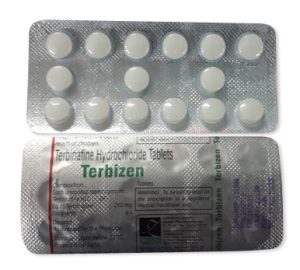
In brief
- In many pharmacies you can buy Lamisil topical forms (cream or spray) without a prescription or receipt in some markets; however, oral Lamisil (terbinafine 250 mg tablets) is prescription-only in most countries including the United States.
- Lamisil is used to treat fungal skin and nail infections such as onychomycosis (nail fungus), tinea pedis (athlete’s foot), tinea corporis and cruris; it is fungicidal and works by inhibiting squalene epoxidase, blocking ergosterol synthesis and causing fungal cell death.
- The usual adult oral dose is 250 mg once daily (commonly 6 weeks for fingernail infections and 12 weeks for toenail infections); for skin infections oral therapy is often 2–4 weeks; topical creams/sprays are typically applied once or twice daily.
- Forms of administration include oral tablets (250 mg), topical cream 1%, and topical spray 1% (also available as generic terbinafine in similar formulations).
- Onset: topical treatment may start to relieve symptoms within days to a week; oral terbinafine begins antifungal activity within days, but noticeable clinical improvement often takes 2–4 weeks and nails may take months to show full improvement.
- Duration of action: terbinafine accumulates in skin and adipose tissue with a terminal half-life around 16 days after repeated dosing; treatment courses typically range from 1–12 weeks depending on the indication, with effects persisting as tissues clear and nails regrow.
- Alcohol warning: avoid excessive alcohol while taking oral terbinafine and monitor alcohol intake, as alcohol may increase the risk of liver injury; consult your provider and monitor liver tests if you drink regularly.
- The most common side effect is gastrointestinal upset (nausea, diarrhea); other common effects include headache, taste disturbances, rash, and mild liver enzyme elevations—serious liver injury and hypersensitivity reactions are rare.
- Would you like to try “lamisil” without a prescription?
Basic Lamisil Information
- INN (International Nonproprietary Name): Terbinafine.
- Brand Names Available In United States: Lamisil® — tablets 250 mg in blister packs or bottles.
- ATC Code: D01BA02.
- Forms & Dosages: Oral tablet 250 mg (packs of 7, 14, 28, 30 tablets), cream 1% (7 g, 15 g, 30 g tubes), topical spray 1% (15 mL, 30 mL bottles).
- Manufacturers In United States: Novartis (original), with many generics produced by Sandoz and other generic suppliers globally.
- Registration Status In United States: Lamisil® (terbinafine hydrochloride) is FDA-approved as a prescription medicine for onychomycosis and tinea infections.
- OTC / Rx Classification: Oral tablet is prescription-only in the United States.
Important Instructions And Warnings — Read This First
Follow your prescriber’s directions for Lamisil (terbinafine) exactly.
Oral Lamisil is typically 250 mg once daily for adults; topical cream or spray is 1% applied one to two times per day.
Have baseline liver tests if your clinician requests them and report jaundice, dark urine, or persistent nausea immediately.
Use topical products on clean, dry skin only.
Oral terbinafine is prescription-only in the United States and is contraindicated in active or chronic liver disease and in people with known hypersensitivity to terbinafine or any excipients.
Avoid or limit alcohol while taking oral therapy because of liver risk.
Be cautious with medications metabolized by CYP2D6 because drug interactions are possible.
Set a single daily reminder, such as a phone alarm or a pillbox alert, for the oral dose.
For topical use, pair application with an existing routine like after showering or before bed.
Wash hands after cream application and store tablets and topical products at 15–30°C (59–86°F), away from moisture and light.
Everyday Use & Best Practices
Morning Vs Evening Dosing
Pick a consistent time for the 250 mg oral tablet that you will remember every day.
Many patients choose morning with breakfast to reduce the chance of missed doses, but evening is acceptable if it fits your routine.
Terbinafine’s antifungal effect is cumulative, and steady state builds over weeks.
The terminal half-life after repeated dosing is about 16 days, so consistency matters more than exact timing.
Taking With Or Without Meals
Oral absorption of terbinafine is about 40 to 50 percent, and the tablet can be taken with or without food.
If you experience nausea, try taking the tablet with a light meal to reduce stomach upset.
Topical 1% cream or spray should be applied to clean, dry skin one to two times daily as directed on the product insert.
If you miss a daily oral dose, take it when you remember unless it is almost time for the next dose; do not double up doses.
- Dosing Checklist: Take terbinafine 250 mg once daily at the same time each day.
- Pillbox Schedule: Use a weekly pillbox and set one alarm for the single daily dose.
- Topical Routine: Apply cream after showering or at bedtime and wash hands after application.
Safety Priorities
Who Should Avoid It
Do not use oral terbinafine if you have known hypersensitivity to terbinafine or any excipients.
Avoid oral terbinafine in active or chronic liver disease because of the risk of hepatic toxicity.
Use caution in patients with pre-existing mild liver dysfunction and discuss monitoring with your clinician.
Moderate to severe renal impairment, defined as creatinine clearance below 50 mL per minute, may require dose adjustment or avoidance.
Pregnancy and breastfeeding require a risk-benefit discussion with your prescriber because routine use is not recommended without specialist guidance.
Activities To Limit
Terbinafine can cause dizziness, headache, or fatigue in some users.
Avoid driving or operating heavy machinery until you know how terbinafine affects you.
Limit alcohol intake while on oral therapy due to potential liver risk.
Watch for skin reactions and seek immediate care for any signs of anaphylaxis such as swelling or difficulty breathing.
| Contraindication | Notes |
|---|---|
| Hypersensitivity To Terbinafine Or Excipients | Absolute contraindication. |
| Active Or Chronic Liver Disease | Avoid oral treatment due to hepatic risk. |
| Moderate/Severe Renal Impairment (CrCl <50 mL/min) | Consider dose reduction or avoidance. |
- Quick Warning Checklist: Stop oral therapy and contact your clinician if you develop jaundice, dark urine, or persistent nausea.
- When To Seek Help: New severe rash, facial swelling, difficulty breathing, or signs of liver failure.
Dosage & Adjustments
General Regimen
The standard adult oral dose is terbinafine 250 mg once daily.
For onychomycosis, typical durations are six weeks for fingernails and twelve weeks for toenails.
For tinea corporis or tinea cruris, oral courses are commonly two to four weeks.
Tinea pedis (athlete’s foot) oral therapy is usually two to six weeks depending on clinical response.
Topical formulations are typically 1% cream or spray applied one to two times daily for one to four weeks depending on the site and severity.
Special Cases
Children under 18 are not routinely recommended to take oral terbinafine; use in pediatrics is off-label and should be guided by a specialist.
Elderly patients generally do not require routine dose changes but should have closer monitoring of hepatic and renal function.
In moderate to severe renal impairment (CrCl under 50 mL per minute), consider reducing the oral dose by roughly 50 percent or avoiding oral therapy.
Hepatic impairment is a contraindication for oral terbinafine; avoid use due to toxicity risk.
| Condition | Typical Oral Dose | Usual Duration |
|---|---|---|
| Onychomycosis (Fingernail) | 250 mg once daily | 6 weeks |
| Onychomycosis (Toenail) | 250 mg once daily | 12 weeks |
| Tinea Corporis/Cruris | 250 mg once daily | 2–4 weeks |
| Tinea Pedis | 250 mg once daily | 2–6 weeks |
- Adjustment Checklist: Check renal function before starting if there is known impairment.
- Monitoring: Discuss baseline liver tests with your prescriber if indicated.
User Testimonials (Summarized Insights)
Positive Reports
Many patients report visible improvement in athlete’s foot or ringworm within one to three weeks with topical therapy.
Nail appearance often improves months after completing oral therapy for onychomycosis because nails grow slowly.
Oral terbinafine is praised for convenience as a once-daily tablet and for higher cure rates for dermatophyte nail infections compared with older regimens.
Common Challenges
Some patients describe taste disturbances, known medically as dysgeusia, which can be bothersome.
Mild gastrointestinal symptoms such as nausea or dyspepsia and transient headaches are commonly reported.
A minority of users experience liver enzyme elevations during oral therapy that led to stopping treatment.
Fungal relapse after therapy is not unusual and may require re-evaluation, culture, or specialist referral.
- Pros: Effective for nail fungus, once-daily dosing, topical options for skin infections.
- Cons: Time to nail improvement, possible taste changes, hepatic monitoring needed for oral use.
- Patient Monitoring Checklist: Watch for taste changes, persistent nausea, jaundice, or dark urine and report promptly.
Buying Guide
Pharmacy Sources
In the United States, oral Lamisil (terbinafine hydrochloride) is prescription-only and should be dispensed by licensed pharmacies.
Topical 1% cream or spray availability varies by market and may be OTC in some regions outside the United States.
Manufacturers listed in product information include Novartis, Sandoz, and a wide range of generic suppliers such as Zentiva, Teva, and Glenmark.
Buy from licensed pharmacies and verify online pharmacies before purchasing because oral tablets require a valid prescription where regulated.
Price Comparison
Price varies by brand, pack size, and insurance coverage.
Generic terbinafine tablets are usually less expensive than branded Lamisil and come in pack sizes suitable for full treatment courses (7 to 30 tablets).
Topical tubes of 1% cream vary in price by retailer and tube size.
When comparing prices, consider total packs needed for the recommended treatment duration and any copays, coupons, or manufacturer discounts.
Our online pharmacy sells lamisil without a prescription and offers discreet delivery to the United States in 5–14 days.
| Form | Typical Pack Sizes | Availability Notes |
|---|---|---|
| Oral Tablet 250 mg | 7, 14, 28, 30 tablets | Prescription-only in the United States. |
| Cream 1% | 7 g, 15 g, 30 g tubes | Topical availability varies by market. |
| Spray 1% | 15 mL, 30 mL bottles | Useful for large surface areas in some regions. |
What’s Inside & How It Works
Ingredients Overview
The active ingredient is terbinafine, listed as the INN.
Common pharmaceutical forms are oral tablet 250 mg and topical 1% cream or spray in tubes or bottles of varying sizes.
Excipients differ by manufacturer, so check the package leaflet for allergy information.
Generic brands may be labeled simply as terbinafine or under local names such as Terbisil or Zabel.
Mechanism Basics
Terbinafine is a fungicidal allylamine that inhibits squalene epoxidase.
Inhibition of squalene epoxidase blocks ergosterol synthesis and leads to fungal cell death.
Oral therapy achieves tissue concentrations that persist, with a terminal half-life after repeated dosing of roughly 16 days.
That pharmacokinetic profile supports once-daily dosing and sustained activity after stopping therapy.
- Formulation Differences: Oral tablets provide systemic tissue levels for nail infections while topical 1% creams deliver local concentrations for skin tinea.
- Storage: Keep at 15–30°C and protect from moisture and light.
Main Indications
Approved Uses
Oral Lamisil is indicated for onychomycosis (fungal nail infections) and dermatophyte tinea infections according to product information and regulatory approvals.
Typical oral regimens are 250 mg once daily for six weeks for fingernails and twelve weeks for toenails.
For skin tinea, oral courses last two to six weeks depending on the site, while topical therapy is commonly used for superficial infections.
Off-Label Uses
Clinicians may use terbinafine off-label in selected fungal infections under specialist guidance.
Topical terbinafine 1% is commonly recommended for athlete’s foot, jock itch, and ringworm.
Recurrent or treatment-resistant infections should prompt culture and possible specialist referral before repeating systemic therapy.
| Indication | Formulation | Usual Duration |
|---|---|---|
| Onychomycosis | Oral 250 mg | 6–12 weeks |
| Athlete’s Foot (Tinea Pedis) | Topical 1% Cream/Spray or Oral | 1–6 weeks depending on route and severity |
| Ringworm (Tinea Corporis) | Topical 1% or Oral | 1–4 weeks topical; 2–4 weeks oral |
Interaction Warnings
Food Interactions
There is no strict requirement to take terbinafine with food because absorption is around 40 to 50 percent.
If gastrointestinal upset occurs, take the tablet with food to ease nausea.
Avoid applying topical formulations to broken skin or near the eyes and allow cream to dry before covering with clothing or socks.
Drug Conflicts
Terbinafine affects cytochrome P450 enzymes and is notably associated with CYP2D6 interactions.
Drugs metabolized by CYP2D6, including some antidepressants and certain beta-blockers, can have altered levels when used with terbinafine.
Provide a full medication list to your prescriber or pharmacist to check for potential interactions before starting therapy.
| Medication Class | Interaction Concern |
|---|---|
| CYP2D6 Substrates (Some Antidepressants) | Potential for altered drug levels; monitor closely. |
| Certain Beta-Blockers | Plasma concentrations may be affected; adjust therapy as needed. |
- Meds To Review With Prescriber: Antidepressants, beta-blockers, and any other chronic medications.
- Pharmacist Tip: Bring a complete medication list including OTC and herbal products for interaction screening.
Latest Evidence & Insights
Current clinical practice supports terbinafine as a first-line oral option for dermatophyte onychomycosis because of favorable cure rates and once-daily dosing.
Comparisons with itraconazole and fluconazole often focus on spectrum of activity, hepatic safety, and interaction profiles.
Itraconazole may be preferred for some non-dermatophyte fungi, while newer topical agents like efinaconazole offer nail-focused options without systemic exposure.
Repeated oral dosing leads to tissue accumulation and a terminal half-life of about 16 days, which explains sustained activity after stopping therapy.
Ongoing research emphasizes shorter courses, careful hepatic monitoring, and topical alternatives for patients who cannot take systemic therapy.
- Comparative Points: Terbinafine — high cure rates for dermatophyte nails; itraconazole — alternative for non-dermatophyte organisms; topical efinaconazole — avoids systemic exposure.
- Pharmacokinetics Note: Oral absorption ~40–50% with extensive first-pass metabolism and tissue accumulation.
Alternative Choices
For nail fungus, alternatives include itraconazole orally and topical options such as efinaconazole (Jublia) and ciclopirox.
Fluconazole is sometimes used off-label for dermatophyte infections depending on clinician judgment.
Topical therapy avoids systemic hepatic exposure but often requires prolonged application and may have lower cure rates for nails.
For skin tinea, topical terbinafine 1% is effective and commonly used, with azole creams like clotrimazole or miconazole as alternatives depending on preference and sensitivity.
| Agent | Route | Pros | Typical Use-Case |
|---|---|---|---|
| Terbinafine | Oral / Topical | High nail cure rates; once-daily oral dosing | Dermatophyte onychomycosis; tinea |
| Itraconazole | Oral | Broader antifungal spectrum for some organisms | Non-dermatophyte nail infections or alternatives |
| Efinaconazole | Topical | No systemic exposure; designed for nails | Onychomycosis when systemic therapy is contraindicated |
| Ciclopirox | Topical | Topical option for mild nail disease | Superficial nail infections; adjunctive therapy |
Regulation Snapshot
INN: terbinafine.
ATC Code: D01BA02 (Allylamines for dermatological use).
In the United States, oral Lamisil (terbinafine hydrochloride) is prescription-only and FDA-approved for onychomycosis and tinea infections.
Manufacturers include Novartis as the original maker, with many generics supplied by companies such as Sandoz, Zentiva, Teva, and Glenmark.
Typical packaging: tablets 250 mg in blister packs or bottles (7–30 tablets), cream 1% tubes (7–30 g), and sprays (15–30 mL).
Storage recommendation is 15–30°C and keep products protected from moisture and light.
| Item | Details |
|---|---|
| INN | Terbinafine |
| ATC Code | D01BA02 |
| Typical Packaging | Tablets 7–30; Cream 7–30 g; Spray 15–30 mL |
| Storage | 15–30°C (59–86°F), protect from moisture and light |
Frequently Asked Questions
How long until I see improvement?
For skin infections treated topically, improvement may appear in days to weeks.
For nail fungus, visible improvement takes months because nails grow slowly, and full cure may require the full treatment duration and regrowth time.
What if I miss a dose?
Take the missed dose when you remember unless it is almost time for the next scheduled dose; do not double the dose.
Can I drink alcohol?
Limit alcohol while on oral therapy due to possible liver risk and discuss specific recommendations with your clinician.
Is terbinafine safe in pregnancy or breastfeeding?
Data are limited and use should be discussed with your prescriber before starting therapy.
How should I store it?
Store at 15–30°C, protect from moisture and light, and keep topical containers tightly closed.
- When To Call Your Clinician: New jaundice, dark urine, persistent nausea, severe rash, or any breathing difficulty.
- Short Q&A Checklist: Missed dose rules, alcohol caution, storage guidance, and pregnancy counseling.
Guidelines For Proper Use
Before Starting
Provide a full medication review to your prescriber so drug interactions can be assessed.
Have baseline liver tests if your clinician deems them necessary based on comorbidities or concomitant medications.
Confirm the diagnosis clinically and consider fungal culture for recurrent or treatment-resistant infections.
During And After Treatment
Monitor for hepatic symptoms and new skin reactions while on oral terbinafine.
Report taste disturbances, jaundice, or persistent nausea immediately to your clinician.
For onychomycosis, follow-up after therapy completion is important to evaluate cure and to discuss further steps if recurrence occurs.
Dispose of unused medication according to local guidelines and keep active products at recommended storage temperatures out of reach of children.
| Stage | Checklist |
|---|---|
| Pre-Start | Medication review, baseline liver tests if indicated, confirm diagnosis |
| During Treatment | Monitor hepatic symptoms, watch for rash, check labs as advised |
| Post-Treatment | Follow-up to assess nail regrowth and consider culture if recurrence |
Delivery Across United States
| City | Region | Delivery Time |
|---|---|---|
| New York | Northeast | 5-7 days |
| Los Angeles | West | 5-7 days |
| Chicago | Midwest | 5-7 days |
| Houston | South | 5-7 days |
| Phoenix | West | 5-7 days |
| Philadelphia | Northeast | 5-7 days |
| San Antonio | South | 5-7 days |
| San Diego | West | 5-7 days |
| Dallas | South | 5-7 days |
| San Jose | West | 5-7 days |
| Austin | South | 5-9 days |
| Jacksonville | Southeast | 5-9 days |
| Columbus | Midwest | 5-9 days |
| Charlotte | Southeast | 5-9 days |
Final Notes And Practical Tips
Terbinafine hydrochloride is fungicidal and works by inhibiting squalene epoxidase to block ergosterol synthesis in fungi.
Oral absorption is about 40 to 50 percent with significant first-pass metabolism and tissue accumulation over repeated dosing.
The terminal half-life after repeated dosing is around 16 days, which explains continued activity after finishing a course.
Topical 1% preparations provide effective local therapy for athlete’s foot, jock itch, and ringworm without systemic exposure.
Always consult your prescriber or pharmacist when considering alternatives like itraconazole or topical efinaconazole based on organism type and comorbidity profile.