Terbinafine
In brief
- In many pharmacies and online sellers, topical terbinafine (1% cream/spray) can be bought without a prescription; however, oral terbinafine tablets (250 mg) are prescription-only in most countries.
- Terbinafine is used to treat fungal infections such as onychomycosis (nail fungus), tinea pedis (athlete’s foot), tinea cruris, tinea corporis and tinea capitis; it is an allylamine antifungal that inhibits fungal squalene epoxidase, disrupting ergosterol synthesis and causing fungal cell death.
- Usual dosages: oral terbinafine 250 mg once daily for adults (typical courses: 6 weeks for fingernail onychomycosis, 12 weeks for toenail onychomycosis, 2–6 weeks for tinea pedis/corporis/cruris); topical terbinafine 1% applied 1–2 times daily to the affected area for 1–4 weeks depending on the product/indication; pediatric dosing is weight-based with granules or lower strengths.
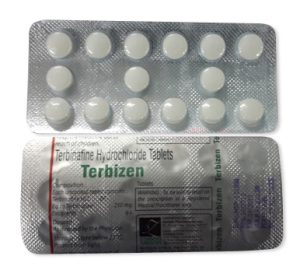
- Forms of administration include oral tablets (250 mg), oral granules for children (125 mg, 187.5 mg), topical cream 1%, and topical spray 1%.
- Onset time: for skin infections, symptomatic improvement often begins within days to a couple of weeks; for nail infections, visible improvement can take weeks to months because nails grow slowly.
- Duration of action/course: topical courses commonly last 1–4 weeks; systemic courses range from 2–12 weeks by indication, and terbinafine persists in skin and nails for weeks to months after finishing therapy, continuing antifungal effect.
- Alcohol warning: avoid excessive alcohol and use caution—because terbinafine can rarely cause liver injury, alcohol intake should be limited and liver function monitored during systemic therapy.
- The most common side effec is gastrointestinal upset (nausea, abdominal pain); other common reactions include headache, taste disturbance and topical irritation.
- Would you like to try terbinafine without a prescription?
Everyday Use & Best Practices
Basic Terbinafine Information
- INN (International Nonproprietary Name): Terbinafine
- Brand Names Available In United States: Lamisil (tablets, cream, spray); Terbinex (tablets); marketed by Novartis, Breckenridge, and Mylan
- ATC Code: D01BA02
- Forms & Dosages: Tablet 250 mg (oral, blisters 7/14/28); Cream 1% (topical, tubes 7 g–30 g); Spray 1% (topical, 15 ml/30 ml); Granules 125 mg and 187.5 mg (oral unit-dose for pediatric use)
- Manufacturers In United States: Novartis, Breckenridge, Mylan (plus global suppliers such as Taro, Aurobindo, Cipla noted in product listings)
- Registration Status In United States: FDA approved and listed on DailyMed
- OTC / Rx Classification: Oral tablets are prescription-only; topical small-package forms are OTC in the United States
Morning Vs Evening Dosing
Are you wondering whether to take terbinafine in the morning or at night?
For oral systemic therapy, the standard adult tablet dose is 250 mg once daily, and timing can be morning or evening depending on what helps you stick to the routine.
Pick a consistent time and tie it to a habit you already have, such as after brushing your teeth or with dinner, to reduce missed doses.
Do not stop oral therapy early even if symptoms improve, since for nail infections especially the full course is required to reach cure.
Topical terbinafine 1% cream or spray is typically applied one to two times daily to the affected area, and once-daily dosing often improves adherence.
If you forget an oral dose, take it as soon as remembered unless it is close to the next scheduled dose; do not double up.
For topical missed applications, apply at the next scheduled time and continue—do not apply extra product to catch up.
Taking With Or Without Meals
Does food matter when taking terbinafine?
Tablets may be taken with or without food, so choose whatever reduces stomach upset for you.
Taking the tablet with a meal can reduce gastrointestinal side effects such as nausea.
Topical formulations do not have food interactions, but apply only to clean, dry skin to ensure good absorption and avoid contamination.
Always confirm whether you are using topical (cream or spray) or oral (tablet or granules) before changing how you take the product.
- Quick Warnings: Systemic terbinafine is contraindicated in patients with chronic or active liver disease, and baseline plus periodic liver tests are standard during oral therapy.
- Storage Note: Store at 59–86°F (15–30°C), keep in a dry place away from light, and do not freeze topical forms.
Morning/Evening Routine Checklist
- Confirm formulation: topical vs oral before starting.
- For oral tablets: take 250 mg once daily at the same time each day.
- For topical 1% cream/spray: apply 1–2× daily to clean, dry skin and allow to dry before clothing.
- Schedule baseline liver tests for systemic therapy and plan periodic checks.
- Do not stop systemic therapy early—even if symptoms improve.
Topical Vs Oral Daily Steps
| Formulation | Daily Steps |
|---|---|
| Topical 1% Cream / Spray | Clean and dry area; apply 1–2× daily; allow to dry before dressing; avoid mucous membranes |
| Oral Tablet 250 mg | Take once daily at same time with or without food; schedule baseline LFTs; do not double dose if missed |
Safety Priorities
Who Should Avoid It
Who should not use terbinafine?
Do not use systemic terbinafine if you have chronic or active liver disease; this is an absolute contraindication.
Known hypersensitivity to terbinafine or any excipient is also an absolute contraindication.
Avoid oral terbinafine during pregnancy unless explicitly recommended by a clinician, and avoid oral use while breastfeeding—topical forms may be used with clinical guidance.
Use caution in patients with significant renal impairment and in elderly patients; monitor hepatic and renal function as indicated.
Topical products should not be applied to open wounds or mucous membranes, and keep topical products out of children’s reach.
Activities To Limit
Which activities should be limited while on terbinafine?
Avoid alcohol or limit intake while taking oral terbinafine to reduce added strain on the liver.
Stop the drug and seek immediate care for signs of liver dysfunction such as jaundice, dark urine, persistent nausea, or severe fatigue.
Avoid starting new hepatotoxic medications while on oral terbinafine unless your prescriber agrees to monitoring.
Refrain from combining topical terbinafine with strong topical steroids unless directed by a clinician for a mixed condition.
Pre-Treatment Screening Checklist
- Document liver disease history and recent liver function tests.
- List all current medications including OTCs and herbal products.
- Confirm pregnancy status and breastfeeding plans.
- Assess renal function if there is known kidney disease (consider CrCl).
Contraindications Table
| Contraindication Type | Examples |
|---|---|
| Absolute | Known hypersensitivity; chronic or active liver disease |
| Relative (Use Cautiously) | Severe renal impairment; pregnancy; lactation (avoid oral) |
Dosage & Adjustments
General Regimen
What dose should most adults expect?
Standard adult systemic dosing is terbinafine 250 mg once daily for most indications requiring oral therapy.
For fingernail onychomycosis the usual oral course is 6 weeks at 250 mg once daily.
For toenail onychomycosis the usual oral course is 12 weeks at 250 mg once daily.
For skin tinea such as tinea pedis, tinea corporis, or tinea cruris oral durations range from 2 to 6 weeks depending on severity and indication.
Topical 1% cream or spray is typically applied once or twice daily for 1–4 weeks for most mild skin infections.
Special Cases
How is dosing adjusted for children, elderly, and people with kidney or liver issues?
Pediatric dosing is weight-based and often uses granules or unit-dose sachets; examples include 125 mg for children under about 20 kg and 187.5 mg for those 20–40 kg, with 250 mg commonly used over 40 kg.
Elderly patients generally do not require routine dose reductions but should have hepatic and renal function monitored.
Terbinafine is contraindicated in chronic or active hepatic disease; dose reduction is not routinely recommended for hepatic impairment—avoid use instead.
Use caution in severe renal impairment and consider dose reduction or alternate therapy if creatinine clearance is less than 50 ml/min.
If a single oral dose is missed, take as soon as remembered unless it is close to the next dose; do not double the dose.
Dosage Table
| Indication | Formulation | Dose | Duration |
|---|---|---|---|
| Onychomycosis (Fingernail) | Oral Tablet | 250 mg once daily | 6 weeks |
| Onychomycosis (Toenail) | Oral Tablet | 250 mg once daily | 12 weeks |
| Tinea Pedis | Topical or Oral | Topical 1% 1–2× daily; Oral 250 mg once daily | Topical 1–4 weeks; Oral 2–6 weeks |
| Tinea Corporis/Cruris | Topical or Oral | Topical 1% 1–2× daily; Oral 250 mg once daily | Topical 1–4 weeks; Oral 2–4 weeks |
Pre-Treatment Labs Checklist
- Baseline liver function tests (AST, ALT, bilirubin) before starting oral terbinafine.
- Repeat liver tests if symptoms suggest hepatic dysfunction or per prescriber schedule.
- Assess renal function for known kidney disease; calculate CrCl when needed.
- Document all concurrent medications to check for interactions.
User Testimonials
Positive Reports
What do patients commonly report when terbinafine works well?
Many topical users report reduced itching and fading of rash within one to two weeks.
Patients taking oral terbinafine for nail fungus often report clinical success and eventual nail clearance months after completing the 12-week toenail course.
Common positive themes include the convenience of once-daily oral dosing and the simple application steps for topical creams and sprays.
Several patients describe improved quality of life when visible ringworm or smelly feet resolve with treatment.
Common Challenges
What problems do users often face?
Oral therapy can cause taste disturbance and gastrointestinal upset for some patients.
Nail fungus can be slow to show visible improvement because fingernails and toenails grow slowly and full cosmetic recovery takes months.
Topical therapy occasionally causes local mild irritation or stinging which usually resolves after stopping or switching products.
Adherence barriers include long treatment durations, the need for baseline and on-treatment liver tests for systemic use, and cost or insurance coverage hurdles.
Pros Vs Cons
- Pros: Once-daily dosing (oral), rapid symptom relief for skin infections (topical), effective nail penetration with oral therapy
- Cons: Potential taste disturbance and GI upset (oral), slow nail recovery, requirement for liver monitoring during systemic therapy
Patient Expectations Checklist
- Topical symptom relief often within 1–2 weeks.
- Nail fungus treatment requires months for visible improvement even after completing therapy.
- Report jaundice, severe nausea, or unexplained fatigue immediately.
- Plan for follow-up and potential lab monitoring if using oral terbinafine.
Buying Guide
Pharmacy Sources
Where can terbinafine be purchased in the United States?
Topical terbinafine 1% cream and spray are commonly available OTC in small packages in the United States.
Oral tablets (250 mg) are prescription-only and require an Rx to pick up at retail or mail-order pharmacies.
Brand names you will encounter include Lamisil and Terbinex, and generics are widely available from manufacturers such as Novartis, Mylan, Taro, Aurobindo, Cipla, and Glenmark.
For pediatric granules or specialized packaging, availability varies and may require a specialty pharmacy.
In our online pharmacy, topical terbinafine is available without a prescription, with discreet delivery across the United States in 5–14 days.
Price Comparison
What affects price and where should you compare?
Price depends on brand versus generic, package size (e.g., 7/14/28 tablets), and whether insurance covers oral therapy.
Compare local retail pharmacies, national chains, and reputable online pharmacies for the best pricing.
Look for manufacturer coupons for branded Lamisil when cost is a concern.
| Source | Typical Price Range | OTC Vs Rx |
|---|---|---|
| Retail Pharmacy (In-Store) | Varies by chain and insurance; generics typically lower | Topical OTC; Oral Rx |
| Online Licensed Pharmacies | Often competitive; check for generics and shipping fees | Topical OTC available; oral requires Rx upload |
| Mail-Order / Pharmacy Benefit | Good for larger supplies; may be covered by insurance | Oral Rx |
Pharmacy Verification Checklist
- Confirm pharmacy licensure and verified contact information.
- Verify packaging authenticity and manufacturer listed on the label.
- For oral tablets, ensure prescription requirements are followed and check generic options.
What’s Inside & How It Works
Ingredients Overview
What is the active ingredient and what else is in the product?
The active ingredient in all these products is terbinafine (INN), an allylamine antifungal classified under ATC code D01BA02.
Topical and systemic products contain the same active moiety but differ in formulation and excipients depending on the manufacturer.
Topical formats list preservatives, emollients, and propellants for sprays that vary by brand; review the package insert for excipient lists if you have allergies.
Mechanism Basics
How does terbinafine kill fungi?
Terbinafine inhibits squalene epoxidase, an enzyme needed for fungal cell membrane synthesis.
This inhibition causes toxic buildup of squalene and disrupts ergosterol production, leading to fungal cell death.
This fungicidal action explains rapid symptom relief in skin tinea and strong mycological cure rates in nail infections compared with some alternative agents.
| Formulation Type | Primary Components / Typical Excipients |
|---|---|
| Oral Tablet 250 mg | Terbinafine 250 mg plus excipients for tablet formulation (manufacturer-specific) |
| Topical Cream / Spray 1% | Terbinafine 1% with cream base, stabilizers, and for sprays propellants and solvents |
Always read the product leaflet for ingredient details and allergy information.
Main Indications
Approved Uses
What is terbinafine approved to treat?
Approved indications include onychomycosis (fingernail and toenail), tinea pedis (athlete’s foot), tinea cruris (jock itch), tinea corporis (ringworm), and tinea capitis, particularly in pediatric cases.
Topical forms are first-line for uncomplicated skin tinea, while systemic terbinafine is preferred for nail infections.
Off-Label Uses
Are there off-label situations where terbinafine is used?
Less common or off-label uses include select cases of cutaneous candidiasis and mixed infections where combination therapy is chosen by a clinician.
Some regional products combine terbinafine with corticosteroids for inflamed mixed dermatitis, but these should be used cautiously and under guidance.
| Indication | Preferred Formulation | Typical Duration |
|---|---|---|
| Onychomycosis | Oral 250 mg | 6 weeks (fingernail); 12 weeks (toenail) |
| Tinea Pedis / Corporis / Cruris | Topical 1% or Oral if severe | Topical 1–4 weeks; Oral 2–6 weeks |
| Tinea Capitis (Pediatric) | Oral (weight-based) often preferred | Varies with age and severity |
Topical vs Systemic Decision Checklist
- Use topical therapy for limited skin tinea without nail involvement.
- Choose oral terbinafine for nail infections, widespread disease, or recalcitrant cases.
- Confirm liver function before oral therapy and plan monitoring.
Interaction Warnings
Food Interactions
Do diet or food interactions affect terbinafine?
Oral terbinafine absorption is not majorly food-dependent and the tablet can be taken with or without meals.
Taking the tablet with food can reduce gastrointestinal upset for people sensitive to stomach irritation.
Topical terbinafine has negligible systemic absorption and food interactions are not clinically relevant for topical use.
Drug Conflicts
Which medicines interact with terbinafine?
Terbinafine is metabolized in the liver and can interact with drugs that share hepatic metabolic pathways.
Important drug classes to disclose to your prescriber include statins, warfarin, certain antidepressants, beta-blockers, and other drugs metabolized via cytochrome P450 pathways.
Always provide a full medication list including OTCs and herbal supplements before starting oral terbinafine.
For topical users, systemic drug interactions are rare, but disclose all topical products you use to avoid local incompatibilities.
Medication Disclosure Checklist
- Tell your prescriber about statins, warfarin, SSRIs, beta-blockers, and any chronic therapies.
- Notify the prescriber if you plan to start a new medication while on terbinafine.
- Consider baseline liver tests and periodic monitoring for oral therapy.
- Avoid heavy alcohol use during systemic treatment.
Latest Evidence & Insights
Recent Findings
What do current guidelines and studies say?
Systemic terbinafine remains a first-line choice for onychomycosis due to higher mycological cure rates compared with many azoles, and this is reflected in therapeutic guidance.
Recent professional emphasis has focused on safety monitoring, with baseline liver function tests and on-treatment monitoring reducing the risk of severe hepatic events.
Topical terbinafine consistently shows rapid symptom control for skin tinea with fewer systemic side effects and is preferred for limited disease.
Practical Implications
How should this affect treatment choices in practice?
Reserve oral terbinafine for nail involvement, widespread infections, recalcitrant disease, or when topical therapy fails.
Topical terbinafine is the practical first choice for most uncomplicated skin tinea because of efficacy and minimal systemic risk.
Emerging strategies under study include combination topical plus oral approaches and shorter or pulsed dosing schedules to balance cure rates and safety.
| Approach | Typical Cure Profile | Side-Effect Profile |
|---|---|---|
| Oral Terbinafine | High mycological cure for onychomycosis | Systemic side effects; liver monitoring required |
| Topical Terbinafine | Rapid symptom relief for skin tinea | Minimal systemic risk; local irritation possible |
Alternative Choices
Other Antifungals
What are the common alternatives to terbinafine?
Alternative topical allylamines include naftifine (Naftin), while topical azoles and cyclopyrox are also options for skin or nail disease.
Systemic alternatives for nail disease include itraconazole and fluconazole, though terbinafine often shows superior nail cure rates.
Ciclopirox nail lacquer is another topical option for onychomycosis with a different mechanism and safety profile.
When To Consider Alternatives
When should terbinafine be avoided and alternatives chosen?
Consider alternatives when there is chronic liver disease, pregnancy, serious drug interactions, or prior terbinafine intolerance.
Request fungal culture or dermatology referral for treatment failures, atypical lesions, or when the organism is uncertain.
| Drug | Formulation | Typical Indication | Major Pros / Cons |
|---|---|---|---|
| Itraconazole | Oral | Onychomycosis | Alternative systemic option; potential drug interactions and hepatic monitoring required |
| Fluconazole | Oral | Various fungal infections | Sometimes used for nails; lower nail cure rates than terbinafine for onychomycosis |
| Ciclopirox | Topical lacquer | Onychomycosis | Topical option; generally lower cure rates than systemic therapy |
Referral Checklist
- Refer to dermatology for treatment failures after adequate therapy.
- Obtain fungal culture for atypical presentations or suspected non-dermatophyte organisms.
- Consider specialist input for immunocompromised patients or extensive disease.
Regulation Snapshot
US Status
What is terbinafine’s regulatory status in the United States?
Oral terbinafine tablets are prescription-only in the United States and are FDA approved with generic approvals listed on DailyMed.
Topical small-package forms are OTC for consumer use in the United States.
Storage guidance is to keep products at 15–30°C (59–86°F), protect from moisture and light, and do not freeze topical formulations.
Global Notes
How does regulation vary internationally?
Brand names such as Lamisil and Terbinex are used internationally, and packaging, combination products, and prescription status vary by country.
Some regions offer combination creams with corticosteroids which may be prescription-only depending on local rules.
| Formulation | US Status | Typical Global Notes |
|---|---|---|
| Oral Tablet 250 mg | Prescription-only | Prescription-only worldwide |
| Topical 1% Cream / Spray | OTC in small packages | OTC in many countries; some larger packages Rx |
Travel And Import Checklist
- Verify local regulations before traveling with terbinafine.
- Carry prescription documentation for oral tablets when traveling internationally.
- Store medication within recommended temperature range during travel.
FAQ Section
Common Patient Questions
How fast will I see improvement?
For skin infections, itching and redness often improve within one to two weeks of topical terbinafine use.
When treating nail fungus, visible improvement often takes months because nails grow slowly and clinical cure follows nail growth.
Is oral terbinafine safe?
Oral terbinafine is generally effective but requires baseline and periodic liver tests and is contraindicated in chronic or active liver disease.
Can I buy terbinafine OTC?
Topical 1% forms are OTC in the United States for small packages; oral tablets require a prescription.
What should I do if I miss a dose?
Take the missed oral dose as soon as remembered unless it is near the time for your next dose; do not double the dose.
Quick Answers
- Call your clinician for jaundice, severe GI symptoms, or signs of systemic allergic reaction.
- Keep topical products away from children and avoid applying to broken skin unless advised.
- Confirm medication interactions with your prescriber before starting oral terbinafine.
Guidelines For Proper Use
Application And Adherence Tips
How can patients use terbinafine properly and stay adherent?
Confirm the diagnosis clinically and consider KOH or culture if uncertain.
Choose topical therapy for limited skin disease and oral therapy for nail involvement or widespread disease after weighing safety considerations.
Apply topical cream or spray to the affected area plus about a 1 cm margin and allow full drying before dressing.
For oral therapy take 250 mg once daily for the full prescribed duration and do not stop early because symptoms improve.
Monitoring & Follow-Up
What monitoring is recommended during therapy?
Baseline liver function tests are standard before starting oral terbinafine, with repeat tests if symptoms suggest hepatotoxicity or per clinician schedule.
Reassess clinical response at 2–6 weeks for skin infections and plan longer-term follow-up for nail disease because improvement is slow.
If unexpected side effects occur, stop the medication and notify your prescriber immediately.
Stepwise Treatment Checklist
- Confirm diagnosis and document concurrent medications.
- Decide topical versus systemic therapy based on site and severity.
- Obtain baseline LFTs before starting oral terbinafine.
- Follow application instructions (topical) or dosing schedule (oral) and complete the full course.
- Schedule follow-up to assess response and repeat labs if clinically indicated.
| Follow-Up Timeline | Action |
|---|---|
| 2–6 Weeks | Assess skin response to topical or early systemic therapy |
| Monthly (Systemic) | Monitor for signs of hepatotoxicity; repeat liver tests if symptomatic |
| 3–6 Months | Assess nail growth and long-term outcomes after onychomycosis therapy |
Delivery Across United States
| City | Region | Delivery time |
|---|---|---|
| New York | Northeast | 5-7 days |
| Los Angeles | West | 5-7 days |
| Chicago | Midwest | 5-7 days |
| Houston | South | 5-7 days |
| Phoenix | West | 5-7 days |
| Philadelphia | Northeast | 5-7 days |
| San Antonio | South | 5-7 days |
| San Diego | West | 5-7 days |
| Dallas | South | 5-7 days |
| San Jose | West | 5-7 days |
| Austin | South | 5-7 days |
| Jacksonville | South | 5-9 days |
| Fort Worth | South | 5-9 days |
| Columbus | Midwest | 5-9 days |
| Charlotte | South | 5-9 days |
FAQ Quick Reference
Common Patient Questions
How fast will I see improvement?
Skin infections usually improve in 1–2 weeks with topical therapy; nails take months after completing oral therapy due to nail growth.
Is oral terbinafine safe?
Oral terbinafine is effective but requires baseline and periodic liver tests and should be avoided in chronic or active liver disease.
Can I buy it OTC?
Topical 1% forms are OTC for small packages in the United States; oral tablets require a prescription.
What if I miss a dose?
Take a missed oral dose as soon as remembered unless it is near the next dose; do not double up.
When To Call Your Clinician
- Jaundice, dark urine, or severe unexplained fatigue.
- Severe gastrointestinal symptoms or persistent taste disturbance.
- Worsening rash, blistering, or signs of allergic reaction.
- Failure to show any improvement after an appropriate treatment period.
Guidelines For Proper Use Summary
Application And Adherence Tips
Confirm diagnosis and choose topical versus systemic therapy based on site and severity.
Topical application: cleanse and dry area, apply terbinafine 1% once or twice daily, include a 1 cm margin, and allow to dry before clothing.
Oral therapy: take 250 mg once daily for the indicated duration and complete the full course even if symptoms improve early.
Monitoring & Follow-Up
Obtain baseline liver function tests prior to oral therapy and monitor if symptoms suggest hepatotoxicity.
Reassess skin response at 2–6 weeks and nail response at longer intervals due to slow nail growth.
Consult your prescriber for personalized adjustments if you have renal impairment, are pregnant, or are taking interacting medications.
Always read the product leaflet and report any concerning side effects promptly to your clinician.