Grifulvin
In brief
- Grifulvin can be purchased from many online and local pharmacies, and in some pharmacies it may be available without a prescription; however, in major markets it is generally classified as prescription-only medicine (Rx), and availability may vary by country and pharmacy.
- Grifulvin (griseofulvin) is used to treat dermatophyte fungal infections such as tinea capitis, tinea corporis, tinea cruris, tinea pedis, and some nail infections. It works as a fungistatic antifungal by disrupting the fungal mitotic spindle and blocking cell division, while also depositing in keratin to make new skin, hair, and nails resistant to infection.
- The usual dose for adults is 500 mg to 1000 mg per day orally. For children, the typical dose is 10 to 20 mg/kg/day, with a maximum of 1 g per day, depending on the infection and severity.
- Grifulvin is taken by mouth as tablets or an oral suspension. Common forms include tablets of 125 mg, 250 mg, or 500 mg, and suspension 125 mg/5 mL.
- It usually begins working gradually over several days, but symptom improvement may take 1 to 2 weeks or longer because it acts on new keratin growth rather than immediately killing existing fungi.
- The duration of action depends on the infection and treatment course: about 2 to 4 weeks for skin infections, 4 to 6 weeks for scalp infections, 4 to 8 weeks for foot infections, and 3 to 6 months for nail infections.
- Alcohol should be avoided or minimized during treatment, because both alcohol and griseofulvin can increase the risk of liver side effects, dizziness, and stomach upset.
- The most common side effects are headache, nausea, vomiting, diarrhea, fatigue, skin rash, photosensitivity, dizziness, and stomach upset.
- Would you like to try grifulvin without a prescription?
Basic Grifulvin Information
- INN (International Nonproprietary Name): Griseofulvin
- Brand names available in United States: Grifulvin V, Gris-PEG, Fulvicin P/G, Grisactin Ultra
- ATC Code: D01AA08
- Forms & dosages: Tablets 125 mg, 250 mg, 500 mg; Oral suspension 125 mg/5 mL
- Manufacturers in United States: Teva, Actavis, Mylan, Pedinol, Schering-Plough
- Registration status in United States: Prescription; widely approved, but shrinking availability due to shift to other antifungals
- OTC / Rx classification: Prescription only medicine (Rx) in all major markets
Everyday Use And Best Practices
Morning Vs Evening Dosing
Is it better to take grifulvin in the morning or at night?
The short answer is that consistency matters more than the exact hour.
Griseofulvin works best when it is taken on a regular schedule, so a daily antifungal routine is easier to follow than a constantly changing one.
Some people tie a Grifulvin V tablet to breakfast, while others pair the dose with dinner after work or after school pickup.
That kind of routine helps prevent missed doses, which is important because fungal infections clear slowly even when treatment is working.
Taking griseofulvin with a fatty meal can help absorption, so a full meal usually makes more sense than an empty stomach.
If the day is busy, a phone alarm or a pillbox can keep the dose from slipping through the cracks.
Taking With Or Without Meals
Can griseofulvin be taken with food?
Yes, and many patients do better when they take griseofulvin with food because it may reduce stomach upset.
The oral suspension should be shaken well before each use, and that small step matters more than most people expect.
Here is a simple way to fit griseofulvin into daily life:
- Set one repeating alarm on your phone.
- Link the dose to breakfast or dinner.
- Take the medicine with food, ideally a meal that includes some fat.
- Shake the Griseofulvin oral suspension well each time.
- Keep tablets and liquid in the same place you will see them every day.
Patients who do this usually have fewer “Did I take it?” moments and a smoother treatment course.
Safety Priorities
Who Should Avoid It
Who should not take griseofulvin?
The biggest red flags are severe liver disease, porphyria, pregnancy, and known allergy to griseofulvin or any excipient in the product.
Women who may become pregnant during treatment should avoid it and follow prescriber guidance carefully, because the pregnancy warning is real and important.
In practice, that means this Rx antifungal should only be used when the prescriber has reviewed the patient’s full history and current medications.
People with lupus erythematosus, hepatic impairment, or severe renal impairment may need closer monitoring rather than routine use.
Activities To Limit
Could this medicine affect daily activities?
Yes.
Photosensitivity can make skin react more strongly to sunlight, and dizziness can make driving or operating machinery unsafe if symptoms show up.
Sun protection and common-sense caution go a long way during treatment.
If any of the following appear, stop and call a clinician:
- Rash or hives.
- Severe nausea or vomiting.
- Confusion or unusual mental changes.
- Unusual bruising or signs of bleeding.
- Yellowing skin or eyes.
Most griseofulvin side effects are mild, but unusual symptoms should never be brushed off.
Dosage And Adjustments
General Regimen
How much griseofulvin is usually used?
Typical adult doses are 500 mg to 1000 mg per day by mouth, while pediatric dosing is 10 to 20 mg/kg/day with a maximum of 1 g per day.
The treatment length depends on where the infection is located and how quickly the area grows new keratin.
| Condition | Typical Adult Dose | Typical Duration |
|---|---|---|
| Tinea corporis or tinea cruris | 500 mg to 1000 mg/day orally | 2 to 4 weeks |
| Tinea capitis | 500 mg to 1000 mg/day | 4 to 6 weeks |
| Tinea pedis | 500 mg to 1000 mg/day | 4 to 8 weeks |
| Tinea unguium | 500 mg to 1000 mg/day | 3 to 6 months, often 6 months |
Special Cases
Children are dosed by weight, so pediatric griseofulvin should be calculated carefully rather than guessed.
Older adults do not have a specific labeling adjustment, but liver function should be watched more closely.
Hepatic impairment calls for caution, and severe liver dysfunction is a reason to avoid the drug.
No routine renal adjustment is usually listed, but prescribers may still monitor closely if kidney disease is part of the picture.
That approach is common with Griseofulvin 500 mg tablets, Griseofulvin 250 mg tablets, and Griseofulvin 125 mg products when a child’s dose must be matched to body weight.
User Testimonials
Positive Reports
What do people usually like about griseofulvin reviews?
Patients often mention less itching, slower spread of ringworm, and helpful results for scalp infections in children when oral treatment is needed.
Here is the kind of feedback that comes up often:
- “The itching settled down after a few days.”
- “It helped keep the ringworm from spreading to the rest of the family.”
- “The oral antifungal was what my child needed for a scalp infection.”
Common Challenges
The main frustrations are usually stomach upset, headache, long treatment courses, and the need to remember a daily dose for weeks or months.
That is why patient experience is often mixed even when the medicine is doing its job.
Buying Guide
Pharmacy Sources
Can griseofulvin be bought over the counter in the US?
No.
Griseofulvin is prescription-only in the United States, and online searches usually turn up Grifulvin V, Gris-PEG, Fulvicin P/G, or generic griseofulvin.
Major e-pharmacies commonly list griseofulvin tablets in 250 mg strength or the 125 mg/5 mL oral suspension.
For shoppers comparing options, our online pharmacy offers grifulvin without a prescription, with discreet delivery to United States in 5-14 days.
Price Comparison
What should patients compare before ordering?
Generic griseofulvin is usually the first place to look for value, followed by tablet versus suspension pricing and any available pharmacy discount programs.
Availability has shrunk over time because newer antifungals are used more often, so a specific brand may be harder to find than it used to be.
| Brand Name | Form | Typical Availability |
|---|---|---|
| Grifulvin V | Tablets and suspension | Often found as a legacy or generic listing |
| Gris-PEG | Tablets and suspension | Common search term in US pharmacy catalogs |
| Fulvicin P/G | Tablets | Less common, but still searchable |
| Generic griseofulvin | Tablets or oral suspension | Usually the best place to compare price |
What Is Inside And How It Works
Ingredients Overview
What exactly is in grifulvin?
The INN is griseofulvin.
Oral dosage forms include tablets in 125 mg, 250 mg, and 500 mg strengths, plus an oral suspension at 125 mg/5 mL.
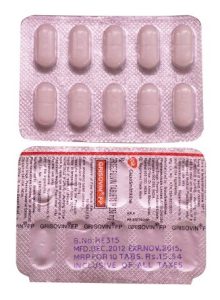
Packaging may come as blister strips, bottles for tablets, or syrup bottles for liquid forms.
Mechanism Basics
How does this antifungal medicine work?
Griseofulvin is fungistatic, which means it slows fungal growth instead of killing fungi outright.
It disrupts fungal mitotic spindle formation, so the organism cannot divide normally.
It also deposits in keratin precursor cells, which helps protect new keratin as skin, hair, or nails grow out.
It works against dermatophytes such as Trichophyton, Microsporum, and Epidermophyton.
It does not work well against Candida, bacteria, or viruses.
Main Indications
Approved Uses
When is griseofulvin used?
The main approved uses are dermatophyte infections, including tinea capitis, tinea corporis, tinea cruris, tinea pedis, and tinea unguium.
It is often first-line for scalp ringworm in children when oral therapy is needed.
| Condition | Common Use | Typical Duration |
|---|---|---|
| Tinea capitis | Often first-line in children | 4 to 6 weeks |
| Tinea corporis | Skin ringworm when oral therapy is needed | 2 to 4 weeks |
| Tinea cruris | Groin dermatophyte infection | 2 to 4 weeks |
| Tinea pedis | Foot dermatophyte infection | 4 to 8 weeks |
| Tinea unguium | Nail infection in selected cases | 3 to 6 months |
Off-Label Uses
Some nail infections are still treated with griseofulvin in selected situations, but it is less favored now because newer agents are often preferred.
That is why clinician-directed use matters more than self-treatment.
Interaction Warnings
Food Interactions
Does food matter with griseofulvin?
Yes.
Taking it with food, especially a fatty meal, can improve absorption.
Skipping that habit may reduce effectiveness, especially if doses are taken on an empty stomach day after day.
Drug Conflicts
What medicines can interact with it?
Griseofulvin may induce hepatic enzymes, which can reduce the effectiveness of oral contraceptives and warfarin.
That makes medication review essential before starting a new Rx antifungal.
Red flags to discuss with a pharmacist include:
- Oral contraceptives.
- Warfarin.
- New prescription medicines.
- Herbal supplements started during treatment.
Any medication changes should be checked before the first dose or before adding something new mid-course.
Latest Evidence And Insights
What Current Practice Shows
Does griseofulvin still matter in modern fungal treatment?
Yes, but it is used less often than before because terbinafine, itraconazole, and fluconazole are common alternatives.
In everyday practice, that shift has reduced the number of griseofulvin tablets and Griseofulvin oral suspension prescriptions seen in routine care.
Where It Still Matters
The drug still has a place in certain pediatric scalp ringworm cases and in some resistant dermatophyte infections.
When the case is straightforward and the infection is dermatophyte-based, it remains a practical option.
| Medicine | Main Strength | Current Role |
|---|---|---|
| Griseofulvin | Long history in scalp ringworm | Still relevant for selected pediatric cases |
| Terbinafine | Common modern alternative | Often preferred for convenience |
| Itraconazole | Broad antifungal option | Used when clinician chooses a different oral agent |
| Fluconazole | Flexible dosing in some settings | Common alternative in practice |
Alternative Choices
Common Substitutes
What drugs compete with griseofulvin?
Terbinafine, itraconazole, fluconazole, and ketoconazole are the main alternatives, although oral ketoconazole is used less because of toxicity concerns.
Each has a different place in care:
- Terbinafine: often chosen for convenience.
- Itraconazole: used when a different oral antifungal is preferred.
- Fluconazole: sometimes selected for dosing flexibility.
- Ketoconazole: much less favored orally because of toxicity concerns.
When Alternatives May Be Chosen
Clinicians may switch to another antifungal when nail infections need a different approach, when a simpler regimen is helpful, or when absorption and interaction concerns are a problem.
Regulation Snapshot
US And Global Status
Is griseofulvin still regulated as a prescription drug?
Yes.
It is prescription-only in the US and remains Rx-only in major markets.
It is still approved in parts of the EU for certain uses, although availability has declined as newer agents have taken over more of the market.
Labeling And Search Tips
What names should patients look for?
In the United States, Grifulvin V and Gris-PEG are the most common search terms.
In France and Belgium, the name may appear as Griséofulvine.
In Spain, Portugal, and much of Latin America, Griseofulvina is a familiar label.
For up-to-date local listings in Romania, the ANMDMR public database is the practical place to check.
| Country | Common Name | Status |
|---|---|---|
| United States | Grifulvin V, Gris-PEG | Rx-only |
| France | Griséofulvine | Rx-only |
| Belgium | Griséofulvine | Rx-only |
| Spain | Griseofulvina | Rx-only |
| Romania | Griseofulvin listings in registry | Rx-only |
Faq Section
Common Patient Questions
How long does griseofulvin take to work?
It depends on the infection site, but skin infections may take 2 to 4 weeks, scalp infections 4 to 6 weeks, feet 4 to 8 weeks, and nail infections months.
Can it be taken with food?
Yes, and taking it with food, especially a fatty meal, can improve absorption.
What if a dose is missed?
Take it as soon as remembered unless it is almost time for the next dose, and do not double up.
Is it safe in pregnancy?
No, pregnancy is a contraindication because of teratogenic risk.
When To Ask For Help
Call the prescriber if severe rash, persistent vomiting, yellowing skin or eyes, unusual bleeding, or worsening symptoms appear.
Those warning signs matter more than a routine headache or mild stomach upset.
Guidelines For Proper Use
Daily Checklist
What is the best way to use griseofulvin at home?
A steady routine keeps treatment on track and reduces mistakes.
- Take exactly as prescribed.
- Take with food.
- Shake the oral suspension well before each dose.
- Protect skin from sun exposure because photosensitivity can happen.
- Store tablets and suspension at room temperature away from moisture and light.
- Finish the full course even if symptoms improve early.
Monitoring And Follow-Up
Who may need closer follow-up?
Patients with liver concerns, older adults, and anyone on prolonged treatment may need monitoring.
That matters because griseofulvin safety is not just about the first dose; it is about the whole course.
In overdose situations, seek medical help right away if severe nausea, vomiting, or central nervous system symptoms occur.
For the home setting, griseofulvin instructions are simple: keep it consistent, store it properly, and call for help if anything feels off.
Delivery Across United States
| City | Region | Delivery Time |
|---|---|---|
| New York | Northeast | 5-7 days |
| Los Angeles | West | 5-7 days |
| Chicago | Midwest | 5-7 days |
| Houston | South | 5-7 days |
| Phoenix | West | 5-7 days |
| Philadelphia | Northeast | 5-7 days |
| San Antonio | South | 5-9 days |
| San Diego | West | 5-7 days |
| Dallas | South | 5-7 days |
| San Jose | West | 5-7 days |
| Austin | South | 5-7 days |
| Jacksonville | South | 5-9 days |
| Fort Worth | South | 5-9 days |
| Columbus | Midwest | 5-9 days |
| Charlotte | South | 5-9 days |