Griseofulvin
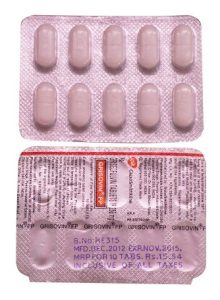
In brief
- Griseofulvin is available from pharmacies in many countries, including the United States, but it is generally a prescription-only medicine (Rx) in major markets. Availability without a prescription may vary by pharmacy or country.
- Griseofulvin is used to treat dermatophyte fungal infections such as tinea capitis, tinea corporis, tinea pedis, and tinea unguium (onychomycosis). It works by inhibiting fungal cell mitosis through binding to microtubules, helping stop the fungus from growing.
- The usual dose for adults is 500–1000 mg daily, taken in single or divided doses. In children, the dose is commonly 10–25 mg/kg/day, not exceeding the adult maximum.
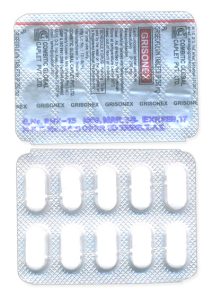
- It is taken by mouth as tablets, capsules, or oral suspension. Common strengths include 125 mg, 250 mg, and 500 mg tablets, with suspensions such as 125 mg/5 mL or 250 mg/5 mL.
- Griseofulvin usually starts working gradually, with symptom improvement often seen after several days to a few weeks, depending on the infection and how quickly the fungus responds.
- The duration of action requires ongoing daily use, and treatment commonly lasts 2–6 weeks for skin infections and 4–12 months for nail infections. Therapy is often continued for at least 2 weeks after clinical resolution.
- Do not drink alcohol while taking griseofulvin, because alcohol may increase the risk of side effects and can cause a disulfiram-like reaction in some people.
- The most common side effects include headache, dizziness, nausea, vomiting, diarrhea, rash, photosensitivity, and fatigue.
- Would you like to try griseofulvin without a prescription?
Basic Griseofulvin Information
- INN (International Nonproprietary Name): Griseofulvin
- Brand Names Available in United States: Gris-PEG, Grisactin, Grifulvin V, Fulvicin P/G, Fulvicin-U/F
- ATC Code: D01AA08, D01BA01
- Forms & Dosages: Tablets 125 mg, 250 mg, 500 mg; capsules 250 mg, 500 mg; suspension 125 mg/5 mL, 250 mg/5 mL
- Manufacturers in United States: Not specified
- Registration Status in United States: FDA approved for various dermatophyte infections
- OTC / Rx Classification: Prescription only (Rx)
Griseofulvin For Ringworm And Other Fungal Infections
Can a tablet for ringworm really be taken the same way every day and still fit into a busy routine?
That is the practical question many patients ask after getting a prescription for griseofulvin oral tablet or griseofulvin oral suspension.
This medicine is a prescription-only antifungal pill for ringworm and other dermatophyte infections, not for yeast or bacterial infections.
Used correctly, it can be a dependable option for scalp, skin, and nail fungus, especially when affordability and pediatric dosing matter.
Morning Vs Evening Dosing
Griseofulvin is usually taken once daily or divided into two doses, depending on the prescribed regimen.
Taking it at the same time every day helps keep doses consistent and lowers the chance of missed doses.
Some people prefer morning dosing because it is easier to remember before work, school, or breakfast.
- Take it at the same time each day.
- Use a phone reminder if your schedule changes often.
- If the dose is divided, keep the spacing regular.
- Do not use it for yeast or bacterial infections.
A simple adherence checklist helps: take the prescribed dose, keep going for the full course, and continue treatment at least 2 weeks after symptoms improve.
Taking With Or Without Meals
Griseofulvin is often better absorbed with food, especially a fatty meal or milk.
That can be helpful for anyone who eats a light breakfast or has a variable schedule.
If breakfast is just coffee and toast, taking the dose with lunch or dinner may be a better fit, as long as the prescriber’s directions are followed.
For families juggling school drop-off, shift work, or weekend travel, pairing the dose with a routine meal is usually the easiest way to stay on track.
Using food also may help reduce stomach upset for some patients.
Safety Priorities
Who should avoid griseofulvin, and what warnings deserve extra attention?
This is where a pharmacy review matters, because some risks are serious enough that the medicine should not be used at all.
Who Should Avoid It
Warning: griseofulvin should not be used in severe hepatic impairment, porphyria, pregnancy, or in anyone with known hypersensitivity to griseofulvin or its excipients.
Pregnancy avoidance is critical because of teratogenic risk.
Contraception may be recommended for both men and women for up to 6 months after use.
That means a clinician should review pregnancy plans, breastfeeding questions, and family planning before treatment starts.
Activities To Limit
Photosensitivity is a real concern, so sunburn can happen more easily than usual.
Dizziness, headache, and fatigue can also affect balance and attention.
Alcohol should be avoided because a disulfiram-like reaction may occur.
- Avoid alcohol during treatment.
- Limit driving if dizziness is present.
- Use sunscreen, protective clothing, and shade for outdoor work.
- Call a clinician for severe rash, yellowing skin, dark urine, trouble breathing, or worsening side effects.
For people who drive for work or spend long hours outside, these griseofulvin warnings are worth planning around before the first dose.
Dosage And Adjustments
What does a typical griseofulvin regimen look like for adults and children?
The answer depends on the infection site, age, and how long the fungus has been present.
General Regimen
For adult tinea capitis, tinea corporis, tinea pedis, and tinea unguium, the usual dose is 500 to 1000 mg daily in single or divided doses.
Higher doses and longer treatment are often needed for nail infections.
Special Cases
Children are usually dosed by weight at about 10 to 25 mg/kg/day, not to exceed the adult maximum, and the oral suspension can make dosing easier.
Nail fungus often needs months of therapy, not weeks.
No major renal adjustment is required, but clinical monitoring is recommended.
Use caution with liver impairment because the drug is metabolized hepatically.
| Situation | Typical Approach | Key Note |
|---|---|---|
| Adult dosing | 500 to 1000 mg daily | Single or divided doses |
| Child dosing | 10 to 25 mg/kg/day | Oral suspension helps with flexibility |
| Nail infection | Longer course often needed | Fingernails and toenails may take months |
| Missed dose | Take when remembered | Skip if it is almost time for the next dose; do not double |
| Overdose | Supportive treatment | Call poison center or a physician right away |
User Testimonials
What do patients usually notice first, and where do the rough spots show up?
Positive Reports
“My child’s scalp ringworm started improving after a few weeks, and the suspension made dosing much easier.”
“The generic antifungal was affordable, which mattered a lot when treatment had to continue for several weeks.”
“Once the routine was set, taking it with dinner became simple.”
Common Challenges
“Nail fungus took patience, and the change was slower than expected.”
“The stomach upset was mild but noticeable on an empty stomach.”
“The rash looked better before treatment was finished, so staying on the medicine longer took discipline.”
Individual experiences vary, and testimonials do not replace medical advice.
Buying Guide
Where do people usually find griseofulvin, and how can they avoid overpaying?
In the United States, griseofulvin is Rx-only and commonly sold under several familiar brand names.
For shoppers comparing griseofulvin tablets price, the generic version is often the most budget-friendly choice.
In our online pharmacy, griseofulvin is available without a prescription, with discreet delivery to United States in 5-14 days.
Pharmacy Sources
Tablets, capsules, and suspension forms are widely available through legitimate pharmacy channels.
Common US brands include Gris-PEG, Grisactin, Grifulvin V, Fulvicin P/G, and Fulvicin-U/F.
| Brand Or Form | Typical Use | Buying Tip |
|---|---|---|
| Gris-PEG generic | Dermatophyte infections | Compare strength and pack size |
| Griseofulvin oral tablet | Adults and older children | Ask for the most cost-effective prescribed strength |
| Griseofulvin oral suspension | Children or dose flexibility | Check bottle size and concentration |
Do not buy from unverified online sellers, and always verify the label and packaging before use.
What’s Inside And How It Works
What is actually in the bottle, and why does it work for some fungal infections but not others?
Ingredients Overview
The active ingredient is griseofulvin.
Common forms include tablets, capsules, and oral suspension.
Pack sizes commonly include 100 mg, 250 mg, and 500 mg tablets, plus 120 mL or 240 mL bottles.
Mechanism Basics
Griseofulvin is a systemic antifungal that inhibits fungal cell mitosis by targeting tubulin.
That is why it helps with dermatophyte infections rather than yeast or bacterial infections.
Its ATC codes are D01AA08 and D01BA01, which place it in antifungal treatment categories for dermatological and systemic use.
| Form | Strength | Typical Use |
|---|---|---|
| Tablet | 125 mg, 250 mg, 500 mg | Adult treatment |
| Capsule | 250 mg, 500 mg | Convenient daily dosing |
| Suspension | 125 mg/5 mL, 250 mg/5 mL | Pediatric and flexible dosing |
Main Indications
Which infections is griseofulvin actually meant to treat?
It is FDA approved in the United States for dermatophyte infections, especially scalp, skin, and nail fungus caused by ringworm organisms.
Approved Uses
- Tinea capitis, often seen as scalp scaling, itching, or broken hairs.
- Tinea corporis, which shows up as ring-shaped skin patches.
- Tinea pedis, better known as athlete’s foot, with peeling or cracking between the toes.
- Tinea unguium, or onychomycosis, where nails thicken, discolor, or crumble.
Children are a common use case because scalp ringworm is frequent in pediatrics and the suspension helps with dose accuracy.
Off-Label Uses
Clinicians may consider it for other dermatophyte cases when appropriate, but it is not for yeast or bacterial infections.
Typical symptoms that point toward a dermatophyte infection include scaling, itching, round patches, nail thickening, and hair breakage.
Interaction Warnings
Should griseofulvin be taken with food, and what medicines can cause problems?
Food often improves absorption and can ease stomach upset, which is one reason many patients take it with dinner or milk.
Food Interactions
Taking the dose with food is practical for people who notice nausea on an empty stomach.
That simple step can make a prescription antifungal easier to finish.
Drug Conflicts
A clinician or pharmacist should review all prescriptions, over-the-counter medicines, and supplements before therapy starts.
Because liver metabolism matters, interaction screening is part of safe use.
Alcohol caution is important, and pregnancy prevention questions should be discussed before the first dose.
- Tell your pharmacist if you take prescription medicines for seizures, blood thinning, or infections.
- Tell them about vitamins, herbal products, and weight-loss supplements.
- Ask about pregnancy prevention if there is any possibility of pregnancy.
- Check for alcohol use before starting therapy.
Latest Evidence And Insights
Why does griseofulvin still matter when newer antifungals are available?
The main reasons are its long safety record, pediatric suspension options, and broad affordability.
Why It Still Matters
For families watching costs, a generic antifungal with a long history can still be a practical option.
Its role is especially visible in pediatrics and in settings where access matters more than speed alone.
Where Newer Options May Be Preferred
Newer antifungals are often preferred for some nail and scalp infections, but griseofulvin remains relevant in some cases and countries.
| Option | Common Strength | Practical Note |
|---|---|---|
| Griseofulvin | Oral tablet or suspension | Affordable and familiar |
| Terbinafine | Oral tablet | Often preferred for some infections |
| Itraconazole or fluconazole | Oral therapy | Selected based on clinical factors |
Alternative Choices
When do doctors think about another antifungal instead of griseofulvin?
That decision should be clinician-guided, not a self-switching choice.
When Alternatives Are Considered
| Alternative | Common Reason Considered | Clinical Note |
|---|---|---|
| Terbinafine | Some scalp and nail infections | Often selected for comparative effectiveness |
| Itraconazole | Selected dermatophyte infections | Choice depends on patient factors |
| Fluconazole | Alternative systemic antifungal option | May be used in certain cases |
| Ketoconazole | Limited systemic use | Use is restricted because of side effects |
How Doctors Choose
Age, infection type, liver status, expected duration, cost, and child-friendly dosing all matter.
For some families, the oral suspension and budget profile of griseofulvin still make sense.
Regulation Snapshot
Is griseofulvin legal and approved in more than one region?
Yes, but the local approval list should always be checked for current status.
US And International Status
In the United States, griseofulvin is FDA approved and prescription only.
In the European Union, it may be available through EMA or national regulatory approval, usually by prescription.
Many countries regulate it as an Rx antifungal.
Packaging And Manufacturer Notes
| Region | Status | Packaging Notes |
|---|---|---|
| United States | FDA approved, Rx only | Tablets, capsules, and suspension |
| European Union | Prescription use | National labeling varies |
| Romania | ANMDMR approvals apply | Check public data for current listings |
Faq
Common Patient Questions
How long does it take to work? Skin infections may improve in a few weeks, while nail fungus often takes months.
What if I miss a dose? Take it as soon as remembered, but skip it if the next dose is close; do not double up.
Can I drink alcohol? Alcohol should be avoided because of the possible disulfiram-like reaction.
Is it okay in pregnancy? No, pregnancy is a contraindication, and pregnancy prevention should be discussed before treatment.
Practical Family Questions
Can children use it? Yes, when prescribed, and the suspension is often helpful for dosing.
Do I shake the suspension? Yes, shake it well before use.
How should it be stored? Keep it at room temperature, away from moisture and sunlight, and do not freeze the suspension.
Call a clinician if symptoms worsen, side effects become severe, or there is any concern about overdose.
Guidelines For Proper Use
What makes griseofulvin work best in real life, not just on paper?
Consistency, food timing, and follow-up care.
Daily Routine Checklist
- Take exactly as prescribed.
- Pair the dose with food if advised.
- Use sunscreen and protective clothing.
- Shake the suspension well before each dose.
- Keep follow-up appointments.
- Finish the full course, even if the rash or scaling improves early.
- Continue treatment at least 2 weeks after symptoms improve.
When To Seek Help
Get medical help for severe rash, signs of liver problems, worsening symptoms, or suspected overdose.
Overdose symptoms may include nausea, vomiting, and dizziness, and a poison center or physician should be contacted right away.
Store the medicine at 15 to 30°C, do not freeze the suspension, and keep it in the original packaging.
Delivery Across United States
| City | Region | Delivery Time |
|---|---|---|
| New York City | Northeast | 5-7 days |
| Los Angeles | West | 5-7 days |
| Chicago | Midwest | 5-7 days |
| Houston | South | 5-7 days |
| Phoenix | West | 5-7 days |
| Philadelphia | Northeast | 5-7 days |
| San Antonio | South | 5-7 days |
| San Diego | West | 5-7 days |
| Dallas | South | 5-7 days |
| San Jose | West | 5-7 days |
| Austin | South | 5-7 days |
| Jacksonville | South | 5-9 days |
| Columbus | Midwest | 5-9 days |
| Charlotte | South | 5-9 days |