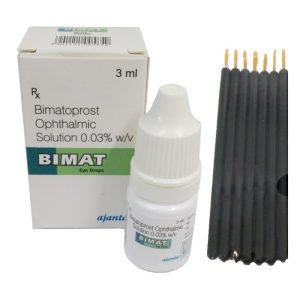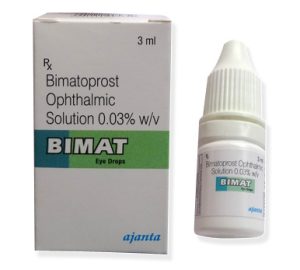
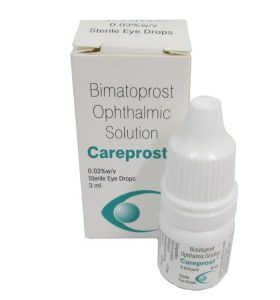
Careprost
In brief
- In many online pharmacies and some brick‑and‑mortar pharmacies you can buy careprost without a prescription or receipt, with international shipping available; note that in major jurisdictions (USA, EU) bimatoprost products are officially prescription‑only.
- Careprost (bimatoprost) is used to lower intraocular pressure for glaucoma/ocular hypertension and to enhance eyelash growth; it is a prostaglandin analogue that increases aqueous humor outflow via the uveoscleral pathway and prolongs the anagen (growth) phase of eyelashes.
- Usual dosage: for glaucoma/ocular hypertension — 1 drop of 0.03% in the affected eye(s) once daily in the evening; for eyelash enhancement — apply one drop of 0.03% with an applicator to the upper eyelid margin once nightly.
- Form of administration: ophthalmic solution (0.03% w/v) supplied in a 3 mL dropper; administered as an eye drop for intraocular pressure or topically along the upper lash line for eyelash growth (remove contact lenses and wait ≥15 minutes before reinserting).
- Onset time: IOP‑lowering effects begin within hours (partial effect within ~3–4 hours, with fuller effect over days to weeks); eyelash growth is typically first noticeable after about 8 weeks, with full effect by 12–16 weeks.
- Duration of action: IOP reduction lasts roughly 24 hours (supporting once‑daily dosing); eyelash changes persist only with continued use and gradually reverse after treatment is stopped.
- Alcohol warning: there is no specific alcohol contraindication, but avoid excessive alcohol as it may worsen eye irritation or dryness and always follow your healthcare provider’s advice.
- The most common side effect is conjunctival hyperemia (eye redness); other common effects include eye irritation, eyelash/eyebrow growth and darkening, and possible eyelid skin darkening or increased iris pigmentation (rare and may be permanent).
- Would you like to try “careprost” without a prescription?
Basic Careprost Information
- INN (International Nonproprietary Name): Bimatoprost.
- Brand Names Available In United States: Lumigan (glaucoma), Latisse (cosmetic eyelash growth); Careprost is listed in India and global e-shops as a 3 mL ophthalmic solution.
- ATC Code: S01EE03 — ophthalmologicals, prostaglandin analogues, specific code for bimatoprost.
- Forms & Dosages: Ophthalmic solution 0.03% w/v in a 3 mL dropper, indicated for glaucoma/ocular hypertension and eyelash enhancement.
- Manufacturers In United States: Allergan (now part of AbbVie) manufactures branded Lumigan and Latisse; Careprost is manufactured by Sun Pharmaceutical Industries Ltd. (India) and supplied by multiple exporters.
- Registration Status In United States: Bimatoprost is FDA-approved in branded forms — Lumigan for glaucoma and Latisse for eyelash growth; Careprost is widely registered in India and sold internationally, and registration varies by country.
- OTC / Rx Classification: Prescription-only (Rx) in most major jurisdictions, although some online e-commerce outlets list Careprost without prescription.
Everyday Use & Best Practices
Morning Vs Evening Dosing
Worried about when to put in your drop so it works best and bothers you least?
For glaucoma or ocular hypertension, the standard regimen is one drop of 0.03% bimatoprost once daily in the evening.
For eyelash enhancement, apply one drop nightly to the upper eyelid margin using an applicator.
Do not use the drops more frequently than once daily; increased frequency raises irritation without added benefit.
If a glaucoma patient is switching brands, coordinate timing with the eye care provider for consistent measurement of intraocular pressure.
- Evening Routine Checklist: remove contacts, wash hands, apply one drop to affected eye(s) (for glaucoma) or apply to upper eyelid margin with applicator (for lashes), wait ≥15 minutes before reinserting lenses.
- Missed Dose Rule: apply when remembered unless it is near the time for the next dose; never double up.
| Timing | Routine For Glaucoma | Routine For Eyelash Enhancement |
|---|---|---|
| Morning | Not preferred; stick to evening dosing when prescribed. | Avoid; night application is recommended for best results. |
| Evening | One drop in affected eye(s) once daily — standard. | One drop on applicator along the upper eyelid margin once nightly. |
Taking With Or Without Meals
Wondering if food changes how the drops work?
Topical ophthalmic bimatoprost has negligible systemic absorption in normal use, so no dietary restrictions are required around application.
Avoid activities that worsen eye dryness or irritation if you notice sensitivity after application.
Always treat Careprost as a prescription ophthalmic medication with the same handling care as other eye drops.
Safety Priorities
Who Should Avoid It
Are you unsure whether Careprost is safe for you or someone in your family?
- Absolute Contraindication: known hypersensitivity to bimatoprost or any component of the formulation.
- Do Not Use In Children: safety and dosing are not established for pediatric patients.
- Pregnancy / Breastfeeding: use cautiously and generally avoid due to limited data.
- Relative Contraindications: history of intraocular inflammation (uveitis), aphakia or pseudophakia (higher risk of macular edema), and immunosuppression — these require specialist oversight.
Activities To Limit
Worried about whether you can drive, swim, or use other eye products after application?
If you experience conjunctival hyperemia, blurred vision, or itching, avoid driving or operating machinery until vision clears.
Do not swim or use hot tubs immediately after application to reduce contamination risk.
Avoid rubbing eyes after application and prevent spread of solution beyond the upper lash line to reduce unwanted hair growth or skin darkening.
Coordinate use of other topical ocular meds with your eye care provider to avoid additive irritation, and discontinue before ocular surgery if your surgeon advises it.
Dosage & Adjustments
General Regimen
Not sure how much to use and how often for different conditions?
For glaucoma or ocular hypertension, apply one drop of 0.03% bimatoprost once nightly to the affected eye(s).
For cosmetic eyelash enhancement, place one drop on a sterile applicator and apply to the upper eyelid margin once nightly; do not apply to the lower lid.
Full eyelash effects typically appear between 8 and 16 weeks, and continued use is required to maintain results.
Stopping the product reverses the cosmetic effects gradually over months.
Special Cases
Do elderly patients or people with organ impairment need a different dose?
- Pediatrics: no established dosing; avoid use.
- Elderly: generally no dose adjustment required, but monitor for systemic effects.
- Liver/Kidney Impairment: no formal adjustment guidance exists; use cautiously under specialist supervision.
- If You Miss A Dose: apply as soon as remembered unless it is near the next dose; do not double up.
- If You Double-Dose Accidentally: rinse the eye with water and seek medical attention if irritation persists.
User Testimonials
Positive Reports
People commonly ask, “Will my lashes actually change?”
Many users report noticeable eyelash length and thickness within 8–12 weeks with nightly application of 0.03% bimatoprost.
Glaucoma patients often praise the convenience of once-daily evening dosing and report measurable intraocular pressure reduction when the drug is used as prescribed.
Cosmetic users often describe fuller, darker lashes and denser lash lines after consistent nightly use.
Common Challenges
What problems do people run into while using Careprost?
- Redness and Irritation: conjunctival hyperemia and eye irritation are the most commonly reported complaints.
- Lid Skin Darkening: some users experience eyelid skin darkening when product spreads beyond the lash line.
- Unwanted Hair Growth: stray contact with surrounding skin can cause hair to grow outside the intended area.
- Rare Serious Issues: permanent iris color change and macular edema have been reported in susceptible eyes.
- “I started seeing thicker lashes after about two months, but had mild redness the first week,” is a common anonymized user note.
- “Persistence mattered — results showed up slowly and required ongoing nightly use,” is another frequent observation.
Buying Guide
Pharmacy Sources
Concerned about where to purchase authentic product safely?
Careprost (Sun Pharma, 3 mL dropper) is commonly sold in India and via international e-shops, while branded alternatives in the US/EU include Lumigan (glaucoma) and Latisse (cosmetic eyelash growth).
In most major jurisdictions, these medications are prescription-only; buying from licensed pharmacies is the safest route.
Some online marketplaces sell Careprost without a prescription, but that practice bypasses regulation and increases risks to authenticity, storage integrity, and sterility.
In our online pharmacy, careprost is available without a prescription, with discreet delivery to United States in 5-14 days.
Price Comparison
Trying to decide whether to buy generic or branded products?
| Brand | Common Pack Size | Typical Use | Price Range |
|---|---|---|---|
| Careprost (Sun Pharma) | 3 mL dropper | Eyelash enhancement; ophthalmic solution | Varies by supplier and region (generally lower than branded alternatives) |
| Latisse (Allergan) | 3 mL with applicators | FDA-approved cosmetic eyelash growth | Brand pricing; generally higher than generics |
| Lumigan (Allergan) | 2.5 mL, 5 mL vials | Glaucoma/ocular hypertension | Priced as branded glaucoma therapy |
- Safe-Purchase Checklist: verify manufacturer (Sun Pharmaceutical for Careprost), check batch number and expiry, confirm storage claims, and buy from licensed pharmacies when used for glaucoma.
What’s Inside & How It Works
Ingredients Overview
Want to know what’s actually in the bottle?
The active ingredient in Careprost is bimatoprost, formulated as a 0.03% w/v ophthalmic solution in a 3 mL dropper with excipients to stabilize the solution.
Different brands such as Latisse and Lumigan use the same active molecule but are packaged and labeled according to their intended indications.
- Active Ingredient: bimatoprost 0.03% w/v.
- Excipients: formulation-specific stabilizers and preservatives (not specified in the available data).
Mechanism Basics
How does bimatoprost lower eye pressure and boost lash growth?
Bimatoprost is a prostaglandin analogue (ATC S01EE03) that lowers intraocular pressure by increasing aqueous humor outflow through unconventional pathways.
For eyelash growth, bimatoprost appears to prolong the anagen phase and increase follicle activity, producing longer, thicker, and darker lashes over weeks.
Prostaglandin analogues can affect melanogenesis in ocular tissues, which explains pigment changes in iris and eyelid skin seen in some users.
Main Indications
Approved Uses
Can this medication treat glaucoma and also be used cosmetically?
Bimatoprost is approved in branded forms for lowering intraocular pressure in glaucoma and ocular hypertension (Lumigan) and for cosmetic eyelash hypotrichosis (Latisse).
Careprost is widely sold as a 0.03% ophthalmic solution and is commonly used for eyelash enhancement in regions where it is available, though specific regulatory approvals vary by country.
Off-Label Uses
Is eyelash use always on-label for generics?
Cosmetic eyelash enhancement with generic bimatoprost formulations is common but may be off-label depending on local approvals; confirm regulatory status locally.
Other experimental or anecdotal uses exist but lack robust evidence, so consult an eye care professional before trying any off-label regimen.
Switching brands for glaucoma treatment should be supervised by an ophthalmologist to ensure continued intraocular pressure control.
Interaction Warnings
Food Interactions
Do meals or alcohol change how the drops work?
Topical ophthalmic bimatoprost has negligible systemic absorption, so food interactions are not clinically relevant.
Avoid alcohol or activities that exacerbate ocular dryness if you experience irritation after application.
Drug Conflicts
What drugs should you tell your prescriber about?
Avoid using multiple prostaglandin analogues at the same time (latanoprost, travoprost, tafluprost) without coordination from your prescriber.
Concurrent ocular medications for glaucoma (beta-blocker drops, carbonic anhydrase inhibitors, alpha agonists) can be used as part of a management plan but require professional oversight to optimize timing and measure IOP response.
Systemic interactions are rare, but disclose all medications and immunosuppressive states to your clinician.
| Ocular Drug Class | Notes |
|---|---|
| Prostaglandin Analogues | Do not use concurrently without guidance; may increase local side effects. |
| Beta-Blocker Drops | Used together in glaucoma management per prescriber direction. |
| Topical Immunosuppressants | Use caution if immunosuppressed; infection risk may be higher. |
Latest Evidence & Insights
Clinical Findings Summary
What does the clinical evidence say about effectiveness and safety?
Prostaglandin analogues including bimatoprost are established first-line topical agents for lowering intraocular pressure, and Lumigan carries FDA approval for glaucoma treatment.
For eyelash growth, Latisse showed consistent efficacy in clinical trials with visible improvements by 8–16 weeks.
Common adverse effects in studies include conjunctival hyperemia and eyelid changes, while rare but notable effects include permanent iris pigmentation changes and macular edema in susceptible patients.
Practical Takeaways
How should these findings change what you do as a patient or prescriber?
- For Glaucoma Patients: use prescription products and follow ophthalmologist guidance; monitor IOP if switching formulations.
- For Cosmetic Users: discuss risks such as pigmentation change and the need for ongoing use to maintain lash results.
- Product Integrity: trust products from licensed manufacturers and pharmacies to reduce authenticity and sterility concerns.
Alternative Choices
Other Drug Classes
Not tolerating bimatoprost or want other options for pressure lowering?
Other prostaglandin analogues include latanoprost (Xalatan), travoprost (Travatan), and tafluprost (Saflutan), all used for glaucoma and ocular hypertension.
If bimatoprost is not tolerated, an eye care provider may switch therapy to another prostaglandin or to a different class such as topical beta-blockers, carbonic anhydrase inhibitors, or alpha agonists.
Non-Drug Options
Looking for non-pharmacologic ways to improve lash appearance or manage glaucoma?
For cosmetic lash enhancement, consider lash serums without prostaglandins, mascara techniques, lash lifts, or extensions to avoid pharmacologic risks.
For glaucoma, laser procedures or surgical interventions are options when medical therapy is insufficient.
| Option | Efficacy | Safety/Notes |
|---|---|---|
| Lash Serums (Non-Prostaglandin) | Variable | Avoids prostaglandin risks; product-dependent ingredients and results. |
| Lash Extensions / Lifts | Immediate cosmetic effect | Requires maintenance; potential for mechanical or allergic reactions. |
| Laser / Surgery (Glaucoma) | Effective for pressure control when needed | Reserved for patients not controlled on medication or unsuitable for topical therapy. |
Regulation Snapshot
Approval Landscape
Is Careprost the same everywhere and approved the same way?
Bimatoprost appears across brands and regions; Lumigan was FDA-approved for glaucoma in 2001 and Latisse is FDA-approved for eyelash hypotrichosis.
Careprost is widely registered and sold in India and through global e-shops, while registration and approval vary by country and should be checked against local agency databases.
Prescription Status & Authenticity
How can you verify that you are buying a legitimate, legal product?
In most major jurisdictions, bimatoprost products are prescription-only, and purchasing without a prescription bypasses safety checks.
For authenticity, verify the manufacturer (Sun Pharmaceutical for Careprost), check batch and expiry information, and buy from licensed pharmacies or verified suppliers.
Importing prescription ophthalmic products without proper authorization can have legal and safety implications.
FAQ Section
Quick Answers
Have a quick question? Here are short, direct answers people ask most.
- How long to see lash results? Often 8–16 weeks with nightly use.
- Can I use on lower lashes? Not recommended — apply only to the upper lid margin.
- Is it safe with contact lenses? Remove lenses before application and wait at least 15 minutes to reinsert.
- Will eye color change? Rare but possible — iris darkening can be permanent.
- Can I stop anytime? Yes — cosmetic effects reverse over months after stopping.
When To Call A Clinician
When should you stop waiting and call your eye doctor right away?
| Symptom | Action |
|---|---|
| Severe eye pain or sudden vision changes | Call a clinician immediately or seek emergency care. |
| Intense redness, swelling, or signs of infection | Contact your clinician for evaluation and possible discontinuation. |
| New eyelid skin darkening or unexpected hair growth | Report to your clinician to review topical spread and consider stopping. |
| For glaucoma patients with uncontrolled IOP | See your ophthalmologist promptly to adjust therapy. |
Guidelines For Proper Use
Step-By-Step Application
Want a simple, safe routine to follow at night?
- Remove contact lenses before starting application.
- Clean the eyelid area gently and ensure it is dry.
- Use a sterile single-use applicator and place one drop of the solution on the applicator tip.
- Apply a thin line along the upper eyelid margin (base of lashes) once nightly — avoid the lower lid.
- Discard the applicator after use and wait at least 15 minutes before reinserting lenses.
Storage, Disposal, And Hygiene
How should you store and throw away opened bottles and applicators?
Store Careprost at room temperature between 15–25°C (59–77°F), protect it from light, and do not freeze.
Use the opened bottle within 4 weeks to reduce contamination risk.
Do not share the dropper or applicators to avoid cross-contamination.
Dispose of expired or opened bottles according to local medical waste rules or household guidance if specific rules are not available.
| Item | Storage / Discard Guidance |
|---|---|
| Opened Bottle | Use within 4 weeks; store 15–25°C, protect from light. |
| Applicators | Single-use; discard after application to prevent contamination. |
Delivery Across United States
| City | Region | Delivery Time |
|---|---|---|
| New York | Northeast | 5-7 days |
| Los Angeles | West | 5-7 days |
| Chicago | Midwest | 5-7 days |
| Houston | South | 5-7 days |
| Phoenix | West | 5-7 days |
| Philadelphia | Northeast | 5-7 days |
| San Antonio | South | 5-9 days |
| San Diego | West | 5-9 days |
| Dallas | South | 5-7 days |
| San Jose | West | 5-9 days |
| Austin | South | 5-9 days |
| Jacksonville | South | 5-9 days |
| Fort Worth | South | 5-9 days |
| Columbus | Midwest | 5-9 days |
Final Notes From A Pharmacist
Quick Safety Reminders
If you experience severe irritation, vision changes, or signs of infection, stop use and contact a clinician immediately.
Always handle ophthalmic solutions with clean hands and single-use applicators to reduce contamination risk.
When using any online seller, confirm manufacturer details, batch, and expiry to help ensure authenticity and safety.
For glaucoma patients, always use prescription products under ophthalmologist supervision and report any new symptoms promptly.