Ciprofloxacin
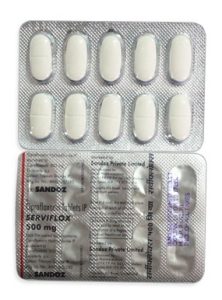
In brief
- In many places ciprofloxacin is a prescription-only antibiotic, but some pharmacies may offer it without a prescription depending on local regulations. It is available in the United States, Europe, the UK, Canada, and many other regions under brand names such as Cipro, Ciprobay, Ciproxin, Ciloxan, and Cetraxal.
- Ciprofloxacin is used to treat bacterial infections such as urinary tract infections, respiratory infections, prostatitis, gastrointestinal infections, and certain post-exposure anthrax cases. It works by inhibiting bacterial DNA gyrase and topoisomerase IV, which blocks bacterial DNA replication and helps kill susceptible bacteria.
- The usual adult dose depends on the infection, but commonly ranges from 250 mg to 750 mg twice daily. Examples include 250–500 mg twice daily for uncomplicated urinary tract infections and 500–750 mg twice daily for more serious infections.
- Ciprofloxacin is available as film-coated tablets, oral suspension, IV infusion, ophthalmic solution, and otic ear drops.
- Ciprofloxacin usually starts working within a few hours after the first dose, although noticeable symptom improvement may take 1 to 3 days depending on the infection.
- The duration of action is typically about 12 hours, which is why it is commonly taken twice daily.
- Alcohol is not strictly forbidden, but it is best to limit or avoid alcohol because it can worsen side effects such as dizziness, stomach upset, and nervous system symptoms.
- The most common side effects are nausea, diarrhea, vomiting, abdominal pain, headache, dizziness, and rash. It can also cause tendon inflammation or tendon rupture in some people.
- Would you like to try ciprofloxacin without a prescription?
Basic Ciprofloxacin Information
- INN (International Nonproprietary Name): Ciprofloxacin; Ciprofloxacine; Ciprofloxacinum
- Brand Names Available in United States: Cipro, Cipro HC, Cetraxal, Ciloxan
- ATC Code: J01MA02
- Forms & Dosages: Film-coated tablets 100 mg, 250 mg, 500 mg, 750 mg; oral suspension 250 mg/5 mL and 500 mg/5 mL; IV infusion 200 mg/100 mL and 400 mg/200 mL; ophthalmic solution 0.3% (3 mg/mL); otic drops 0.2% to 0.3%
- Manufacturers in United States: Bayer and various generics; Alcon for some eye and ear products; major global suppliers include Aurobindo, Teva, Fresenius Kabi, Hexal, Hikma, Mylan, Amriya, and Claris
- Registration Status in United States: Prescription-only in major markets and approved by the FDA
- OTC / Rx Classification: Rx-only antibiotic
Everyday Use And Best Practices
Morning Vs. Evening Dosing
Many people ask whether ciprofloxacin should be taken before breakfast or after dinner.
For most infections, the answer is that consistency matters more than the exact clock time.
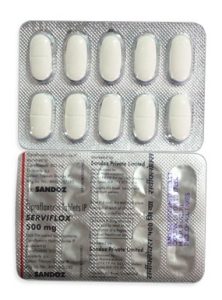
Ciprofloxacin is sold as 250 mg, 500 mg, and 750 mg tablets, and it is usually taken twice daily for many infections.
Try to keep doses spaced evenly, such as morning and evening, because uneven spacing can make the antibiotic less dependable.
Phone alarms help a lot, especially during a busy workday or a school schedule that changes by the hour.
If a dose is close to the next one, skip the missed dose rather than doubling up.
That simple rule prevents accidental overuse and keeps your dosing routine cleaner.
For the first three days, a short checklist works well.
- Confirm the dose schedule.
- Track symptoms like fever, urinary burning, or cough.
- Note any new stomach upset, dizziness, or Cipro side effects.
- Plan doses around work, school, meals, and sleep.
Taking With Or Without Meals
Ciprofloxacin can often be taken with food if it upsets your stomach.
If you start one way, stay with that pattern day to day so your routine stays predictable.
Plain water is the safest choice when swallowing a ciprofloxacin 500mg tablet.
It is smart not to build the habit around calcium-heavy drinks or supplement timing, because daily routines create avoidable interaction problems.
That is one of the most common practical mistakes with a Cipro antibiotic at home.
Safety Priorities
Who Should Avoid It
Some patients should not use ciprofloxacin at all, and others need careful review before the first dose.
Do not use it if you have a known hypersensitivity to ciprofloxacin or other quinolones.
It should also be avoided if you have a history of tendon disorders related to fluoroquinolone use.
Concomitant tizanidine use is an absolute contraindication.
Extra caution is needed with epilepsy, CNS disorders, myasthenia gravis, prolonged QT interval, renal impairment, or liver dysfunction.
These ciprofloxacin warnings matter because this is an Rx-only antibiotic with real safety limits.
Activities To Limit
Be careful with intense exercise, sudden sprinting, or heavy lifting, because fluoroquinolone tendon rupture is a known concern.
Limit driving or hazardous tasks if you feel dizzy, confused, or sleepy.
Watch for Achilles pain, swelling, or sudden weakness and stop activity early if symptoms begin.
If any of the following happen, contact a clinician right away.
- Tendon pain.
- Severe rash.
- Confusion or hallucinations.
- Breathing trouble.
- Severe diarrhea.
Dosage And Adjustments
General Regimen
The usual ciprofloxacin dosage depends on the infection site and severity.
Common adult regimens include 250 to 500 mg twice daily for UTI, 500 to 750 mg twice daily for complicated UTI or respiratory infection, and 500 mg twice daily for gastrointestinal infections.
Typical durations range from 3 to 7 days for uncomplicated infections to 7 to 14 days for more serious cases.
Anthrax post-exposure treatment uses 500 mg twice daily for 60 days.
| Condition | Typical Dose | Frequency | Duration |
|---|---|---|---|
| UTI | 250–500 mg | 2× daily | 3–7 days |
| Complicated UTI or pyelonephritis | 500–750 mg | 2× daily | 7–14 days |
| Lower respiratory infection | 500–750 mg | 2× daily | 7–14 days |
| Prostatitis | 500–750 mg | 2× daily | 2–4 weeks |
| Gastrointestinal infections | 500 mg | 2× daily | 5–7 days |
| Anthrax post-exposure | 500 mg | 2× daily | 60 days |
Special Cases
Children should receive ciprofloxacin only for select severe infections and only under specialist guidance.
Doses in children are weight-based, and the drug is not routinely recommended outside that setting.
Older adults may need lower doses because kidney function often declines with age.
Renal impairment requires dose reduction, and for creatinine clearance below 30 mL/min, dosing may be 250 to 500 mg every 18 to 24 hours.
Hepatic impairment usually does not require adjustment, but severe cases still need monitoring.
- Kidney function reviewed?
- Age-related risk assessed?
- Other antibiotics tried first?
User Testimonials
Positive Reports
People often like the convenience of ciprofloxacin because it comes as tablets, oral suspension, IV, eye drops, and ear drops.
That flexibility helps when a patient needs a pill at home, a liquid for swallowing problems, or a localized product for the eye or ear.
Brand examples include Cipro, Ciprobay, Ciproxin, Ciproxan, Ciloxan, and Cetraxal.
Common Challenges
Real-world feedback is mixed, which is normal for any antibiotic.
Some patients notice nausea, diarrhea, or a metallic, “off” feeling after doses.
Others say the schedule is easy to miss when work or travel disrupts their routine.
A few also mention anxiety about tendon warnings or medication interactions.
- “Easy to take.”
- “Upset stomach.”
- “Had to avoid exercise.”
- “Needed reminder alarms.”
Buying Guide
Pharmacy Sources
Ciprofloxacin is prescription-only in major markets, including the United States.
Buy from licensed pharmacies only, and avoid informal online sellers that cannot verify product quality.
Before you order, check whether you need tablets, oral suspension, IV, eye drops, or ear drops.
That one detail prevents a lot of shopping mistakes when people search for buy ciprofloxacin or compare ciprofloxacin generic brands.
In our online pharmacy, ciprofloxacin is available without a prescription, with discreet delivery to United States in 5-14 days.
Price Comparison
Price shopping is worth doing, but only after you verify strength, form, and quantity.
Generic and brand-name versions can look similar on a listing page and still differ in packaging or use.
| What To Compare | Why It Matters |
|---|---|
| Strength | Avoid dosing mistakes |
| Form | Tablet versus drops versus IV |
| Manufacturer | Supply and packaging differences |
| Prescription status | Safety and legality |
What’S Inside And How It Works
Ingredients Overview
The active ingredient is ciprofloxacin.
The INN appears as Ciprofloxacin in English, Ciprofloxacine in French, and Ciprofloxacinum in Latin.
Available forms include 100 mg, 250 mg, 500 mg, and 750 mg tablets, oral suspension, IV infusion, ophthalmic solution, and otic drops.
Mechanism Basics
Ciprofloxacin is a fluoroquinolone antibiotic with ATC code J01MA02.
- It targets bacterial DNA gyrase and topoisomerase IV.
- It blocks bacterial DNA replication.
- It is especially useful against difficult Gram-negative infections, including Pseudomonas aeruginosa.
- Resistance matters because overuse reduces future usefulness.
Main Indications
Approved Uses
Ciprofloxacin is commonly used for UTI, complicated UTI or pyelonephritis, lower respiratory infection, prostatitis, gastrointestinal infections, and anthrax post-exposure.
Oral, IV, eye, and ear forms support different medical uses, so the product form has to match the condition.
Typical duration depends on infection severity and location, which is why Cipro for UTI is not handled the same way as chronic prostatitis or anthrax post-exposure.
| Condition | Typical Dose | Duration |
|---|---|---|
| UTI | 250–500 mg 2× daily | 3–7 days |
| Complicated UTI | 500–750 mg 2× daily | 7–14 days |
| Prostatitis | 500–750 mg 2× daily | 2–4 weeks |
Off-Label Uses
Some clinicians use ciprofloxacin for other bacterial infections when culture results and local resistance patterns support it.
That kind of use should be tied to antibiotic stewardship and a clear reason, not convenience.
Because resistance is a major issue, treatment should stay targeted rather than routine.
Interaction Warnings
Food Interactions
Daily habits can interfere with absorption if ciprofloxacin is taken at the same time as certain minerals or supplement routines.
Space doses carefully around multivitamins, calcium, iron, magnesium, or zinc products.
Keep a consistent meal pattern if stomach upset is a problem.
Drug Conflicts
The most important absolute drug conflict is tizanidine.
Other risks include medicines that affect QT interval and drugs that raise seizure risk.
Tell your clinician about epilepsy, myasthenia gravis, or heart rhythm issues before starting.
- Prescription drugs.
- Over-the-counter cold remedies.
- Vitamins and minerals.
- Herbal products.
- Sleep aids.
Latest Evidence And Insights
What Current Use Trends Show
Ciprofloxacin remains widely prescribed globally and is still one of the key agents for difficult Gram-negative infections.
Stewardship matters because overuse can speed resistance.
Clinicians now weigh tendon injury and CNS effects more carefully against the expected benefit than they did years ago.
Practical Takeaway
The safest use is narrow, targeted, and based on the infection type, severity, and susceptibility pattern.
Culture-guided treatment is preferred when possible.
- Narrow, targeted use.
- Resistance awareness.
- Safety screening.
- Follow-up if symptoms worsen.
Alternative Choices
When Another Drug May Be Better
Sometimes ciprofloxacin is not the best fit, and another fluoroquinolone may be considered instead.
Alternatives include levofloxacin, moxifloxacin, norfloxacin, and ofloxacin.
Levofloxacin may fit some respiratory infections better, while moxifloxacin offers broader Gram-positive coverage in some settings.
How Clinicians Choose
Choice depends on infection site, likely bacteria, local resistance, and individual risk factors.
Kidney function, tendon history, and QT risk can shift the decision away from ciprofloxacin.
Do not self-switch antibiotics, because class differences are clinically important.
| Drug | Common Reason Considered |
|---|---|
| Levofloxacin | Respiratory pathogens |
| Moxifloxacin | Broader Gram-positive coverage |
| Norfloxacin or Ofloxacin | Older, narrower options |
Regulation Snapshot
Rx Status And Approvals
Ciprofloxacin is prescription-only in major markets.
It is approved by agencies such as the FDA and EMA and is widely registered internationally.
Brand availability varies by country, with examples such as Cipro, Ciprobay, Ciproxin, Ciflox, and Ciprofloxacin Fresenius Kabi.
Practical Meaning For Patients
Prescription status helps ensure kidney dosing, contraindication review, and interaction screening.
If you travel, packaging and brand names may change even when the active ingredient is the same.
| Region | Brand Examples |
|---|---|
| US and Canada | Cipro, Cipro HC |
| Europe | Ciprobay, Ciproxin |
| Middle East | CIPRINOL, CIPRODAR |
Faq Section
Common Patient Questions
Can I stop early if I feel better? No, finish exactly as prescribed unless your clinician tells you otherwise.
What if I miss a dose? Take it as soon as possible unless it is close to the next dose; do not double up.
Can it cause tendon pain? Yes, and the Achilles tendon is a known concern.
Everyday Use Questions
Does it matter when I take it? Consistency matters more than the exact clock time.
Can I drink alcohol? Ask your clinician, and avoid it if it worsens dizziness or stomach upset.
What if I get diarrhea? Mild upset can happen, but severe or persistent diarrhea needs medical review.
Guidelines For Proper Use
Daily Handling And Storage
Store tablets and oral forms below 30°C in a dry place.
Refrigerate IV solutions or suspensions if package instructions say so.
Ophthalmic and otic products often need specific storage and may need to be discarded 14 to 28 days after opening.
When To Seek Help
Get urgent care for confusion, seizures, severe rash, trouble breathing, or tendon pain.
For overdose, seek emergency help; symptoms may include confusion, seizures, and gastrointestinal upset.
If symptoms do not improve, contact the prescriber rather than extending the course on your own.
- Store properly.
- Track dose times.
- Watch for side effects.
- Keep follow-up instructions.
- Dispose of expired or opened drops correctly.
Delivery Across United States
| City | Region | Delivery Time |
|---|---|---|
| New York | Northeast | 5-7 days |
| Los Angeles | West | 5-7 days |
| Chicago | Midwest | 5-7 days |
| Houston | South | 5-7 days |
| Phoenix | West | 5-7 days |
| Philadelphia | Northeast | 5-7 days |
| San Antonio | South | 5-7 days |
| San Diego | West | 5-7 days |
| Dallas | South | 5-7 days |
| San Jose | West | 5-7 days |
| Austin | South | 5-7 days |
| Jacksonville | South | 5-9 days |
| Columbus | Midwest | 5-9 days |
| Indianapolis | Midwest | 5-9 days |
| Charlotte | South | 5-9 days |