Diclofenac
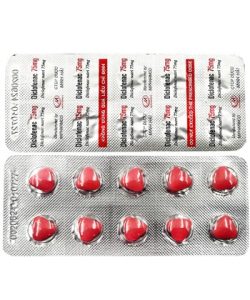
In brief
- Diclofenac can be purchased in pharmacies and some online pharmacies; in many places topical forms such as gel, patch, or spray are available over the counter, while oral tablets, injections, and eye drops usually require a prescription. Availability and prescription rules vary by country.
- Diclofenac is a nonsteroidal anti-inflammatory drug (NSAID) used for pain and inflammation, including arthritis, acute musculoskeletal pain, and other inflammatory conditions. It works by inhibiting cyclooxygenase (COX-1 and COX-2), which lowers prostaglandin production and helps reduce pain, swelling, and fever.
- The usual dose of diclofenac depends on the form and condition: oral tablets are commonly 25–100 mg per dose, taken 2–3 times daily, with a maximum of 150 mg/day in adults; topical gel is often applied 2–4 g to the affected area 3–4 times daily; suppositories, injections, and eye drops are used according to the specific indication and product label.
- Diclofenac is available as tablets, gel/cream, suppositories, injection, eye drops, and spray or patch forms. Administration routes include oral, topical, rectal, intramuscular, slow intravenous infusion, and ophthalmic use.
- Diclofenac usually starts working within about 30 to 60 minutes when taken by mouth, sometimes sooner for injections, while topical forms may begin to relieve pain within a few hours.
- The duration of action is typically about 4 to 6 hours for standard oral forms, longer for extended-release products, and topical forms may provide relief for several hours depending on the product.
- Alcohol should be avoided or strictly limited while taking diclofenac because it can increase the risk of stomach irritation, ulcers, and bleeding, especially with oral forms.
- The most common side effects are stomach upset, nausea, indigestion, abdominal pain, headache, dizziness, and rash or skin irritation with topical use.
- Would you like to try diclofenac without a prescription?
Basic Diclofenac Information
- INN (International Nonproprietary Name): Diclofenac
- Brand Names Available in United States: Voltaren, Cataflam, Zipsor, Zorvolex
- ATC Code: M01AB05; M02AA15; S01BC03
- Forms & Dosages: Tablets 25mg, 50mg, 75mg, 100mg; gel/cream 1%, 2%, 3%; suppositories 12.5mg, 25mg, 50mg, 100mg; injection 25mg/ml, 75mg/3ml; eye drops 0.1%; spray/patch 4%, 5% (varies)
- Manufacturers in United States: Novartis (Voltaren), Teva, Sandoz, Mylan, and many generics
- Registration Status in United States: Approved and marketed globally in oral, topical, and parenteral forms
- OTC / Rx Classification: OTC for topical forms and low-dose oral in some countries; prescription for oral, injectable, higher strength topical, and eye drops
Everyday Use And Best Practices
Morning Vs Evening Dosing
People often ask whether diclofenac works better in the morning or at night.
The answer depends on the form.
Diclofenac tablets, diclofenac extended-release products, suppositories, injections, and eye drops should be used exactly as prescribed on the product label or by the prescriber.
Diclofenac gel and other topical diclofenac instructions are usually simpler: apply it consistently at the same time each day.
Some patients with stiffness that is worse on waking feel better when a dose is taken in the evening, but that only makes sense when it matches the label and the clinician’s instructions.
A practical example is the person who gets out of bed stiff every weekday and wants quick relief before work.
- Set a phone alarm for oral doses and topical applications.
- Use a pill organizer only for oral diclofenac tablets or capsules.
- Apply diclofenac gel to the same area each day as directed.
- Wash hands after topical use unless the hands are the treatment site.
Taking With Or Without Meals
Oral diclofenac is often taken with food or milk to help reduce stomach upset.
That said, some diclofenac sodium and diclofenac potassium formulations have their own timing directions, so the package insert matters.
Topical diclofenac gel should be applied to clean, dry skin and not washed off right away.
If a tube of Voltaren is part of the routine, it helps to keep it near the toothbrush, medicine cabinet, or another fixed spot so doses are not forgotten.
The goal is steady, correct use rather than taking extra medicine “just in case.”
- Do not crush, split, or chew extended-release tablets unless the label says it is allowed.
- Do not apply topical diclofenac to broken or irritated skin unless instructed.
- Do not double up doses because one was missed.
- Do not wash off diclofenac gel immediately after applying it.
- Do not use a pill organizer for topical forms.
Safety Priorities
Who Should Avoid It
Diclofenac is a diclofenac NSAID, so the safety warnings matter.
People with hypersensitivity to diclofenac or other NSAIDs, an active gastric or duodenal ulcer, GI bleeding or perforation, severe heart failure, severe liver or kidney dysfunction, third-trimester pregnancy, or past asthma, urticaria, or allergic-type reactions after NSAID use should avoid it.
Other groups may need an individualized risk review, including people with controlled hypertension, diabetes, mild to moderate kidney or liver impairment, inflammatory bowel disease, anticoagulant use, older age, or lactation.
| Situation | Safer Approach | Avoid Or Use Only With Medical Review |
|---|---|---|
| Healthy adult with short-term pain | May use as directed | Do not exceed the prescribed dose |
| History of ulcer or GI bleeding | Needs clinician review | Often not appropriate |
| Severe heart, liver, or kidney disease | Needs close monitoring | May need avoidance |
| Third-trimester pregnancy | Not appropriate | Avoid |
Activities To Limit
Day-to-day safety is just as important as the label warnings.
If dizziness happens, avoid driving or operating machinery.
Limit alcohol because it can increase stomach irritation and bleeding risk.
Do not combine diclofenac with another NSAID unless a clinician specifically says to do so.
Swelling, shortness of breath, black stools, chest pain, or reduced urination need immediate medical attention.
- Swelling of the legs, face, or hands.
- Shortness of breath or trouble breathing.
- Black, tarry stools or blood in vomit.
- Chest pain or pressure.
- Reduced urination or sudden change in urine output.
Dosage And Adjustments
General Regimen
Adults using diclofenac for osteoarthritis or rheumatic pain often take 50mg to 100mg up to 2 to 3 times daily by mouth, with a maximum oral dose of 150mg per day.
Acute pain may be treated with a single 50mg to 75mg oral dose or an IM injection, with repeat dosing only if needed.
Topical diclofenac gel is typically applied at 2 to 4 grams to the affected area 3 to 4 times daily.
Eye drops are usually 1 drop 4 to 5 times daily, depending on the indication.
The standard approach is the lowest effective dose for the shortest time.
| Use | Typical Diclofenac Dosage | Route |
|---|---|---|
| Osteoarthritis or rheumatic pain | 50mg to 100mg up to 2 to 3 times daily; max 150mg/day | Oral |
| Acute pain | Single 50mg to 75mg dose; repeat if needed | Oral or IM injection |
| Localized pain | 2 to 4g gel 3 to 4 times daily | Topical |
| Ophthalmic use | 1 drop 4 to 5 times daily | Eye drops |
Special Cases
Children use oral or rectal forms with weight-based dosing of 1 to 3mg/kg/day divided into 2 to 3 doses.
Older adults need closer monitoring for GI, cardiovascular, and renal effects.
Severe liver or kidney impairment may require dose reduction or avoidance.
If a dose is missed, take it when remembered unless the next dose is near, and never double up.
An overdose can cause GI disturbance, CNS effects, or renal impairment, and urgent care is needed right away.
- Children: use weight-based oral or rectal dosing only.
- Older adults: start low and monitor closely.
- Liver or kidney impairment: reduce dose or avoid in severe cases.
- Missed dose: take it when remembered unless the next dose is close.
- Overdose: seek urgent medical help.
User Testimonials
Positive Reports
Real-world diclofenac reviews often sound practical rather than dramatic.
People describe faster relief of joint pain, less morning stiffness, easier walking, and better function during short flares.
Topical diclofenac gel is often appreciated because it targets one area and may cause fewer whole-body effects than tablets.
That is anecdotal feedback, not proof, but it does explain why many patients keep asking for Voltaren or similar products.
Common Challenges
The same diclofenac gel that helps one person may frustrate another.
Common complaints include stomach upset with oral forms, messy application, odor concerns, and confusion about how much gel to use.
- What users like: quicker pain relief, easier movement, targeted topical pain relief.
- What users struggle with: GI upset, application mess, and dosing confusion.
- What varies: response depends on the condition, strength, and length of use.
Buying Guide
Pharmacy Sources
In the United States, diclofenac is sold under names like Voltaren, Cataflam, Zipsor, and Zorvolex.
Common forms include tablets, topical solution, gel tubes, and patches.
Topical forms and some low-dose oral products may be OTC in some settings, while oral, injectable, higher-strength topical, and eye-drop forms are often prescription-only.
In our online pharmacy, diclofenac is available without a prescription, with discreet delivery to United States in 5-14 days.
Checking the package label and pharmacist guidance is still the safest way to buy the right form.
| Brand | Common Form | Typical Access |
|---|---|---|
| Voltaren | Gel, tablets, patch in some markets | OTC or Rx depending on form |
| Cataflam | Tablets | Rx |
| Zipsor | Capsules or tablets | Rx |
| Zorvolex | Capsules | Rx |
Price Comparison
Price depends on the form, strength, package size, and whether the product is brand or generic.
Shoppers should verify the active ingredient diclofenac, not just the brand name, because packaging can vary.
- Compare strength and package size, not just the box color.
- Check whether the product is brand or generic.
- Confirm the active ingredient says diclofenac.
- Ask the pharmacist about OTC versus prescription status.
What Is Inside And How It Works
Ingredients Overview
The active ingredient is diclofenac.
Products may contain diclofenac sodium or diclofenac potassium, and the form may be tablets, gel, suppositories, injections, eye drops, sprays, or patches.
Packaging varies by manufacturer and country, including blisters, tubes, ampoules, vials, and patches.
Mechanism Basics
Diclofenac is a nonsteroidal anti-inflammatory drug, or NSAID, that reduces pain and swelling by blocking inflammatory pathways.
Less inflammation can mean less stiffness and easier movement.
That is why diclofenac gel and oral diclofenac tablets are used so often for joint and muscle pain.
| Form | Example Ingredient | ATC Classification |
|---|---|---|
| Oral | Diclofenac sodium or diclofenac potassium | M01AB05 |
| Topical | Diclofenac gel | M02AA15 |
| Eye drops | Diclofenac ophthalmic use | S01BC03 |
- Inflammation rises.
- Diclofenac blocks the pathways involved.
- Pain and swelling may lessen.
- Movement can feel easier.
Main Indications
Approved Uses
Diclofenac is approved for osteoarthritis and rheumatic pain, acute pain, topical joint or muscle pain, and ophthalmic inflammatory uses.
Those indications fit common daily problems like stiffness, sprains, localized back pain, and joint discomfort.
Oral, topical, rectal, injectable, and eye-drop forms exist, but the route depends on the indication and country.
| Form | Typical Use | Common Access |
|---|---|---|
| Tablets | Arthritis and rheumatic pain | Rx |
| Gel | Localized joint or muscle pain | OTC or Rx |
| Injection | Acute pain | Rx |
| Eye drops | Ophthalmic inflammatory use | Rx |
Off-Label Uses
Some clinicians may use diclofenac in ways not listed on a product label, but only under medical supervision.
Product labeling and local regulatory guidance should always lead the decision.
That caution matters because diclofenac safety depends on the form, dose, and the patient’s other conditions.
- Approved use: follow the labeled indication.
- Off-label use: only with clinician oversight.
- Never guess based on another person’s treatment plan.
Interaction Warnings
Food Interactions
Food can reduce stomach upset for oral diclofenac, but it does not remove GI risk.
Alcohol can increase irritation and bleeding risk.
Some diclofenac tablets and diclofenac delayed-release products have special directions, so the label still matters.
Drug Conflicts
The biggest medication warning is not to combine diclofenac with other NSAIDs unless a clinician directs it.
Higher-risk combinations also include anticoagulants and other drugs that can increase bleeding.
Extra caution is needed in people with hypertension, kidney problems, or heart failure because fluid retention, blood pressure rise, and renal effects can show up.
| Interaction Category | Why It Matters | What To Watch |
|---|---|---|
| Other NSAIDs | More GI and safety risk | Stomach pain, black stools |
| Anticoagulants | Bleeding risk may rise | Bruising, blood in stool or vomit |
| Hypertension or heart failure treatment | Fluid retention can interfere | Swelling, rising blood pressure |
| Kidney disease | Renal stress may increase | Reduced urination, fatigue |
- Swelling that is new or worsening.
- Black stools or blood in vomit.
- Reduced urine output.
- Rising blood pressure.
- Chest pain or shortness of breath.
Latest Evidence And Insights
What Current Safety Thinking Emphasizes
Diclofenac remains widely prescribed because it is effective, but the modern safety message is clear.
At-risk groups have higher GI, cardiovascular, and renal risks.
Some countries have restricted or withdrawn high-dose formulations, which reinforces the lowest effective dose and shortest duration approach.
- Diclofenac works, but risk review matters.
- High-dose and long-term use deserve extra caution.
- Regulatory updates from FDA, EMA, and similar agencies are worth following.
What Users Should Watch In Real Life
For longer use, periodic check-ins make sense, especially for older adults and people with chronic conditions.
If a clinician recommends it, blood pressure, kidney function, and GI symptoms should be monitored.
The main question over time is simple: does ongoing diclofenac still provide enough benefit to justify the risk?
| Risk Area | What To Monitor |
|---|---|
| GI | Stomach pain, black stools, vomiting blood |
| Cardiovascular | Swelling, chest pain, blood pressure changes |
| Renal | Urination changes, fluid retention |
Alternative Choices
Other NSAIDs
Diclofenac is only one option in the NSAID group.
Common alternatives include ibuprofen, naproxen, ketoprofen, piroxicam, celecoxib, and etodolac.
The practical differences are pain relief, stomach tolerance, dosing convenience, and prescription status.
| Option | Strengths | Cautions |
|---|---|---|
| Ibuprofen | Common and familiar | NSAID stomach and kidney cautions still apply |
| Naproxen | Longer dosing interval | GI and cardiovascular caution |
| Celecoxib | COX-2 selective option | Still needs prescription oversight |
| Topical NSAIDs | Useful for localized pain | Lower whole-body exposure, but not risk-free |
When Alternatives May Fit Better
Someone with a stomach ulcer history, cardiovascular risk, or kidney concerns may do better with another plan.
Topical NSAIDs can be a good fit when pain is localized and systemic exposure should be minimized.
The right choice depends on the reason for treatment and the patient’s risk profile.
- Stomach history: consider a different NSAID plan.
- Cardiovascular risk: ask about alternatives.
- Localized pain: topical options may fit better.
Regulation Snapshot
U.S. And Global Status
Diclofenac is approved and marketed globally, with oversight from agencies such as the FDA, EMA, MHRA, and ANMDMR.
In the United States, brand names include Voltaren, Cataflam, Zipsor, and Zorvolex, and whether a product is OTC or Rx depends on the strength and route.
| Agency | Market | Example |
|---|---|---|
| FDA | United States | Voltaren, Cataflam, Zipsor, Zorvolex |
| EMA | Europe | Voltaren, Diclofenac-ratiopharm |
| MHRA | United Kingdom | Voltarol |
| ANMDMR | Romania | Diclac, Diclofenac Terapia, Voltaren |
Packaging And Labeling Basics
Packaging may include tablets, gel tubes, topical solution, patches, suppositories, ampoules, or eye drops.
Local labeling should be checked carefully because packaging varies by manufacturer and country.
ANMDMR public product data is a good example of why country-specific documentation matters.
- Check the active ingredient and strength.
- Verify whether the product is OTC or Rx.
- Read route instructions carefully.
- Keep the leaflet for reference.
Frequently Asked Questions
Can Diclofenac Be Taken With Food?
Yes, oral diclofenac is often taken with food or milk to reduce stomach upset.
How Long Can It Be Used?
Use the shortest possible duration at the lowest effective dose, and longer use needs medical supervision.
What If A Dose Is Missed?
Take it when remembered unless the next dose is close, and never double the next dose.
Is Topical Diclofenac Safer Than Tablets?
Topical diclofenac gel is often preferred for localized pain because it may have fewer whole-body effects, but it still has safety limits.
What Side Effects Need Urgent Care?
Urgent symptoms include GI bleeding signs, chest pain, severe rash, breathing trouble, or reduced urination.
Guidelines For Proper Use
Storage And Transport
Store diclofenac at 15 to 30°C, which is 59 to 86°F.
Protect it from moisture, heat, and light.
Ampoules and vials should stay in their original packaging.
Topical forms should not be refrigerated unless the label says so.
| Item | Storage Rule |
|---|---|
| Tablets | Store at 15 to 30°C, away from moisture and light |
| Gel or cream | Keep tightly closed; do not refrigerate unless labeled |
| Ampoules or vials | Keep in original packaging |
| Patches | Store according to the package insert |
Practical Use Checklist
A simple routine keeps diclofenac safer and easier to use.
- Use the lowest effective dose.
- Follow the exact route and frequency on the label.
- Avoid duplicate NSAIDs.
- Watch for stomach, kidney, heart, and skin symptoms.
- Contact a clinician if pain persists or worsens.
- Read the package before every new refill.
- Confirm the strength before each dose.
- Track doses so nothing gets doubled by accident.
- Store it out of excessive heat.
Delivery Across United States
| City | Region | Delivery time |
|---|---|---|
| New York | Northeast | 5-7 days |
| Los Angeles | West | 5-7 days |
| Chicago | Midwest | 5-7 days |
| Houston | South | 5-7 days |
| Phoenix | West | 5-7 days |
| Philadelphia | Northeast | 5-7 days |
| San Antonio | South | 5-7 days |
| San Diego | West | 5-7 days |
| Dallas | South | 5-7 days |
| San Jose | West | 5-7 days |
| Austin | South | 5-7 days |
| Jacksonville | South | 5-9 days |
| Fort Worth | South | 5-9 days |
| Columbus | Midwest | 5-9 days |
| Charlotte | South | 5-9 days |