Erythromycin
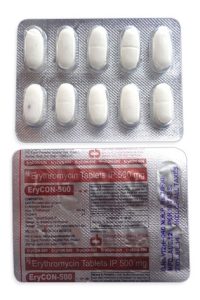
In brief
- In some online pharmacies, erythromycin may be available without a prescription, but in most countries it is a prescription-only (Rx) antibiotic. Availability and legal status can vary by country and formulation.
- Erythromycin is a macrolide antibiotic used to treat respiratory infections, skin and soft-tissue infections, acne, and certain eye infections; it also may be used for gastroparesis. It works by inhibiting bacterial protein synthesis by binding to the 50S ribosomal subunit, stopping bacterial growth.
- The usual dose depends on the condition and form: oral tablets are commonly 250–500 mg every 6 hours; pediatric oral suspension is often 30–50 mg/kg/day divided into 2–4 doses; topical acne treatment is usually 2% applied twice daily; eye ointment is commonly applied every 6 hours as directed.
- Erythromycin comes as oral tablets, delayed-release tablets, oral suspension, topical solution or gel, eye ointment, and powder for suspension.
- Erythromycin usually begins working within 1–2 hours, though symptom improvement for infections may take 1–3 days and acne may take longer.
- The duration of action is generally about 6 hours for immediate-release oral forms, while delayed-release forms last longer; treatment courses are typically 7–14 days for infections, and topical acne therapy may require several weeks.
- Alcohol is best avoided or limited because it can worsen stomach upset and may increase the risk of side effects while taking erythromycin.
- The most common side effects are nausea, vomiting, abdominal cramps, diarrhea, rash, and local irritation; some people may also notice taste disturbance or, rarely, hearing changes at high doses.
- Would you like to try erythromycin without a prescription?
Basic Erythromycin Information
- INN (International Nonproprietary Name): Erythromycin
- Brand Names Available In United States: Erythromycin, E.E.S. 400, Akne-Mycin, Ilosone
- ATC Code: J01FA01
- Forms & Dosages: Oral tablets, oral suspensions, delayed-release tablets, topical solution/gel, eye ointment, powder for suspension
- Manufacturers In United States: Azurity Pharmaceuticals, Carnegie Pharma, and various other manufacturers and distributors
- Registration Status In United States: Prescription-only (Rx) for systemic forms; oral and topical forms are approved
- OTC / Rx Classification: Prescription only (Rx) in most jurisdictions; over-the-counter (OTC) not available for systemic forms in most countries
Everyday Use And Best Practices
Morning Vs Evening Dosing
Wondering when to take erythromycin so it actually works the way it should?
Most erythromycin use follows a daily dosing routine with doses spaced evenly through the day, often every 6 hours for oral treatment.
That steady medication schedule helps keep antibiotic levels more consistent in the body.
Here is a simple checklist that patients use to stay on track with erythromycin tablets or erythromycin oral suspension.
- Take each dose at the same times every day when possible.
- Set phone alarms so a busy shift, school run, or commute does not throw off the schedule.
- Link doses to regular routines, such as breakfast, lunch, dinner, and bedtime, if that fits the prescription label.
- Check whether your formulation is delayed-release, because exact timing may differ from standard tablets.
- Use the dosing times written on the label instead of guessing.
For many people, the biggest challenge is not the medicine itself but remembering four daily doses.
A parent who is juggling work and daycare pickups, for example, often does better with alarms than memory alone.
Taking With Or Without Meals
Not sure whether erythromycin should be taken on an empty stomach or with food?
The answer depends on the exact product and what your prescriber wrote on the label.
Some people take erythromycin with food when stomach upset becomes a problem, but certain formulations have their own instructions.
Reading the prescription label carefully matters more than relying on general advice from the internet.
These daily-use tips can make life easier without drifting from the instructions.
- Do plan doses around meals and school schedules when that helps prevent missed doses.
- Do keep erythromycin tablets or erythromycin oral suspension in the same place each day.
- Do ask a pharmacist if the product should be taken with food.
- Don’t assume every formulation follows the same rule.
- Don’t skip a dose just because your routine gets busy.
That extra planning is especially helpful for commuters, shift workers, and caregivers who are already managing a lot.
Safety Priorities
Who Should Avoid It
Is erythromycin safe for everyone who gets a prescription antibiotic?
No, and the biggest safety issues are straightforward when you see them in a table.
| Avoid | Use Caution | Ask A Clinician |
|---|---|---|
| Known macrolide allergy, including erythromycin | Liver disease or liver impairment | History of heart rhythm problems or prolonged QT interval |
| History of cholestatic jaundice or hepatic dysfunction linked to prior erythromycin use | Myasthenia gravis | Any medicine that may affect QT prolongation or CYP3A4 metabolism |
| Concurrent use with contraindicated QT-prolonging or CYP3A4-metabolized drugs | Older age with possible hepatic function concerns | Any new rash, swelling, or breathing problem after a first dose |
People with liver impairment, heart rhythm concerns, or myasthenia gravis need a careful medical review before starting therapy.
Activities To Limit
Could erythromycin side effects affect normal life?
They can, especially if nausea, dizziness, or rare hearing changes show up.
Those problems may interfere with driving, school, or work performance in some people.
For that reason, it is smart to pay attention to warning symptoms and act quickly.
- Pause normal activities if you feel dizzy enough to drive unsafely.
- Contact a clinician promptly for palpitations or a racing heartbeat.
- Seek medical advice quickly for severe diarrhea, especially if it does not settle.
- Call for help if your skin or eyes turn yellow, which may suggest liver trouble.
- Report worsening weakness, especially if you have myasthenia gravis.
The goal is not to scare people off a useful prescription antibiotic, but to know when normal routine should stop and medical help should start.
Dosage And Adjustments
General Regimen
What does a typical erythromycin dose look like in real practice?
For adults, common oral dosing for respiratory or skin and soft-tissue infections is 250 to 500 mg every 6 hours.
Children commonly receive 30 to 50 mg/kg/day divided into 2 to 4 doses.
Many infections are treated for 7 to 14 days, while acne may be treated longer when directed.
| Patient Group | Common Dose | Typical Duration | Common Formulations |
|---|---|---|---|
| Adults | 250 to 500 mg every 6 hours | 7 to 14 days | Erythromycin 250 mg, erythromycin 500 mg, delayed-release tablets |
| Children | 30 to 50 mg/kg/day in 2 to 4 doses | 7 to 14 days | Erythromycin suspension, powder for suspension |
| Acne | Apply 2% solution or gel twice daily | Until improvement | Topical solution/gel |
Erythromycin 250 mg uses and erythromycin 500 mg tablets may overlap depending on the infection and the prescriber’s plan.
Special Cases
Do certain groups need a different erythromycin dose adjustment?
Yes, and the differences are practical rather than complicated.
- Children: Suspensions are usually preferred because they support weight-based pediatric dosing more accurately.
- Liver impairment: A reduced dose or longer interval may be needed because erythromycin is metabolized hepatically.
- Renal impairment: Adjustment is usually not needed unless impairment is severe, though monitoring may still be advised.
- Older adults: No standard dose change is listed, but hepatic function should be watched closely.
- All patients: Do not change the dose or stop early without guidance.
Erythromycin oral and erythromycin suspension products should always be matched to the form prescribed, especially when dosing by weight in children.
User Testimonials
Positive Reports
What do patients usually say after taking erythromycin correctly?
Common patient-reported positives include improvement in acne, skin infections, or respiratory symptoms when the medicine is taken consistently.
Some people also like having multiple options, including tablets, topical solution, ointment, and suspension.
- “My acne started calming down once I used the topical erythromycin the way it was prescribed.”
- “The oral tablets were easy to get, and the infection symptoms eased after I stuck to the schedule.”
- “Having a suspension made dosing easier for my child.”
Common Challenges
What gets in the way most often?
Nausea, abdominal cramps, diarrhea, and remembering frequent doses are the usual complaints.
Those problems do not mean the medicine is failing, but they can make adherence harder.
- Take it with food if the label and prescriber allow that approach.
- Use phone reminders for the frequent schedule.
- Track symptoms in a notebook or phone app so you can report them clearly.
- Ask a pharmacist about ways to fit the doses into work or school days.
Buying Guide
Pharmacy Sources
Trying to find erythromycin without overpaying or getting the wrong form?
In the United States, systemic erythromycin is prescription-only, so the first step is confirming the exact product and strength.
Real-world examples include E.E.S. 400, Ilosone, Akne-Mycin, and Erygel or Eryderm-style topical products where available.
That matters because erythromycin tablets, erythromycin ointment, and topical solution are not interchangeable.
| Form | Common Strength | Common Use |
|---|---|---|
| Oral tablet | 250 mg, 400 mg, 500 mg | Respiratory or skin infections |
| Topical solution/gel | 2% | Acne and skin infections |
| Eye ointment | 5 mg/g | Ophthalmic infections |
Price Comparison
Erythromycin price can vary a lot by dosage form, brand, insurance formulary, and supply chain.
Generic versions are often available, so it pays to compare local pharmacies, insurance pricing, and reputable mail-order pharmacies.
When the medication arrives, check the active ingredient, expiration date, and whether a suspension needs reconstitution or refrigeration after mixing.
- Compare cash price and insurance price before buying.
- Ask whether the product is generic erythromycin or a brand form.
- Verify storage instructions before you leave the pharmacy.
- Confirm the package size and exact strength.
For shoppers who need convenience, our online pharmacy offers erythromycin without a prescription with discreet delivery to the United States in 5 to 14 days.
What Is Inside And How It Works
Ingredients Overview
What is actually in erythromycin products?
The active ingredient is erythromycin, an INN and macrolide antibiotic in ATC class J01FA01.
Inactive ingredients vary by manufacturer and formulation, so the tablet, suspension, gel, or eye ointment may not look the same from one brand to another.
| Formulation | Common Strengths | Typical Use |
|---|---|---|
| Oral tablets | 250 mg, 400 mg, 500 mg | Systemic bacterial infections |
| Oral suspensions | 125 mg/5 mL, 250 mg/5 mL | Pediatric dosing |
| Topical solution or gel | 2% | Acne and skin infections |
| Eye ointment | 5 mg/g | Ophthalmic infections |
Mechanism Basics
How does erythromycin work in plain language?
It helps stop bacteria from making proteins, which slows bacterial growth.
That is why it can be used for selected bacterial infections and for acne-related bacteria.
- What it does: Slows bacterial growth by interfering with protein production.
- What it does not do: Treat viral illnesses like colds or flu.
- What that means: It should be used only when a bacterial infection or acne treatment plan calls for it.
Main Indications
Approved Uses
What conditions does erythromycin commonly help treat?
Oral forms are used for respiratory infections and skin or soft-tissue infections, while topical forms are used for acne and eye ointment for ophthalmic infections.
| Condition | Form | Typical Duration |
|---|---|---|
| Respiratory infections | Oral tablets or suspension | 7 to 14 days |
| Skin and soft-tissue infections | Oral tablets or suspension | 7 to 10 days |
| Acne vulgaris | Topical 2% solution or gel | Until improvement |
| Ophthalmic infections | Eye ointment 5 mg/g | Typically 7 to 14 days |
Erythromycin 250 mg uses may also include infections such as pharyngitis, bronchitis, sinusitis, and skin infections when prescribed by a clinician.
Off-Label Uses
Note: Erythromycin may also be used in practice for gastroprotection for gastroparesis, but that is an off-label use and should be directed by a clinician.
It is not appropriate for viral illness and should not be started on your own for symptoms that have not been evaluated.
Interaction Warnings
Food Interactions
Does food matter with erythromycin?
Sometimes it does, but the product label decides the details.
Some formulations are better tolerated with food when stomach upset shows up, while others have specific directions that should not be ignored.
A few simple habits help patients stay safe and avoid confusion.
- Read the label for the exact product before the first dose.
- Use food only if the label or prescriber allows it.
- Stay hydrated if nausea or diarrhea becomes a problem.
- Avoid alcohol if it makes stomach upset worse, even though it is not listed here as a major direct interaction.
Drug Conflicts
The biggest erythromycin interaction concern is with medicines that prolong the QT interval or are extensively metabolized by CYP3A4 and are contraindicated.
That is why medication reconciliation matters so much.
| Check Before Use | Why It Matters |
|---|---|
| Prescription medications | Some can conflict through QT prolongation or CYP3A4 metabolism |
| Over-the-counter products | They may still affect symptoms or interact with other therapies |
| Supplements and herbals | They should be disclosed to the pharmacist and prescriber |
Patients with heart rhythm issues should tell every clinician and pharmacist they are taking erythromycin.
Latest Evidence And Insights
What Current Practice Suggests
Why does erythromycin still show up in modern prescribing?
It remains relevant because it comes in multiple formulations, is broadly available, and still has a place in selected bacterial infections and topical acne treatment.
- Clinicians may choose it when a macrolide option is needed.
- Topical erythromycin can be useful when local therapy is preferred.
- Alternatives may be selected based on resistance patterns, tolerability, or dosing convenience.
Why It Still Matters
Erythromycin continues to matter because some patients need a macrolide antibiotic option that fits a specific infection or a topical plan.
Updated prescribing decisions should always follow local guidelines and current regulatory data from the FDA, EMA, or national agencies.
Check local guidance: Product availability and approved uses can change by country and formulation, so current agency records are the safest source for clinical decisions.
Alternative Choices
Azithromycin And Clarithromycin
When a clinician considers another macrolide, azithromycin and clarithromycin are the main alternatives.
| Medicine | Why It May Be Chosen | Common Clinical Consideration |
|---|---|---|
| Azithromycin | Shorter treatment courses | Often selected for schedule simplicity |
| Clarithromycin | May be preferred for some infections | Choice depends on tolerability and interactions |
When Alternatives May Be Chosen
Why might a prescriber switch away from erythromycin?
- GI intolerance, including nausea or diarrhea.
- A need for simpler dosing.
- Interaction concerns with other medicines.
- Local resistance patterns.
Any antibiotic change should be clinician-directed, not based on convenience alone.
Regulation Snapshot
United States And International Status
In the United States, erythromycin is prescription-only for systemic forms and available in multiple approved forms.
EU countries also approve it under various brand names, and most require a prescription.
Taiwan has registered eye ointment, while regulation differs by country and formulation.
| Region | Status | Common Forms |
|---|---|---|
| United States | Prescription only | Oral tablets, topical solution, suspension, eye ointment |
| European Union | Approved under varied brand names | Oral and topical products |
| Taiwan | Registered | Eye ointment |
Romania And Public Records
For Romania, erythromycin approval should be checked on ANMDMR for current registration and public records.
That same habit applies to professionals anywhere: verify the exact product and indication using official agency sources rather than outdated packaging or online listings.
Frequently Asked Questions
Common Patient Questions
What should you do if a dose is missed?
Take the missed dose as soon as remembered unless it is close to the next dose, and do not double up.
Can erythromycin be taken with food?
Sometimes yes, but the label directions for the exact formulation should be followed.
How long does treatment usually last?
Most infections are treated for 7 to 14 days, while acne may take longer as directed.
Is it used for acne or eye infections?
Yes, topical 2% solution or gel is used for acne, and 5 mg/g eye ointment is used for ophthalmic infections.
When To Call A Clinician
What symptoms should never be ignored?
- Severe diarrhea.
- Rash or swelling.
- Palpitations or a racing heartbeat.
- Yellowing of the skin or eyes.
- Worsening symptoms despite treatment.
- Overdose symptoms such as significant GI upset or possible ototoxicity at high doses.
Guidelines For Proper Use
Daily Routine And Storage
How should erythromycin be stored at home and while traveling?
The storage rule depends on the dosage form, and that matters more than people think.
- Store tablets and capsules below 25°C and protect them from moisture.
- Refrigerate suspensions after reconstitution if the label says to do so, and shake before use.
- Keep topical products at room temperature and avoid freezing.
- Store eye ointment below 25°C and discard it after the course is finished.
- Use a kitchen checklist, travel bag plan, or phone reminder so the medication stays within reach and on schedule.
Finish The Course Correctly
Should erythromycin be stopped as soon as symptoms improve?
No, unless the prescriber changes the plan.
Taking erythromycin exactly as prescribed and finishing the full course helps reduce treatment failure or relapse.
- Follow the prescribed dose and timing.
- Use oral suspension, tablets, or eye ointment only as directed.
- Wash hands before and after applying topical products or eye ointment.
- Do not save leftover antibiotic for a future illness.
Delivery Across United States
| City | Region | Delivery Time |
|---|---|---|
| New York | Northeast | 5-7 days |
| Los Angeles | West | 5-7 days |
| Chicago | Midwest | 5-7 days |
| Houston | South | 5-7 days |
| Phoenix | West | 5-7 days |
| Philadelphia | Northeast | 5-7 days |
| San Antonio | South | 5-7 days |
| San Diego | West | 5-7 days |
| Dallas | South | 5-7 days |
| San Jose | West | 5-7 days |
| Austin | South | 5-7 days |
| Jacksonville | South | 5-9 days |
| Columbus | Midwest | 5-9 days |
| Charlotte | South | 5-9 days |
| Seattle | West | 5-7 days |