Ivermectin
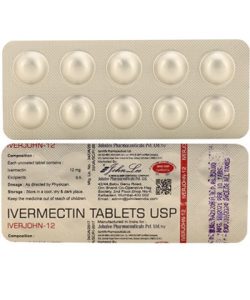
In brief
- In some pharmacies and online marketplaces, ivermectin may be available without a prescription, but in most countries human oral ivermectin is prescription-only; availability and legal requirements depend on local regulations, while veterinary products are sold separately and should not be used for human treatment.
- Ivermectin is used to treat parasitic infections such as onchocerciasis, strongyloidiasis, scabies, and lice, and it is also used in veterinary medicine. It works by binding to parasite-specific chloride channels, causing paralysis and death of the parasite.
- The usual adult dose varies by condition: onchocerciasis 150 mcg/kg orally once, strongyloidiasis 200 mcg/kg orally once, and scabies 200 mcg/kg orally with a repeat dose in 7–14 days. Topical rosacea treatment is typically applied once daily.
- The form of administration is oral tablets, topical cream, topical lotion, and veterinary injectable or pour-on formulations.
- The effect usually begins within hours after oral dosing, while topical forms may start improving symptoms over several days.
- The duration of action is generally 1 dose for some infections, or repeated dosing after 7–14 days or every 6–12 months depending on the indication.
- Alcohol is not specifically contraindicated, but it is best to avoid heavy drinking because it may worsen dizziness, drowsiness, and stomach upset.
- The most common side effects are nausea, diarrhea, abdominal pain, dizziness, headache, and mild skin itching or rash.
- Would you like to try ivermectin without a prescription?
Basic Ivermectin Information
- INN (International Nonproprietary Name): Ivermectin
- Brand names available in United States: Stromectol, Soolantra, Sklice
- ATC Code: P02CF01
- Forms & dosages: Tablet (oral) 3 mg, 6 mg, 12 mg; Cream (topical) 1% (10 mg/g); Lotion (topical) 0.5% (5 mg/g)
- Manufacturers in United States: Merck, Galderma, Sanofi/Arbor Pharma
- Registration status in United States: Prescription (Rx) only for human oral use in most markets; some topical forms may have different access rules
- OTC / Rx classification: Human oral ivermectin is prescription-only; Sklice lotion may be available without a prescription in some settings
Everyday Use And Best Practices
People usually want to know one simple thing first: when should ivermectin be taken, and does it have to fit around meals or daily routines?
Take the Stromectol tablet, ivermectin pill, or ivermectin tablet exactly as prescribed, because the schedule depends on the condition and the form.
Some regimens are a single dose, while topical products like ivermectin cream may be used once daily for a set period.
If an oral dose leaves you dizzy or sleepy, evening dosing may be easier for daily life, but only if the prescriber agrees.
A pharmacist often suggests building a dosing routine that is hard to miss.
- Set a phone reminder for the dose date.
- Keep the medicine in one place at home.
- Mark the date on a calendar if a repeat dose is needed.
- Read the label before each use so the route and strength stay clear.
Morning Vs Evening Dosing
For some patients, morning works best because it is tied to breakfast or a work routine.
For others, evening works better because it reduces the chance that dizziness gets in the way of driving, errands, or a busy shift.
The key point is that the prescriber sets the plan, not the clock alone.
Taking With Or Without Meals
Oral ivermectin is often taken on an empty stomach in many protocols, but the prescription label always comes first.
Topical use is different, because the skin or scalp should be clean and dry before applying ivermectin cream or ivermectin lotion.
It also helps to avoid starting a new skincare product or antiparasitic product on the same day unless a clinician told you to do that.
- Checklist: confirm the strength, confirm whether it is oral or topical, confirm whether a repeat dose is needed, and confirm when to call the pharmacy or doctor.
Safety Priorities
Before anyone starts prescription ivermectin, the most important question is whether it is safe for the person and the diagnosis.
This medicine has real benefits, but it also has clear limits.
Human oral ivermectin should not be used in children under 15 kg or under 5 years old, and veterinary ivermectin is never a substitute for human medicine.
That warning matters because animal products can have different concentrations, packaging, and ingredients.
Who Should Avoid It
- Do not use it if there is a known allergy to ivermectin or the product’s inactive ingredients.
- Avoid oral use in children under 15 kg or under 5 years old.
- Use extra caution with severe liver disease.
- Pregnancy and breastfeeding need individualized medical advice because safety data are limited.
- High-burden Loa loa exposure is a serious concern because of CNS risk.
- Veterinary ivermectin is not for human use.
Activities To Limit
If ivermectin side effects such as drowsiness, dizziness, or lightheadedness happen, it is wise to pause driving, cycling, alcohol use, and machinery until the response is clear.
That same caution applies when another sedating medicine or supplement is already on board.
For topical ivermectin, avoid applying it to broken skin unless the prescriber specifically says otherwise.
- Checklist: review age and weight limits, confirm pregnancy status if relevant, avoid veterinary formulations, and watch for rash, confusion, or severe weakness.
Dosage And Adjustments
People often search for ivermectin dosage charts, but the safest chart is the one tied to the diagnosis and the exact product on the label.
Human oral tablets commonly come as 3 mg, 6 mg, or 12 mg strengths, while topical products include Soolantra cream and Sklice lotion.
The table below gives the standard adult regimens described in product information and common protocols.
| Indication | Usual Adult Dose | Repeat Interval | Form |
|---|---|---|---|
| Onchocerciasis | 150 mcg/kg oral once | Repeat every 6 to 12 months | Oral tablet |
| Strongyloidiasis | 200 mcg/kg oral once | Some protocols use up to 2 doses | Oral tablet |
| Scabies | 200 mcg/kg oral | Repeat in 7 to 14 days | Oral tablet, sometimes topical |
| Rosacea | Apply a thin layer once daily | Up to 12 weeks | Topical cream |
| Head lice | Apply to dry scalp, rinse after 10 minutes | Once; may repeat after 7 days | Topical lotion |
Special Cases
Children over 15 kg may use weight-based dosing, but younger or smaller children are generally excluded because safety data are limited.
No routine renal dose adjustment is usually needed, although severe kidney disease still deserves monitoring.
Severe hepatic impairment needs caution because ivermectin is metabolized in the liver.
That is why a dose chart should never replace clinical judgment, especially when the issue is scabies, rosacea, or a parasitic infection with a different parasite burden than expected.
User Testimonials
Patient stories usually sound practical, not dramatic.
Most people want to know whether the treatment actually helped, whether the schedule was easy, and whether the side effects were manageable.
- “The itching settled down after treatment, and that was a relief.”
- “The schedule was simple enough that the repeat dose did not get missed.”
- “My skin felt calmer after several weeks of topical use for rosacea.”
Those reports line up with common ivermectin user experience when the medicine matches the diagnosis and is used correctly.
| Pros | Cons |
|---|---|
| Simple dosing for many regimens | Nausea, dizziness, or temporary irritation can happen |
| Helpful for scabies, lice, and rosacea in the right setting | Some people forget repeat dosing dates |
| Short oral or topical courses | Confusion can happen between human and veterinary products |
Buying Guide
When people buy ivermectin online, the main question is not just price.
The bigger issue is whether the product is legitimate and matched to the prescription or diagnosis.
In the U.S., human oral ivermectin is typically prescription-only, while topical products such as Soolantra and Sklice may have different access rules.
For shoppers comparing pharmacy sources, the active ingredient, strength, and manufacturer name should be verified every time.
In our online pharmacy, ivermectin is available without a prescription, with discreet delivery to United States in 5-14 days.
Pharmacy Sources
- Buy only from licensed pharmacies.
- Check whether the product is human oral, topical cream, or topical lotion.
- Avoid websites selling research, animal, or unregulated ivermectin products for human use.
- In Romania, ANMDMR registry data can be used to verify approved listings.
| Pharmacy Source | Prescription Requirement | Dosage Form | Safety Check |
|---|---|---|---|
| Licensed U.S. pharmacy | Usually required for oral tablets | Tablet, cream, lotion | Confirm manufacturer and expiration date |
| Regulated online pharmacy | Depends on product type | Tablet, cream, lotion | Confirm packaging and source |
| Marketplace seller | Not reliable | Varies | Avoid counterfeit risk |
Checklist: verify Rx status, inspect packaging, confirm expiration date, and avoid counterfeit marketplaces.
What Is Inside And How It Works
Ivermectin is the active ingredient in this medicine, and it belongs to the macrocyclic lactone class of antiparasitic agents.
Human products may appear as tablets, creams, or lotions, while veterinary products use different concentrations and packaging.
Brand examples include Stromectol, Soolantra, Sklice, and Mectizan.
| Product Type | Typical Strength | Use |
|---|---|---|
| Tablet | 3 mg, 6 mg, 12 mg | Human oral treatment |
| Cream | 1% | Rosacea treatment |
| Lotion | 0.5% | Head lice treatment |
Ivermectin mechanism basics are straightforward.
It interferes with parasite nerve and muscle function, which helps immobilize and eliminate certain parasites.
Its ATC code is P02CF01.
For day-to-day use, the most important point is simple: take only the intended human formulation and follow exact directions.
Main Indications
Most patients want to know whether ivermectin is approved for their exact problem or only used in certain situations.
That matters because ivermectin for scabies is handled differently from ivermectin for rosacea, and the oral tablet is not the same as the topical cream or lotion.
| Indication | Human Form | Typical Frequency | Status |
|---|---|---|---|
| Onchocerciasis | Stromectol tablet | Single oral dose, repeated later if needed | Approved |
| Strongyloidiasis | Oral tablet | Single oral dose, sometimes more than one | Approved |
| Rosacea | Soolantra cream | Once daily | Approved |
| Head lice | Sklice lotion | Single use, sometimes repeat after 7 days | Approved in some markets |
| Scabies | Oral tablet or topical option | Repeat in 7 to 14 days when oral is used | May be used depending on guidance |
Some clinicians also use ivermectin off-label for other parasitic situations when local guidance supports it.
That choice should be explained clearly, especially when comparing it with permethrin, albendazole, or moxidectin.
The right diagnosis matters because scabies, lice, and rosacea can look similar at first glance, but the treatment plan changes a lot once the cause is confirmed.
Interaction Warnings
Drug review is an important step because ivermectin interactions are not the same for every patient.
Food effects can depend on the formulation, so the label should guide use rather than a generic rule.
If sedation or dizziness is already a concern, alcohol and other unapproved supplements should be limited until the response is known.
Food And Drug Conflicts
- Follow the label for food instructions, because formulations can differ.
- Avoid mixing with products that increase drowsiness unless a clinician approves it.
- For topical products, avoid layering strong skin treatments at the same time unless directed.
- Tell the pharmacist about all prescription drugs, over-the-counter products, and supplements.
| Interacting Drug Class | Concern | What To Ask The Pharmacist |
|---|---|---|
| Sedating medicines | More dizziness or sleepiness | Whether driving should be limited |
| Other antiparasitic agents | More adverse effects or confusion about dosing | Whether both medicines are needed |
| Medicines that affect the liver | Higher liver burden | Whether monitoring is needed |
Latest Evidence And Insights
Current ivermectin evidence continues to support approved antiparasitic and dermatologic uses when the medicine is matched to the correct diagnosis.
That is the main takeaway from current ivermectin research and FDA ivermectin labeling.
Public interest has also created a lot of misinformation, so evidence-based use matters more than viral claims.
- Myth: One dosing chart works for every person and every condition.
- Fact: The dose depends on the condition, the form, and the patient’s age and weight.
- Myth: Human and veterinary ivermectin are interchangeable.
- Fact: Veterinary products are not for human use.
- Myth: Topical ivermectin is only for short-term use.
- Fact: Topical ivermectin remains important for rosacea and may take weeks to show benefit.
When information seems inconsistent, official prescribing information and pharmacy guidance are better than social media dosing charts.
Alternative Choices
Sometimes ivermectin is not the best fit, and another antiparasitic may be a better match for the diagnosis.
That decision depends on route, age limits, side-effect profile, and whether the product is approved for the condition.
| Drug | Main Use | Oral Or Topical | Key Advantage |
|---|---|---|---|
| Albendazole | Helminthic infections | Oral | Common alternative for worm infections |
| Mebendazole | Helminthic infections | Oral | Another standard option for worms |
| Praziquantel | Schistosomiasis and tapeworm infections | Oral | Useful for specific cestode and schistosome infections |
| Permethrin | Lice and scabies | Topical | Frequent alternative for skin infestations |
| Moxidectin | Onchocerciasis and strongyloidiasis | Oral | Newer alternative in selected cases |
Some patients prefer topical treatment to avoid oral side effects, while others need oral therapy for broader parasite coverage.
Regulation Snapshot
In the United States, ivermectin is generally prescription-only for human oral use, with approved uses that include certain parasitic infections and topical dermatologic indications.
Brand examples include Stromectol, Soolantra, and Sklice.
In Romania, ANMDMR registry data can be checked for human and veterinary listings.
Veterinary products such as Ivomec are broadly available globally but must never be substituted for human medicine.
| Region | Brand Examples | Prescription Status |
|---|---|---|
| United States | Stromectol, Soolantra, Sklice | Human oral: Rx only |
| European Union | Stromectol, Soolantra, generics | Prescription-only for human use |
| Romania | Ivermectin, Stromectol, local generics | Prescription-only for human medicine |
| Veterinary market | Ivomec | Veterinary only |
Frequently Asked Questions
People usually have the same practical questions after a prescription is written or after they compare products online.
- Is ivermectin the same as a dewormer? Yes, it is an antiparasitic medicine, but the exact use depends on the diagnosis and form.
- Can I buy ivermectin over the counter? Usually not for human oral tablets in the U.S.; some topical products may have different access rules.
- How long until it works? Timing varies by condition; some regimens are one-time, while rosacea treatment may take weeks.
- Can I use veterinary ivermectin? No. Human and animal products are not interchangeable.
- What if I miss a dose? Take it when remembered unless it is almost time for the next dose.
- What if I feel sick? Contact a clinician if symptoms are severe, persistent, or neurologic.
That simple follow-up advice often prevents confusion, especially when the medicine is being used for scabies, lice, or rosacea and the schedule is short.
Guidelines For Proper Use
The best results usually come from the same basics: read the label, keep track of the dose, and know when to call for help.
That is especially true with Stromectol tablet use, Soolantra cream, or Sklice lotion, because the route and schedule are not the same.
How To Use It Correctly
- Read the label before the first dose and confirm the medicine is for the correct person, condition, and route.
- Keep a record of the dose date, strength, and any repeat dose instructions.
- Use only the exact human formulation prescribed.
- Store oral and topical human products at room temperature, away from light and moisture.
- Never substitute a veterinary product.
When To Seek Help
Call a clinician quickly if severe rash, trouble breathing, fainting, confusion, or significant neurologic symptoms appear.
Medical advice is also important if symptoms do not improve as expected or if a repeat treatment date is unclear.
- Checklist: identity of product, strength, dosing schedule, storage, adverse effect monitoring, follow-up plan.
Delivery Across United States
| City | Region | Delivery time |
|---|---|---|
| New York | Northeast | 5-7 days |
| Los Angeles | West | 5-7 days |
| Chicago | Midwest | 5-7 days |
| Houston | South | 5-7 days |
| Phoenix | West | 5-7 days |
| Philadelphia | Northeast | 5-7 days |
| San Antonio | South | 5-7 days |
| San Diego | West | 5-7 days |
| Dallas | South | 5-7 days |
| San Jose | West | 5-7 days |
| Austin | South | 5-7 days |
| Jacksonville | South | 5-9 days |
| Columbus | Midwest | 5-9 days |
| Fort Worth | South | 5-9 days |
| Charlotte | South | 5-9 days |