Arcoxia
In brief
- Arcoxia (etoricoxib) is available in pharmacies in over 60 countries (Europe, Latin America, Asia-Pacific) and is marketed by Merck/MSD and various local manufacturers; it is officially a prescription-only medicine and is not approved in the United States, although in some pharmacies it may be sold without a prescription or receipt.
- Arcoxia is used to treat osteoarthritis, rheumatoid arthritis, ankylosing spondylitis, acute gouty arthritis, acute pain (including dental/postoperative pain) and primary dysmenorrhea; it works as a selective COX‑2 inhibitor, reducing prostaglandin synthesis to relieve pain and inflammation while generally causing fewer GI ulcers than nonselective NSAIDs but carrying increased cardiovascular risk with long or high‑dose use.
- Usual adult doses: osteoarthritis 60 mg once daily; rheumatoid arthritis and ankylosing spondylitis 90 mg once daily; acute gouty arthritis up to 120 mg once daily (maximum 8 days); acute pain and primary dysmenorrhea 120 mg once daily for short term (1–5 days); dental/postoperative pain 90–120 mg as a single dose or for 1–3 days. Not recommended for children <16 years; dose adjustments required in liver impairment and contraindicated in severe renal impairment.
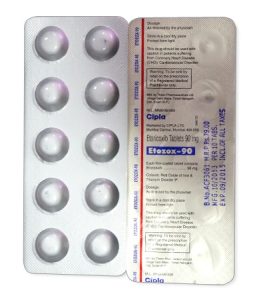
- Form of administration: oral film‑coated tablets (commonly available in 30 mg, 60 mg, 90 mg and 120 mg strengths).
- Onset time: rapid oral absorption with pain relief typically beginning within about 30–60 minutes.
- Duration of action: long‑acting with once‑daily dosing; effects generally last around 24 hours.
- Alcohol warning: avoid or limit alcohol while taking Arcoxia, as alcohol increases the risk of gastrointestinal bleeding and other adverse effects.
- The most common side effect is dyspepsia (indigestion); other common effects include abdominal pain, diarrhea, headache, dizziness, peripheral edema and mild increases in blood pressure.
- Would you like to try arcoxia without a prescription?
Basic Arcoxia Information
- INN (International Nonproprietary Name): Etoricoxib.
- Brand Names Available In United States: Not approved in the United States; Arcoxia and related brands are not FDA‑approved and are not available through standard US retail pharmacies.
- ATC Code: M01AH05 (COX‑2 selective NSAID for musculo‑skeletal use).
- Forms & Dosages: Film‑coated tablets in 30 mg, 60 mg, 90 mg, and 120 mg strengths; common pack sizes include 7, 14, 28, or 30 tablets.
- Manufacturers In United States: Not specified.
- Registration Status In United States: Not approved by the FDA (FDA issued a non‑approvable letter).
- OTC / Rx Classification: Prescription only (Rx) in registered markets; not OTC.
Before using Arcoxia, tell prescriber about heart, blood pressure, kidney and liver history and medicines; store tablets in original blister below 30°C, avoid other NSAIDs; seek urgent care for sudden chest pain.
Everyday Use & Best Practices
Morning Vs Evening Dosing
Are you wondering whether to take Arcoxia in the morning or at night?
Arcoxia (etoricoxib) is usually prescribed once daily, and timing should match when your pain is worst.
For chronic osteoarthritis with pronounced morning stiffness, a morning dose will cover daytime activities and mobility needs.
For patients whose pain interferes with sleep or peaks at night, taking the dose in the evening can improve rest and nighttime comfort.
For intermittent acute pain such as dental pain or gout, take the single recommended dose when the pain begins and limit duration to the indication‑recommended course.
Typical clinical guidance limits gout courses to up to eight days and dysmenorrhea or acute postoperative pain to one to five days as needed.
Taking With Or Without Meals
Can you take Arcoxia with food?
Yes — etoricoxib can be taken with or without food, and absorption is generally reliable regardless of meals.
If you notice mild dyspepsia or stomach discomfort, taking the tablet with a light meal often reduces irritation.
Avoid alcohol while taking any NSAID to limit gastrointestinal bleeding risk.
Use a simple daily dosing checklist to log the time taken and any side effects to share with your clinician at follow‑up appointments.
- Daily Dosing Checklist: Record date, time, dose, and any GI symptoms, dizziness, or swelling.
- Quick Pros/Cons Table: Morning dosing: better daytime coverage; Evening dosing: better sleep relief; Both: once‑daily convenience and consistent blood levels.
Safety Priorities
Who Should Avoid It
Who should not take Arcoxia?
Do not use etoricoxib if you have severe liver disease or creatinine clearance below 30 mL/min.
Avoid Arcoxia with uncontrolled hypertension above 140/90 mmHg, heart failure, ischemic heart disease, cerebrovascular disease, or peripheral arterial disease.
Do not use during pregnancy or breastfeeding, in children under 16, or in anyone with a known NSAID allergy or history of NSAID‑induced asthma or hives.
Active or prior gastrointestinal ulcers or bleeding are also contraindications for etoricoxib use.
Because Arcoxia is not FDA‑approved, discuss alternatives with your US clinician if you live in the United States.
Activities To Limit
What should I avoid while starting Arcoxia?
Until you know how etoricoxib affects you, avoid high‑risk activities like operating heavy machinery or long drives if you feel dizzy or have headaches.
Limit heavy lifting and intense athletic training while starting therapy, and coordinate use with your clinician if you are prone to fluid retention.
Reduce dietary salt intake and monitor fluid balance if you notice swelling or unexplained weight gain.
Avoid combining Arcoxia with other NSAIDs or high‑dose aspirin because of additive gastrointestinal and cardiovascular risks.
- Contraindications Checklist: Severe liver disease; CrCl <30 mL/min; uncontrolled hypertension; ischemic heart disease; pregnancy/lactation; pediatric <16 years; concomitant NSAIDs.
- Bring To Appointments: List of current medicines, recent BP readings, kidney or liver test results, and history of ulcers or cardiovascular disease.
Dosage & Adjustments
General Regimen
What dose will my clinician prescribe?
Standard adult doses vary by condition: osteoarthritis commonly 60 mg once daily, rheumatoid arthritis and ankylosing spondylitis typically 90 mg once daily.
For acute gouty arthritis or severe short‑term pain, doses up to 120 mg once daily may be used, usually limited to a short course.
Dental and postoperative pain are commonly treated with single 90–120 mg doses or regimens lasting one to three days.
Always use the minimum effective dose for the shortest duration that controls symptoms.
Special Cases
Are dose changes needed for age or organ impairment?
Etoricoxib is not recommended for children under 16 years.
Elderly patients do not automatically require dose reduction, but renal, hepatic, and cardiovascular monitoring is essential.
In liver impairment, limit dosing: mild hepatic impairment maximum 60 mg/day; moderate impairment maximum 30 mg/day; severe liver disease contraindicates use.
Severe renal impairment with CrCl below 30 mL/min is a contraindication; mild to moderate renal impairment requires monitoring without standard dose changes.
| Indication | Typical Dose | Usual Duration |
|---|---|---|
| Osteoarthritis | 60 mg once daily | Long‑term as clinically needed |
| Rheumatoid Arthritis | 90 mg once daily | Long‑term as clinically needed |
| Ankylosing Spondylitis | 90 mg once daily | Long‑term as clinically needed |
| Acute Gouty Arthritis | Up to 120 mg once daily | Short term, up to 8 days |
| Primary Dysmenorrhea / Acute Pain | 120 mg once daily | Short term, 1–5 days |
| Dental/Postoperative Pain | 90–120 mg single dose or 1–3 days | Short term |
- Dose Adjustment Checklist: Pediatric use contraindicated; adjust down or avoid in moderate liver impairment; contraindicated in severe liver or renal failure.
User Testimonials
Positive Reports
Do patients find Arcoxia helpful?
Many users report rapid pain relief and improved function, often within days at effective doses like 60 mg for osteoarthritis.
Patients who previously had stomach intolerance with nonselective NSAIDs sometimes notice fewer bothersome GI symptoms with COX‑2 selectivity.
Short courses for gout flares are commonly described as effective at reducing swelling and pain quickly.
Common Challenges
What problems do people report?
Some patients experience fluid retention, mild increases in blood pressure, headaches, or dizziness while taking etoricoxib.
GI upset still occurs in a minority, and rare but serious skin reactions have been reported, so any rash should prompt immediate discontinuation and medical review.
Because Arcoxia is not available in the United States, patients traveling or relocating often need to plan alternatives locally.
- Short Testimonials: “60 mg helped my knees within a week.”
- Pros/Cons Table: Pros: rapid relief, once‑daily dosing, lower GI ulcer risk than nonselective NSAIDs; Cons: cardiovascular risk with long‑term use, possible edema, not FDA‑approved in the US.
Buying Guide
Pharmacy Sources
Where can Arcoxia be obtained?
Arcoxia (etoricoxib) is prescription‑only and available in many countries under brand names Arcoxia, Exinef, and Nucoxia, produced mainly by Merck/MSD and licensed local manufacturers.
Typical packaging is blister packs in box sizes of 7, 14, 28, or 30 tablets across strengths 30, 60, 90, and 120 mg.
Always obtain etoricoxib from licensed community or online pharmacies in countries where it is registered and only with a valid prescription.
Price Comparison
How much does Arcoxia cost?
Price varies widely by country, brand, and pack size, so compare per‑tablet cost and check for generics such as Nucoxia where available.
Verify packaging and batch numbers to reduce counterfeit risk and use pharmacy discount programs or insurance where applicable.
Beware of online offers implying US availability; Arcoxia is not FDA‑approved and such purchases may ship from overseas and carry legal or import risks.
- Supplier Comparison Table: Merck/MSD (innovator); Zydus Cadila and Emcure (Nucoxia in India); local licensees in various regions.
- Safe Online Purchase Checklist: Valid prescription, licensed pharmacy, verifiable packaging and manufacturer, batch number, and secure payment.
What’s Inside & How It Works
Ingredients Overview
What is the active ingredient in Arcoxia?
The active substance is etoricoxib (International Nonproprietary Name), supplied as film‑coated tablets in 30, 60, 90, and 120 mg strengths.
Excipients vary by manufacturer and country, so check the package leaflet for any allergenic components if you have known sensitivities.
Mechanism Basics
How does etoricoxib relieve pain?
Etoricoxib is a selective COX‑2 inhibitor (ATC M01AH05) that reduces prostaglandin‑mediated pain and inflammation while sparing COX‑1 activity, which often lowers the risk of peptic ulcers compared with nonselective NSAIDs.
The COX‑2 selectivity also means there is a dose‑ and duration‑dependent cardiovascular risk that must be weighed against benefit.
Rapid oral absorption gives relatively quick symptomatic relief, making etoricoxib suitable for arthritis pain, gout flares, and short‑term acute pain when prescribed.
- Strengths Table: 30 mg, 60 mg, 90 mg, 120 mg film‑coated tablets.
Latest Evidence & Insights
What does current evidence say about COX‑2 agents like etoricoxib?
Clinical studies show COX‑2 selective agents are effective for inflammatory pain and often have lower rates of gastrointestinal complications versus nonselective NSAIDs in short‑term trials.
However, etoricoxib and other COX‑2 inhibitors are associated with increased cardiovascular risk that is greater at higher doses and with longer durations of use.
Regulatory histories reflect this balance: etoricoxib is approved in more than 60 countries but was not approved in the United States.
Modern guidance advises individual cardiovascular risk assessment, use of the lowest effective dose, and limiting treatment duration when possible.
For chronic arthritis, combine pharmacologic therapy with exercise, weight management, and physical therapy to minimize long‑term NSAID reliance.
| Regulatory Highlight | Notes |
|---|---|
| Approval | Approved in >60 countries; not FDA‑approved in the United States. |
| Safety Focus | Balance between reduced GI risk and increased cardiovascular risk; monitor BP, renal, hepatic function. |
Alternative Choices
What are safe alternatives if Arcoxia isn’t suitable?
If etoricoxib is unavailable or contraindicated, consider other COX‑2 selective options such as celecoxib where available, or nonselective NSAIDs like ibuprofen, naproxen, or diclofenac depending on the patient’s GI and cardiovascular risk profile.
Parecoxib is an injectable COX‑2 option used perioperatively in some settings.
For patients at high cardiovascular risk, topical NSAIDs, nonpharmacologic measures, or lowest‑dose strategies are often preferred.
In the United States, clinicians commonly use celecoxib or nonselective NSAIDs and apply risk mitigation such as lower dosing and PPI co‑therapy for GI protection.
| Option | Typical Use | Relative Risk |
|---|---|---|
| Celecoxib (Celebrex) | COX‑2 selective alternative where approved | Similar GI benefit, CV risk requires assessment |
| Ibuprofen/Naproxen | Nonselective NSAIDs for short‑term pain | Higher GI risk; CV risk varies |
| Topical NSAIDs | Localized musculoskeletal pain | Lower systemic exposure and systemic risk |
Regulation Snapshot
Where is etoricoxib registered?
Etoricoxib is marketed under Arcoxia, Exinef, Nucoxia and is approved in more than 60 countries including many in Europe, Latin America, and Asia‑Pacific.
Merck Sharp & Dohme (MSD) is the global innovator and main manufacturer, with licensed local producers and generics such as Nucoxia available in markets like India.
The product is sold in blister packs and boxes of 7–30 tablets, with strengths of 30, 60, 90, and 120 mg.
It is prescription‑only in registered markets and specifically not FDA‑approved in the United States.
| Country / Region | Approval Status | Common Brand Name |
|---|---|---|
| European Union | Approved | Arcoxia |
| Latin America | Approved in many countries | Arcoxia / Local Brands |
| Asia‑Pacific | Approved in many countries | Arcoxia, Exinef, Nucoxia |
| United States | Not approved | Not available |
FAQ Section
Will Arcoxia Upset My Stomach?
Because etoricoxib is COX‑2 selective, many patients have fewer ulcers than with nonselective NSAIDs, but GI side effects such as dyspepsia, abdominal pain, diarrhea and rare bleeding still occur.
Stop the medicine and seek urgent care for signs of GI bleeding such as black stools or vomiting blood.
Can I Take Arcoxia With Blood Pressure Meds?
COX‑2 inhibitors can raise blood pressure and blunt some antihypertensive effects; you can take them with blood pressure medications only under clinician supervision with regular BP monitoring.
Patients on diuretics, ACE inhibitors, or ARBs should be monitored for renal function and electrolytes after starting etoricoxib.
- Is Arcoxia Available In The US? No; Arcoxia is not FDA‑approved and generally not stocked by US pharmacies.
- How Long Can I Use It? Use the lowest effective dose for the shortest time; chronic use requires periodic monitoring of cardiovascular, renal, and hepatic status.
Guidelines For Proper Use
Monitoring & Follow‑Up
What monitoring does etoricoxib require?
Before starting etoricoxib, have baseline blood pressure, renal function (creatinine/CrCl), and liver enzymes recorded.
Monitor blood pressure and renal function periodically, and check liver tests if clinically indicated or if symptoms suggest hepatic dysfunction.
Watch for signs of edema, unexplained weight gain, or new cardiac symptoms and report them promptly.
Review cardiovascular risk profile annually or sooner if new risk factors appear.
Missed Dose & Overdose
If you miss a dose, take it as soon as you remember unless the next dose is due soon; do not double up to make up a missed dose.
There is no specific antidote for etoricoxib overdose; management is supportive with monitoring of vital signs and symptomatic treatment.
Keep an up‑to‑date treatment log and bring all medicines to follow‑up appointments for reconciliation and safety checks.
- Printable Monitoring Checklist: baseline BP, creatinine, LFTs; record weight and edema; document any new chest pain or shortness of breath.
- Emergency Overdose Instructions: seek emergency care; supportive measures and observation.
Access And Purchase Note
In our online pharmacy, arcoxia is available without a prescription, with discreet delivery to United States in 5‑14 days.
Delivery Across United States
| City | Region | Delivery Time |
|---|---|---|
| New York | New York | 5-7 days |
| Los Angeles | California | 5-7 days |
| Chicago | Illinois | 5-7 days |
| Houston | Texas | 5-7 days |
| Phoenix | Arizona | 5-7 days |
| Philadelphia | Pennsylvania | 5-7 days |
| San Antonio | Texas | 5-9 days |
| San Diego | California | 5-9 days |
| Dallas | Texas | 5-9 days |
| San Jose | California | 5-9 days |
| Austin | Texas | 5-9 days |
| Jacksonville | Florida | 5-9 days |
| San Francisco | California | 5-7 days |
| Columbus | Ohio | 5-9 days |
| Charlotte | North Carolina | 5-9 days |