Hydroquinone
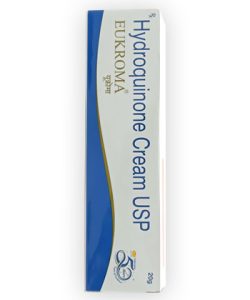
In brief
- Hydroquinone may be available from some pharmacies and online sellers without a prescription in certain regions, but in many regulated markets it is prescription-only, especially for 4% strengths and higher. Availability and legal status vary by country, so check local rules before purchasing.
- Hydroquinone is used to treat melasma, hyperpigmentation, lentigines, age spots, and post-inflammatory dark spots. It works by inhibiting tyrosinase, an enzyme needed for melanin production, which helps lighten areas of excess pigmentation.
- The usual dose is a thin layer of 2% to 4% cream applied to the affected area 1 to 2 times daily. Treatment is generally limited to a few months and should be reassessed by a clinician.
- The form of administration is topical, most commonly as a cream; it is also available in some markets as a gel or lotion, and sometimes in combination creams with tretinoin and/or corticosteroids.
- The effect usually begins gradually, with visible improvement often starting in about 2 to 6 weeks, depending on the skin condition, concentration, and consistency of use.
- The duration of action lasts as long as the product is used regularly; treatment courses are typically 2 to 4 months, and should not be prolonged beyond 4 to 6 months without medical supervision.
- Alcohol does not have a major direct interaction with topical hydroquinone, but excessive alcohol use may worsen skin irritation or reduce adherence to sun-protection and skincare routines.
- The most common side effects are redness, mild burning or stinging, dryness, and mild peeling. Less commonly, it can cause irritant or allergic contact dermatitis.
- Would you like to try hydroquinone without a prescription?
Basic Hydroquinone Information
- INN (International Nonproprietary Name): Hydroquinone
- Brand names available in United States: Eldoquin, Lustra, Melanex, Melquin
- ATC Code: D11AX11
- Forms & dosages: Cream 2%, 4%, 5%; Gel 2%, 4%; Lotion 2%, 4%; Combination products with tretinoin, corticosteroids, or sunscreen
- Manufacturers in United States: Valeant Pharmaceuticals, Obagi, Ranbaxy
- Registration status in United States: Rx only for strengths above 2%; ≤2% may be OTC depending on current rules
- OTC / Rx classification: Rx in most regulated markets for 2% to 4% and higher strengths; OTC for ≤2% in some regions
Hydroquinone Cream Use, Safety, And Buying Guide
Morning Vs Evening Dosing
People often ask whether hydroquinone belongs in the morning or at night.
The practical answer is that it is usually applied as a thin layer to clean, dry skin one to two times daily, depending on the strength and the prescriber’s directions.
For many patients using hydroquinone cream for dark spots or melasma treatment, the easiest routine is after cleansing, before moisturizer, then sunscreen during the day.
That timing matters more than the clock on the wall.
A patient using Eldoquin, Lustra, Melanex, or Melquin may see 2%, 4%, or 5% tubes depending on region and prescription status, but the same basic routine still applies.
Daily hydroquinone routine:
- Cleanse the skin gently and pat it dry.
- Apply a thin layer only to the darkened area.
- Let it absorb before adding moisturizer.
- Use SPF 30+ every morning.
- Avoid using it on broken, irritated, or sunburned skin.
Consistency is what usually drives hydroquinone results, not heavy application.
Taking With Or Without Meals
Meals are irrelevant because hydroquinone is topical, not oral.
That makes it easier to fit into everyday life, even on a busy weekday or after a late pharmacy pickup.
Still, timing should stay consistent so the skin gets the same exposure each day.
It also helps to keep the cream for dark spots away from open cuts, shaving irritation, or recent exfoliation.
Daytime sunscreen is not optional with hydroquinone skin lightener use, because sun exposure can undo progress and increase irritation.
If the dose is missed, apply it when remembered unless the next application is close.
Do not double up.
That simple routine usually works better than trying to “catch up.”
Who Should Avoid It
Some people should not start hydroquinone without medical advice.
Absolute contraindications include allergy or hypersensitivity to hydroquinone or the product ingredients, eczema or broken skin in the treatment area, recent sunburn, and pregnancy or breastfeeding unless a specialist specifically recommends it.
Children under 12 do not have established safety data.
Caution is also reasonable in patients with psoriasis, atopic dermatitis, vitiligo history, or prior reactions to phenols or resorcinol.
Avoid or limit:
- Direct sun exposure and tanning.
- Harsh exfoliation, scrubs, and peels.
- Use on irritated, cracked, or inflamed skin.
- Long-term high-strength use without supervision.
- Combining it with products that sting or peel unless advised.
Hydroquinone safety concerns include skin irritation and, with prolonged use, exogenous ochronosis.
The product warning language is serious for a reason: hydroquinone may cause allergic skin reactions and serious eye damage if misused.
General Regimen
For melasma, hyperpigmentation, lentigines, age spots, and post-inflammatory hyperpigmentation, the usual regimen is a 2% to 4% cream applied in a thin layer one to two times daily.
Most courses are limited to about 2 to 4 months, then reassessed.
Age spots may be treated once daily until they fade, usually with a maximum around 3 months.
Post-inflammatory hyperpigmentation may need 2 to 6 months, depending on response and skin sensitivity.
Condition, strength, and duration:
| Condition | Typical Strength | Frequency | Duration |
|---|---|---|---|
| Melasma | 2% to 4% | 1 to 2 times daily | 2 to 4 months |
| Hyperpigmentation | 2% to 4% | 1 to 2 times daily | 2 to 4 months |
| Lentigines / age spots | 2% to 4% | Once daily | Up to 3 months |
| Post-inflammatory hyperpigmentation | 2% to 4% | 1 to 2 times daily | 2 to 6 months |
Special Cases
No formal kidney or liver dose adjustment exists, but caution is reasonable because formal data are limited.
Older adults may have more skin sensitivity.
After a missed dose, apply as soon as remembered, skip it if the next dose is near, and never apply twice at once.
If too much is used on the skin, wash off the excess and watch for irritation.
If hydroquinone is swallowed or a very large amount is applied over a wide area, seek urgent medical help immediately.
In our online pharmacy, hydroquinone is available without a prescription, with discreet delivery to United States in 5-14 days.
What Users Like
Patients usually want one thing: visible fading without a complicated routine.
Common positive reports include gradual improvement in dark spots, a better-looking melasma pattern, and more confidence with makeup-free skin when sunscreen is used consistently.
That is especially true for people using hydroquinone cream 4% as part of a steady skin care plan.
What users like:
- Dark spots fade slowly and steadily.
- Melasma often looks less noticeable over time.
- Sunscreen plus treatment can improve cosmetic confidence.
What users struggle with:
- Dryness, redness, and stinging.
- Results that take time, not days.
- Strict daily sunscreen use.
Common Challenges
Hydroquinone results vary by skin type, how deep the pigment sits, and whether the cream is used consistently.
Some patients stop too soon because they expect fast changes.
Others get irritation from overuse or from pairing it with too many actives at once.
That is why patient experience is usually mixed, even when the medication is working.
The best outcomes tend to come from adherence, realistic expectations, and regular sunscreen.
Pharmacy Sources
Brand names and packaging differ by region, but the core ingredient is the same.
In the United States and Canada, common brands include Eldoquin, Lustra, Melanex, and Melquin.
In the EU, including Romania, Albothyl Hydrochinon, HQderm, and Iklen may appear in 2%, 4%, or 5% tubes.
India often uses Melalite, Iluma, and Benoquin, including combo creams with tretinoin.
Africa and Nigeria may have Movate and Funbact A, often in combinations.
The Middle East may carry Eldoquin Forte and Benoquin Forte.
Brands by region:
| Region | Common Brands | Typical Packaging | Manufacturers |
|---|---|---|---|
| United States / Canada | Eldoquin, Lustra, Melanex, Melquin | 2%, 4%; 15 g to 60 g tubes | Valeant, Brinton, Obagi |
| EU / Romania | Albothyl Hydrochinon, HQderm, Iklen | 2%, 4%, 5%; 20 g to 50 g tubes | Cantabria Labs, Terapia, Zentiva |
| India | Melalite, Iluma, Benoquin | 2%, 4%; 15 g to 30 g tubes | Abbott, Wallace Pharma |
| Africa / Nigeria | Movate, Funbact A | 2%, 4%; 25 g tubes | GSK Consumer Health, local generics |
| Middle East | Eldoquin Forte, Benoquin Forte | 4% tube | Various generics |
Price Comparison
Price depends on country, strength, whether the product is prescription or OTC, and whether it is a standalone cream or a triple combination product.
Regulated pharmacies are the safest place to compare options, especially when searching for buy hydroquinone ointment online or Eldoquin alternatives.
For Romania, the ANMDMR public database is the right place to check approval status for Hydroquinone prescription Romania ANMDMR searches.
That same principle applies elsewhere: compare the registered product, the tube size, and the active ingredients before ordering.
Ingredients Overview
Hydroquinone is the INN for a phenol derivative and benzenediol that is used only topically for skin lightening.
It comes in creams, gels, lotions, and combination products.
Combination products often include tretinoin, corticosteroids, or sunscreen, especially in triple-combo creams.
The chemistry is simple enough to remember: hydroquinone is a topical depigmenting agent, not a general skin bleach.
Mini-glossary:
- INN: the standard international drug name.
- ATC D11AX11: the dermatologic classification code for hydroquinone.
- Phenol derivative: the chemical family hydroquinone belongs to.
- Topical depigmenting agent: a medicine applied to skin to reduce pigment.
Mechanism Basics
Hydroquinone reduces melanin production in the treated skin.
That is why it is used for melasma treatment, hyperpigmentation, and cream for dark spots.
In everyday language, it helps slow the skin’s pigment-making process in the area where it is applied.
Its ATC code is D11AX11, and it is classified among dermatologicals.
The effect is local, which is why application technique and sunscreen matter so much.
Approved Uses
The main uses are melasma, hyperpigmentation, lentigines, age spots, and post-inflammatory hyperpigmentation.
These are the problems most patients mean when they ask about a hydroquinone skin lightener.
For many cases, 2% to 4% cream is standard, with treatment reviewed after a limited course.
Indication summary:
| Indication | Typical Strength | Frequency | Maximum Duration |
|---|---|---|---|
| Melasma | 2% to 4% | 1 to 2 times daily | 2 to 4 months |
| Hyperpigmentation | 2% to 4% | 1 to 2 times daily | 2 to 4 months |
| Lentigines / age spots | 2% to 4% | Once daily | 3 months |
| Post-inflammatory hyperpigmentation | 2% to 4% | 1 to 2 times daily | 2 to 6 months |
Off-Label Uses
Triple combination creams are used off-label for refractory melasma in India, the Middle East and North Africa region, and Latin America.
These products mix hydroquinone with tretinoin and a corticosteroid.
They can work well for selected patients, but long-term or casual use raises risk, so supervision matters.
That is especially true when someone is tempted to keep using the same cream indefinitely because it “seems to help.”
Food Interactions
Food interactions do not apply because hydroquinone is topical.
The real issues are skin-product interactions and irritation load.
Exfoliating acids, retinoids, and harsh acne treatments can make the skin sting more.
That is why combination products should be used exactly as directed.
Do not combine without advice:
- Other irritant creams or peels.
- Strong exfoliating acids.
- Retinoids used at the same time without a plan.
- Harsh acne treatments that already dry the skin.
When hydroquinone is paired with tretinoin or corticosteroids, clinician guidance helps prevent avoidable irritation.
What Recent Practice Trends Show
Current practice has shifted toward limited-duration use, stronger sunscreen emphasis, and monitored treatment rather than indefinite use.
That is partly because hydroquinone safety concerns have kept the spotlight on chronic irritation and ochronosis risk.
Many countries are also reviewing regulatory status, which affects access and labeling.
The pattern is straightforward: short courses are favored, and supervision is preferred for stronger products.
What Patients Should Know Now
Hydroquinone remains widely used, but it should not be used long term without supervision.
Chronic use can increase the risk of exogenous ochronosis and other adverse effects.
July 2025 status snapshot:
| Region | Status | Typical Access |
|---|---|---|
| United States | Rx above 2%; ≤2% may be OTC | Prescription or regulated OTC |
| EU / Romania | Mostly Rx | Check ANMDMR listings |
| India | OTC and Rx both available | Often sold through e-pharmacies |
| Africa | OTC and Rx both available | Varies by country and enforcement |
| Middle East | Usually Rx | Enforcement may vary |
When To Consider Alternatives
Hydroquinone may not be the best fit if the skin is sensitive, if there is pregnancy or breastfeeding, if there is a prior allergy, or if a gentler option is preferred.
Several hydroquinone alternatives are used in pigment care.
They may work more slowly, but some are better tolerated.
Substitute comparison:
| Alternative | Pros | Cons | Best Fit |
|---|---|---|---|
| Tretinoin | Useful for texture and pigment | Can irritate | Patients who tolerate retinoids |
| Azelaic acid | Often gentler | May be slower | Sensitive skin, acne-prone skin |
| Kojic acid | Common brightening option | May sting | Cosmetic pigment support |
| Arbutin creams | Frequently better tolerated | Usually less potent | Gentler maintenance use |
| Tranexamic acid | Used for melasma | Topical or oral selection matters | Selected melasma cases |
United States And EU Status
In the United States, strengths above 2% are prescription products, while ≤2% may be OTC depending on current rules.
In the EU, including Romania, hydroquinone is mostly Rx and should be checked in ANMDMR listings.
Brand names and packaging vary by region, so the label matters more than the name on the box.
Global Buying And Legal Notes
India, many African countries, and parts of the Middle East may have both OTC and Rx versions, but enforcement varies.
Some countries restrict or ban hydroquinone because of safety concerns.
Always verify the local listing before buying, especially if ordering online or comparing regional brand names.
Common Patient Questions
How long should hydroquinone be used? Usually 2 to 4 months, with reassessment.
Can it be applied every day? Yes, when directed, often one to two times daily.
Why is sunscreen needed? Without SPF 30+ daily, pigment can return and irritation can worsen.
What if a dose is missed? Apply it when remembered unless the next dose is close.
Is it safe for sensitive skin? Sometimes, but irritation is common, so monitoring matters.
When should it be stopped? Stop and get advice if severe rash, swelling, eye exposure, or worsening darkening occurs.
Step-By-Step Application
Clean skin gently, then dry it completely before application.
Apply a thin layer only to the affected areas.
Avoid the eyes, lips, mucous membranes, and broken skin.
Wash hands after use unless the hands are being treated.
Use SPF 30+ every day during treatment and after treatment.
Before, during, and after application:
- Before: cleanse and dry fully.
- During: apply only a thin layer to the dark area.
- After: wash hands and apply sunscreen the next morning.
- Storage: keep below 25°C, away from light and moisture, and do not freeze.
Keep the tube in its original sealed container.
Monitoring And When To Stop
Reassess after 2 to 4 months, or sooner if irritation develops.
Prolonged use beyond 4 to 6 months should not happen without medical supervision.
Warning signs that need a stop-and-check approach include persistent darkening, severe dermatitis, and suspected ochronosis.
That is the point where continuing on autopilot is a bad idea.
Delivery Across United States
| City | Region | Delivery time |
|---|---|---|
| New York | Northeast | 5-7 days |
| Los Angeles | West | 5-7 days |
| Chicago | Midwest | 5-7 days |
| Houston | South | 5-7 days |
| Phoenix | West | 5-7 days |
| Philadelphia | Northeast | 5-7 days |
| San Antonio | South | 5-7 days |
| San Diego | West | 5-7 days |
| Dallas | South | 5-7 days |
| San Jose | West | 5-7 days |
| Austin | South | 5-7 days |
| Jacksonville | South | 5-9 days |
| Fort Worth | South | 5-9 days |
| Columbus | Midwest | 5-9 days |
| Charlotte | South | 5-9 days |