Pepcid
In brief
- In many pharmacies and online stores (United States and EU) pepcid can be purchased without a prescription for lower strengths (10–20 mg); higher strengths (40 mg), liquid suspensions, or pediatric formulations may require a prescription. Delivery options vary (often 3–14 days) and discreet packaging is commonly available.
- Pepcid (famotidine) is used to treat heartburn, GERD, gastric and duodenal ulcers, and to reduce gastric acid in conditions like Zollinger–Ellison syndrome; it works as a histamine H2‑receptor antagonist that reduces stomach acid secretion.
- Usual adult dosages: heartburn/GERD — 20 mg twice daily; active duodenal ulcer — 20 mg twice daily or 40 mg once daily; gastric ulcer — 40 mg once daily (bedtime). Dosing for Zollinger–Ellison is individualized (20–160 mg every 6 hours).
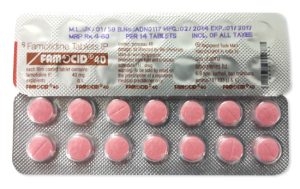
- Forms of administration include oral tablets (10, 20, 40 mg), chewable tablets (10, 20 mg), orally disintegrating tablets (20 mg), and powder for oral suspension (reconstituted liquid).
- Onset of action is typically within 30–60 minutes after oral administration.
- Duration of action is generally about 8–12 hours per dose, which is why dosing is often once or twice daily depending on the condition.
- Avoid alcohol while taking pepcid; alcohol can worsen gastrointestinal symptoms and may increase the risk of side effects—consult your healthcare provider for personalized advice.
- The most common side effect is headache (others include dizziness, constipation, diarrhea, and fatigue).
- Would you like to try pepcid without a prescription?
Basic Pepcid Information
- INN (International Nonproprietary Name): famotidine
- Brand Names Available In United States: Pepcid, Pepcid AC, Pepcid AC Maximum Strength, Heartburn Relief (tablets; sometimes blister packs, bottles)
- ATC Code: A02BA03 (Histamine H2-Receptor Antagonists)
- Forms & Dosages: Tablets 10 mg / 20 mg / 40 mg; Chewable Tablets 10 mg / 20 mg; Orally Disintegrating Tablets 20 mg; Powder For Suspension 40 mg/5 mL (Rx)
- Manufacturers In United States: Johnson & Johnson, McNeil Consumer Healthcare, generics via Teva, Mylan, Sandoz
- Registration Status In United States: Approved by the FDA in both OTC and prescription forms
- OTC / Rx Classification: OTC for lower strengths (10 mg, 20 mg); Prescription for higher strengths and suspensions (40 mg and liquid)
Quick Warnings: Do not use if known allergy to famotidine or other H2 blockers such as ranitidine, cimetidine, or nizatidine.
If pregnant, breastfeeding, have severe renal or hepatic disease, or a history of QT prolongation or arrhythmias, consult a clinician before starting.
For signs of overdose such as confusion, fainting, or very low blood pressure, seek emergency care immediately.
- Carry chewables in a purse or handbag for sudden heartburn.
- Use a checklist app for twice-daily dosing reminders when prescribed.
- Keep a dose log if switching between OTC and prescription strengths.
| Storage Condition | Transport Note |
|---|---|
| Store below 25°C (77°F), dry, protect from moisture and direct light. | Avoid freezing liquids; standard pharmaceutical transport precautions apply. |
Everyday Use & Best Practices
Do you get heartburn mostly at night or after meals and want to know how to time doses?
Morning Vs Evening Dosing
For routine GERD prevention or everyday heartburn control, typical regimens include famotidine 20 mg once or twice daily.
When nighttime reflux is the main problem, a 40 mg dose at bedtime is commonly used for healing or nocturnal symptom control.
Over-the-counter options usually come in 10–20 mg strengths and work well for daytime or as-needed relief.
Prescription 40 mg tablets or suspensions are commonly used for nightly healing regimens under clinician guidance.
- 20 mg once daily: mild, occasional symptoms or prevention.
- 20 mg twice daily: intermittent GERD or chronic reflux control.
- 40 mg at bedtime: nocturnal symptoms or active gastric ulcer healing.
- OTC chewables (10–20 mg): fast, PRN relief during the day.
| Product Type | Common Strengths | Timing |
|---|---|---|
| OTC Chewables/Tablets | 10 mg, 20 mg | Daytime or PRN; can be before/after meals |
| Prescription Tablets/Suspension | 40 mg; 40 mg/5 mL suspension | Often bedtime for healing; provider-directed schedules |
Taking With Or Without Meals
Famotidine can be taken with or without food, which makes it easy to fit into daily routines.
Chewable or orally disintegrating forms often give the fastest symptom relief when taken around meals.
If stomach upset occurs, try taking doses with a small snack.
Pair doses with regular daily activities such as breakfast or dinner to maintain consistency.
Safety Priorities
Worried whether famotidine is safe for you or someone you care for?
Who Should Avoid It
Do not use famotidine if there is a known allergy to famotidine or other H2 blockers like ranitidine, cimetidine, or nizatidine.
Exercise caution or avoid use in severe renal impairment because dose reductions are necessary.
Severe hepatic disease also warrants careful monitoring for central nervous system effects.
Patients with a history of QT prolongation or cardiac arrhythmias should discuss alternatives with their clinician.
Pregnant or breastfeeding persons should use famotidine only if clearly needed and after consulting a healthcare provider.
Children under three months require specialist dosing and supervision.
Activities To Limit
Famotidine may cause dizziness or fatigue in some people; avoid driving or heavy machinery until individual effects are known.
If confusion or significant lightheadedness develops—particularly in renal impairment—stop hazardous activities and seek advice.
When taking multiple CNS-active medications, monitor coordination and alertness and report side effects promptly.
- Avoid driving if you feel dizzy or unusually tired after a dose.
- Pause heavy machinery or safety-sensitive tasks if cognitive changes occur.
- Contact a clinician for dose review if renal function declines or side effects worsen.
| Contraindication / Trigger | Monitoring Or Action |
|---|---|
| Known H2 allergy | Do not use; report to provider |
| Severe renal impairment | Reduce dose; monitor for confusion or accumulation |
| QT prolongation / Arrhythmia | Consider alternatives; consult cardiology if needed |
Dosage & Adjustments
Need clear guidance on typical dosing and how to adjust for age or kidney function?
General Regimen
Standard adult dosages for GERD or heartburn are 20 mg twice daily or 40 mg once daily for prevention and healing.
Active gastric ulcers are commonly treated with 40 mg once daily at bedtime.
Duodenal ulcers are usually managed with 20 mg twice daily or 40 mg once daily.
OTC famotidine strengths are typically 10–20 mg and prescription strengths include 40 mg tablets and 40 mg/5 mL suspension.
Typical treatment durations are six to eight weeks for ulcers and six to twelve weeks for GERD.
Special Cases
In pediatrics, famotidine is not recommended for infants under three months and dosing is weight-based; above 40 kg, adult dosages are used.
Elderly patients should be started on lower doses if renal impairment is suspected.
In renal impairment, reduce the dose—commonly by half if creatinine clearance is under 50 mL/min.
Zollinger-Ellison syndrome dosing is individualized and may require frequent high doses (for example, 20–160 mg every six hours); consult a specialist.
| Patient Group | Usual Dose / Note |
|---|---|
| Adults (GERD) | 20 mg twice daily or 40 mg once daily |
| Active Gastric Ulcer | 40 mg once daily at bedtime (6–8 weeks) |
| Renal Impairment | Reduce dose; consider halving if CrCl <50 mL/min |
| Children >40 kg | Use adult doses; avoid under 3 months without specialist advice |
- Confirm indication and duration before starting (ulcer vs GERD vs PRN).
- Adjust dose for renal function and age; review medications for interactions.
User Testimonials
Wondering how famotidine performs for real people with routine heartburn?
Positive Reports
Many users report reliable, fast relief for mild-to-moderate heartburn, often within an hour after an OTC dose.
Patients taking a 40 mg bedtime dose commonly report fewer nocturnal awakenings from reflux.
People switching from cimetidine often note fewer drug interactions when using famotidine.
Common Challenges
Some users find famotidine gives incomplete relief for severe GERD and are directed to proton pump inhibitors by their clinician.
Typical side-effect reports include transient headaches, dizziness, constipation, or diarrhea.
Others report reduced effectiveness with long-term use and require higher prescription doses under medical supervision.
- “Took a 20 mg chewable after dinner and felt better within an hour.” — anonymized user
- “Switching to 40 mg at bedtime stopped my nighttime waking.” — anonymized user
- “Needed a PPI later for erosive disease; Pepcid helped between doctor visits.” — anonymized user
Buying Guide
Looking to buy Pepcid or generic famotidine and want to compare options and prices?
Pharmacy Sources
In the United States, famotidine is widely available OTC as Pepcid, Pepcid AC, and generics from manufacturers such as Johnson & Johnson, McNeil, Teva, Mylan, and Sandoz.
Prescription versions like 40 mg tablets and suspensions are available through pharmacies with a prescription.
Our online pharmacy stocks Pepcid and generic famotidine without a prescription, with discreet delivery to United States in 5-14 days.
Price Comparison
OTC 20 mg chewables or tablets are generally low-cost and sold in blister packs or bottles.
Rx 40 mg bottles or suspensions cost more and are priced per unit of active ingredient.
Price-shopping tips include comparing unit price per mg and choosing generics labeled famotidine 20 mg when identical performance is expected.
| Brand / Generic | Common Dosages | Typical Packaging | Average Price Range |
|---|---|---|---|
| Pepcid (brand) | 10–20 mg OTC; 40 mg Rx | Chewables, tablets, bottles | Low to moderate for OTC; higher for Rx |
| Generic Famotidine | 10 mg, 20 mg, 40 mg | Bottles, blister packs | Usually lower unit price than brand |
| Pepcid Suspension (Rx) | 40 mg/5 mL | Powder for reconstitution | Prescription pricing varies |
What’s Inside & How It Works
Curious what’s active in Pepcid and how it reduces acid?
Ingredients Overview
The active ingredient is famotidine (INN), typically present at 10–20 mg in OTC products and 40 mg in prescription tablets.
Prescription suspensions are commonly 40 mg/5 mL powder for reconstitution.
Nonactive ingredients vary by formulation and may include binders, flavorings, and chewable bases; check labels for excipient allergies.
Mechanism Basics
Famotidine is an H2-receptor antagonist that blocks histamine H2 receptors on gastric parietal cells to reduce acid secretion.
Onset of relief is faster than proton pump inhibitors, but the degree and duration of acid suppression are generally less than PPIs.
H2 blockers are therefore useful for as-needed relief and particular dosing strategies like nighttime control.
| Aspect | Famotidine (H2) | PPI (Example) |
|---|---|---|
| Mechanism | H2 receptor blockade | Proton pump inhibition |
| Onset | Faster (within an hour for many) | Slower (may take days for full effect) |
| Duration / Potency | Shorter and less profound | Stronger and longer-lasting |
Main Indications
What is Pepcid FDA-approved for, and are there common off-label uses?
Approved Uses
Famotidine is approved for treatment of GERD and heartburn, duodenal and gastric ulcers, and conditions requiring reduced gastric acid.
Typical adult dosing by indication includes 20 mg twice daily for GERD and 40 mg once daily at bedtime for active gastric ulcers.
Duration depends on indication: ulcers six to eight weeks; GERD six to twelve weeks.
Off-Label Uses
Off-label uses include H2-mediated stress ulcer prophylaxis in some hospital settings and symptomatic treatment of dyspepsia.
Higher or more frequent dosing is sometimes used off-label for conditions such as Zollinger-Ellison syndrome under specialist supervision.
| Use | Typical Dosing | Duration / Note |
|---|---|---|
| GERD / Heartburn | 20 mg twice daily | 6–12 weeks; PRN for mild cases |
| Active Gastric Ulcer | 40 mg once daily at bedtime | 6–8 weeks |
| Stress Ulcer Prophylaxis (Off-Label) | Clinician-directed | Hospital protocols vary |
Interaction Warnings
Want to know what interacts with famotidine and how to space doses?
Food Interactions
Famotidine has minimal direct food interactions and may be taken with or without meals.
Large fatty meals, alcohol, and spicy foods can trigger reflux and make the medicine seem less effective.
Timing a dose before a heavy meal can help if used PRN for predictable triggers.
Drug Conflicts
Famotidine has fewer CYP-mediated interactions than cimetidine but can alter absorption of drugs sensitive to gastric pH changes.
Examples include some antifungal agents and iron formulations where pH affects bioavailability; consult a pharmacist for specifics.
Antacids can be used together if spaced by about two hours to avoid interference with absorption.
Renal impairment increases the chance of higher drug levels and side effects; check dosing for renally cleared co-medications.
- Watch with: pH-sensitive antifungals, iron supplements, and some investigational oral agents.
- Space antacids and famotidine by roughly two hours.
- Review all prescriptions and supplements with a pharmacist when starting famotidine.
| Interaction Type | Recommendation |
|---|---|
| Antacids | Space by 2 hours |
| pH-Sensitive Drugs | Check product info; consult pharmacist |
| Renally Cleared Co-Drugs | Monitor levels and adjust doses as needed |
Latest Evidence & Insights
How does recent research shape the role of famotidine in heartburn care?
Research Highlights
Recent comparative studies confirm famotidine provides faster onset of relief than PPIs but with less potent and shorter acid suppression.
Famotidine remains an effective H2 blocker for short-term heartburn control and ulcer healing in indicated doses.
Regulatory issues with ranitidine have increased clinician and patient interest in famotidine as a widely available alternative.
Practical Clinical Takeaways
For patients with infrequent or mild GERD, famotidine 20 mg OTC is a reasonable first-line option for PRN relief.
Patients with severe or erosive reflux disease often require the stronger, longer-lasting acid suppression of proton pump inhibitors.
Clinicians should factor renal function, age, and polypharmacy into famotidine recommendations and consider Rx 40 mg for healing regimens when appropriate.
- Use OTC famotidine for occasional heartburn and nighttime symptoms.
- Escalate to PPIs for persistent, severe, or erosive disease.
- Review renal function and concomitant drugs periodically during therapy.
Alternative Choices
Thinking about alternatives to Pepcid or when to switch classes?
Other H2 Options
Alternatives in the H2 class include cimetidine and nizatidine, although ranitidine is widely restricted due to NDMA concerns.
Cimetidine has a higher potential for drug interactions compared with famotidine, making famotidine a preferred H2 choice for many patients.
Switch To PPIs Or Nonpharmacologic Options
When more potent, longer suppression is needed, proton pump inhibitors such as omeprazole or esomeprazole are commonly used.
Lifestyle measures remain important: weight loss, head-of-bed elevation, avoiding late large meals, and reducing alcohol or trigger foods.
For immediate, short-term relief alginate formulations or antacids can supplement therapy if spaced appropriately from famotidine.
| Option | When To Use | Notes |
|---|---|---|
| H2 Blocker (Famotidine) | PRN, nighttime control, mild GERD | Faster onset, fewer interactions vs cimetidine |
| PPI (Omeprazole) | Severe or erosive GERD | Stronger, longer-lasting acid suppression |
| Antacids / Alginates | Immediate neutralization/raft effect | Short duration; space from H2 agents as needed |
- Consult a clinician if symptoms persist despite OTC famotidine.
- Consider PPI therapy for severe or erosive disease after evaluation.
Regulation Snapshot
Is Pepcid OTC or prescription where you live, and who makes it?
Approval & OTC/Rx Status
In the United States, famotidine is FDA-approved in both OTC and prescription forms.
OTC strengths commonly include 10–20 mg, while 40 mg tablets and suspensions are frequently prescription-only.
Availability and classification may vary by country; in the EU and many other markets, generics are widely approved at national levels.
Packaging & Manufacturer Notes
Pepcid brand and generics are sold in chewables, tablets, and bottles by Johnson & Johnson, McNeil, Teva, Mylan, Sandoz, and others.
International brand names include Pepcidine in France and Famotidin-ratiopharm in Germany; local generics predominate in many regions.
For Romania, check ANMDMR registries for current approvals and suppliers if ordering internationally.
| Country Example | Common Brand/Generic | Common Pack Types |
|---|---|---|
| United States | Pepcid, Generic Famotidine | Chewables, Tablets, Bottles |
| France | Pepcidine | Blister Packs |
| Germany | Famotidin-ratiopharm | Tablets, Blisters |
FAQ
Have quick questions about daily use, missed doses, or safety?
Common Patient Questions
- Can I take Pepcid every day? — Yes, when used at recommended dosing for prevention or healing, but follow duration guidance and consult a clinician for long-term use.
- Is famotidine safe with other meds? — It has fewer interactions than cimetidine, but always check specific drugs and renal function with a pharmacist.
- Can I use Pepcid during pregnancy? — Use only if the potential benefit justifies the potential risk; consult your provider.
Quick Answers & Troubleshooting
- Missed Dose: Take when remembered unless close to next dose; do not double dose.
- Overdose: Confusion, fainting, or hypotension may occur; seek immediate medical care.
- Storage: Keep below 25°C (77°F), dry, protected from light and moisture.
- If OTC products fail after the recommended period, see your clinician for reassessment.
Guidelines For Proper Use
Want a printable checklist to share with your clinician or caregiver?
Practical Daily Checklist
- Confirm indication (PRN heartburn, GERD, or ulcer healing).
- Choose OTC (10/20 mg) vs Rx (40 mg) based on clinician advice.
- Verify renal function if elderly or on multiple medications.
- Set dosing times: morning/bedtime or PRN as directed.
- Track symptom response and any side effects for follow-up.
- Return to provider if no improvement within recommended duration.
Monitoring & When To Seek Care
Monitor for headache, dizziness, GI upset, and cognitive changes in older adults.
If symptoms persist beyond expected treatment durations, or if there is weight loss, GI bleeding, or severe abdominal pain, seek medical evaluation promptly.
Keep the medicine packaging and batch information handy for pharmacy consultations or adverse event reporting.
| Monitor | Action Threshold |
|---|---|
| Persistent Symptoms | No improvement after 6–12 weeks for GERD or 6–8 weeks for ulcers |
| Neurological Changes | Confusion or severe dizziness—seek care and review dosing |
| Allergic Reaction | Rash, swelling, or breathing difficulty—stop and seek emergency care |
Delivery Across United States
| City | Region | Delivery Time |
|---|---|---|
| New York | Northeast | 5-7 days |
| Los Angeles | West | 5-7 days |
| Chicago | Midwest | 5-7 days |
| Houston | South | 5-7 days |
| Phoenix | West | 5-7 days |
| Philadelphia | Northeast | 5-7 days |
| San Antonio | South | 5-7 days |
| San Diego | West | 5-9 days |
| Dallas | South | 5-9 days |
| San Jose | West | 5-9 days |
| Austin | South | 5-9 days |
| Jacksonville | South | 5-9 days |
| Columbus | Midwest | 5-9 days |