Rabeprazole
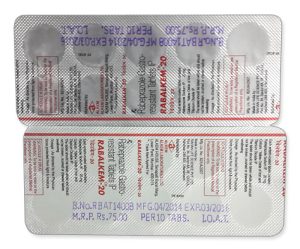
In brief
- In our pharmacy, you can buy rabeprazole without a prescription, with delivery in 5–14 days throughout the United States. Discreet and anonymous packaging available.
- Rabeprazole is used to treat gastroesophageal reflux disease (GERD), peptic/duodenal ulcers, as part of H. pylori eradication regimens, and Zollinger–Ellison syndrome; it is a proton pump inhibitor (a prodrug that irreversibly inhibits the H+/K+ ATPase in gastric parietal cells to reduce acid secretion).
- The usual dose is 20 mg once daily for GERD and ulcers (20 mg twice daily when used in H. pylori triple therapy with antibiotics; higher individualized doses for Zollinger–Ellison syndrome, often starting around 60 mg daily and titrated).
- Administered orally as enteric‑coated tablets (commonly 10 mg and 20 mg); granules or suspensions are available in some markets for pediatric use and co‑packaged kits exist for H. pylori therapy.
- Onset: rabeprazole begins to reduce gastric acid within about 1 hour, with symptomatic relief often noticeable within a few days; it is considered to have a relatively fast onset among PPIs.
- Duration of action: a single dose provides acid suppression for approximately 24 hours; full steady acid control develops over 2–3 days of daily dosing.
- Avoid heavy alcohol consumption while taking rabeprazole, as alcohol can worsen reflux and gastric irritation and may reduce treatment effectiveness; consult your healthcare provider for personalized advice.
- The most common side effect is diarrhea.
- Would you like to try rabeprazole without a prescription?
Basic Rabeprazole Information
- INN (International Nonproprietary Name): Rabeprazole
- Brand Names Available In United States: AcipHex (10 mg, 20 mg enteric-coated tablets)
- ATC Code: A02BC04 (Proton Pump Inhibitors — rabeprazole); A02BD12/13 for H. pylori combinations
- Forms & Dosages: Enteric-coated tablets 10 mg and 20 mg; rare granules/suspensions in select markets; co-packaged H. pylori kits in some regions
- Manufacturers In United States: AcipHex originally marketed by Eisai (originator); generics available from global manufacturers (Dr. Reddy’s, Sun Pharma, Sandoz, Mylan, Teva) depending on supply
- Registration Status In United States: Approved by the US FDA as a prescription medication (AcipHex, NDA)
- OTC / Rx Classification: Prescription only (Rx) in most regulatory agencies, including the US FDA, due to PPI class safety considerations
Morning Vs Evening Dosing
People ask whether to take rabeprazole in the morning or at night when heartburn keeps them up.
For most adults with GERD, the standard starting dose is rabeprazole 20 mg once daily for four to eight weeks, or 10 mg depending on the prescriber.
Clinicians often advise morning dosing because it covers daytime acid exposure and matches many patients’ routines.
Patients whose symptoms are mainly at night may benefit from evening dosing or an adjusted schedule discussed with their clinician.
When treating H. pylori as part of triple therapy, rabeprazole is used 20 mg twice daily with two antibiotics for seven to fourteen days.
Follow the specific plan your prescriber gives you rather than guessing timing on your own.
Do not crush or chew enteric-coated tablets such as AcipHex, since the coating protects the drug until it reaches the intestine.
Store rabeprazole below 25°C (77°F) and protect it from moisture and light.
If you notice an allergic reaction like rash or facial swelling, stop the medication and seek immediate medical care.
Quick Checklist:
- Take 20 mg once daily for GERD unless otherwise directed.
- Consider morning dosing for daytime symptoms; consider evening dosing if reflux is nocturnal.
- For H. pylori, follow 20 mg twice daily with antibiotics for 7–14 days.
- Never crush or chew enteric-coated tablets.
Taking With Or Without Meals
Patients often wonder whether food matters for rabeprazole dosing and symptom control.
Rabeprazole can be taken with or without food, but taking it at the same time every day helps steady symptom control.
Enteric-coated formulations are designed to pass through the stomach and dissolve in the intestine, so swallowing them whole is essential.
Do not chew or crush enteric-coated tablets like AcipHex or Pariet because doing so destroys the acid-resistant coating.
Consistency matters more than exact meal timing for most people; pick a time you will reliably remember.
If your prescriber recommended morning dosing, try to take the tablet at roughly the same hour each morning.
If you experience breakthrough symptoms after meals, tell your clinician before increasing dose or adding over-the-counter therapies.
Short Table — Once Vs Twice Daily Uses
| Regimen | Common Use |
|---|---|
| 20 mg Once Daily | GERD, duodenal ulcer healing |
| 20 mg Twice Daily | H. pylori eradication (with antibiotics) |
Who Should Avoid It
Before starting rabeprazole, patients want to know who should not take it.
Absolute contraindication includes known hypersensitivity to rabeprazole or substituted benzimidazoles.
Use caution or avoid in severe hepatic impairment; dose reduction may be necessary and closer monitoring advised.
Pregnancy and breastfeeding require a risk–benefit discussion; use only if the prescriber determines benefits outweigh risks.
Tell your clinician if you have a history of frequent Clostridioides difficile infection, hypomagnesemia, or osteoporosis-related fractures because long-term PPI therapy carries class risks.
Report unexplained persistent gastrointestinal symptoms before starting treatment to rule out other causes.
People taking medications that require an acidic stomach for absorption should discuss alternatives with their prescriber.
Red Flags Checklist:
- Known allergy to rabeprazole or related drugs — do not take.
- Severe liver disease — use with caution and possible dose adjustment.
- Pregnancy/breastfeeding — discuss risks and benefits.
Activities To Limit
Patients frequently ask what activities they must avoid while taking rabeprazole.
There are no widespread direct activity restrictions like driving for most people taking rabeprazole.
Some users report dizziness or headache; if these symptoms occur, avoid operating machinery or driving until you know the effect on you.
Limit unnecessary long-term use because prolonged PPI exposure is linked to hypomagnesemia, B12 deficiency, and increased fracture risk.
Avoid combining multiple OTC acid-suppressing medications without medical advice to prevent over-suppression and interactions.
Plan periodic reviews with your prescriber to reassess ongoing need for therapy and potential tapering.
Contraindications Vs Cautions (Short Table)
| Contraindication | Caution |
|---|---|
| Hypersensitivity to rabeprazole | Severe hepatic impairment |
| Concomitant critical pH-dependent drugs | History of frequent C. difficile infection |
General Regimen
People want a clear, reliable regimen to follow when starting rabeprazole.
Standard adult dosing for GERD and duodenal ulcers is typically rabeprazole 20 mg once daily for four to eight weeks for GERD and about four weeks for duodenal ulcer healing.
Gastric ulcers may require up to six weeks of therapy depending on clinician assessment.
H. pylori triple therapy commonly pairs rabeprazole 20 mg twice daily with two antibiotics for seven to fourteen days.
Zollinger-Ellison syndrome requires individualized, often much higher dosing, starting around 60 mg daily with titration and divided dosing as needed.
For misssed doses, take the missed dose when remembered unless it is close to the next scheduled dose; do not double up.
In case of overdose, treatment is supportive; rabeprazole is minimally removed by dialysis.
Special Cases
Patients with special circumstances need tailored dosing and monitoring plans.
Elderly patients usually do not require routine dose adjustments but should be monitored more closely due to increased sensitivity to adverse effects.
Severe hepatic impairment may require dose reduction and closer monitoring for increased exposure and adverse events.
Renal impairment typically does not require adjustment in mild to moderate disease, though severe cases need clinician oversight.
Pediatric use is not widely approved under age 12; consult specialists and local labeling for off-label weight-based regimens.
If a dose is missed, take it when remembered unless it is almost time for the next dose; do not take two doses at once.
Common Dosing Table
| Indication | Typical Adult Dose | Duration |
|---|---|---|
| GERD | 20 mg once daily | 4–8 weeks |
| Duodenal Ulcer | 20 mg once daily | ≈4 weeks |
| H. pylori (triple) | 20 mg twice daily + antibiotics | 7–14 days |
Positive Reports
Many patients want to know whether rabeprazole actually helps and what others say about it.
Positive feedback often highlights fast relief of heartburn and acid-related discomfort compared with some other proton pump inhibitors.
Users appreciate once-daily dosing at 20 mg and the enteric-coated tablet format such as AcipHex for ease of swallowing.
Availability of generic rabeprazole is frequently mentioned as a cost-saver while delivering comparable symptom relief.
When used in H. pylori regimens, patients report improved ulcer healing when rabeprazole is paired with appropriate antibiotics.
Patient Quotes
- “My heartburn calmed down in a few days on 20 mg once daily.”
- “I switched to generic rabeprazole to save money and it worked the same.”
- “The tablet is easy to swallow, just don’t crush it.”
Common Challenges
It helps to be realistic about side effects and adherence issues that patients commonly face.
Gastrointestinal complaints such as diarrhea, constipation, abdominal pain, nausea, and flatulence are commonly reported side effects.
Central nervous system complaints like headache and dizziness appear in some users and can affect daily activities.
Long-term users often express concern about hypomagnesemia, vitamin B12 deficiency, osteoporosis-related fractures, and increased risk of C. difficile infection.
Adherence challenges include confusion about the enteric-coated tablets — crushing or chewing destroys the protective coating — and inconsistent timing relative to meals.
Talking Points For Your Clinician
- Duration of therapy and need for periodic review.
- Concerns about long-term risks like low magnesium or bone health.
- Medication interactions and alternative options if side effects occur.
Pharmacy Sources
Patients frequently ask where they can obtain rabeprazole safely and legally.
Rabeprazole is prescription-only in most countries, including the US FDA-approved AcipHex product.
It is sold as branded products (AcipHex in the United States; Pariet in the EU and Japan) and as multiple generics from manufacturers like Dr. Reddy’s, Sun Pharma, Sandoz, Mylan, and Teva.
Some countries offer co-packaged H. pylori therapies (for example Rabicure/Helicure) that include rabeprazole with antibiotics.
In our online pharmacy, rabeprazole is available without a prescription, with discreet delivery to United States in 5-14 days.
Always use a licensed pharmacy to avoid falsified products and check that packaging (foil blisters) protects tablets from humidity and light.
Price Comparison
Cost is a common deciding factor when patients choose branded versus generic options.
Generic rabeprazole tablets (10 mg and 20 mg) are usually less expensive than branded AcipHex, while manufacturer savings cards may reduce costs for the brand.
Compare cash prices at local and reputable online pharmacies and check insurance formularies because prior authorization requirements or tier placement can affect out-of-pocket costs.
Avoid unauthorized online sellers; buy only from verified pharmacies to protect quality and authenticity.
Price Tips Checklist
- Check generic options for lower cost.
- Ask about coupons or manufacturer savings if branded AcipHex is prescribed.
- Review insurance formulary placement and prior authorization needs.
Ingredients Overview
People with allergies or sensitivities often ask what’s in a rabeprazole tablet.
Rabeprazole products most commonly come as enteric-coated tablets in 10 mg and 20 mg strengths (AcipHex, Pariet, generics).
Some regional formulations include co-formulations with other agents (for example domperidone or sodium bicarbonate in specific markets) and rare granule or suspension forms for pediatric use.
Excipients vary by manufacturer, so review the package insert if you have known sensitivities or allergies to tablet components.
Mechanism Basics
Patients and clinicians alike appreciate a short, clear explanation of how rabeprazole works.
Rabeprazole is a prodrug activated in the acidic canaliculi of gastric parietal cells.
Once activated, it irreversibly inhibits the H+/K+ ATPase, known as the proton pump, thereby reducing gastric acid secretion.
Rabeprazole belongs to the ATC class A02BC04, the proton pump inhibitors.
It is often chosen for a relatively faster onset of acid suppression and a comparatively low interaction profile among PPIs, while sharing class-wide safety considerations such as hypomagnesemia and B12 deficiency with long-term use.
Approved Uses
Patients need to know what rabeprazole is approved to treat so they can match prescriptions to conditions.
Rabeprazole is indicated for GERD, commonly at 20 mg once daily for four to eight weeks, and for duodenal ulcer healing at 20 mg once daily for about four weeks.
It is approved for Zollinger–Ellison syndrome at individualized, often higher dosages starting around 60 mg daily with titration and divided doses as required.
For H. pylori eradication, rabeprazole is used in combination regimens at 20 mg twice daily with antibiotics for seven to fourteen days.
Regulatory approvals include US FDA (AcipHex), EMA authorizations in the EU, and PMDA approval in Japan for Pariet.
Off-Label Uses
Clinicians sometimes consider rabeprazole for conditions beyond labeled indications.
Common off-label uses include management of non-ulcer dyspepsia and maintenance therapy for GERD when short courses are insufficient and the clinician judges continued therapy appropriate.
Rabeprazole serves as an alternative PPI for patients who do not respond or tolerate other agents.
Pediatric use under age 12 is limited and not widely approved, so any pediatric dosing should follow specialist guidance and local labeling.
Indication Table
| Indication | Standard Dose | Duration |
|---|---|---|
| GERD | 20 mg once daily | 4–8 weeks |
| Duodenal Ulcer | 20 mg once daily | ≈4 weeks |
| H. pylori (triple) | 20 mg twice daily + antibiotics | 7–14 days |
Food Interactions
Many patients assume food dramatically alters PPI effectiveness, so clear guidance helps.
Rabeprazole can be taken with or without food; consistent timing helps symptom control more than strict meal timing.
Enteric-coated tablets rely on intact coating to bypass stomach acid and dissolve in the intestine, so do not crush or chew.
Keeping dosing consistent day-to-day is a simple way to reduce breakthrough symptoms and improve adherence.
Drug Conflicts
Drug interactions are a common concern, especially with acid suppression affecting other medicines.
Rabeprazole generally has a low interaction profile compared with some PPIs, but drugs whose absorption depends on gastric pH (certain azole antifungals or some antiretrovirals) may be affected.
Long-term PPI use can reduce absorption of magnesium and vitamin B12, so monitoring is advisable for prolonged therapy.
Always give your clinician or pharmacist a complete medication list so they can check for interactions specific to your regimen.
Tell-Your-Doctor Meds Checklist:
- Antifungals (azole class) and certain antiretrovirals
- Medications with pH-dependent absorption
- Drugs affecting magnesium or B12 status
Recent Findings
Clinicians and well-informed patients want to know what the latest evidence says about rabeprazole.
Head-to-head studies and systematic reviews indicate rabeprazole offers relatively rapid onset of acid suppression and comparable efficacy to other PPIs for healing erosive esophagitis and ulcers.
Safety signals common to the PPI class continue to be examined in the literature, including rare hepatic dysfunction, hypomagnesemia, vitamin B12 deficiency, and small increases in infection risks like C. difficile with prolonged use.
Regulatory bodies maintain rabeprazole as prescription-only in many regions due to the need for appropriate indication and monitoring.
Practical Takeaway
Practical, clinician-oriented guidance makes everyday decisions easier for prescribers and patients.
Use rabeprazole when rapid symptom relief and a low interaction profile are desired, and follow guideline-directed short courses for uncomplicated GERD or ulcer disease.
For H. pylori eradication, follow a 7–14 day triple regimen with rabeprazole 20 mg twice daily plus appropriate antibiotics.
Personalize therapy based on comorbidities, liver function, medication list, and reassess the need for ongoing PPI therapy periodically.
Clinician Monitoring Checklist:
- Review necessity at 4–8 weeks for GERD or after initial ulcer healing period.
- Monitor magnesium and B12 if therapy extends long term.
- Adjust dose in severe hepatic impairment and monitor closely.
Other PPIs
When rabeprazole is not suitable, clinicians choose among several other PPIs based on patient factors and formulary coverage.
Common alternatives include omeprazole (Prilosec/Losec), esomeprazole (Nexium), lansoprazole (Prevacid), pantoprazole (Protonix), and dexlansoprazole (Dexilant).
Selection often depends on prior response, drug–drug interaction concerns, insurance coverage, and cost.
Rabeprazole is sometimes preferred for its faster onset and lower interaction risk.
Non-PPI Options
Some patients ask what to try before or instead of a PPI.
H2 receptor antagonists such as famotidine can be effective for mild-to-moderate reflux or as short-term therapy.
Antacids provide immediate but short-lived relief for breakthrough symptoms.
Lifestyle modifications — weight loss, head-of-bed elevation, and avoiding trigger foods — are essential adjuncts that reduce medication need for many people.
Refer for specialist evaluation if symptoms are refractory or complications are suspected.
Approvals By Region
Patients and providers sometimes want a quick view of where rabeprazole is approved and under what brands.
Rabeprazole is marketed globally under several brand names: AcipHex in the United States (10 mg, 20 mg enteric-coated tablets), Pariet/Rabecid in the EU and Japan, and multiple generics worldwide.
Regulatory approvals include the US FDA, the European Medicines Agency across EU member states, and Japan’s PMDA.
Some regional markets also register co-packaged H. pylori therapy kits that include rabeprazole and antibiotics.
Prescription Status
Most regulatory agencies classify rabeprazole as prescription-only to ensure appropriate use and monitoring.
Confirm local formulary listings and product specifics via national regulators or pharmacy databases when prescribing or purchasing.
Always obtain rabeprazole from a licensed pharmacy to ensure authenticity and correct handling.
Quick Practical Answers
Short answers to the most common practical questions help patients act quickly and safely.
Can I stop cold turkey? Short, finite courses may stop after the prescribed duration; for long-term therapy consult your clinician about tapering if needed.
Can I take antacids with rabeprazole? Yes, but maintain timing and consult your pharmacist about specific interactions.
Is it safe during pregnancy? Use only if benefits outweigh risks; discuss with your provider before starting.
How should I store it? Keep below 25°C (77°F) and protect from moisture and light.
When To Call Your Doctor
Knowing when to seek medical attention is critical for safe use of rabeprazole.
Call your clinician or seek emergency care for severe allergic reactions such as rash, facial swelling, or breathing difficulty.
Also contact your provider for persistent abdominal pain, jaundice, severe or persistent diarrhea (possible C. difficile), symptoms of low magnesium (muscle cramps, irregular heartbeat), or any new neurologic complaints.
If symptoms persist or recur after completing a treatment course, report this to your prescriber for reassessment.
Start-To-Finish Protocol
A simple start-to-finish protocol helps patients and clinicians follow best practices.
Obtain a prescription and confirm the indication, such as GERD, duodenal ulcer, H. pylori eradication, or Zollinger–Ellison syndrome.
Typical regimens include GERD 20 mg once daily for four to eight weeks and duodenal ulcer 20 mg once daily for about four weeks.
H. pylori triple therapy uses rabeprazole 20 mg twice daily with antibiotics for seven to fourteen days.
Do not crush enteric-coated tablets and maintain consistent timing.
Monitoring And Follow-Up
Monitoring plans keep therapy safe and targeted.
Reassess symptom control after the initial treatment course and decide whether to stop, repeat, or continue maintenance therapy.
For long-term therapy, schedule periodic reviews to evaluate need, adverse effects, and risk factors for hypomagnesemia, B12 deficiency, or bone loss.
Consider checking magnesium and B12 levels if therapy extends over months to years, and evaluate bone health risk factors for fracture prevention.
Adjust dose and monitor closely in severe hepatic impairment; renal impairment rarely requires routine change in mild-to-moderate disease.
Monitoring Checklist:
- Review at 4–8 weeks after starting for GERD.
- Consider labs (magnesium, B12) for prolonged use.
- Document all medications to check for interactions.
Delivery Across United States
| City | Region | Delivery time |
|---|---|---|
| New York City | New York | 5-7 days |
| Los Angeles | California | 5-7 days |
| Chicago | Illinois | 5-7 days |
| Houston | Texas | 5-7 days |
| Phoenix | Arizona | 5-7 days |
| Philadelphia | Pennsylvania | 5-7 days |
| San Antonio | Texas | 5-7 days |
| San Diego | California | 5-7 days |
| Dallas | Texas | 5-7 days |
| San Jose | California | 5-7 days |
| Austin | Texas | 5-7 days |
| Jacksonville | Florida | 5-7 days |