Allopurinol
In brief
- Allopurinol is normally a prescription-only medicine in most countries (FDA, EMA, MHRA, TGA, PMDA and others); it should be obtained from a pharmacy with a valid prescription—while some online or local outlets may claim to sell it without a prescription, doing so can be illegal and unsafe, so always check local regulations and consult a prescriber.
- Allopurinol is used to lower high uric acid levels and prevent gout flares, tophi, uric acid kidney stones, and for tumor lysis syndrome prophylaxis; it is a xanthine oxidase inhibitor that reduces uric acid synthesis.
- Usual adult dosing starts at about 100 mg/day and is titrated by serum uric acid: common maintenance doses are 200–300 mg/day (mild) or 400–600 mg/day (severe), with doses up to 800 mg/day in specialist care; adjust downward in renal impairment and start low in the elderly.
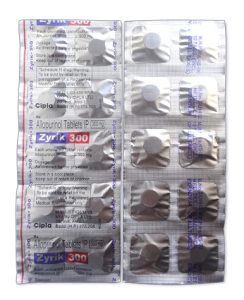
- Allopurinol is administered orally, most commonly as film‑coated tablets (standard strengths 100 mg and 300 mg; some regions offer 200/400 mg or suspension formulations).
- Allopurinol does not provide immediate relief for an acute gout attack; biochemical reduction in serum uric acid typically begins within days to a couple of weeks after starting, though clinical benefits (reduced flares, tophi shrinkage) may take weeks to months.
- The drug is usually taken once daily and maintains uric acid lowering with continued daily dosing; its active metabolite (oxypurinol) has a relatively long half-life, so effects persist with regular therapy—duration of benefit requires ongoing treatment for chronic conditions.
- Avoid excessive alcohol while taking allopurinol because alcohol (especially beer and spirits) raises uric acid and increases the risk of gout flares; also practice moderation and discuss alcohol use with your prescriber.
- The most common and important side effect to watch for is a skin rash (which can signal a severe hypersensitivity reaction such as Stevens–Johnson syndrome or toxic epidermal necrolysis); other frequent effects include gastrointestinal upset (nausea, diarrhea), liver enzyme changes, headache and drowsiness.
- Would you like to try allopurinol without a prescription?
Basic Allopurinol Information
- INN (International Nonproprietary Name): Allopurinol.
- Brand Names Available In United States: Zyloprim and generics marketed as allopurinol tablets, commonly available in 100 mg and 300 mg tablet strengths.
- ATC Code: M04AA01.
- Forms & Dosages: Oral tablets are standard, typically 100 mg and 300 mg; some regions may supply 200 mg, 400 mg, or suspension/compounded forms, but no typical injectable or topical allopurinol is standard.
- Manufacturers In United States: Major suppliers and generic manufacturers include Teva, Sandoz, Mylan, and Sanofi (Zyloric) among others.
- Registration Status In United States: Widely registered and available through national regulatory channels (FDA registration noted for allopurinol products).
- OTC / Rx Classification: Prescription-only (Rx) in the United States and most jurisdictions due to the risk of serious adverse reactions.
Quick Instructions, Warnings & Daily-Life Integration
Take allopurinol exactly as prescribed by your clinician and do not self-adjust doses without medical advice.
Standard oral tablets are most commonly 100 mg or 300 mg and sold under Zyloprim and multiple generics.
Start low—many gout regimens begin at about 100 mg once daily and are titrated according to serum uric acid.
Higher short-term doses (for tumor lysis prophylaxis) can be 600–800 mg/day in divided doses under specialist supervision.
Store tablets below 25°C (77°F) in their original packaging to protect from light and moisture.
Stop the medicine and seek urgent medical care if you develop a rash, fever, or blistering skin because of the risk of serious reactions such as Stevens-Johnson syndrome or TEN.
Discuss alternatives if you test positive for HLA-B*5801 or have severe renal impairment that limits dosing.
Daily-life tips: set a daily alarm to keep doses consistent, drink adequate fluids to lower the risk of uric acid stones, and carry a small card noting your allopurinol dose and any drug allergies.
Preferable extras: keep a simple checklist of warning signs and a wallet-sized medication card showing drug, dose, and clinician contact.
Everyday Use & Best Practices
Morning Vs Evening Dosing
Decide dosing time with your clinician so monitoring and adherence align with care plans.
Consistency is more important than morning or evening, and for many patients a bedtime dose is convenient and reduces missed doses.
When using a once-daily regimen, take allopurinol at the same time each day to support adherence and steady urate control.
For divided regimens at higher total daily doses, follow prescriber instructions exactly to distribute daily dosing.
Typical starting schedules for gout begin at 100 mg/day and are titrated to maintenance, often around 200–300 mg/day for mild cases.
Taking With Or Without Meals
Allopurinol may be taken with or without food, and taking it with food can reduce mild gastrointestinal upset for some patients.
Avoid alcohol binges as drinking heavily can raise uric acid and undermine therapy.
Maintain hydration; increased fluid intake helps prevent uric acid nephrolithiasis while on therapy.
- Daily Routine Tips: set a pill alarm, keep the bottle in the same place, and review doses at refill time with your pharmacist.
- When To Call: report rash, fever, or unusual fatigue immediately.
| Regimen Type | Typical Use | Pros/Cons |
|---|---|---|
| Once-Daily | Most maintenance gout patients | Simple, better adherence; limited flexibility for renal-based dose splitting |
| Divided Doses | High total daily doses (e.g., tumor lysis prophylaxis) | Better tolerability at high doses; needs clearer scheduling |
Safety Priorities
Who Should Avoid It
Do not use allopurinol if there is a history of hypersensitivity to allopurinol or any tablet excipient.
Patients with prior severe cutaneous adverse reactions such as Stevens-Johnson Syndrome or Toxic Epidermal Necrolysis must avoid the drug.
Do not start allopurinol during an acute gout flare because initiation can temporarily worsen flares.
Use caution or consider alternatives in severe renal impairment and reduce doses when CrCl is low; if CrCl is under about 20 mL/min, doses may be limited to around 100 mg/day.
Screen for HLA-B*5801 in high-risk ethnic groups per practice guidance before initiating therapy when available.
Activities To Limit
No routine restrictions on daily activities are required for most patients taking allopurinol.
Avoid dehydration and excessive alcohol, which raise uric acid and can promote stone formation.
If a new rash appears, avoid excessive UV exposure and stop the drug until a clinician evaluates the rash.
If you experience significant dizziness or drowsiness on any medication, avoid driving or operating heavy machinery until you are certain of your reaction.
- Contraindication Checklist: known hypersensitivity, prior SJS/TEN, acute gout attack at start.
- High-Risk Flags For Clinicians: CrCl <20 mL/min, HLA-B*5801 positivity, marked hepatic dysfunction.
Dosage & Adjustments
General Regimen
Typical adult initiation for gout is 100 mg once daily, with titration based on serum uric acid until the target is reached.
Maintenance doses commonly fall in the 200–300 mg/day range for mild disease and 400–600 mg/day for more severe hyperuricemia or tophi burden.
Maximum reported doses in specialist care can reach up to 800 mg/day, often split into divided doses for tolerability.
For tumor lysis syndrome prophylaxis, short-term regimens may use 600–800 mg/day in divided doses under oncologist supervision.
Laboratory monitoring of serum uric acid, renal, and liver function guides titration and long-term dose adjustments.
Special Cases
In renal impairment dose reduction is required and very low CrCl may limit dosing to about 100 mg/day with close monitoring.
For pediatric uses related to chemotherapy-induced hyperuricemia, dosing is typically 10–20 mg/kg/day in divided doses with a maximum around 400 mg/day.
Elderly patients generally start at the lowest effective dose with frequent renal and hepatic monitoring.
| Situation | Starting Dose | Maintenance / Max |
|---|---|---|
| Adult Gout | 100 mg/day | 200–300 mg/day (mild), up to 800 mg/day (specialist) |
| Tumor Lysis Prophylaxis | — | 600–800 mg/day (divided, short-term) |
| Severe Renal Impairment (CrCl <20) | 100 mg/day or lower | Limit doses and consider alternatives |
User Testimonials
Positive Reports
Many patients report fewer gout flares after several months on a steady allopurinol maintenance dose.
People with established tophi sometimes see gradual reduction in size after long-term urate lowering with allopurinol.
Users often describe convenience with once-daily 100 mg or 300 mg tablets and savings when switching to generics like Zyloprim alternatives.
Common Challenges
Some patients experience an initial increase in gout flares after starting allopurinol unless given prophylaxis such as low-dose colchicine or an NSAID.
Occasional gastrointestinal upset and concern about skin rashes are commonly reported reasons for early discontinuation.
Several patients note needing multiple dose adjustments to reach target serum uric acid, especially when renal function changes.
- Quick Pro/Con: fewer flares vs. risk of early flare and need for monitoring.
- Patient Follow-Up Questions: ask about rash, frequency of flares, urine stones, and recent renal labs at your next appointment.
Buying Guide
Pharmacy Sources
Allopurinol is a prescription medication in the United States, and it is typically dispensed through community and online pharmacies as Zyloprim or generic allopurinol tablets.
Generics are supplied by manufacturers such as Teva, Sandoz, Mylan, and others, and 100 mg and 300 mg tablets are commonly stocked.
Patients with insurance should confirm formulary tier placement and possible prior authorization rules before selecting a pharmacy.
Price Comparison
Generic allopurinol tends to be substantially cheaper than brand-name Zyloprim, and 90-day supplies or mail-order fills often reduce per-tablet cost.
Check local retail pharmacies, national chains, and reputable online pharmacies to compare cash pricing and insurance coverage.
In our online pharmacy, allopurinol is available without a prescription, with discreet delivery to United States in 5-14 days.
| Option | Typical Pack Sizes | Retail Vs Generic Pricing |
|---|---|---|
| Local Pharmacy | 30–100 tablets | Higher retail price; immediate pickup |
| Mail-Order / 90-Day | 90 tablets | Lower per-tablet price; slower delivery |
| Online Pharmacy | 30–90 tablets | Competitive pricing; discreet shipping |
What’s Inside & How It Works
Ingredients Overview
The active ingredient is allopurinol (International Nonproprietary Name: allopurinol).
Tablets are typically film-coated and available in 100 mg and 300 mg strengths with excipients varying by manufacturer.
There are no standard injectable or topical allopurinol forms widely available; oral tablets are the norm.
Mechanism Basics
Allopurinol inhibits xanthine oxidase, the enzyme responsible for the final steps of uric acid synthesis.
Reduced uric acid production lowers serum urate, preventing gout flares, tophi progression, and uric acid stone formation over time.
Because urate pools shift when synthesis drops, initial therapy can precipitate gout flares—hence gradual titration and prophylaxis when indicated.
- Xanthine Oxidase Inhibition → Less Uric Acid Production → Lower Serum Uric Acid → Fewer Flares And Stones.
Main Indications
Approved Uses
Primary approved uses include chronic gout and hyperuricemia management, prevention of uric acid nephrolithiasis, and short-term prophylaxis for tumor lysis syndrome in oncology settings.
Long-term therapy is commonly used to prevent gout flares and to manage established tophi.
For tumor lysis prophylaxis clinicians may use higher short-term doses such as 600–800 mg/day divided, under specialist oversight.
Off-Label Uses
Less common or off-label uses include certain inherited hyperuricemia disorders and selected urologic scenarios where urate control is beneficial.
Alternatives such as febuxostat, probenecid, or rasburicase are considered when allopurinol intolerance or contraindication is present.
- Approved: chronic gout, stone prevention, tumor lysis prophylaxis (short term).
- Off-Label: rare inherited disorders, specialist renal/urologic indications.
Interaction Warnings
Food Interactions
There are no major food-drug interactions that require strict avoidance of particular foods while taking allopurinol.
Alcohol consumption can raise uric acid and may counteract therapy, so limiting alcohol intake supports treatment goals.
Maintain hydration and moderate intake of purine-rich foods to help control uric acid, but diet alone rarely replaces medication.
Drug Conflicts
Allopurinol has important interactions with azathioprine and mercaptopurine; coadministration requires dose reductions or avoidance due to serious toxicity risk.
Diuretics can raise serum uric acid and complicate urate control during therapy.
Concurrent use with febuxostat is not standard practice; combining xanthine oxidase inhibitors is generally avoided.
| Drug | Risk | Recommended Action |
|---|---|---|
| Azathioprine / Mercaptopurine | Severe myelosuppression/toxicity | Avoid or reduce dose and monitor closely |
| Diuretics | Raised uric acid and poorer control | Monitor urate and consider dose adjustments |
| Febuxostat | No routine combination use | Use alternative strategy if intolerance occurs |
Latest Evidence & Insights
Recent Trial Highlights
Recent studies emphasize setting individualized serum uric acid targets instead of a one-size-fits-all approach.
Renal-function-guided dosing and safety profiling for HLA-B*5801 screening in high-risk populations have gained attention in clinical guidance.
Comparative trials between allopurinol and febuxostat focus on cardiovascular outcomes and tolerability, with cost and access often influencing real-world prescribing.
Practical Takeaways
Clinically, start low and titrate to target uric acid while monitoring labs.
Screening for HLA-B*5801 is recommended in high-risk ethnic groups when available before initiating therapy.
Reserve higher-dose strategies and complex combinations for specialist care; rasburicase may be preferred over high-dose allopurinol in some high-risk tumor lysis scenarios, particularly with renal impairment.
- Start low, monitor serum uric acid regularly, and adjust dosing by renal function.
- Consider HLA-B*5801 testing in high-risk patients prior to initiation.
Alternative Choices
Non-Drug Alternatives
Lifestyle measures such as weight loss, limiting alcohol, moderating purine-rich foods, increased hydration, and controlling comorbidities help lower uric acid risk.
Diet and exercise support pharmacologic therapy but are rarely sufficient alone for chronic hyperuricemia that requires sustained urate lowering.
Drug Alternatives
Drug alternatives include febuxostat as an alternative xanthine oxidase inhibitor, uricosurics such as probenecid or sulfinpyrazone in selected patients, and rasburicase for tumor lysis syndrome in high-risk contexts.
Choice depends on renal function, prior hypersensitivity, cardiovascular profile, and cost or availability.
| Option | Pros | Cons |
|---|---|---|
| Allopurinol | Well-established, many generics, cost-effective | Risk of hypersensitivity; renal dosing required |
| Febuxostat | Alternative for intolerance to allopurinol | Cost and cardiovascular trial considerations |
| Probenecid / Uricosurics | Useful when renal function permits | Less used; not ideal with renal impairment |
| Rasburicase | Rapid urate reduction for tumor lysis | High cost; specialist use |
Regulation Snapshot
Approval Status
Allopurinol is widely registered globally, including FDA approval and registration in other national agencies such as EMA, MHRA, TGA, and PMDA.
The drug is listed on the WHO Essential Medicines List, reflecting broad clinical utility worldwide.
Multiple generics and branded forms (Zyloprim, Zyloric) are produced by manufacturers such as Teva, Sandoz, Mylan, and Sanofi.
Prescription Rules
Allopurinol is prescription-only due to the risk of severe adverse reactions and the need for monitoring while on treatment.
Guidelines in some regions recommend HLA-B*5801 testing in high-risk groups prior to initiation to reduce the risk of severe cutaneous adverse reactions.
- Regulatory Summary: FDA-approved, WHO essential medicine, prescription-only.
- Common Brands/Manufacturers: Zyloprim (brand) and multiple generics by Teva, Sandoz, Mylan, Sanofi.
FAQ Section
Common Qs
Can I start allopurinol during a gout attack?
No, initiation is not recommended during an acute gout flare because starting therapy can transiently worsen the attack.
How long until I see benefit?
Uric acid levels and gout flare frequency typically improve over months, with dose titration guided by serum uric acid measurements.
Is it safe in kidney disease?
Allopurinol can be used with dose reductions and close monitoring in kidney disease, but severe impairment may require alternatives or specialist input.
When To Call The Doctor
Contact your clinician immediately for a new rash, fever, sore throat, or blistering skin while on allopurinol.
Seek urgent care for persistent gastrointestinal symptoms, jaundice, unexplained fatigue, or signs of allergic reaction.
For missed doses, take the missed dose when remembered unless near the next scheduled dose; do not double the dose to make up for a missed one.
- Emergency Signs Checklist: rash with fever, mucous membrane involvement, jaundice, severe GI upset, or sudden changes in consciousness.
Guidelines For Proper Use
Initiation Checklist
Before starting allopurinol confirm the clinical indication and baseline serum uric acid level.
Obtain baseline renal and liver function tests and review concomitant medications, especially azathioprine and mercaptopurine.
Consider HLA-B*5801 testing in high-risk ethnic groups prior to initiation when available.
Start low—commonly 100 mg/day for gout—and arrange prophylaxis to reduce initial gout flare risk if indicated.
Schedule early follow-up for serum uric acid and safety labs after initiation and during titration.
Long-Term Monitoring
Monitor serum uric acid periodically to guide titration and ensure target achievement.
Check renal and liver function tests at intervals based on baseline values and clinical course.
Instruct patients to watch for dermatologic signs and to stop the drug and seek care if a rash or systemic symptoms develop.
Store medication below 25°C (77°F) in the original packaging and reinforce adherence, hydration, and lifestyle interventions for long-term success.
- Printable Items: clinician initiation checklist and a patient wallet card with drug, dose, and emergency contact.
Delivery Across United States
| City | Region | Delivery time |
|---|---|---|
| New York | New York | 5-7 days |
| Los Angeles | California | 5-7 days |
| Chicago | Illinois | 5-7 days |
| Houston | Texas | 5-7 days |
| Phoenix | Arizona | 5-7 days |
| Philadelphia | Pennsylvania | 5-7 days |
| San Diego | California | 5-7 days |
| Dallas | Texas | 5-9 days |
| San Jose | California | 5-9 days |
| Austin | Texas | 5-9 days |
| Jacksonville | Florida | 5-9 days |
| San Francisco | California | 5-7 days |
| Columbus | Ohio | 5-9 days |
| Fort Worth | Texas | 5-9 days |